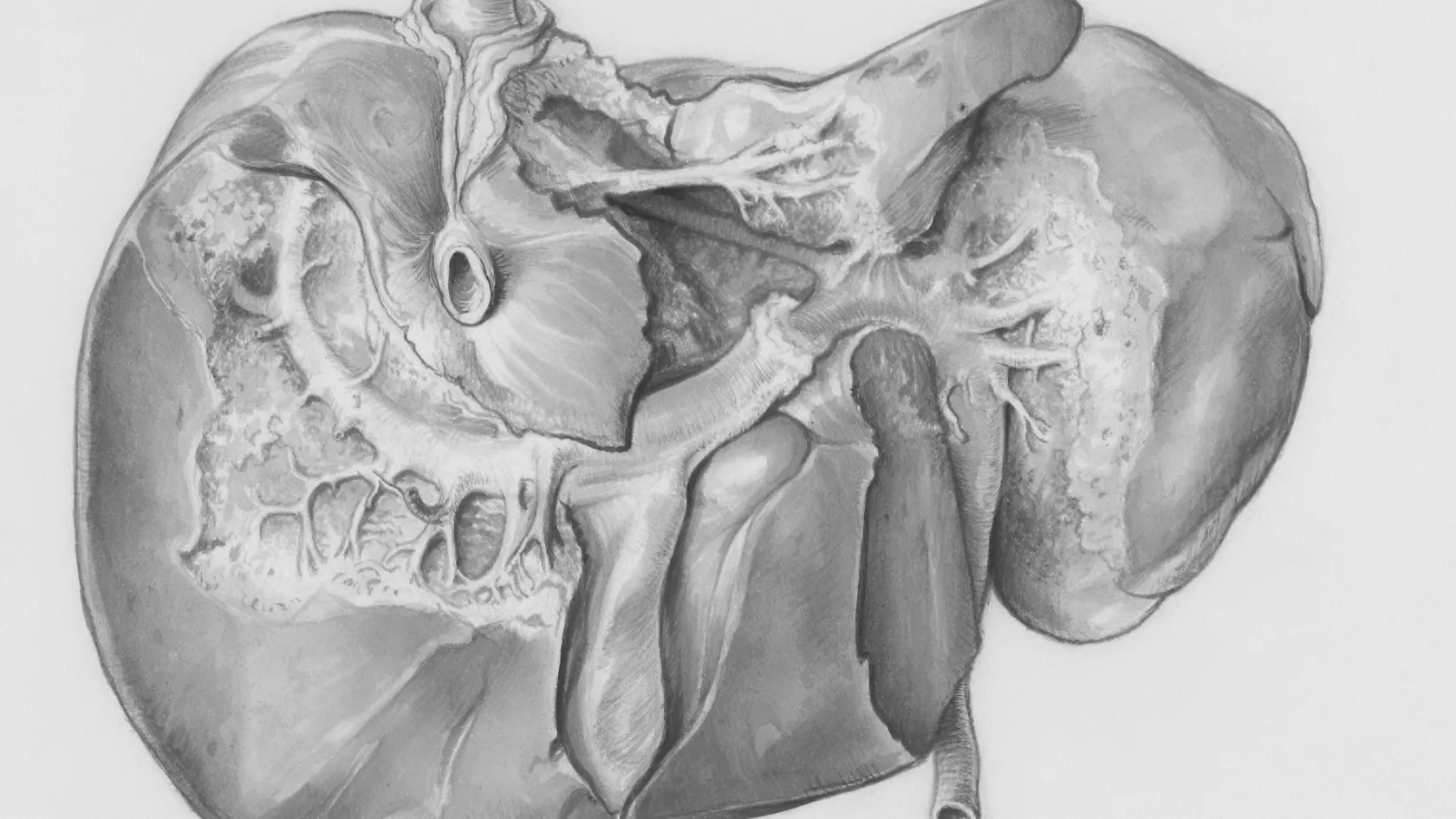
Liver transplant for cirrhosis replaces a liver scarred by hepatitis, alcohol, fatty liver or autoimmune disease once it begins to fail, or when a small liver cancer develops. For patients from abroad the new liver comes from a living relative, with both livers regrowing within months. Our transplant team times the operation using the MELD score, evaluates recipient and donor, and follows you once you are back home.
About This Department
Organ Transplantation
When cirrhosis stops responding to treatment, a new liver is the only cure. Timing the transplant well matters as much as the operation.
Liver transplant for cirrhosis replaces a liver scarred beyond repair with a healthy one, from a deceased donor or, in Turkey for most patients, part of a liver donated by a living relative. Cirrhosis ends years of damage. Hepatitis B or C, alcohol, fatty liver disease, autoimmune and bile duct diseases and inherited conditions all lead there. Doctors consider transplant once the liver begins to fail, with fluid in the abdomen, bleeding from swollen veins, confusion or jaundice, or when a small liver cancer develops. In a study of 12,996 patients on the United States waiting list, those who received a transplant had a 79 percent lower risk of death than those still waiting (Merion and colleagues, American Journal of Transplantation, 2005). This page explains the causes and timing, the MELD score, liver cancer in cirrhosis, alcohol-related disease, living and deceased donation, the donor, evaluation, the operation and recovery, life after transplant, and how patients from abroad arrange treatment at Biruni Hospital in Istanbul.
79
Percent lower risk of death after transplant than for comparable patients still on the waiting list
44
Percent lower risk of death with a living donor transplant than when waiting for a deceased donor, across nine US centers
15
MELD score below which transplant did not improve survival in the first year, so timing matters
Free
Review of your scans, blood tests and MELD score by our transplant hepatology team
Cirrhosis means the liver has been replaced by scar tissue in nodules. It still works for years, a stage doctors call compensated cirrhosis, but once the scarring blocks blood flow and the remaining cells can no longer keep up, complications appear and life expectancy falls sharply. Treating the cause, antiviral tablets for hepatitis, stopping alcohol, weight loss for fatty liver, can slow or halt the damage. A transplant replaces the liver when that is no longer enough.
Fat and inflammation linked to obesity and diabetes
Now among the fastest-growing reasons
Autoimmune hepatitis, PBC and PSC
Immune attack on liver cells or bile ducts
Good results, some recurrence possible
Wilson disease, hemochromatosis and others
Inherited metabolic disorders
Transplant cures the liver defect
A transplant does not treat the cause by itself. Hepatitis, alcohol and weight still need control to protect the new liver.
When transplant is needed
1
The MELD score
MELD, the Model for End-Stage Liver Disease, combines three blood tests, bilirubin, creatinine and INR, with sodium in the newer MELD-Na version. It ranges from 6 to 40 and predicts the risk of death over the next three months without transplant.
What the MELD score means
MELD score
Risk without transplant
Usual approach
Under 15
Low
Treat the cause and complications, monitor
15 to 25
Rising
Transplant evaluation and listing
Over 25
High
Transplant as soon as possible
Survival benefit increased with increasing MELD score. At lower MELD scores, recipient mortality risk during the first post-transplant year was higher than for candidates still waiting (Merion and colleagues, 2005).
The finding explains why transplant is not offered too early. A patient with MELD below 15 is safer without the operation for now. Low sodium in the blood adds risk, and adding it to the score, as MELD-Na, identified patients who would otherwise have died on the list (Kim and colleagues, New England Journal of Medicine, 2008). Complications such as repeated fluid build-up or confusion can justify transplant even when the score is moderate.
Signs that cirrhosis is failing
Fluid in the abdomen, called ascites, that returns after drainage.
Vomiting blood or black stools from bleeding swollen veins, called varices.
Confusion, sleepiness or personality change from toxins the liver no longer clears, called hepatic encephalopathy.
Why these matter
The first episode of any of these complications marks the move to decompensated cirrhosis. From that point, referral to a transplant center should not wait.
Other complications and their meaning
Complication
What it is
Relevance
Jaundice
Yellow skin and eyes, rising bilirubin
Raises MELD directly
Kidney failure, hepatorenal syndrome
Kidneys fail because of the liver
High short-term risk, needs assessment within days
Infection of the ascites fluid
Bacterial peritonitis
Marker of advanced disease
Muscle loss and frailty
Malnutrition
Affects recovery after transplant
1
Early referral
Referral when MELD reaches 15, or at the first complication, gives time for tests, donor assessment and nutrition before an emergency.
Liver cancer in cirrhosis
Milan criteria for transplant in liver cancer
Criterion
Limit
Meaning
One tumor
Up to 5 centimeters
Transplant cures most patients
Two or three tumors
Each up to 3 centimeters
Same
Spread
No invasion of major vessels, no spread outside the liver
Required in all cases
Hepatocellular carcinoma develops in a share of people with cirrhosis each year, which is why ultrasound every six months is advised. Tumors within the Milan criteria have results after transplant close to those of patients without cancer. Larger tumors may be shrunk first with chemoembolization, ablation or radiation, a process called downstaging, and transplanted if they come within limits and stay stable. Living donor programs apply extended criteria in selected cases.
Transplant treats both the cancer and the cirrhosis that caused it, which no other treatment can do.
Alcohol-related cirrhosis
Do I need six months without alcohol before transplant?
A period of abstinence, traditionally six months, allows the liver to recover as far as it can and shows commitment to staying sober, and many centers still use it. It is no longer an absolute rule. Selected patients with a first episode of severe alcoholic hepatitis who do not respond to treatment can be transplanted earlier, after careful assessment of support and commitment.
Patients with alcohol-related cirrhosis meet an addiction specialist during evaluation, and abstinence is checked with blood and urine tests. Family support and a plan for lifelong sobriety are part of the assessment. Results of transplant for alcohol-related cirrhosis are as good as for other causes when drinking does not resume.
Early transplant in severe alcoholic hepatitis
The cumulative 6-month survival rate was higher among patients who received early transplantation than among those who did not, 77 percent against 23 percent (Mathurin and colleagues, New England Journal of Medicine, 2011).
Who cannot have a transplant
Some patients arrive too ill. Others, too early.
Active alcohol or drug use, cancer that has spread outside the liver, severe heart or lung disease that would not survive the operation, uncontrolled infection, and inability to take lifelong medicines all rule out transplant, at least for now. Age alone does not, and patients in their late sixties and seventies are transplanted when otherwise fit. Severe obesity and frailty raise the risk. Both may need treatment first, with a dietitian and physiotherapist working over weeks or months to bring the patient to a point where surgery becomes safe enough to proceed. When a patient is not a candidate, the team explains why and what could change that.
Living or deceased donor
Living and deceased donor transplant
Feature
Deceased donor
Living donor
Source
Whole liver from a brain-dead donor
Right or left lobe from a healthy relative
Waiting time
Depends on MELD and organ supply, can be long
Planned, within weeks of evaluation
Availability for patients from abroad in Turkey
Allocated through the national system
Available with a related donor
In Turkey, most liver transplants come from living donors, and Turkish centers perform some of the largest numbers of living donor transplants in the world. The donor gives the right lobe, about 60 percent of the liver, for most adults, or the left lobe for smaller recipients. Both livers regrow within about two months.
Receipt of living donor liver transplantation was associated with an adjusted mortality hazard ratio of 0.56 relative to candidates who did not receive one, and the benefit grew to 0.35 as centers gained experience (Berg and colleagues, Gastroenterology, 2007).
A living donor allows the operation at the right moment, before the patient becomes too ill, with a healthy graft and a short time outside the body.
The living donor
Who can donate
1
The donor
A healthy adult relative aged 18 to about 55, with a compatible blood group, normal liver, no significant heart, lung or kidney disease, and a liver large enough that the remaining part is safe for them.
The donor undergoes blood tests, CT and MRI to map the vessels and bile ducts and measure volumes, heart tests and a psychological assessment. An independent doctor, separate from the recipient's team, confirms that the donor is fit and giving freely. Donors with fatty liver may be asked to lose weight first.
Donor recovery
Time
Stage
Activities
Days 1 to 7
Hospital stay
Walking from the first days
Weeks 2 to 6
Home recovery
Light activity, no lifting
Months 2 to 3
Liver regrown
Return to work and sport
How risky is right lobe donation?
It is major surgery, and complications such as bile leak, infection or hernia occur in a meaningful minority, most of them resolving fully. Worldwide, around 2 in every 1,000 living liver donors have died, a risk the surgeon discusses openly before consent. Donors keep the right to withdraw at any point.
The donor mortality rate was 0.2 percent across 11,553 donor operations in 71 programs worldwide (Cheah and colleagues, Liver Transplantation, 2013).
Evaluation
1
One to two weeks of tests
The hepatologist, transplant surgeon, anesthetist, cardiologist, dietitian, psychologist and, where needed, an addiction specialist assess the recipient.
The tests look for anything that would make surgery unsafe or the transplant less likely to succeed, and they plan the operation. Dental problems and infections are treated first, and vaccinations are brought up to date.
Tests before transplant
Test
Purpose
Note
Blood tests, viruses, blood group
MELD, compatibility, infections
Guides medicines after surgery
CT or MRI of the liver
Vessels, tumors, clots in the portal vein
Plans the connections
Heart ultrasound and stress test
Fitness for surgery
Coronary scan in older patients
Endoscopy
Varices
Banding if needed
The operation and recovery
A typical hospital course
Period
Where
Main focus
Days 1 to 3
Intensive care
Breathing, blood flow to the new liver, kidney function
Days 4 to 14
Transplant ward
Walking, eating, medicine levels, drain removal
Weeks 2 to 6
Nearby accommodation
Clinic visits two to three times a week
The recipient operation takes six to ten hours. The diseased liver is removed and the new liver or lobe is connected to the patient's vessels and bile duct. The donor and recipient operations run in parallel in two theaters. Ultrasound checks blood flow in the new liver daily during the first days.
1
Early complications
Bleeding, clots in the hepatic artery, bile leaks and early rejection are watched for closely. Most are treated without losing the graft.
After transplant
Follow-up after transplant
Item
Frequency
Purpose
Immunosuppressants, usually tacrolimus
Daily, for life
Prevent rejection
Blood tests
Weekly at first, then monthly, then every three months
Liver function, drug levels, kidneys
Screening
Yearly skin checks and cancer screening
Immunosuppression raises some risks
Doses fall over the first year. Side effects of long-term immunosuppression include kidney strain, diabetes, high blood pressure and a higher risk of infection and skin cancer, all monitored. Hepatitis B is kept suppressed with lifelong tablets, and hepatitis C is cured with antivirals before or after transplant.
Missing doses is the commonest preventable reason for losing a transplanted liver.
Warning signs after transplant
Sign
Possible cause
Action
Fever
Infection or rejection
Call the transplant team the same day
Yellow eyes, dark urine, itching
Rejection or bile duct problem
Call the team
Vomiting, unable to take medicines
Risk of low drug levels
Call the team at once
Life with a new liver
Energy returns within months.
Confusion, fluid and jaundice disappear with a working liver, appetite and muscle recover, and the majority return to work within three to six months. Driving resumes once the wound heals and strong painkillers stop. Everyone avoids alcohol for life, whatever the original cause. Exercise, a balanced diet and weight control prevent the diabetes and fatty liver that can affect the new organ. Many travel, work and live for decades after transplant.
For patients from abroad
One coordinator from the international patients office handles arrangements from the first message through discharge and answers the same WhatsApp number once you are back home. The office works in English, Arabic, French, Russian, Serbian, Romanian and Spanish and books interpreters for other languages, and it arranges the visa invitation letter, airport transfers, daily transport and accommodation near the hospital. Halal, vegetarian and diabetic meals, a prayer room on site, and a female physician on request wherever the rota allows.
Donor rules in Turkey
Patients from abroad receive a liver from a living relative. Turkish law requires the relationship between donor and recipient to be documented before surgery.
Planning the trip
Send recent blood tests, scans, endoscopy reports and a summary of your liver disease in advance, together with the blood groups of possible donors. Our transplant hepatologist reviews them and advises whether and when transplant is appropriate, and which relatives are worth assessing. The coordinator lists the exact documents for your country and arranges translation here.
Documents for living donation
Document
Purpose
Note
Family register or birth certificates
Proves the relationship
Apostilled or consular-certified
Passports of recipient and donor
Identity
Valid for the whole stay
Medical records
Diagnosis, MELD, earlier treatment
Sent before travel
1
Length of stay and fitness to fly
Plan about two to three months in Istanbul, one to two weeks for evaluation, two to three weeks in hospital and close follow-up after discharge. The donor usually leaves hospital within a week and can fly after about four weeks. The recipient flies once liver function and drug levels are stable, and follow-up continues once you are back home with our written plan and shared blood results.
Cost
What a quote for liver transplant covers
Item
Included
Priced separately
Evaluation
Recipient and donor tests, consultations
Treatment of problems found, such as dental work
Surgery
Both operations, intensive care, hospital stay
Extra procedures for complications, retransplantation
After discharge
Clinic visits and tests during the stay
Medicines after return home, accommodation
The quote is a package covering recipient and donor, based on the recipient's condition. A longer stay for complications adds cost, and the quote explains how this is handled. Compare packages that include the same items, especially intensive care days and donor evaluation.
1
Before you compare
Ask how many living donor transplants the center performs each year, and what is included if the first donor candidate is not suitable.
References
Merion RM, Schaubel DE, Dykstra DM, Freeman RB, Port FK, Wolfe RA. The survival benefit of liver transplantation. Am J Transplant. 2005;5(2):307-313.
Berg CL, Gillespie BW, Merion RM, et al. Improvement in survival associated with adult-to-adult living donor liver transplantation. Gastroenterology. 2007;133(6):1806-1813.
Kim WR, Biggins SW, Kremers WK, et al. Hyponatremia and mortality among patients on the liver-transplant waiting list. N Engl J Med. 2008;359(10):1018-1026.
Mathurin P, Moreno C, Samuel D, et al. Early liver transplantation for severe alcoholic hepatitis. N Engl J Med. 2011;365(19):1790-1800.
Cheah YL, Simpson MA, Pomposelli JJ, Pomfret EA. Incidence of death and potentially life-threatening near-miss events in living donor hepatic lobectomy. A world-wide survey. Liver Transpl. 2013;19(5):499-506.
Editor's note
Written by the Biruni Hospital medical editorial team. Reviewed by Op. Dr. Enes Serhat COŞKUN, Gynecology and Obstetrics.