CKD - Kidney Transplant For Chronic Kidney Disease
A kidney transplant ends dialysis and lowers long-term death rates by half or more among patients fit enough to be listed, and it works best before dialysis starts. This guide explains who qualifies, how living donation works for international patients in Turkey, the real risks for the donor, the medicines for life, and the weeks to plan in Istanbul.
About This Department
Organ Transplantation
A kidney transplant ends dialysis and lengthens life. Among patients fit enough to be listed, long-term death rates fell by 48 to 82 percent after transplantation.
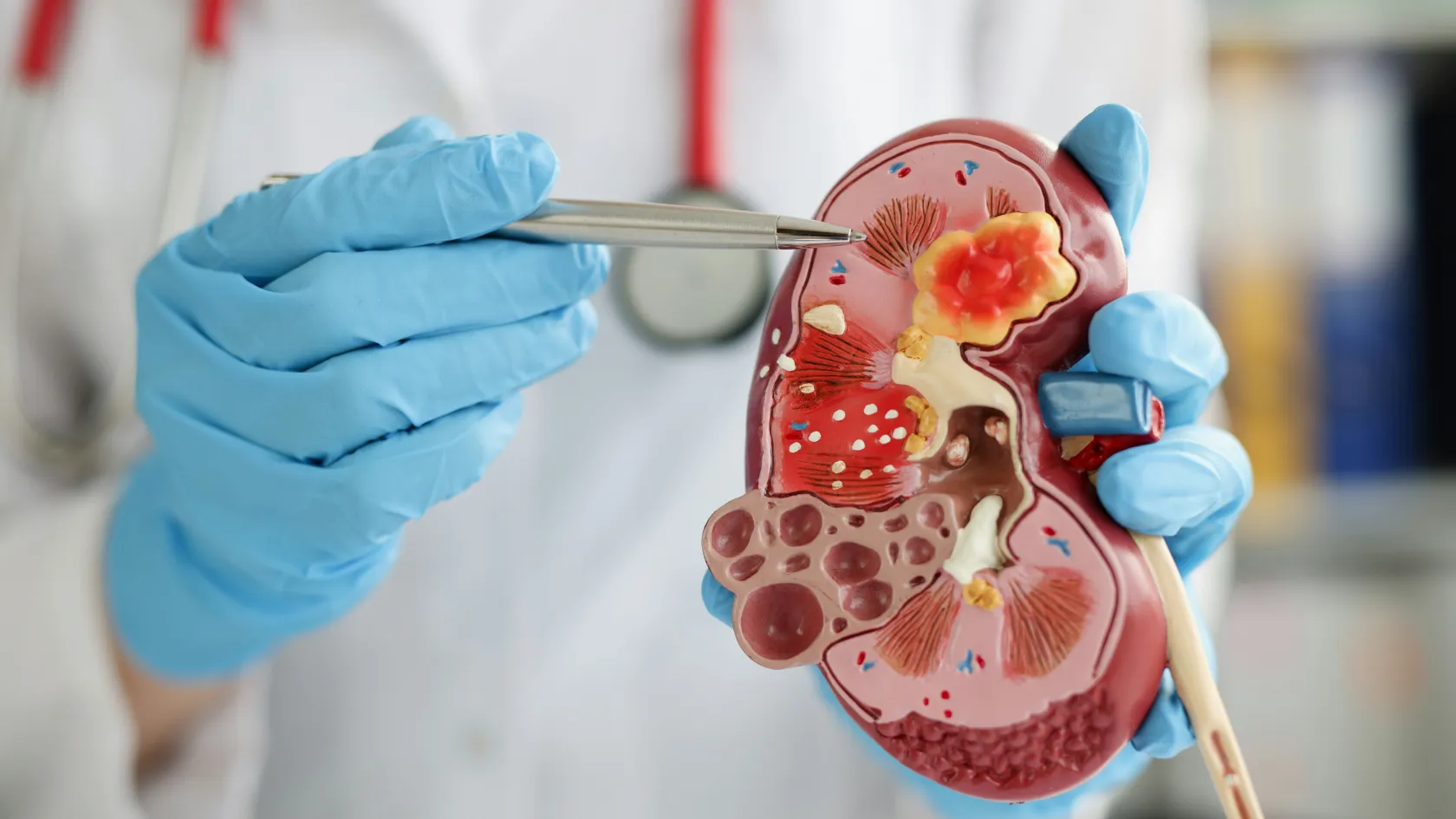
Dialysis keeps people alive when the kidneys fail. A transplant does more. It restores kidney function, frees the patient from three sessions a week and lowers the risk of heart disease. The sooner it happens, the better, and a transplant before dialysis starts gives the best results of all. For international patients in Turkey the kidney comes from a living donor, in most cases a relative, after full medical checks and approval by an ethics committee. Send us your kidney function tests, blood group and medical history, with the donor's if you have one, and a nephrologist and transplant surgeon will tell you whether a transplant is possible and how long to plan.
48% to 82%
Lower long-term death rate after transplant than on the waiting list
Chronic kidney disease, from diabetes, high blood pressure, inherited cysts or inflammation of the kidneys, can progress to kidney failure, when less than a sixth of normal function remains. Three treatments then keep a person alive.
Hemodialysis. The blood is cleaned by a machine, three times a week for four hours, in a center or at home.
Peritoneal dialysis. Fluid runs into the abdomen through a catheter and is drained several times a day or overnight by a machine.
Kidney transplant. One healthy kidney from a donor takes over the work of both failed kidneys.
Why a transplant does better than dialysis
In a study of 228,552 people on dialysis in the United States, researchers separated the effect of the transplant from the fact that healthier patients are chosen for one. Surgery carries its own risk. In the first two weeks after the operation, recipients were more likely to die than patients still on the list. By eighteen months their risk was a third of that on the list, and over the long term their death rate was 48 to 82 percent lower. A systematic review of 110 studies and 1.9 million people found the same pattern, with fewer heart attacks and strokes and a markedly better quality of life, and the advantage has grown over time.
Blood group and tissue typing of recipient and donor, and a crossmatch to check for antibodies against the donor.
Heart tests, and in older or diabetic patients a stress test or coronary angiography.
Screening for cancer, infections such as hepatitis, HIV and tuberculosis, and a dental check.
A pelvic scan.
1
Assessment of both people
Recipient and donor are examined in parallel over one to two weeks. Blood group, tissue type and crossmatch come first, since they decide whether the pair is compatible.
2
Committee approval
The transplant team presents the case, and the ethics committee reviews the relationship and the donor's free and informed consent, with documents from the home country.
3
The operation date
Once both are cleared and approved, surgery is scheduled within days in most cases, and both operations take place on the same morning.
Among patients with end-stage renal disease, healthier patients are placed on the waiting list for transplantation, and long-term survival is better among those on the waiting list who eventually undergo transplantation.
United States Renal Data System study, New England Journal of Medicine, 1999
Timing, before dialysis if possible
The time spent on dialysis before a transplant counts. An analysis of 73,103 transplants found that, compared with a transplant before any dialysis, six to twelve months of dialysis raised the risk of death after transplant by 21 percent, and more than four years raised it by 72 percent. Kidneys lasted longer, too. A patient whose function is falling toward failure should start the transplant assessment early, while there is still time to plan a transplant before the first dialysis session.
Who can donate
Living donors give one kidney, and the remaining kidney grows to take on most of the work. Turkish law allows donation by relatives, and any other donor needs the hospital ethics committee's approval. Donor and recipient travel together with official documents proving their relationship.
A healthy adult, with normal kidney function, blood pressure and blood sugar, and no kidney stones or cysts that threaten the remaining kidney.
A compatible blood group, or an incompatible one that the team can manage with special treatment before surgery.
A free decision, confirmed in private with an independent physician and a psychologist, which the donor can withdraw at any time.
Blood group need not stop a transplant.
When the donor's blood group does not match, the recipient can receive treatment before surgery to remove the antibodies that would attack the kidney, a process that adds one to two weeks and some cost, with results that approach those of matched transplants in experienced centers. Where two pairs are each incompatible, some programs arrange a paired exchange, with each donor giving to the other pair's recipient, within the same legal and ethical rules.
Buying a kidney is a crime
Organ trading is illegal in Turkey and in almost every country, harms the poorest donors, and no legitimate program will take part in it. Anyone offering a paid donor should be refused and reported.
Risks for the donor
What the large studies show
A registry of 80,347 living kidney donors in the United States found a surgical death risk of 3.1 per 10,000 donors, unchanged over fifteen years, higher in men and in donors with high blood pressure. Over the long term, donors lived as long as healthy people of the same age who had not donated.
Later kidney failure becomes a little more likely after donation. Among 96,217 donors, the estimated lifetime risk was 90 per 10,000, against 14 per 10,000 in similar healthy people who had not donated and 326 per 10,000 in the general population. The absolute increase is small, and it is a figure every donor should hear before agreeing.
What does the operation involve, and what happens in the first year?
The two operations
Keyhole surgery removes the donor's kidney in two to three hours, and the donor goes home from hospital in two to four days. The failed kidneys stay. The new kidney is placed low in the abdomen, on one side, joined to the blood vessels that run to the leg, and its ureter to the bladder, in three to four hours.
A living donor kidney starts working within minutes in most recipients. Dialysis stops. The first week brings close checks of kidney function, fluid balance and medicine levels, and a temporary tube in the ureter is removed after a few weeks.
Rejection gives warning signs.
Fever, pain or swelling over the kidney, less urine, sudden weight gain or rising creatinine on a blood test can all mean rejection or infection, and both are treated best when caught within days. Recipients keep a daily record of weight, blood pressure and urine output. Bring it to every visit.
Medicines for life
Anti-rejection medicines keep the immune system from attacking the kidney. Take them daily, at fixed times, for as long as the kidney works. Missed doses cost more transplants than any other avoidable cause, because the immune system never stops watching the new kidney and a few days without protection can start a rejection that does lasting damage before any symptom appears. The medicines raise the risk of infections and some cancers, especially of the skin, and need regular blood tests to keep their levels right.
The first year
1
Weeks one to four
Blood tests two or three times a week, then weekly, with medicine doses adjusted each time. Rejection, if it occurs, is most likely now and is treated with stronger medicines.
2
Months two to six
Visits every two to four weeks with your own nephrologist, antiviral and antibiotic tablets to prevent infections, and a watch on blood pressure, sugar and weight.
3
After the first year
Checks every few months, sun protection and yearly skin checks, vaccinations without live vaccines, and the same daily medicines for life.
What are the results, and how long is the stay?
Transplant recipients live longer and better than patients who stay on dialysis.
This table scrolls sideways on a narrow screen. Swipe or drag to see every column.
Transplant and dialysis compared
Measure
Kidney transplant
Staying on dialysis
Long-term death rate
3.8 per 100 patient-years
6.3 per 100 patient-years on the waiting list
Heart attacks and strokes
Fewer in most studies
More
Quality of life
Markedly better
Lower
Time spent on treatment
Daily tablets, regular blood tests
Three sessions a week or daily exchanges
Days in Istanbul, cost and travel
Plan four weeks for the recipient. The donor needs two, including one to two weeks of assessment before surgery. Donors fly home two weeks after the operation, the recipient after three to four weeks once kidney function and medicine levels are stable and a nephrologist at home has agreed to take over.
The cost covers the assessment of both people, the tissue typing and crossmatch, the two operations, the hospital days, and the medicines and tests of the first weeks. Special treatment for blood group incompatibility adds to it. A quote should name each part, including the daily rate for any extra days in hospital and the cost of the medicines to take home for the first month. Your own figure follows the free review of your file.
One coordinator stays with both of you, recipient and donor, from the first message to the flight home and beyond, and the team works in seven languages with interpreters for the rest. An invitation letter naming the hospital, the surgeon, the recipient and the donor goes out ten days before travel, and the international patients office arranges transfers and an apartment near the hospital for the weeks of the stay. Halal, vegetarian and diabetic meals are available. There is a prayer room. A request for a female doctor is passed to the department and met wherever the rota allows. Back home, the coordinator stays reachable on the same WhatsApp number, and the team reviews your blood results for life.
This table scrolls sideways on a narrow screen. Swipe or drag to see every column.
Risks for the donor in numbers
Risk
Donors
Comparison
Death from the operation
3.1 per 10,000
Higher in men and in donors with high blood pressure
Kidney failure over a lifetime
90 per 10,000
14 per 10,000 healthy non-donors, 326 in the general population
Long-term survival
Same as matched non-donors
No difference after a median of 6.3 years
Kidney transplant FAQ
Is a kidney transplant better than dialysis?
For patients fit enough for the operation, yes. Long-term death rates are 48 to 82 percent lower and quality of life is markedly better, although the first weeks carry the risk of surgery.
Can I have a transplant before starting dialysis?
Yes, and it gives the best results. Each year on dialysis before transplant raises the risk afterward, so assessment should start when kidney function is falling.
Who can donate a kidney to me in Turkey?
A healthy adult relative with a compatible blood group, or another donor approved by the hospital ethics committee. Paid donation is illegal.
Is it safe to donate a kidney?
The surgical death risk is 3.1 per 10,000 donors, and donors live as long as similar non-donors. The lifetime risk of kidney failure rises slightly, to 90 per 10,000.
How long does a transplanted kidney last?
A living donor kidney lasts many years, often more than fifteen, and taking the anti-rejection medicines every day is the single most important factor.
How long do we stay in Istanbul?
Four weeks for the recipient and two weeks for the donor, including the assessment before surgery.
References
Wolfe RA, Ashby VB, Milford EL, et al. Comparison of mortality in all patients on dialysis, patients on dialysis awaiting transplantation, and recipients of a first cadaveric transplant. New England Journal of Medicine. 1999;341(23):1725-1730.
Tonelli M, Wiebe N, Knoll G, et al. Systematic review: kidney transplantation compared with dialysis in clinically relevant outcomes. American Journal of Transplantation. 2011;11(10):2093-2109.
Meier-Kriesche HU, Port FK, Ojo AO, et al. Effect of waiting time on renal transplant outcome. Kidney International. 2000;58(3):1311-1317.
Segev DL, Muzaale AD, Caffo BS, et al. Perioperative mortality and long-term survival following live kidney donation. JAMA. 2010;303(10):959-966.
Muzaale AD, Massie AB, Wang MC, et al. Risk of end-stage renal disease following live kidney donation. JAMA. 2014;311(6):579-586.
Editor's note
Written by the Biruni Hospital medical editorial team. Reviewed by Assistant Professor Pırıltı ÖZCAN, General Surgery.