Two people are evaluated.
Both must be safe.
Donors give the right or left part of the liver in an operation of six to eight hours. Both halves regrow. Within two to three months each is close to full size. Complications such as bile leaks or infection occur in a minority, and the risk of death is small and real, estimated at well under one percent in experienced centers. Every donor must hear that figure before agreeing, from a doctor who is not part of the recipient's team, with time to think and the freedom to withdraw without explaining why to anyone in the family.
Prediction of tumor recurrence is improved significantly by a model that incorporates AFP.
French liver transplant study, Gastroenterology, 2012
More patients with hepatocellular carcinoma could be candidates for transplantation if the current dual approach to candidacy, based on the strict Milan criteria, were replaced with a more precise estimation of survival.
Up-to-seven study, Lancet Oncology, 2009
What does the operation involve, and what are the results?
The operation and the risks for the recipient
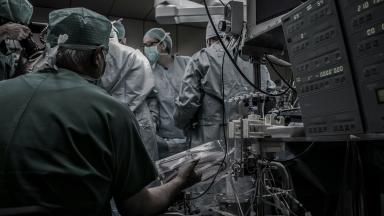
Donor and recipient operations run side by side. The recipient's liver comes out, and the donor graft is joined to the recipient's blood vessels and bile duct over eight to twelve hours of painstaking microsurgery on arteries only a few millimeters wide, which is where the experience of the team shows most. The recipient spends several days in intensive care and three to four weeks in hospital.
Early problems include bleeding, bile leaks, narrowing of the blood vessels and infection. Rejection is treated with a short course of stronger immunosuppression. Anti-rejection medicines are lifelong. They raise the risk of infections, kidney problems and skin cancers. The cancer itself can return, most frequently within the first two years, and the risk rises with tumor size, alpha-fetoprotein and vessel invasion found in the removed liver.
The current criteria for liver transplantation based on tumor size may be modestly expanded while still preserving excellent survival.
University of California San Francisco series, Hepatology, 2001
This table scrolls sideways on a narrow screen. Swipe or drag to see every column.
Survival after transplantation by selection rule
| Group |
Study |
Survival |
| Within Milan criteria |
Milan 1996, 48 patients |
75 percent at four years |
| Within UCSF criteria |
San Francisco 2001, 70 patients |
75.2 percent at five years |
| Within Milan |
International study 2009, 1,556 patients |
73.3 percent at five years |
| Beyond Milan, within up-to-seven, no vessel invasion |
International study 2009 |
71.2 percent at five years |
| Beyond Milan, downstaged, transplanted |
XXL trial 2020, 45 patients |
77.5 percent at five years, against 31.2 without transplant |
1
Evaluation, two to three weeks
Recipient and donor are assessed in parallel. The tumor board and ethics committee meet, the donor gives written consent twice, and the date is set.
2
Surgery and hospital, three to four weeks
The donor leaves hospital in about a week and the recipient in three to four, after intensive care and the first adjustments of the anti-rejection medicines.
3
Nearby follow-up, one to two months
Blood tests twice a week, then weekly, and imaging of the vessels and bile ducts. Donors fly home after four to six weeks in most cases, the recipient after two to three months, once medicines are stable and a hepatologist at home has agreed to take over.
One coordinator stays with you from the first message. The team works in seven languages. Interpreters cover the rest. An invitation letter naming the hospital, the surgeon, the recipient and the donor goes out ten days before travel. The international patients office arranges transfers and an apartment near the hospital for the months of the stay, for the recipient, the donor and a companion. Halal, vegetarian and diabetic meals are available, there is a prayer room, and a request for a female doctor is passed to the department and met wherever the rota allows. Back home, the coordinator stays reachable on the same WhatsApp number, and the transplant team reviews blood results sent from home for life. Before you leave, the team writes to your hepatologist with the operation notes, the pathology of the removed liver, the anti-rejection doses and the target blood levels, the schedule of scans for recurrence, and the signs that should bring you back or to the nearest transplant center, and it agrees who answers a call on a weekend, since the first year after a liver transplant is the time when quick decisions matter most.
Cost follows the same logic.
It depends on the work-up of both people, the two operations, the intensive care and hospital days, the medicines of the first months and the follow-up. A quote should name each part and state the daily rate for any extra days. Your own figure follows the free review of your file.
Liver transplant for HCC FAQ
Who qualifies for a liver transplant for liver cancer?
Patients whose cancer is confined to the liver, within the Milan criteria or wider accepted limits, without invasion of major veins or spread, and fit enough for the operation. Some patients beyond the limits qualify after downstaging.
What is the survival after transplant for HCC?
Within the Milan criteria, around three in four patients are alive at five years. After successful downstaging, the XXL trial reported 77.5 percent five-year survival.
Can a foreigner receive a deceased donor liver in Turkey?
No. International patients receive part of a liver from a living donor, in most cases a relative, with approval from the hospital ethics committee.
Is it safe to donate part of my liver?
The remaining liver regrows within months and most donors return to normal life. The risk of death is small but real, estimated at well under one percent in experienced centers.
Can the cancer come back after transplant?
Yes. Recurrence is most likely within two years and depends on tumor size, number, alpha-fetoprotein and vessel invasion. Regular scans and blood tests catch it early.
How long do we stay in Istanbul?
Plan two to three months for the recipient and four to six weeks for the donor, including the evaluation before surgery.
References
- Mazzaferro V, Regalia E, Doci R, et al. Liver transplantation for the treatment of small hepatocellular carcinomas in patients with cirrhosis. New England Journal of Medicine. 1996;334(11):693-699.
- Yao FY, Ferrell L, Bass NM, et al. Liver transplantation for hepatocellular carcinoma: expansion of the tumor size limits does not adversely impact survival. Hepatology. 2001;33(6):1394-1403.
- Mazzaferro V, Llovet JM, Miceli R, et al. Predicting survival after liver transplantation in patients with hepatocellular carcinoma beyond the Milan criteria: a retrospective, exploratory analysis. Lancet Oncology. 2009;10(1):35-43.
- Duvoux C, Roudot-Thoraval F, Decaens T, et al. Liver transplantation for hepatocellular carcinoma: a model including alpha-fetoprotein improves the performance of Milan criteria. Gastroenterology. 2012;143(4):986-994.
- Mazzaferro V, Citterio D, Bhoori S, et al. Liver transplantation in hepatocellular carcinoma after tumour downstaging (XXL): a randomised, controlled, phase 2b/3 trial. Lancet Oncology. 2020;21(7):947-956.