
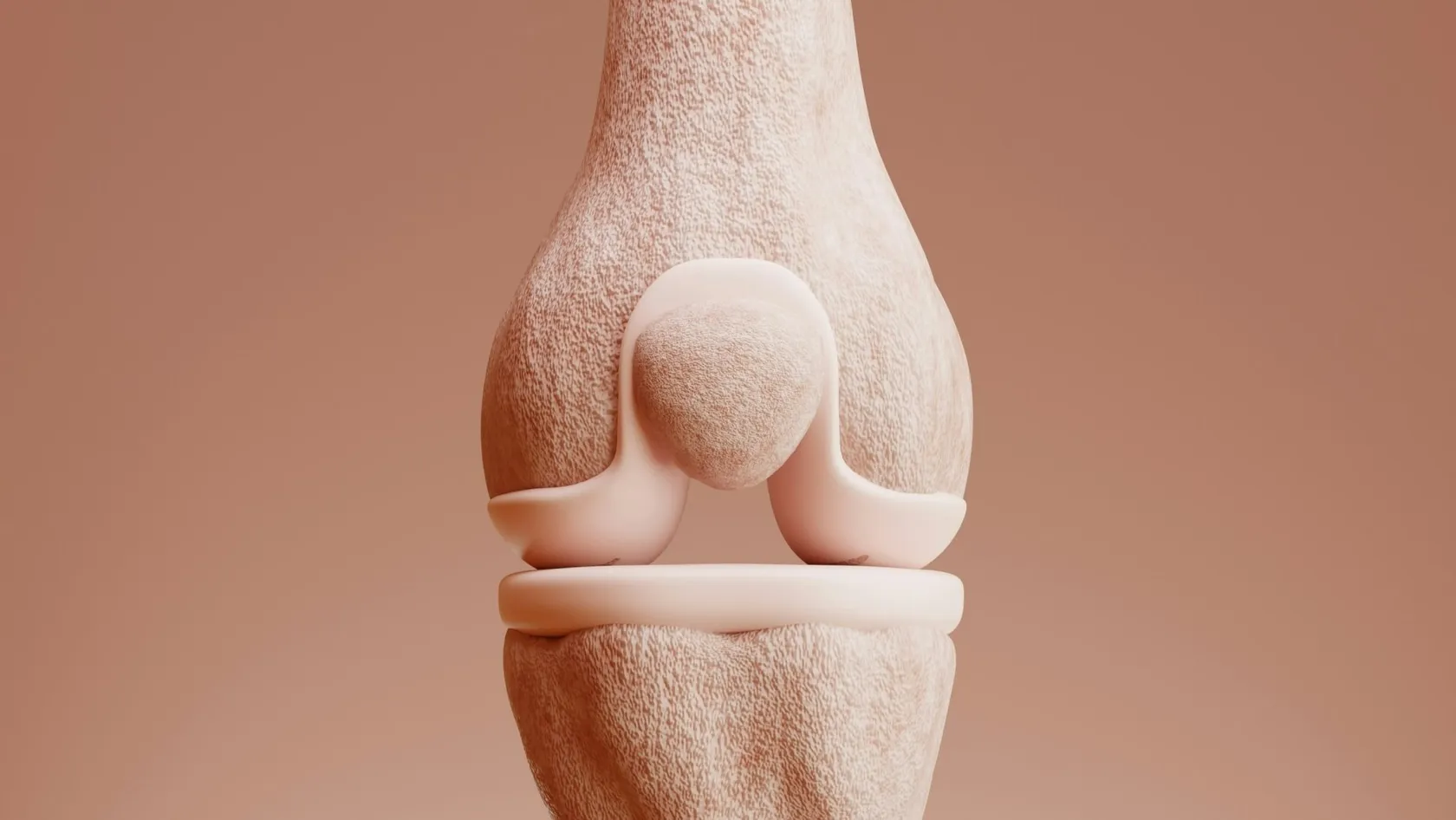
Kyphoplasty
Kyphoplasty is cement injection with one extra step, and that step is what the higher price pays for. The balloon measurably keeps cement inside the bone and measurably restores height on the scan. Whether the height reaches the patient as something they can feel has never been shown, and the largest randomized effect this procedure has produced came from a population most pages mention only in passing.
About This Department
The balloon buys height. Height was never the thing you feel.
Kyphoplasty means cement injection with one extra step, and that step is what the higher price pays for. This page sets out what the balloon measurably delivers, what it has never been shown to deliver, and the group of patients in whom the randomized effect is largest by a wide margin.
What kyphoplasty is
The whole procedure in one paragraphA collapsed vertebra is reached with a needle passed through the bony column at the back of it. A balloon goes down that needle, inflates inside the crushed bone, pushes the flattened surfaces apart and leaves a cavity behind. The balloon comes out. Cement fills the cavity it made, at low pressure because the space is already there, and hardens within minutes. Take the balloon out of that sequence and you have vertebroplasty, which costs less and is the procedure kyphoplasty is always measured against.
Everything arguable in this treatment lives in that one extra step. The balloon answers two real objections to plain cement injection, namely that pushing cement into intact spongy bone takes pressure and pressure sends cement where nobody wants it, and that a vertebra which has lost a third of its height stays lost. A cavity solves the first. Inflation addresses the second. Together they make up the entire engineering case for the device. Whether either solution reaches the patient as something they can feel is the question this page exists to answer, and the answer is more interesting than either the people selling balloons or the people dismissing them tend to give. Both engineering answers are genuine, and neither was ever the hard part, because the hard part in this condition has always been showing that anything done to a single collapsed vertebra changes how a person lives six weeks later, and that is a question for patients rather than for bone, which is why it has proved so much harder to settle than the mechanics ever were.
What the balloon is actually for
Three claims get made for it. They do not rest on equal evidence. Separating them turns a marketing phrase into three testable statements.
Why the third claim keeps getting made anyway
Persuasive reasoning sits behind it, and that is how it survives. People with several collapsed vertebrae do stoop, stooping does compress the chest, and populations with more vertebral fractures do have shorter lives. Every link in that chain is real. What has never been shown is that adding a few millimeters back to one vertebra alters any of it, and the arithmetic explains why, because a stooped spine is the sum of everything that has already collapsed and the block being treated today is one contributor among several that healed before anybody was consulted. Fixing the newest one changes the total by very little. Picture a stack of books with four already crushed. Restoring a few millimeters to the fifth leaves the stack at very nearly the height it was, and the person standing under it notices nothing, which is the geometry that nobody selling the procedure walks a patient through.
So the useful way to read the rest of this page is to keep the first claim, treat the second as an image finding, and ask for evidence before accepting the third.
How much height comes back
Patients want this number more than any other, and hear it least often in a form they can use.
Millimeters, and what a millimeter is worth
Inflation buys back millimeters, and a good result restores a portion of what was lost rather than the whole of it. Bone that has been crushed does not unfold cleanly, the balloon works against the same weak bone that failed in the first place, and a vertebra that collapsed six weeks ago has begun to knit in its collapsed shape. Freshness helps, which is one reason these procedures are pushed toward the early weeks. Even at best, what returns is a fraction. Nobody gets the vertebra back.
The comparison that settles it
If height were doing the clinical work, then techniques that restore more height should produce better patients. That prediction has been tested inside kyphoplasty itself, by comparing balloons placed through one pedicle against balloons placed through both. Two pooled analyses covering 876 and 563 patients found no significant difference between the two approaches in anterior vertebral height, in middle vertebral height, or in kyphotic angle, and also none in pain scores or disability scores out to two years. Height came back the same either way. So did the patients. The prediction was not tested and passed. It was tested and produced nothing, which is the pattern you get when the variable being manipulated turns out to be beside the point.
One pedicle or two
Having raised it, the one sided approach deserves its own section, because it is a live technical choice and the pooled evidence points clearly in one direction.
Same result, less of everything else
Across those same analyses the single sided approach came out shorter by roughly twenty minutes of operating time, used about two milliliters less cement, and cut the risk of cement escaping the bone, with risk estimates of 0.47 and 0.59 in the two reviews. Short term general health scores came out marginally better. Pain, disability, height, kyphotic angle, later loss of correction and fractures at neighboring levels all came out the same, while less time under anesthetic in an eighty year old is not a small thing, less cement means less to leak, and fewer punctures means fewer chances to hit something. A center still doing every case through both pedicles by default has a habit rather than a reason, and asking which they use tells you how closely they follow their own field. There are proper exceptions. A vertebra whose collapse sits entirely on one side, or a balloon that will not reach across the midline from a single entry, both argue for two. What does not argue for two is that the tray comes with a pair.
Who the procedure suits
Three groups get offered cement for a collapsed vertebra. The evidence behind them differs enormously.
First comes somebody whose bones have thinned with age and who has cracked a vertebra doing nothing much, which is the largest group by far and the one the sham controlled trials were built around. Second comes somebody whose cancer has eaten into a vertebra until it gave way, where the bone will not heal on its own because the tumor sits there still, and where the strongest randomized effect in this whole literature has been recorded. Third comes somebody on long term steroids, or with a rare bone disorder, whose fracture behaves like the first group's while their age and life expectancy change the calculation. A woman of fifty two on steroids for a lung condition has thirty years of spine ahead of her, and a decision on one vertebra has to be weighed against everything that follows rather than against the next six weeks alone.
Those are genuinely different problems.
Lumping them together is how this field generates confusion, because a page that quotes the cancer trial to an osteoporosis patient, or the osteoporosis trial to somebody with myeloma, has moved a number across a boundary it does not cross. The bone in the second group will never mend by itself, so waiting achieves nothing and the clock argument that dominates the first group simply does not apply. Nobody should be quoted a benefit figure without being told which of the three populations produced it, and if you take one habit away from this page, make it asking that question of every number anybody shows you. The habit costs you one sentence. It has saved patients we have reviewed from flying across a continent to have an injection for a fracture that had already healed, which is the commonest avoidable mistake in this corner of medicine.
Where the evidence is strongest
Most pages describing this procedure lead with osteoporosis and mention cancer in a clause. The randomized evidence runs the other way round.
A trial across 22 sites in Europe, North America and Australia enrolled 134 patients who had cancer and one to three painful collapsed vertebrae, and randomly assigned them to balloon kyphoplasty or to continued non-surgical management with the option of crossing over after a month. Back specific disability was the primary measure, scored from zero to twenty three. In the kyphoplasty group it fell from 17.6 to 9.1 in that first month. In the control group it moved from 18.2 to 18.0, which is to say it did not move. The treatment effect came out at 8.4 points, with a confidence interval from 7.6 to 9.2 and a probability value below 0.0001. Patients could cross over to treatment after that first month, and most of the control group did, which tells you how the two arms felt from the inside even before the numbers were counted.
Eight points on a twenty three point scale is enormous. Nothing else in this literature comes close.
For comparison, the pooled advantage of cement over a dummy procedure in osteoporotic fractures runs to about a point and a half on that same disability scale, which nobody regards as clinically meaningful. The gap between those two figures is the single most useful thing on this page. Cancer bone gets held apart by a tumor that will not resorb and remodel, the fracture has no natural course toward healing, and the control arm therefore stays exactly where it started, which is precisely what that trial recorded. None of this makes the cancer result unimpeachable, since the trial was open label and everybody knew who had been treated, and expectation does a great deal of work in pain research. It does mean that when somebody with myeloma and a crushed vertebra asks whether to go ahead, the answer looks very different from the one given to a seventy five year old with osteoporosis and the same picture on film.
The osteoporosis trial, and what open label costs
The trial everybody cites for osteoporotic fractures randomized 300 patients across 21 sites in eight countries to balloon kyphoplasty or to non-surgical care, and measured physical function on a hundred point scale a month later.
Treated patients improved by 7.2 points. The comparison group improved by 2.0. The difference of 5.2 points came with a confidence interval from 2.9 to 7.4 and a probability value below 0.0001, and adverse events occurred no more frequently in the treated group, with two serious events attributed to the procedure itself, a bruise and a urinary infection.
Read on its own that is a clean positive result, and for a decade it was quoted as one. What it cannot do is separate the cement from the ceremony. Everybody in that trial knew which arm they were in, the comparison group received ordinary care rather than a convincing imitation of a procedure, and a month later they were asked how they felt by people who also knew. Every ingredient of a placebo response was present and unmeasured, which is not a criticism of the investigators, who said as much, but it is the reason the sham controlled work that followed mattered so much and produced such different numbers. A trial comparing a procedure against no procedure answers a narrower question than most readers assume. It tells you what happens to people who are treated, and leaves open how much of that would have happened to people who merely believed they were.
What the two trials measured
Side by side, with the scales named, because the two use different instruments and the numbers are not interchangeable.
This table scrolls sideways on a narrow screen. Swipe or drag to see every column.
| Feature | Osteoporotic fractures | Cancer related fractures |
|---|---|---|
| Patients and sites | 300 patients, 21 sites, eight countries | 134 patients, 22 sites, four continents |
| What was measured | Physical function, scale of 100 | Back specific disability, scale of 23 |
| Treated group at one month | Improved 7.2 points, from 26.0 to 33.4 | Improved 8.5 points, from 17.6 to 9.1 |
| Comparison group at one month | Improved 2.0 points, from 25.5 to 27.4 | Unchanged, from 18.2 to 18.0 |
| Difference between groups | 5.2 points, interval 2.9 to 7.4 | 8.4 points, interval 7.6 to 9.2 |
| Comparison group received | Ordinary care, no imitation procedure | Ordinary care, crossover allowed at one month |
What that last row does to the rest of the table
Neither trial had a dummy arm, so neither can separate the effect of the cement from the effect of being treated, and in cancer, where the comparison group did not improve at all over a month, that objection carries less weight, since a placebo response tends to produce some movement and here there was none. In osteoporosis, where the comparison group improved by two points on its own and the fractures were healing anyway, the objection carries a great deal.
A rule for reading any number on this subjectAsk three things of every figure quoted at you. Which population produced it, osteoporosis or cancer. What the comparison group received, nothing or an imitation. And which scale it sits on, because five points out of a hundred and five points out of twenty three describe completely different amounts of human improvement. A figure missing any of those three is decoration.
The problem kyphoplasty inherits
Plain cement injection has been compared against a convincing imitation of itself five times. Kyphoplasty has not. The pooled verdict from those comparisons is that it produces no clinically important benefit in osteoporotic fractures, with a pain advantage of under a point on a ten point scale where the threshold for a patient noticing sits three times higher.
Balloon kyphoplasty has never been put through that test. Not once. Twenty five years, and no sham arm. Every randomized comparison it has faced has been against ordinary care or against plain cement injection, never against a procedure designed to be indistinguishable from it. So its position rests on a chain of two links, the first being that kyphoplasty performs as well as plain cement injection, which seven trials covering 968 patients support, and the second being that plain cement injection itself works, which five sham controlled trials largely do not support. A chain like that is only as good as its weakest link, and anybody offering you kyphoplasty for an osteoporotic fracture should be willing to say that sentence out loud before you agree to anything. We say it here because a patient who learns this after paying for the procedure has every right to feel misled. None of that makes the balloon useless. It makes the balloon a refinement of a procedure whose core effect in osteoporosis remains unproven, which is a defensible thing to offer a patient who has been told it plainly and an indefensible thing to sell to one who has not.
Kyphoplasty against plain cement
Seven randomized trials covering 968 patients have compared the two head to head, and the comparison is the one most patients are actually choosing between, since a department offering one usually offers both.
This table scrolls sideways on a narrow screen. Swipe or drag to see every column.
| Measure | Which way it goes | How much it should weigh |
|---|---|---|
| Cement escaping the bone | Lower with the balloon | The real advantage, and the reason to pick it in a risky level |
| Vertebral height on imaging | Better with the balloon | Real on film, unproven in the patient |
| Pain and disability scores | No meaningful separation | The outcome that matters, and it does not favor either |
| Procedure time and complexity | Longer with the balloon | Counts against it in a frail patient |
| Price | Higher with the balloon, because of the device | Ask what the extra is buying in your particular level |
What happens on the day
The day runs short, and the preparation takes most of the time. You arrive having already had the scan that shows the fracture is fresh, since a healed vertebra is not treatable by any of this and no amount of technique changes that.
From arrival to walkingYou lie face down, sedated or fully asleep according to how well you tolerate that position. Live X-ray finds the level and confirms it twice. A needle enters through one pedicle, or both where the anatomy demands it, and the balloon is inflated under continuous imaging with the pressure and volume displayed on a gauge. The balloon comes out, the cement goes into the cavity, and the operator watches it fill. Expect around an hour for a single level. Afterward you lie flat for an hour, sit at one hour, walk at two, and most people spend one night and leave the next morning with two puncture marks and no stitches.
Two weeks of restraint follow, meaning no bending, no lifting and nothing strenuous, and then ordinary life resumes. No brace is needed. The cement is already hard before you stand up, and there is nothing left to protect. People who expected a longer convalescence are unsettled by how quickly they are told to get on with things, and the instruction is correct, because a spine that is kept still stiffens and the muscles around it weaken within days. What does not resume by itself is the treatment of the bone that broke, and the next section explains why that sentence carries more weight than anything else on this page.
Risks and complications
The balloon reduces one category of risk and leaves the rest where it found them. The list below runs in the order a patient encounters it.
- Cement outside the vertebra. Less frequent than with plain injection and still possible, usually harmless on a scan, and rarely enough to press on a nerve or travel through a vein toward the lungs.
- Infection in the treated bone. Rare and serious, because hardened cement cannot be cleaned out the way an ordinary wound can.
- A fracture at the level above or below. Reported after both procedures, argued about for twenty years, and impossible to separate cleanly from the fact that these patients break bones.
- Bleeding into the tissues. One of the two serious events attributed to the procedure in the 300 patient trial, the other being a urinary infection.
- A sore back for a few days. The ordinary outcome, needing nothing beyond simple painkillers.
Questions worth asking any center
Five questions, each with a short factual answer. Ask us. Ask anywhere else you are considering, and compare the two sets of answers.
- How old is my fracture, and what on my scan tells you that it has not healed yet?
- Which trial population produced the benefit figure you have just quoted to me, the osteoporosis one or the cancer one?
- What would the balloon do for my particular vertebra that plain cement injection would not?
- In my case, would you go in through one pedicle or through both, and what in my anatomy decides that?
- What is the written plan for my osteoporosis, and who reviews it once I am home?
Question three separates departments. An answer naming something specific in your anatomy is the one you want. An answer describing the balloon in general terms means the decision was made before anybody looked at your scan.
Cost and having it done in Istanbul
We print no price here, because the figure moves with the number of levels and with whether a balloon is used at all, and because the first question is which procedure suits your vertebra rather than what either one costs.
Send the MRI itself in its original form, along with the date your pain began, your current pain score, the painkillers you are taking, and any bone density result and cancer history. A spine specialist reviews it and answers in writing whether the fracture is still fresh enough to treat, whether a balloon adds anything in your case, how many nights you would need and what the bone plan looks like afterward. Where nothing should be injected, the letter says so and explains why, which happens often enough to deserve saying out loud on a page like this one. The two commonest reasons for that answer are a fracture that turns out to be months old on the scan whatever the pain diary says, and back pain that never came from the fracture in the first place and will still be there afterward.
Staff in the international patients office work in English, Arabic, French, Russian, Serbian, Romanian and Spanish, and interpreting for other languages is arranged before arrival. One coordinator handles the case from the first message until discharge and stays reachable on WhatsApp once you are back home, which matters here because the bone treatment runs for years and the questions arrive long after the flight. A companion can stay in the room overnight, accommodation and airport transfers are booked around your dates, a female physician is available on request, and the visa invitation letter is issued ten days ahead of the flight. Meals are prepared halal, and vegetarian and diabetic options are standard rather than special requests. There is a prayer room on the ward floor. Endocrinology and, where the fracture came from a tumor, oncology both sit on the same campus as the procedure room, which is the practical reason the bone plan and the cancer plan get settled during the same admission rather than left to somebody at home who was not in the conversation. Endocrinology and oncology sit on the same campus, which is the practical reason the bone plan and, where relevant, the cancer plan can be settled during the same admission instead of being left to somebody at home.
Plan on four to six nights. That covers the assessment, the procedure, one night of observation, the bone density study and the appointment that sets your treatment for the years ahead, and the last of those is the one worth flying for even when the answer on the cement turns out to be no.
Send the scan, and tell us the date the pain started. Those two settle most of it.
Kyphoplasty FAQ
Most first messages from abroad ask the questions below.
Is kyphoplasty better than plain cement injection?
Will it straighten my back?
Has kyphoplasty been tested against a dummy procedure?
My fracture is from cancer. Does the evidence differ?
Why does it cost more than vertebroplasty?
One needle or two?
How soon can I fly home?
References
- Wardlaw D, Cummings SR, Van Meirhaeghe J, Bastian L, Tillman JB, Ranstam J, et al. Efficacy and safety of balloon kyphoplasty compared with non-surgical care for vertebral compression fracture (FREE). A randomised controlled trial. Lancet. 2009;373(9668):1016-1024.
- Berenson J, Pflugmacher R, Jarzem P, Zonder J, Schechtman K, Tillman JB, et al. Balloon kyphoplasty versus non-surgical fracture management for treatment of painful vertebral body compression fractures in patients with cancer. A multicentre, randomised controlled trial. Lancet Oncology. 2011;12(3):225-235.
- Chen H, Tang P, Zhao Y, Gao Y, Wang Y. Unilateral versus bilateral balloon kyphoplasty in the treatment of osteoporotic vertebral compression fractures. Orthopedics. 2014;37(9):e828-e835.
- Sun H, Lu PP, Liu YJ, Yang X, Zhou PH, Shen XF, et al. Can unilateral kyphoplasty replace bilateral kyphoplasty in treatment of osteoporotic vertebral compression fractures. A systematic review and meta-analysis. Pain Physician. 2016;19(8):551-563.
- Buchbinder R, Johnston RV, Rischin KJ, Homik J, Jones CA, Golmohammadi K, et al. Percutaneous vertebroplasty for osteoporotic vertebral compression fracture. Cochrane Database of Systematic Reviews. 2018;11(11):CD006349.
Editor's note
Written by the Biruni Hospital medical editorial team. Reviewed by Assistant Professor Özcan ÇIKLATEKERLİO, Neurosurgery.
Medically reviewed by

Assistant Professor Özcan ÇIKLATEKERLİO
Neurosurgery
Related Treatments
View All
ALIF - Anterior Lumbar Interbody Fusion Surgery
Coming in from the front restores the curve of the lower back better than any posterior route and leaves the back muscles untouched. It also carries one risk most pages will not name, and this page names it.

Brain AVM Surgery - Arteriovenous Malformation Surgery
An unruptured brain AVM bleeds at roughly 2.2 percent a year, and surgery spends its whole risk on a single morning. This page sets those two shapes of risk side by side, explains what the ARUBA trial does and does not say about your case, and shows how a Spetzler-Martin grade changes the answer.

Brain Tumor Surgery - Brain Tumor Removal
Brain surgery is one trade repeated all day, how much tumor comes out against what the brain around it still does. This page puts the published numbers on both sides of that trade.
Cervical Microdiscectomy - Minimally Invasive Neck Disc Surgery
Neck disc surgery is done from the front, through the space between your windpipe and your carotid artery, and almost everything that goes wrong that is not the disc happens in that corridor. What has been measured in it.

Chiari Malformation Surgery
A Chiari malformation is measured in millimeters and treated according to symptoms, and those two things come apart more often than patients are told. Most people with the finding never need an operation. This page sets out who does, what posterior fossa decompression removes, why surgeons still argue over opening the dura, and what the pooled studies say about both sides of that argument.