
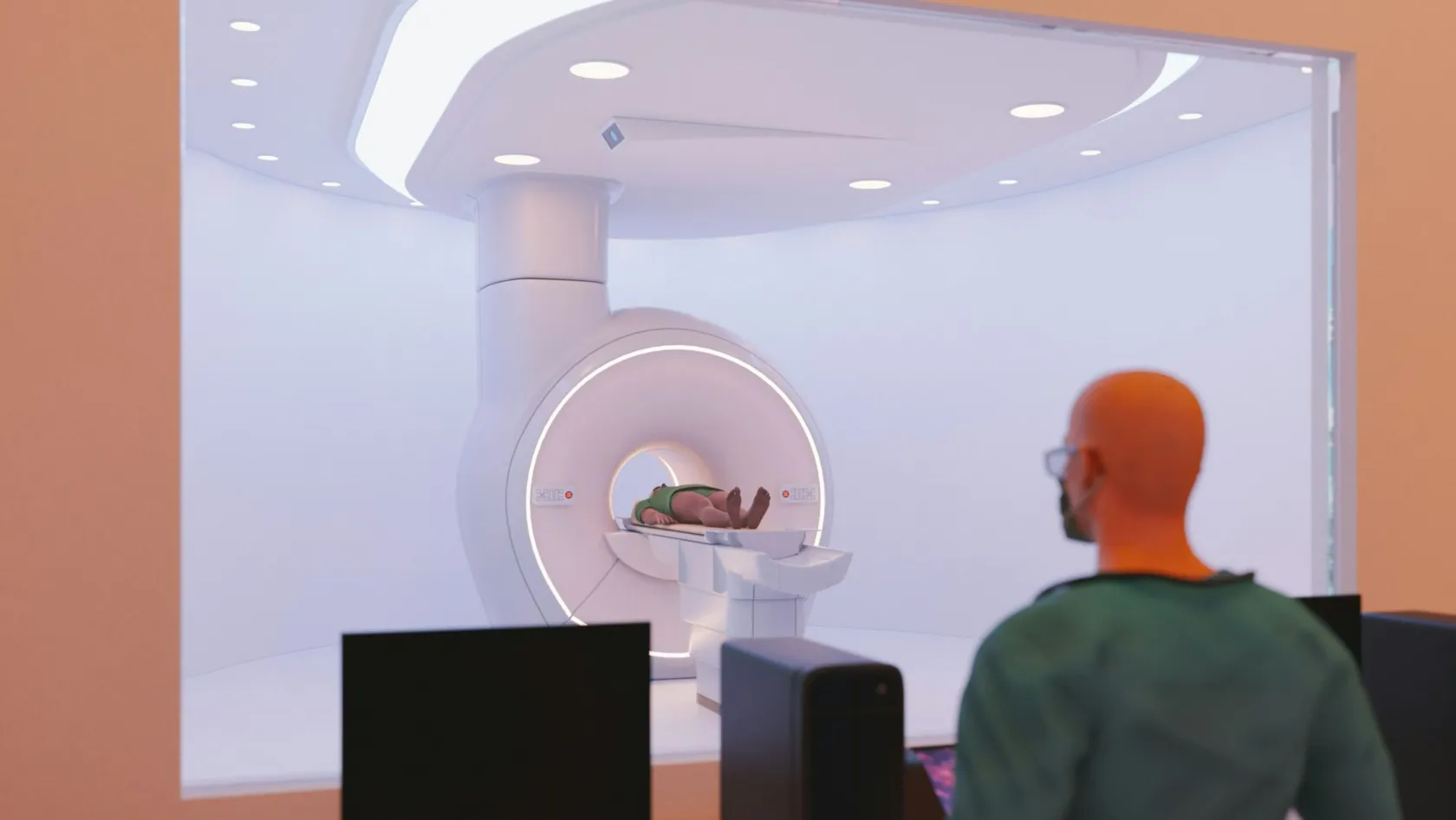
IMRT Radiation Therapy - Intensity Modulated Radiation Therapy
IMRT divides each radiation beam into hundreds of segments of different strength, so the full dose wraps around the tumor and drops off in front of the salivary glands, bowel, lung or heart. Trials show the same cancer control as older techniques, with about half the lasting dry mouth after head and neck treatment.
About This Department
IMRT bends the radiation dose around the organs you want to keep. In a head and neck trial, lasting dry mouth fell from 74 to 38 percent.
Intensity modulated radiation therapy splits each radiation beam into hundreds of small segments of different strength, so the high dose follows the outline of the tumor and falls away sharply in front of healthy organs. The cancer receives the same dose as with older techniques. What changes is the damage around it. In the British PARSPORT trial, 38 percent of patients treated with IMRT had troublesome dry mouth a year later, against 74 percent after conventional radiotherapy, while tumor control and survival were the same in both groups.
Hospitals shorten the name, and patients search for both versions, so this page carries them together in its title, IMRT Radiation Therapy - Intensity Modulated Radiation Therapy. In clinical use since the 1990s, the technique has become the standard way to give curative radiotherapy near sensitive organs. The radiation itself has not changed. IMRT simply aims the same X-rays more exactly.
What IMRT is
A linear accelerator delivers IMRT. The machine produces high-energy X-rays and rotates around the patient on a gantry. Inside its head sits a multileaf collimator, a set of thin tungsten leaves that slide in and out while the beam is on and block part of it. Older radiotherapy sent a handful of uniform beams shaped to the outline of the tumor. IMRT sends beams whose strength varies from one square millimeter to the next. The planning runs backward. The doctor tells the computer which dose the tumor must receive and which doses the spinal cord, the salivary glands, the bowel or the heart must stay below, and the software searches thousands of leaf patterns for the one that comes closest. A medical physicist then measures the finished plan on a test device before the first patient session, and the plan is released for treatment only when the measured dose matches the calculated one.
Same tumor control, less collateral doseIn PARSPORT there were no significant differences between IMRT and conventional radiotherapy in control of the cancer or in survival at 24 months. IMRT is chosen to reduce side effects. It has not been shown to cure more cancers.
IMRT and the other techniques
Several abbreviations appear on hospital websites as if they were rival products. Most of them mark steps on one ladder of precision, and the right step depends on the shape and position of the target.
This table scrolls sideways on a narrow screen. Swipe or drag to see every column.
| Technique | How the dose is shaped | Where it fits best |
|---|---|---|
| 3D conformal | A few beams, each shaped to the outline of the tumor, uniform across its width | Simple targets away from critical organs, and many palliative treatments |
| IMRT | Many beams, each divided into segments of different strength | Targets that curve around organs, such as head and neck, pelvic and prostate cancers |
| VMAT | IMRT delivered in one or two continuous arcs while the machine rotates | The same targets as IMRT, with sessions of a few minutes |
| Stereotactic radiotherapy | Very high dose in one to five sessions to a small, well-defined target | Small lung, liver, spine and brain lesions |
| Proton therapy | A particle beam that stops at a set depth | Selected childhood tumors and tumors against the brainstem or spinal cord |
IGRT is not a rival eitherImage-guided radiotherapy means scanning the patient on the couch before each session and shifting the couch by millimeters to match the plan. Sharp dose edges are safe only when the target is where the plan expects it, so IMRT and image guidance belong together.
What the trials show
Randomized evidence for IMRT exists for some cancers and not for others, because once the dose maps looked so much better, doctors in many fields became unwilling to randomize patients to the older technique. The strongest data come from three areas of the body.
38% vs 74% at one year, 29% vs 83% at twoPatients with dry mouth of grade 2 or worse after IMRT and after conventional radiotherapy. Saliva flow recovered with IMRT and quality of life scores were better. Nutting and colleagues, Lancet Oncol, 2011.
33.7% vs 51.9%Women reporting frequent or almost constant diarrhea at the end of treatment with IMRT and with standard radiotherapy. Use of antidiarrheal tablets four or more times a day was 7.8 against 20.4 percent, and urinary symptoms were milder too. Klopp and colleagues, J Clin Oncol, 2018.
3.5% vs 7.9%Severe inflammation of the lung, grade 3 or worse, with IMRT and with 3D conformal radiotherapy. IMRT also lowered the dose to the heart, and heart dose was linked to survival. Survival itself did not differ at two years. Chun and colleagues, J Clin Oncol, 2017.
Breast cancer has a trial of its own. In the Cambridge Breast IMRT trial, 815 women whose standard plans showed uneven dose were randomized to standard treatment or to a simple form of IMRT, and at five years the IMRT group had lower odds of a poor cosmetic result, with an odds ratio of 0.68, and of visible small blood vessels in the skin, with an odds ratio of 0.58. Prostate cancer has no large randomized comparison of this kind, and IMRT became the standard there on the strength of dose studies showing less rectum and bladder inside the high-dose zone.
One result went the other way. Fatigue during treatment was more common with IMRT in PARSPORT, at 74 against 41 percent, probably because many beam directions spread a low dose through more of the head.
When IMRT is not needed
More complex does not always mean better, and a center that puts every patient on IMRT is selling a technique instead of choosing one. A single session for a painful bone metastasis needs two simple beams and can start the day after the scan. Many palliative treatments are the same. A small lung nodule or a solitary spinal deposit is better served by stereotactic radiotherapy, which finishes in one to five sessions. A superficial skin cancer is treated with electrons or low-energy X-rays that barely penetrate. Children form a special case, since IMRT spreads a low dose through a larger volume of growing tissue, and some childhood tumors are referred for proton therapy for that reason.
Ask which technique is proposed for you, and why.
The course, from mapping to the last session
Radiotherapy runs as a routine. After the first week you could run the appointment yourself.
- Consultation. The radiation oncologist examines you, reviews pathology and scans, and explains the aim, the dose, the number of sessions and the side effects for your case.
- Simulation. A planning CT scan in the exact treatment position. For head and neck treatment a plastic mesh mask is molded to the face. For pelvic treatment you follow a bladder and bowel routine. Small ink marks or tattoo dots guide the daily setup.
- Planning. The doctor outlines the target and every organ nearby on each CT slice, the physicist builds and tests the plan. Published programs quote three to seven working days for this stage.
- First session. Longer than the rest, because the position is imaged and checked from several angles.
- Daily sessions. Monday to Friday, 10 to 30 minutes in the room, of which the beam is on for a few minutes. You feel nothing. Staff watch on camera and speak to you by intercom.
- Weekly review. The doctor checks weight, skin, mouth or bowel symptoms and blood counts, and prescribes what is needed.
- Last day. A treatment summary, advice for the coming weeks and the follow-up plan.
Side effects
IMRT lowers side effects. It does not remove them. They depend on the part of the body treated. They build up from the second or third week, peak in the fortnight after the last session and then settle. Tiredness and reddened skin in the treated area are common to all sites. Treatment of the head and neck brings a sore mouth, thick saliva, altered taste and difficulty eating, and a dental check comes before the first session because extractions after radiotherapy heal badly. Pelvic treatment brings loose stools and an irritable bladder. Chest treatment brings painful swallowing for a few weeks. In a small share of patients the lung becomes inflamed one to six months later, which shows as a dry cough and breathlessness. Late effects, such as firmness of tissue, dryness, bowel changes or, rarely, a second cancer many years later, are discussed at consent for each site, because they differ completely between a breast and a pelvis.
Supportive care decides whether the course finishes on timeMouth care, pain relief, a dietitian, feeding support where needed and skin care are part of radiotherapy. Breaks in a curative course give the tumor time to regrow, so the aim is to treat symptoms early enough that no session is missed.
If the plan changes
A plan rests on the body as it was on the day of the planning scan. Tumors shrink, patients lose weight and masks loosen, and when the daily images show that the fit has drifted, a new scan and a new plan are made, which takes two or three working days. Machines need servicing, and public holidays fall inside long courses. Low blood counts sometimes delay chemotherapy given alongside radiotherapy. Both chemotherapy and radiotherapy are delivered at Biruni Hospital on the same site, so the two teams adjust the schedule together. The records stay in one place.
Missed days are made upA course is prescribed as a total dose in a set number of sessions. If a session is missed, it is added at the end or made up with a second session on another day, six hours apart. Build a margin of several days into the return flight.
Weeks in Istanbul, cost and daily life
Radiotherapy means the longest stay in medical travel. Settle the calendar first.
This table scrolls sideways on a narrow screen. Swipe or drag to see every column.
| Type of course | Sessions | Time in Istanbul, planning included |
|---|---|---|
| Short palliative course | 1 to 10 | 1 to 3 weeks |
| Shortened curative schedules, for example the 15 sessions used in the Cambridge breast trial | 15 to 20 | 4 to 5 weeks |
| Standard curative course, for example the 30 sessions of PARSPORT | 25 to 35 | 6 to 8 weeks |
Published programs in Turkey give the same picture, with five to seven weeks of daily treatment plus three to seven days of planning at the start. Check the length of your visa against the longest version of that calendar. Many visa-free entries allow less. The international patients office sends the appointment confirmation and an invitation letter naming the hospital and the treating doctor ten days before travel, and the letter states the expected duration of treatment for the consulate.
Cost follows the technique, the number of sessions and the imaging needed for planning. A PET-CT or an MRI taken for planning adds to it. So do a head and neck mask, daily image guidance, chemotherapy given alongside, feeding support and any replanning. Packages published by Turkish hospitals cover the consultation, the planning scan, the plan, all sessions, weekly reviews, an interpreter and transfers, and leave out the hotel, flights, chemotherapy drugs, extra imaging and hospital admission for a side effect. Your own health enters too. Diabetes, a pacemaker near the treatment field, previous radiotherapy to the same area and the need for sedation all change the plan, and a quote that names neither the technique nor the number of sessions cannot be compared with another. Replanning, if needed, is priced by some centers and absorbed by others. A figure for one patient follows the doctor's review of the scans, and that review is free.
Daily life matters over six weeks. An apartment-style hotel near the hospital, shared with a relative, suits a stay of this length, since you can cook for yourself and keep afternoons free to rest. One coordinator looks after the case throughout, in English, Arabic, French, Russian, Serbian, Romanian or Spanish, or with an interpreter. Two family members may attend consultations. A prayer room is on site, the hospital kitchen prepares halal, vegetarian and diabetic meals for patients who are admitted, and a female doctor can be requested at the first contact.
After you fly home
You leave with a treatment summary that any radiation oncologist can read. It states the diagnosis and stage, the total dose, the number of sessions, the technique, the dates, the volumes treated and the doses received by the nearby organs, along with any chemotherapy given and the side effects recorded. Keep it for life. Should radiotherapy ever come up again, the new team must know exactly what was given.
Side effects peak after you are back home, in the first two weeks. The file lists what to expect, which creams, mouthwashes and tablets to continue, and when the first scan is due, which is eight to twelve weeks after the last session for most cancers, because earlier images show inflammation and mislead. Your oncologist at home carries out the follow-up visits and scans, while the coordinator stays reachable on the same WhatsApp number. Clinical questions are passed to the radiation oncologist who treated you. Fever, inability to drink, breathlessness or bleeding need a local doctor the same day.
IMRT Radiation Therapy - Intensity Modulated Radiation Therapy FAQ
Does IMRT cure more cancers than standard radiotherapy?
How long does an IMRT session take?
How many weeks will I need to stay in Istanbul?
Is IMRT painful, and will I be radioactive?
Can I fly home during the course or straight after it?
Who follows me up after I go home?
References
- Nutting CM, Morden JP, Harrington KJ, et al. Parotid-sparing intensity modulated versus conventional radiotherapy in head and neck cancer (PARSPORT): a phase 3 multicentre randomised controlled trial. Lancet Oncol. 2011;12(2):127-36.
- Klopp AH, Yeung AR, Deshmukh S, et al. Patient-Reported Toxicity During Pelvic Intensity-Modulated Radiation Therapy: NRG Oncology-RTOG 1203. J Clin Oncol. 2018;36(24):2538-2544.
- Chun SG, Hu C, Choy H, et al. Impact of Intensity-Modulated Radiation Therapy Technique for Locally Advanced Non-Small-Cell Lung Cancer: A Secondary Analysis of the NRG Oncology RTOG 0617 Randomized Clinical Trial. J Clin Oncol. 2017;35(1):56-62.
- Mukesh MB, Barnett GC, Wilkinson JS, et al. Randomized controlled trial of intensity-modulated radiotherapy for early breast cancer: 5-year results confirm superior overall cosmesis. J Clin Oncol. 2013;31(36):4488-95.
Editor's note
Written by the Biruni Hospital medical editorial team. Reviewed by Prof. Dr. Metin GÜDEN, Radiation Oncology.
Medically reviewed by
Prof. Dr. Metin GÜDEN
Radiation Oncology
Related Treatments
View All
Brachytherapy - Internal Radiation Therapy
A beam from outside has to cross healthy tissue to reach a tumor. Brachytherapy avoids that by placing a rice-sized radioactive source inside the tumor for a few minutes, then taking it out again. It is an essential part of curing cervical cancer and a tested option for womb, prostate and early breast cancer.
Brain Tumor Radiation Therapy
The plan for a brain tumor starts with what must be protected, the optic nerves, the brainstem, the hippocampus, and then shapes the dose around them. Radiosurgery in one to five sessions now treats most metastases, and six weeks of radiotherapy with temozolomide remains the standard after surgery for glioblastoma.
Chemoradiation Therapy - Concurrent Chemoradiotherapy
Blood test on Monday, a drip on Tuesday, radiotherapy every weekday, and the same again for six or seven weeks. Chemoradiation asks more of a patient than either treatment alone and, for several cancers, cures more. See the survival gains trial by trial, the side effects they came with, who is fit for it and how a long stay is organized.
Elekta Versa HD Radiation Therapy
The Elekta Versa HD is the linear accelerator on which Biruni Hospital delivers external beam radiation therapy, with a 160-leaf collimator, high dose rate beams and cone beam CT imaging before every session. This page covers the techniques, from VMAT to radiosurgery, the cancers treated, what large trials show about shorter courses for breast, prostate and metastases, the path from first visit to last session, side effects, and how patients from abroad arrange treatment.
Glioblastoma Radiation Therapy
A glioblastoma has no edge, so surgery alone is never enough. Radiation covers the cavity and a margin of brain around it, together with a daily temozolomide capsule, over six weeks or three depending on age and fitness.