Families of inpatients at Biruni Hospital in Istanbul can stay close in two ways. Ward rooms have a companion bed for one relative, and the international patients office arranges accommodation near the hospital with daily transport and airport transfers. Research shows seven in ten relatives of intensive care patients have symptoms of anxiety, so this page also covers choosing where to stay, who arranges what, and how relatives can look after themselves.
About This Department
Family accommodation
Seven in ten relatives of intensive care patients show symptoms of anxiety. When families were allowed to visit up to 12 hours a day, their anxiety and depression scores fell.
Illness happens to families, and hospitals are slowly learning to plan for that. A French study of 920 relatives in 43 intensive care units found symptoms of anxiety in 69.1 percent and of depression in 35.4 percent, and the figures were worse where there was no waiting room and no regular meeting with staff (Pochard and colleagues, Critical Care Medicine, 2001). A Brazilian trial in 36 units later showed that longer visiting hours lowered both scores in relatives without raising infections (Rosa and colleagues, JAMA, 2019). Where the family sleeps, eats and waits is part of care. This page explains how family accommodation works for inpatients at Biruni Hospital in Istanbul, in the room and near the hospital, and how relatives can look after themselves during a long stay.
69.1
Percent of relatives of intensive care patients with symptoms of anxiety
67
Percent of caregivers with depressive symptoms in the first week, and 43 percent a year later
4.8
Hours a day families spent at the bedside under flexible visiting, against 1.4
Free
Review of the patient's reports before the family books travel
Families of inpatients at Biruni Hospital have two arrangements, and most use both.
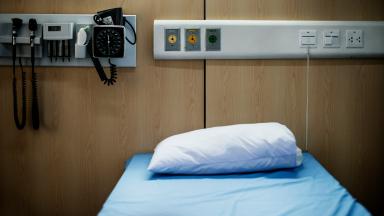
In the room. Ward rooms have a companion bed, and one relative can stay overnight beside the patient.
Near the hospital. The international patients office arranges accommodation close by for the rest of the family, with daily transport between the two and transfers to and from the airport.
A typical pattern is one person in the room at night and the others in a hotel or apartment, swapping every day or two so that nobody goes a week without proper sleep. While a patient is in intensive care the companion bed is not in use, visits are shorter, and the whole family sleeps outside the hospital until the move back to the ward.
What research says about families
Of 836 relatives who completed the questionnaire in full, 69.1 percent had symptoms of anxiety and 35.4 percent of depression. Among spouses, 84 percent had one or the other.
What made it worse?
Being the spouse, being a woman, having no regular meetings with doctors and nurses, having no room set aside for families, and hearing contradictory information from different staff.
Among 280 caregivers of patients who had spent a week or more on a ventilator, 67 percent reported high levels of depressive symptoms at first, and 43 percent still did a year later.
Who coped best?
Older caregivers, those with more social support, those who kept a sense of control over their lives, and those whose other activities were less disrupted by caring. Nothing about the patient predicted how the caregiver fared (Cameron and colleagues, New England Journal of Medicine, 2016).
Read together, the two studies point at things a family can arrange. Information from one consistent source, a place to rest that is not a corridor chair, company, and enough of ordinary life kept going that the caregiver remains a person. The Brazilian trial adds a third point. Units that extended visiting from a median of an hour and a half to as much as twelve hours saw relatives actually stay for 4.8 hours a day, and those relatives scored lower for both anxiety and depression, while infections acquired in the unit and staff burnout did not increase. Being near the patient helps the family. Nobody can keep it up for weeks, though, without a proper bed within reach, regular meals and someone to take over, and that is the practical case for treating accommodation as part of the treatment plan and settling it before the flight instead of on the pavement outside the hospital on the first evening.
Choosing where to stay
How close should the accommodation be?
Close enough to reach the ward within minutes if the hospital calls at night. Daily transport is arranged by the office, and a short distance still matters at three in the morning.
Tell the coordinator the following, and the options offered will fit better.
How many people are coming, their ages, and who will share a room.
The expected length of stay from the written treatment plan, plus the days the doctor wants the patient to remain in Istanbul after discharge.
Whether you need a kitchen, which matters on stays longer than a week and for special diets.
Mobility needs, such as a lift, a walk-in shower or a ground-floor room for the patient after discharge.
Budget range, so that options are realistic from the start.
Hotel or apartment?
Hotels suit short stays and relatives who will spend most hours at the hospital. Apartments suit families with children, stays of several weeks, and patients who will convalesce nearby after discharge and want to cook and rest as they would at home.
Staying in the room
A night on the companion bed is not a night in a hotel. Nurses come in for observations, pumps beep, the patient wakes and needs help to the bathroom, and the companion who stays five nights running will be exhausted by the weekend, however willing. It is also the most useful thing a relative can do. Someone who knows the patient notices confusion, pain or a change in breathing long before a chart does, and someone who speaks the patient's language at three in the morning matters a great deal when the interpreter has gone home.
Who can use the companion bed?
One adult relative or friend chosen by the patient. Families often rotate, and the nurse should know who is staying each night.
What should the companion bring?
A change of clothes, toiletries, any personal medicines, a phone charger, earplugs and something to read. Leave valuables at the accommodation.
Are meals provided for the companion?
The hospital kitchen prepares halal, vegetarian and diabetic meals for patients. Ask the coordinator how companion meals are arranged for your room type, since this differs between packages.
Is there somewhere to pray?
Yes. A prayer room is on site.
Who arranges what
Nearly everything runs through one office. The ward handles the companion bed.
This table scrolls sideways on a narrow screen. Swipe or drag to see every column.
Family logistics during an inpatient stay
Item
Arranged by
Tell them
Airport transfers
International patients office
Flight numbers and the number of travelers
Accommodation near the hospital
International patients office
The details listed above
Daily transport to the hospital
International patients office
Who is traveling each day, and any wheelchair
Invitation letter for visas
International patients office
Passport details of every traveler, patient and companions alike
Interpreter for family meetings
International patients office
The language, and which relatives will attend
Companion bed in the ward room
Ward nurses
Who is staying tonight
One coordinator handles all of it, from the first message through discharge, and the same WhatsApp number answers once you are back home. The office works in English, Arabic, French, Russian, Serbian, Romanian and Spanish and books interpreters for other languages.
Looking after yourself
Relatives rarely give themselves permission to rest, so here it is. A caregiver who has not slept makes poor decisions, forgets what the doctor said, catches every cold on the ward and is no use to the patient by the second week. Sleep in a real bed at least every other night. Eat at mealtimes, away from the bedside, and drink water, because hospital air is dry and coffee is not a meal. Walk outside once a day. Istanbul is a large and absorbing city, and an hour beside the water, in a park or simply in a street full of people going about ordinary business does more for a frightened mind than another hour of watching numbers on a monitor that the nurses are already watching. Keep one person at home informed and let that person update everyone else, so that your phone is not a second job. Bring your own medicines in sufficient quantity, and tell the coordinator if you have a health condition of your own, since hospitals are well placed to help a relative who becomes unwell. If the fear or low mood becomes heavy, say so. The studies above show how common that is, and nobody on the ward will be surprised.
Take turns. Rest counts. Nobody earns credit for exhaustion, and the patient, who sees your face every day, will read it there and begin to worry about you on top of everything else.
Children and older relatives
Families sometimes travel with small children or with grandparents who cannot be left behind. Say so early. Notice helps. An apartment with separate bedrooms, a cot, a quiet floor or step-free access is easy to find with notice and hard to find on the day. Children visit general wards briefly and by arrangement with the nurse, and anyone with a cough, fever or stomach upset stays away from the hospital until well. Plan something for children to do that has nothing to do with illness. Older relatives tire faster than they admit, and a journey of many hours followed by days of waiting-room chairs is hard on anyone past seventy, so build in rest days for them and check that their own medicines, travel insurance and mobility aids have come along.
Cost
Accommodation sits outside the treatment estimate. Confirm with the coordinator whether you pay the hotel directly or through the office. Length of stay drives the total. Use the nights in the hospital and the days in Istanbul afterward from the written plan when you budget, add a margin of several days in case discharge or the fit-to-fly date moves, and book on terms that allow a change of dates without penalty, because medicine keeps its own calendar.
Hospitals in this market obtain negotiated rates from nearby hotels, and weekly rates for apartments are lower than nightly ones. Request two or three options. Compare them on distance first.
References
Pochard F, Azoulay E, Chevret S, et al. Symptoms of anxiety and depression in family members of intensive care unit patients: ethical hypothesis regarding decision-making capacity. Crit Care Med. 2001;29(10):1893-1897.
Cameron JI, Chu LM, Matte A, et al. One-year outcomes in caregivers of critically ill patients. N Engl J Med. 2016;374(19):1831-1841.
Rosa RG, Falavigna M, da Silva DB, et al. Effect of flexible family visitation on delirium among patients in the intensive care unit: the ICU Visits randomized clinical trial. JAMA. 2019;322(3):216-228.
Editor's note
Written by the Biruni Hospital medical editorial team. Reviewed by Assistant Professor Pınar ACAR, Anesthesia and Reanimation.