
Cardiac ICU (Cardiac Intensive Care Unit)
Heart attacks now make up under a third of cardiac ICU admissions. This page covers who is treated there today, what the monitors and pumps do, and how many days after a heart event you can board a plane.
About This Department
Today a cardiac ICU treats far more than heart attacks. More than nine in ten patients leave it alive.
A cardiac intensive care unit treats adults whose heart or circulation has become unstable. Heart attack, severe heart failure, a dangerous rhythm and cardiac arrest are the usual causes. A registry of 3,049 admissions to 16 advanced cardiac ICUs in the United States and Canada recorded that 91.7 percent of patients left the unit alive (Bohula and colleagues, JAMA Cardiology, 2019). This page explains who the Cardiac ICU at Biruni Hospital in Istanbul looks after, what its monitors and devices do, and when a heart patient can safely travel.
A heart attack abroad is treated where it happens
Time decides how much heart muscle survives.
European Society of Cardiology guidelines set a target of 120 minutes or less from the diagnosis of a major heart attack to reopening the blocked artery with a balloon and stent (Ibanez and colleagues, European Heart Journal, 2018).
Records for a planned transfer
For a planned transfer the receiving cardiologist wants to see the following.
- Every ECG recorded since the event
- The echocardiogram report
- Angiogram images on disc or by link, with the written report
- Troponin and kidney results
- The current drug list with doses
- The summary from the treating unit
Treating doctors and the medical director of the transport company decide together whether the patient is fit to fly, and they put that decision in writing, while Biruni Hospital reviews the file free of charge and confirms acceptance in writing before any aircraft is booked.
Heart attacks are now a minority of admissions
Coronary care units opened in the 1960s to watch heart attack patients for fatal rhythms and to shock the heart back within seconds. That job remains. Everything around it has changed.
What a registry of 16 units shows
In the Critical Care Cardiology Trials Network registry, acute coronary syndrome, the group that covers heart attack and unstable angina, made up 31.8 percent of admissions and heart failure 18.6 percent. Organ trouble of a wider kind brought these patients through the door. Breathing failure was the main reason for intensive care in 26.7 percent, shock in 21.1 percent, an unstable rhythm in 17.1 percent and cardiac arrest in 8.7 percent. More than half of all patients, 58.2 percent, needed an advanced therapy, meaning drugs by vein to hold blood pressure up (36.2 percent), catheters that measure pressures inside the heart and lungs (30.8 percent) or a ventilator (21.4 percent). Median age was 65. Many of these patients arrived with diabetes, kidney disease or lung disease alongside the heart problem. Centers differed widely, with acute coronary syndrome making up anything from 15 to 57 percent of admissions depending on the hospital.
Outcomes spread widely, and the reason for admission explains nearly all of that spread.
The low-risk group
One in ten admissions in the registry came for observation after a procedure such as a complex stent or a valve implanted through a catheter. For them the unit is a precaution for a night.
Why the doctor in charge matters
Deaths in one cardiac ICU fell from 8.9 percent to 4.1 percent after a dedicated cardiac intensivist took charge of the unit.
Samsung Medical Center in Seoul changed the way its cardiac ICU was run in January 2013. Before that date cardiologists visited their own patients in the unit between other duties, and afterward a dedicated cardiac intensivist, a cardiologist with added training in critical care, directed the care of every patient from inside the unit. Researchers compared 616 patients treated under the old model with 1,815 treated under the new one. Deaths in the unit fell from 8.9 percent to 4.1 percent. After patients of similar risk were matched, the odds of dying in the unit were about half, with an adjusted odds ratio of 0.53, and among the 135 patients who needed ECMO mortality dropped from 54.5 percent to 22.5 percent (Na and colleagues, Journal of the American College of Cardiology, 2016). Length of stay and readmissions stayed the same. An American Heart Association statement cited by Cleveland Clinic recommends the same high-intensity model for advanced cardiac ICUs.
So ask who runs the unit.
What the team watches, minute by minute
Rhythm
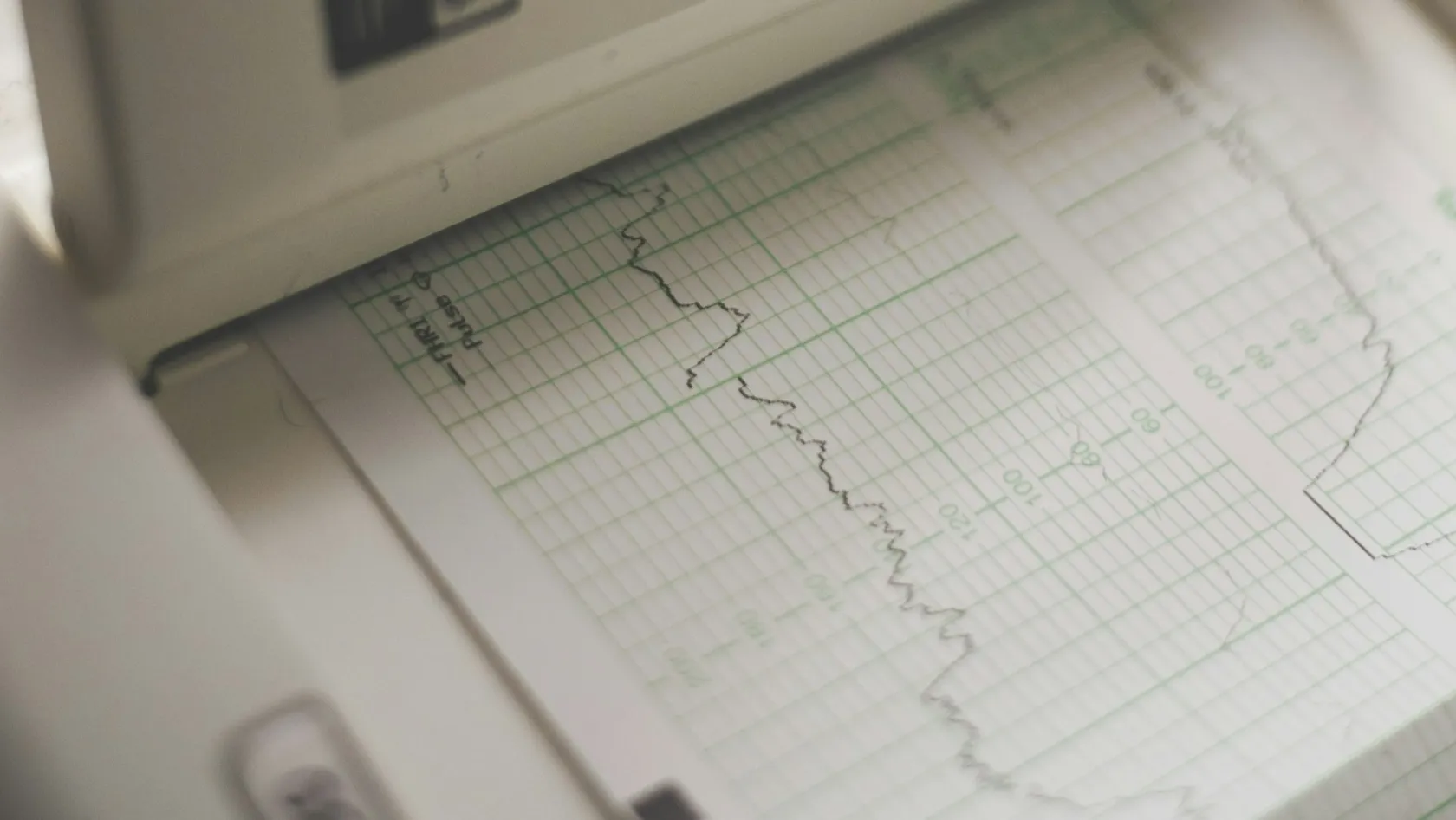
Every heartbeat is recorded. The signal is analyzed at the bedside and at a central station where a nurse watches all the screens together, and because dangerous rhythms after a heart attack cluster in the first 24 to 48 hours, even a patient who feels well stays connected.
Pressure and flow
A fine tube in the wrist artery reads blood pressure beat by beat. When the team needs to know how much blood the heart is pumping and how high the pressures in the lungs have climbed, a thin catheter is floated through a neck vein into the right side of the heart. Those numbers decide between more fluid, less fluid, a stronger drug or a pump.
Ultrasound at the bedside
Echocardiography shows the heart moving in real time. It takes ten minutes, needs no transport, and answers the questions that change treatment, such as how strongly the main chamber contracts, whether a valve leaks and whether fluid has gathered around the heart. Blood tests fill in the rest, with troponin tracking heart muscle damage and lactate showing whether the body is getting enough blood.
Treatments given only in the unit
Some treatments need a nurse at the bedside and a doctor within earshot. Wards do not give them.
Drugs that support the circulation
Noradrenaline, dobutamine and similar drugs run through a central line and are adjusted every few minutes against the blood pressure. Drugs that control rhythm, such as amiodarone, are loaded the same way, and strong diuretics by continuous infusion clear the lungs in severe heart failure. Doses change by the minute.
Electrical treatment
A synchronized shock under brief sedation restores normal rhythm in seconds. When the heartbeat turns dangerously slow, a temporary pacing wire passed through a vein holds the rate until the heart recovers or a permanent pacemaker goes in.
Pumps, ventilators and dialysis
Some failing hearts need mechanical help for a few days. The intra-aortic balloon pump and small catheter-mounted pumps take over part of the work, ECMO adds oxygen to the blood outside the body when heart and lungs fail together, and because only specialist centers run these devices, a family planning a transfer that depends on one should ask the receiving hospital directly whether it offers it. Ventilators and dialysis machines work as they do in any intensive care unit. After a cardiac arrest, patients who remain unconscious are kept at a controlled temperature for the first day to protect the brain.
Risks that come with the treatment
Blood thinners and punctures in the groin or wrist artery make bleeding the most frequent problem, and nurses check the puncture site and the pulse below it every hour at first. Contrast dye used during angiography strains the kidneys, which is managed with fluids and daily kidney tests. Central lines carry a risk of infection and come out as soon as the drugs allow. Delirium affects older patients in any ICU. Light sedation, daylight, sleep and family at the bedside reduce it.
Families, language and the daily update
Cardiac ICU visits are short and calm. Expect one or two people at the bedside, hand cleaning at the door and a request to step out during procedures.
Interpreters, meals and a place to pray
From the first message a coordinator from the international patients team at Biruni Hospital looks after the family and stays with them until discharge. The team works in English, Arabic, French, Russian, Serbian, Romanian and Spanish, and interpreters for other languages are arranged on request, which matters most when a cardiologist explains an angiogram and asks for consent to a procedure. A request for a female physician goes to the department and is met wherever the rota allows, and relatives get help with hotel nights near the hospital, airport transfers, daily transport and the invitation letter that consulates request with a visa application. Heart-healthy, diabetic, halal and vegetarian meals come from the hospital kitchen. A prayer room is on site. After the move from intensive care to a ward room, one family member sleeps in that room on the companion bed for the remainder of the stay. Tell the coordinator in your first message who is traveling and what they need.
From the unit to the ward to the flight
Patients leave the cardiac ICU once they are off blood pressure drugs and breathing without support, with a rhythm that has been steady for a day, and monitoring continues on the ward through a small wireless transmitter, so walking in the corridor starts early.
When you can fly
When can I fly is the question every international patient asks.
The British Cardiovascular Society published guidance on fitness to fly that airlines and cardiologists still use (Smith and colleagues, Heart, 2010).
This table scrolls sideways on a narrow screen. Swipe or drag to see every column.
| Situation | Earliest flight |
|---|---|
| Heart attack, low risk, meaning under 65, first event, artery reopened, pumping function preserved, no complications | After 3 days |
| Heart attack, medium risk, meaning pumping function mildly reduced and no symptoms of heart failure | After 10 days |
| Heart attack with poor pumping function, heart failure or further tests pending | Wait until stable |
| Planned angioplasty and stent without complications | After 2 days |
| Coronary bypass surgery | After 10 days |
| Pacemaker or defibrillator implant without a collapsed lung | After 2 days |
Your cardiologist gives the final clearance in writing, because the table assumes an uncomplicated course.
Pack for the flight with the heart in mind. Carry a copy of your latest ECG, your drugs in hand luggage with enough tablets for an extra week, and the card for any stent, pacemaker or defibrillator, since airport security staff ask to see it. Walk through the security arch at a normal pace, which the same guidance considers safe for implanted devices. Choose an aisle seat, drink water and stand up every hour.
Rehabilitation at home
Recovery continues for months, and cardiac rehabilitation is the part patients skip most. A Cochrane review of 63 trials with 14,486 participants found that exercise-based rehabilitation after a heart attack or revascularization lowered cardiovascular death, with a relative risk of 0.74, and hospital admissions, with a relative risk of 0.82 (Anderson and colleagues, Journal of the American College of Cardiology, 2016). Enroll in a program at home, carry the discharge summary and the stent or device card, and never stop the two blood-thinning tablets prescribed after a stent without speaking to a cardiologist.
Warning signs after the trip
Once you are back home your coordinator stays reachable on the same WhatsApp number. Chest pain lasting more than a few minutes, fainting, breathlessness when lying flat, or bleeding that will not stop means the local emergency service first. Do not wait.
What shapes the cost of cardiac intensive care
Nights in the unit drive the total, followed by what is done during them. Angiography, the number and type of stents, a pacemaker or defibrillator, a temporary heart pump, days on a ventilator and dialysis sessions each add to it, while kidney function, diabetes, previous bypass surgery and the weakness of the heart muscle lengthen the stay without appearing in any published package.
What a package covers
Published packages for heart procedures in this market cover the procedure, the named device, a fixed number of nights including one in intensive care, routine tests and transfers, and extra intensive care nights, additional stents, support devices, blood products and the treatment of complications fall outside them.
Questions to put in writing
Four questions make a quote readable.
- Which stent or device is named
- How many intensive care nights are counted
- What an unplanned extra night adds
- Who updates the estimate when the plan changes
Insurance and the free review
Travel insurers and assistance companies settle many emergency cardiac stays directly with the hospital against a guarantee of payment, so send your policy and case number early. No figure means anything before a cardiologist has read the file, and that review is free. Request it first.
Cardiac ICU FAQ
Is a cardiac ICU the same as a CCU?
What is the difference between a cardiac ICU and a cardiovascular surgical ICU?
How serious is it to be in the cardiac intensive care unit?
Can family stay with a patient in the Cardiac ICU at Biruni Hospital?
How soon can I fly after a heart attack?
Will the cardiologist explain things in my language?
References
- Bohula EA, Katz JN, van Diepen S, et al. Demographics, Care Patterns, and Outcomes of Patients Admitted to Cardiac Intensive Care Units: The Critical Care Cardiology Trials Network Prospective North American Multicenter Registry of Cardiac Critical Illness. JAMA Cardiol. 2019;4(9):928-935.
- Na SJ, Chung CR, Jeon K, et al. Association Between Presence of a Cardiac Intensivist and Mortality in an Adult Cardiac Care Unit. J Am Coll Cardiol. 2016;68(24):2637-2648.
- Ibanez B, James S, Agewall S, et al. 2017 ESC Guidelines for the management of acute myocardial infarction in patients presenting with ST-segment elevation. Eur Heart J. 2018;39(2):119-177.
- Smith D, Toff W, Joy M, et al. Fitness to fly for passengers with cardiovascular disease. Heart. 2010;96 Suppl 2:ii1-ii16.
- Anderson L, Oldridge N, Thompson DR, et al. Exercise-Based Cardiac Rehabilitation for Coronary Heart Disease: Cochrane Systematic Review and Meta-Analysis. J Am Coll Cardiol. 2016;67(1):1-12.
Editor's note
Written by the Biruni Hospital medical editorial team. Reviewed by Assistant Professor İsmail YILDIZ, Anesthesia and Reanimation.
Medically reviewed by
Assistant Professor İsmail YILDIZ
Anesthesia and Reanimation
Related Treatments
View All
Bone Marrow Transplant Unit (BMT Unit)
Between the mid 1990s and the mid 2000s, death within 200 days of an allogeneic transplant that was not caused by relapse fell by 60 percent, and almost none of that came from a new drug. This page is about the part nobody photographs, meaning the filtered room, the rules that have evidence behind them and the ones that do not, the laboratory chain behind the cells, and what a family can actually do.
Burn ICU (Burn Intensive Care Unit)
Age, burn size and smoke inhalation are the three numbers that set the outlook after a major burn. This page walks through fluids, early surgery and grafting, the long healing phase, and when a burn patient can be flown abroad.

Burn Unit (Burn Center)
Burn care runs on one figure, the percentage of the body surface burned, and a systematic review of 28 studies found that referring hospitals overestimate it in half or more of cases. Fluid volume, the transfer decision and the survival estimate are all calculated from that number, which is why this page starts with how it is measured and who should be measuring it.

Cancer Pain Management Unit
The Cancer Pain Management Unit at Biruni Hospital in Istanbul treats pain caused by cancer and by its treatment. Two in three people with advanced cancer report pain, and reviews show nearly one in three receive medication too weak for it. The unit uses stepwise medicines, radiotherapy for bone pain, nerve blocks and spinal pumps, and plans follow-up for patients who return home abroad. The pain team reviews reports and current medicines free of charge.
Cancer Patient ICU Care
Cancer once counted as a reason not to offer an intensive care bed at all. Pooled data from 7,354 critically ill cancer patients retired that rule, and the argument now is about which patient, for what, and how long full support runs before anybody formally reassesses it.