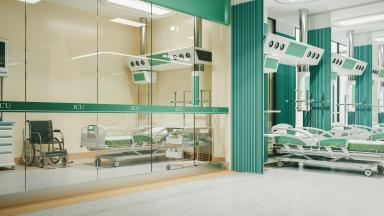
The Cardiac Care Unit at Biruni Hospital in Istanbul monitors and treats people during and after a heart attack, a dangerous heart rhythm or sudden heart failure. In a French registry of 14,423 patients, six-month mortality after a major heart attack fell from 17.2 percent in 1995 to 5.3 percent in 2015. This page covers the path from chest pain to the unit, what is watched, angioplasty, going home and flying. The heart team reviews reports free of charge.
About This Department
Coronary care
Deaths in the six months after a major heart attack fell from 17.2 percent to 5.3 percent in twenty years. Every 30 minutes of delay in opening the artery still raises one-year mortality by 7.5 percent.
A cardiac care unit, also called a coronary care unit or CCU, is the monitored ward where people are treated during and just after a heart attack, a dangerous heart rhythm or a sudden worsening of heart failure. The first figure above comes from a French registry of 14,423 heart attack patients admitted to such units between 1995 and 2015 (Puymirat and colleagues, Circulation, 2017). The second comes from 1,791 patients treated by emergency angioplasty in the Netherlands (De Luca and colleagues, Circulation, 2004). This page explains what happens in the Cardiac Care Unit at Biruni Hospital in Istanbul, hour by hour and day by day, and what travelers and their families need to know.
5.3
Percent six-month mortality after a major heart attack in 2015, against 17.2 in 1995
7.5
Percent rise in one-year mortality for each 30 minutes of delay
76
Percent of major heart attacks treated by emergency angioplasty in 2015, against 12
A ward where every bed has continuous heart rhythm monitoring, where nurses trained in cardiology watch a central screen day and night, and where a defibrillator is seconds away.
Is a CCU the same as a cardiac ICU?
The names overlap. CCU traditionally means the coronary unit for heart attacks and rhythm problems. A cardiac ICU also looks after patients who need ventilators, heart pumps and care after heart surgery.
How long is the stay after a heart attack?
After an uncomplicated heart attack treated with a stent, one to two days in the unit and three to five days in the hospital altogether.
Can family visit?
Yes, in short visits, one or two people at a time. Rest matters in the first days, so the nurse may ask visitors to keep it brief.
What should I do if I have chest pain while traveling in Istanbul?
Call 112, the emergency number in Turkey, and do not drive yourself. Chew an aspirin if you are not allergic and have not been told to avoid it.
From chest pain to the unit
Speed decides how much heart muscle survives. The sequence below is the same in every well-organized hospital.
Electrocardiogram within ten minutes. The tracing shows whether an artery is completely blocked. That single finding sorts patients into two routes.
Blocked artery, straight to the catheterization laboratory. A cardiologist passes a fine tube from the wrist or groin to the heart, opens the artery with a balloon and leaves a stent in place. The target is under 90 minutes from first medical contact.
Partial blockage, tablets and monitoring first. Blood thinners and a troponin blood test repeated after a few hours, with angiography in the next day or two, sooner if pain returns.
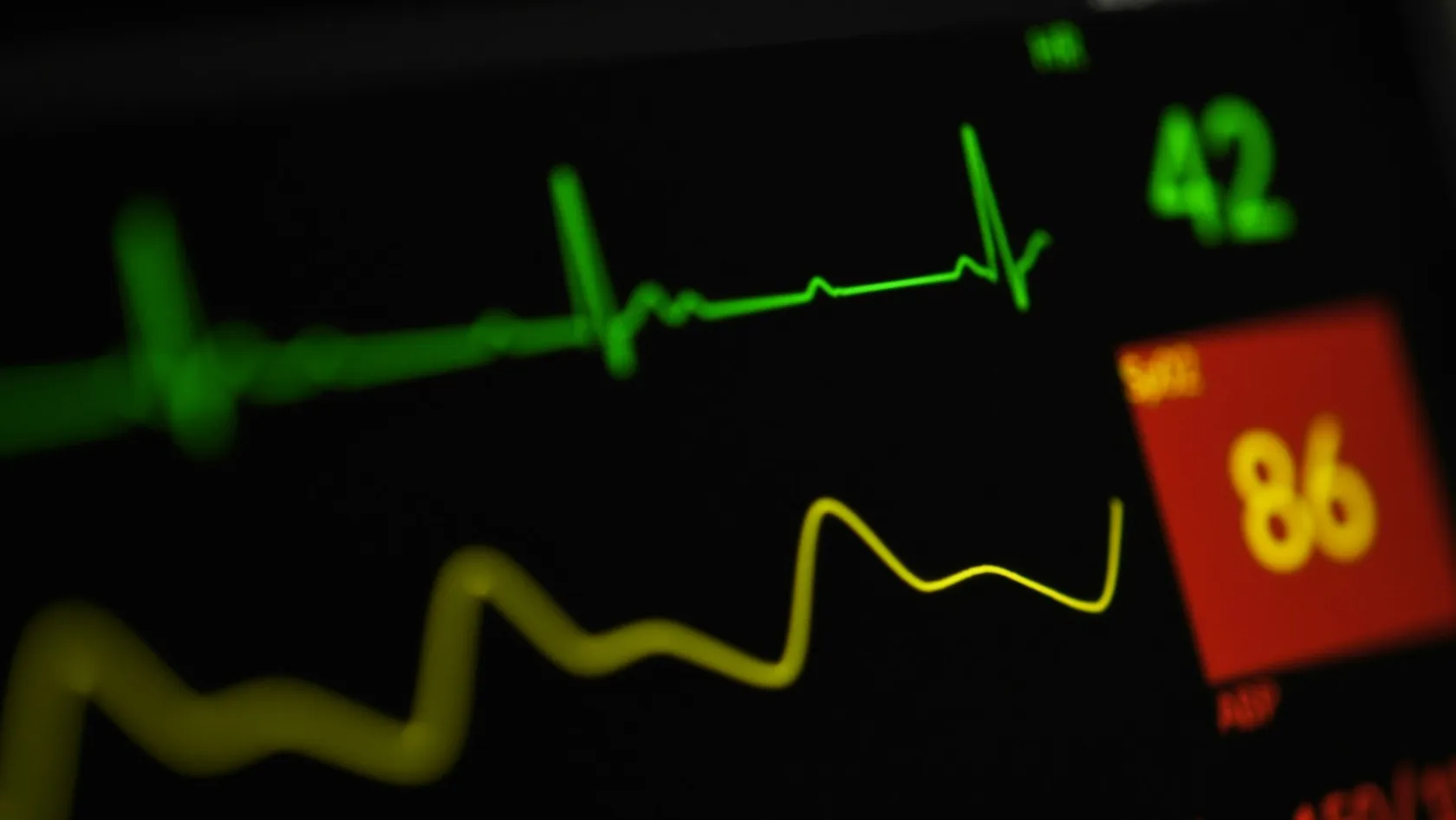
Arrival in the unit. Leads on the chest, a blood pressure cuff, an oxygen probe and a line in the arm. The puncture site is checked every fifteen minutes at first.
The first evening. An ultrasound of the heart measures how well it is pumping, and the long-term tablets begin.
Most people feel well within hours of a stent. That is the dangerous part, because feeling well tempts patients to get up, skip the monitoring and ask to leave.
What the unit watches for
The CCU was invented for one reason. In the early 1960s doctors realized that many deaths in the first days after a heart attack came from sudden rhythm disturbances that an electric shock could reverse, if only someone saw them in time. Continuous monitoring and nurses authorized to defibrillate were the answer, and they remain the core of the unit. In 1967 Killip and Kimball reported 250 heart attack patients from one of the first units in New York and sorted them into four classes by signs of heart failure at the bedside, from clear lungs to shock. Mortality rose steeply from class to class, and cardiologists still write the Killip class in the notes on admission because it predicts who needs the closest watch. Sixty years on, the machines are smaller and the drugs are better. The principle has not moved.
Rhythm. Ventricular fibrillation and very slow rhythms are most likely in the first 24 to 48 hours. The monitor alarms, and treatment takes seconds.
Pump failure. Breathlessness, low blood pressure or falling urine output signal a weakened heart. Medicines by vein, and occasionally a support pump, carry the patient through.
The artery closing again, or bleeding. A stent can clot if tablets are missed. Blood thinners, for their part, sometimes cause bleeding at the puncture site or elsewhere, and the nurses check for both through the night.
Tell the nurse at once if chest pain returns, if you feel faint or short of breath, or if the wrist or groin swells or bleeds.
Twenty years of progress
France offers the clearest picture of what changed. The registry mentioned at the top of this page took a one-month census of heart attack admissions every five years. Between 1995 and 2015, among patients with a fully blocked artery, the share treated by emergency angioplasty rose from 12 percent to 76 percent, and death within six months fell from 17.2 percent to 6.9 percent in 2010 and 5.3 percent in 2015. For heart attacks with a partial blockage, angioplasty within 72 hours rose from 9 percent to 60 percent and six-month mortality fell from 17.2 percent to 6.3 percent. Patients also changed. Those with a blocked artery were on average three years younger in 2015 than in 1995, while diabetes, obesity and high blood pressure had all become more common.
Treatment improved faster than habits did.
Not every admission is a heart attack. The same beds serve people whose heart suddenly races at 180 beats a minute or crawls at 30, those fitted with a temporary pacing wire while a permanent pacemaker is arranged, people with heart failure whose lungs have filled with fluid overnight, and patients recovering from a procedure on a valve or a rhythm circuit who need a night of observation. Inflammation of the heart muscle or its lining, a clot in the lung arteries, and a tear in the wall of the aorta arrive with chest pain too, and part of the unit's work in the first hour is telling these apart, because the blood thinners that help one of them can be disastrous in another. Expect tests to be repeated. A single normal tracing or blood result early on proves little, and the pattern over six to twelve hours is what settles the diagnosis.
Opening the artery
Two methods reopen a blocked coronary artery, a clot-dissolving drug by vein or a balloon and stent. A pooled analysis of 23 randomized trials settled which is better when both are available.
This table scrolls sideways on a narrow screen. Swipe or drag to see every column.
Emergency angioplasty against clot-dissolving drugs in 7,739 patients, Keeley and colleagues, Lancet, 2003
Short-term outcome
Angioplasty
Clot-dissolving drug
Death
7 percent
9 percent
Another heart attack
3 percent
7 percent
Stroke
1 percent
2 percent
Any of the three
8 percent
14 percent
1
Balloon
A wire crosses the clot and a balloon restores flow, often with instant relief of pain.
2
Stent
A metal mesh tube coated with medicine holds the artery open.
3
Two antiplatelet tablets
Aspirin and a second drug keep the stent from clotting, usually for twelve months, and should never be stopped without asking a cardiologist.
That advantage held even when patients had to be transferred to another hospital for the procedure. Time still matters within angioplasty itself. In the Dutch study each half hour of delay raised the risk of death at one year by 7.5 percent, and for that reason ambulance crews now send the electrocardiogram ahead and the laboratory team is called in before the patient arrives.
Going home and flying
A heart attack treated early often leaves the heart close to normal. What follows, tablets, rehabilitation and no tobacco, decides the next ten years.
Before discharge the team explains each tablet, arranges cardiac rehabilitation and checks the pumping function once more. Walking starts in the corridor. Driving, work and sex resume over the following weeks on the cardiologist's advice. Smoking does not.
Travelers ask about flying first. Guidance used by airline medical departments generally allows a flight home about a week to ten days after an uncomplicated heart attack treated with a stent, and later when the heart has been weakened, a rhythm problem persists or bypass surgery was needed. The cardiologist confirms in writing that you are fit to fly, lists your tablets by generic name for the doctor at home, and gives you the angiography images on a disc or by link. Tell your travel insurer on the first day and carry the tablets in hand luggage. Book an aisle seat. Once you are back home, see your own cardiologist within two weeks.
Visitors from abroad
Nobody plans a heart attack on holiday. When it happens, relatives are suddenly dealing with a hospital, an insurer and a language they do not speak. The international patients office puts one coordinator on the case from the first message until discharge, and that person remains reachable on the same WhatsApp number afterward. English, Arabic, French, Russian, Serbian, Romanian and Spanish are covered in the office, with interpreters for other languages, so consent for a procedure and the explanation of each tablet are given in words the patient follows. The office contacts the insurer or assistance company, finds accommodation nearby for relatives, and handles airport transfers, daily transport and any invitation letter a consulate requires. Halal, vegetarian and diabetic meals come from the kitchen, a prayer room is available, and a request for a female physician is met wherever the rota allows. On the ward after the unit, a companion bed lets one relative stay overnight.
People with known heart disease who want a planned assessment can send their reports in advance. The heart team reviews them free of charge.
Cost
Four things make up most of an estimate, namely the procedure, the number and type of stents, the nights in the unit and any support device. A straightforward heart attack with one stent sits at one end. Shock, several stents or bypass surgery sit at the other. Most cases fall between.
Hospitals in this market quote emergency cardiac care as a package for the procedure plus a daily rate for the unit, and most travel insurers deal with the hospital directly once they have the admission report. Send the policy details early. Written estimates follow the angiogram, since nobody knows what an artery needs before seeing it.
References
Puymirat E, Simon T, Cayla G, et al. Acute myocardial infarction: changes in patient characteristics, management, and 6-month outcomes over a period of 20 years in the FAST-MI program, 1995 to 2015. Circulation. 2017;136(20):1908-1919.
De Luca G, Suryapranata H, Ottervanger JP, Antman EM. Time delay to treatment and mortality in primary angioplasty for acute myocardial infarction: every minute of delay counts. Circulation. 2004;109(10):1223-1225.
Keeley EC, Boura JA, Grines CL. Primary angioplasty versus intravenous thrombolytic therapy for acute myocardial infarction: a quantitative review of 23 randomised trials. Lancet. 2003;361(9351):13-20.
Killip T, Kimball JT. Treatment of myocardial infarction in a coronary care unit. A two year experience with 250 patients. Am J Cardiol. 1967;20(4):457-464.
Editor's note
Written by the Biruni Hospital medical editorial team. Reviewed by Assistant Professor Pınar ACAR, Anesthesia and Reanimation.