
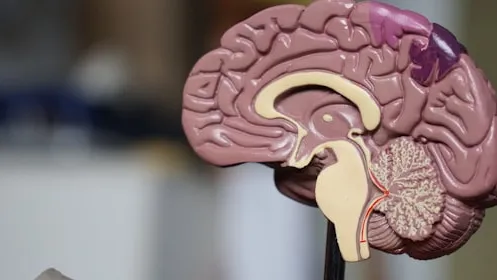
Neurosurgery Center
The Neurosurgery Center at Biruni Hospital Istanbul covers brain tumor surgery, DBS for Parkinson's, aneurysm clipping and coiling, honest goals and costs.
Let us call you
Send us your contact information and we will call you as soon as possible.
About This Center
Most readers of this page arrive holding a scan result. A tumor showing on a brain MRI, an aneurysm found by accident on imaging ordered for something else, or Parkinson's disease that medication no longer holds steady through the day. This page explains what the Neurosurgery Center at Biruni Hospital in Istanbul operates on, how its three biggest decisions are made in practice, brain tumor surgery, deep brain stimulation and aneurysm treatment, and how to get a neurosurgeon's opinion on your own images, in writing, before you book anything.
Free consultation
A neurosurgeon reads your scans and answers in writing before you travel
The remote file review is free and places you under no obligation. Send the actual MRI or CT images, the radiology report, and for Parkinson's disease your medication history. The reply is a written surgical opinion stating whether an operation is indicated, which approach, and the realistic goal named plainly: cure, control or symptom relief.
What the Neurosurgery Center treats
Neurosurgery at Biruni Hospital covers the brain, the vessels that supply it, and the peripheral nerves. The center operates on benign and malignant brain tumors, on cerebrovascular disease including aneurysms and arteriovenous malformations, and on the functional disorders where the surgeon's job is to change how the brain behaves instead of removing anything: Parkinson's disease and other movement disorders treated with deep brain stimulation, and epilepsy that resists medication.
Hydrocephalus, the buildup of cerebrospinal fluid inside the head, is treated in adults with shunts or with endoscopic surgery, described further down this page. Trigeminal neuralgia and the nerve compression syndromes, carpal tunnel among them, occupy the small-surgery end of the specialty, and peripheral nerve injuries and entrapments beyond the wrist are operated here as well. Traumatic brain injuries and hematomas are emergencies, treated wherever in the world the patient happens to be when they occur, so nobody plans a trip around them. Children with neurosurgical conditions are cared for within the hospital's pediatric pathway, where pediatric neurosurgery has its own place. And one boundary is worth stating early: operations on the spine itself run through the hospital's dedicated Spine Surgery Center, where neurosurgeons and orthopedic surgeons work as one team.
The setting matters for this specialty more than for most. Biruni Hospital is a university hospital with more than 600 beds, intensive care sits in the same building, and the first night after a craniotomy is spent under close monitoring as a matter of routine. Interventional Radiology works alongside the neurosurgeons on vascular cases, and the cancer departments that a malignant tumor plan needs after the operation are part of the same institution.
Brain tumor surgery and what maximal safe resection honestly means
Take it all out is what every patient asks for. For a brain tumor the honest version of that goal is called maximal safe resection: the surgeon removes as much tumor as can be taken without damaging the brain that carries your speech, your movement and your vision. Where a tumor grows against or inside those regions, a few millimeters separate a good outcome from a permanent deficit, and judging that margin is the entire craft. Microsurgical technique and real-time imaging during the operation exist to serve exactly this balance, showing the surgeon where tumor ends and functioning brain begins while the operation is still underway.
Benign and malignant tumors then follow different stories, and a center owes you that difference before surgery. Many benign tumors are cured by the operation alone. Meningioma, which grows from the brain's covering membrane rather than from the brain itself, is the common example: removed completely, it frequently never returns, and follow-up becomes a schedule of scans with no further treatment attached.
Glioblastoma is the opposite case, and pretending otherwise helps nobody. For this most aggressive malignant brain tumor, the operation is the first move of a longer plan rather than the whole treatment. The landmark trial by Stupp and colleagues, published in the New England Journal of Medicine in 2005, showed that radiotherapy combined with temozolomide chemotherapy after surgery lengthened survival compared with radiotherapy alone, and that combination has defined the standard of care since. A center that says this to you before the operation, not after, is being straight with you. At Biruni Hospital the radiation phase of that plan runs through the hospital's own Radiation Oncology Center, and chemotherapy with long-term follow-up continues through the medical oncology pathway.
Almost everything above can be assessed from your MRI before you travel. The free file review answers three questions in writing: whether your tumor is operable, by what approach, and what the realistic goal of the operation is. Sometimes that goal is cure. Sometimes it is control of the disease or relief of pressure symptoms. The honest word for your case belongs on paper in front of you before you buy a ticket.
Deep brain stimulation for Parkinson's disease, and who it is actually for
Deep brain stimulation has a specific natural candidate, and it is not the newly diagnosed patient or the most advanced one. It is the patient whose levodopa once worked well and now swings: good hours when the dose kicks in, involuntary movements when it peaks, stiffness and slowness when it fades, several times every day. For that fluctuation pattern the evidence is randomized and clear. Deuschl and colleagues reported in the New England Journal of Medicine in 2006 that in advanced Parkinson's disease with motor fluctuations despite medication, DBS improved quality of life and motor function more than the best medical treatment alone.
Two limits belong next to that result. DBS treats symptoms and does not slow the disease, so Parkinson's continues on its own course with the stimulator working against its motor effects. And candidacy is a detailed assessment, never a request. Before anyone offers you this operation, the team tests how strongly you still respond to levodopa, because stimulation largely reproduces what the drug does at its best, and it examines memory and thinking, because cognitive decline changes the risk calculation. Some patients are declined at this stage. That refusal protects them from an implant that would not have helped, and a center willing to say no is the kind you want deciding.
The hardware deserves a plain description too. DBS means thin electrodes placed deep in the brain, connected under the skin to a pacemaker-like device in the chest. The battery is replaced years later in a minor procedure, and the stimulation settings are adjusted over multiple programming sessions in the weeks and months after surgery. For an international patient those sessions are the real planning question, so they are agreed before the operation, not discovered after it: either scheduled return visits to Istanbul, or a handover to a movement-disorder neurologist near your home who takes over the programming. Treat the arithmetic as typical planning, never as a promise: surgery plus the initial programming means a stay measured in weeks, with remote adjustment support afterwards where the device and your local setup allow it.
The same functional team addresses essential tremor with DBS and evaluates drug-resistant epilepsy for its surgical options, which begin with locating precisely where seizures start. An epilepsy file review needs the EEG recordings and good seizure descriptions alongside the MRI.
An aneurysm found before it ruptures
Unruptured aneurysms are usually discovered by accident, on a scan ordered for headaches, dizziness or something unrelated, and the person carrying the result is this page's typical vascular reader. The first thing to hear is that treatment is not automatic. Watch or treat is a genuine conversation, driven by the aneurysm's size and location, your age, your blood pressure and smoking history, and whether aneurysm rupture runs in your family. For many small aneurysms the lifetime risk of rupture is lower than the risk of intervening, and the honest recommendation is monitoring with periodic scans.
When treatment is advised, two routes exist, and Biruni Hospital offers both. Clipping is open microsurgery: a titanium clip closes the aneurysm's neck from outside the vessel. Coiling is endovascular: a catheter travels from an artery at the groin or wrist up to the aneurysm and packs it with soft platinum coils from inside, with no opening of the skull, performed with the Interventional Radiology team. The International Subarachnoid Aneurysm Trial, published in the Lancet in 2002 with 2143 patients, found that in ruptured aneurysms suitable for both treatments, coiling produced better disability-free survival at one year than clipping. Since that trial the choice has been made per aneurysm, by anatomy: neck shape, vessel branches, location and what each route can achieve durably in that specific case.
A ruptured aneurysm is a different situation entirely: it is an emergency treated in the nearest capable hospital, wherever you are, never a reason to travel. Acute stroke likewise belongs to the hospital's Stroke Center and sits outside this page. The planned, travel-suitable case is the unruptured aneurysm, where there is time to compare opinions, and the same applies to arteriovenous malformations, tangles of abnormal vessels that the team treats through microsurgical or endovascular routes chosen case by case.
Hydrocephalus, trigeminal neuralgia and the smaller operations
Hydrocephalus develops when cerebrospinal fluid cannot drain the way it should and pressure builds inside the head. Surgery restores the drainage, by one of two means. A shunt is a thin tube that carries the excess fluid from the brain's chambers to the abdomen, regulated by a small valve under the scalp; it stays for life and can need revision if it blocks. Endoscopic third ventriculostomy takes a different path: through a small opening in the skull, the surgeon makes a tiny perforation in the floor of one of the brain's fluid chambers so the fluid bypasses the blockage on its own, with no implanted hardware at all. Which operation fits depends on what is blocking the flow, and that is readable on the MRI.
Trigeminal neuralgia produces brief electric-shock pains in the face, severe enough that patients stop eating or talking to avoid triggering them. Medication comes first and controls many cases. When it stops working, the most common surgical cause turns out to be a small artery pulsing against the trigeminal nerve, and microvascular decompression treats it by lifting that vessel off the nerve and placing a soft cushion between them. The pain relief, when the anatomy fits, can be immediate.
At the lightest end of the specialty sit the nerve compression syndromes. Carpal tunnel release frees the median nerve at the wrist in a short day-case operation under local anesthesia, and similar decompressions exist for the ulnar nerve at the elbow. These are the travel-friendly operations of neurosurgery: no hospital stay to speak of, a flight home within days, and hand physiotherapy that can run anywhere. Peripheral nerve surgery beyond the entrapments, for injuries and select nerve tumors, completes the list.
Flying home after brain surgery, and follow-up from your own country
Brain surgery has one travel rule that surprises almost everyone: after a craniotomy you cannot fly for several weeks, and the reason is physical. Opening the skull leaves a small amount of air inside the head, the body absorbs it gradually, and until it is gone the pressure changes of an aircraft cabin are unsafe. Most surgeons clear flying somewhere around four to six weeks after an open brain operation, always on their own review of your recovery, never on a calendar. Stitches or staples come out before you leave. Driving after brain surgery or after any seizure is restricted for a period the team sets individually, and feeling well does not shorten it.
| Operation | Hospital stay | Flight home |
|---|---|---|
| Craniotomy for brain tumor | About 4 to 7 days, first night monitored in intensive care | Commonly 4 to 6 weeks after surgery, on surgeon clearance |
| Deep brain stimulation | Several days for surgery, then outpatient programming | A total stay of weeks, once initial programming is stable |
| Endovascular coiling, unruptured aneurysm | Often 1 to 2 nights | Commonly within 1 to 2 weeks |
| Carpal tunnel release | Day case | Within days |
Follow-up does not require living in Istanbul. The MRI schedule that watches a tumor cavity or a treated aneurysm can run at a radiology center near your home, with the images sent for remote review and a written response each time. Patients who need rehabilitation after brain surgery begin it in the hospital's Physical Medicine and Rehabilitation Center before the flight, with a program to continue afterwards.
Know the warning signs for the weeks after you return home. A headache that keeps worsening, new weakness or trouble speaking, redness, swelling or leaking at the wound, and any seizure all mean local emergency care first, with your operation note in hand so the doctors there know exactly what was done, and the Biruni team contacted in parallel. Carry that operation note in your hand luggage. It is the single most useful document you will own for the next year.
What brain surgery costs in Turkey, and what moves a quote
Listing sites that aggregate medical travel packages advertise brain tumor surgery in Turkey at roughly 15,000 to 35,000 US dollars and deep brain stimulation at roughly 25,000 to 40,000 US dollars. Read those as indicative spans compiled from public package listings, useful for calibration and nothing more, because they mix different operations, hospitals and inclusions into single headline numbers.
What actually moves an individual price is easier to name. The approach and how many hours the operation takes. Whether the plan uses neuromonitoring and imaging inside the operating room, which lengthen and equip the procedure in exchange for safety around functional brain regions. The number of intensive care nights. The total length of stay. And for DBS, the implanted hardware itself, which is the largest single item in that quote by a wide margin, so two DBS prices that differ sharply usually differ in the device. Biruni Hospital states no headline figure on this page; after the free file review you receive a written itemized quote for your specific operation, naming what it covers and what it does not.
Questions patients ask the Neurosurgery Center
Is my brain tumor operable?
Does deep brain stimulation cure Parkinson's disease?
My scan found an unruptured aneurysm. Does it have to be treated?
When can I fly home after brain surgery?
What happens if Biruni Hospital advises against surgery?
How much does brain surgery cost in Turkey?
What should I send for the remote file review?
References
- Deuschl G, Schade-Brittinger C, et al. A randomized trial of deep-brain stimulation for Parkinson's disease. N Engl J Med. 2006;355(9):896-908.
- Stupp R, Mason WP, et al. Radiotherapy plus concomitant and adjuvant temozolomide for glioblastoma. N Engl J Med. 2005;352(10):987-996.
- Molyneux A, Kerr R, et al. International Subarachnoid Aneurysm Trial (ISAT) of neurosurgical clipping versus endovascular coiling in 2143 patients with ruptured intracranial aneurysms: a randomised trial. Lancet. 2002;360(9342):1267-1274.
Editor's note
Written by the Biruni Hospital medical editorial team. Reviewed by Prof. Dr. Birnur YILMAZ, Radiology.
Medically reviewed by
Prof. Dr. Birnur YILMAZ
Radiology
Areas of Specialization
Our multidisciplinary team covers the following areas within this center.
- Brain Tumor Surgery
- Spinal Disc & Deformity Surgery
- Cerebrovascular Surgery
- Functional & Stereotactic Neurosurgery
- Peripheral Nerve Surgery
- Neuro-Oncology
Other Medical Centers
View All
Breast Health & Breast Cancer Center
Most people arrive having already decided which operation they want. The operation is rarely the first decision and never the one that decides most.
CAR-T Cell Therapy Center
CAR-T cell therapy in Istanbul for leukemia, lymphoma and myeloma. Eligibility, the five stage process, honest cost figures and how long you stay at Biruni.
Cellular Immunotherapy Center
Two entirely different industries use the words cell therapy. One has a regulator behind it. Four questions tell you which one you are talking to.
Check Up & Longevity Center
Biruni Hospital's Check-Up and Preventive Medicine Center in Istanbul plans risk based health screening by age, sex and history, with a free remote intake.

Children’s Health Center
The Children's Health and Diseases Center in Istanbul unites pediatric subspecialists at Biruni Hospital, with a free remote review of your child's file.