
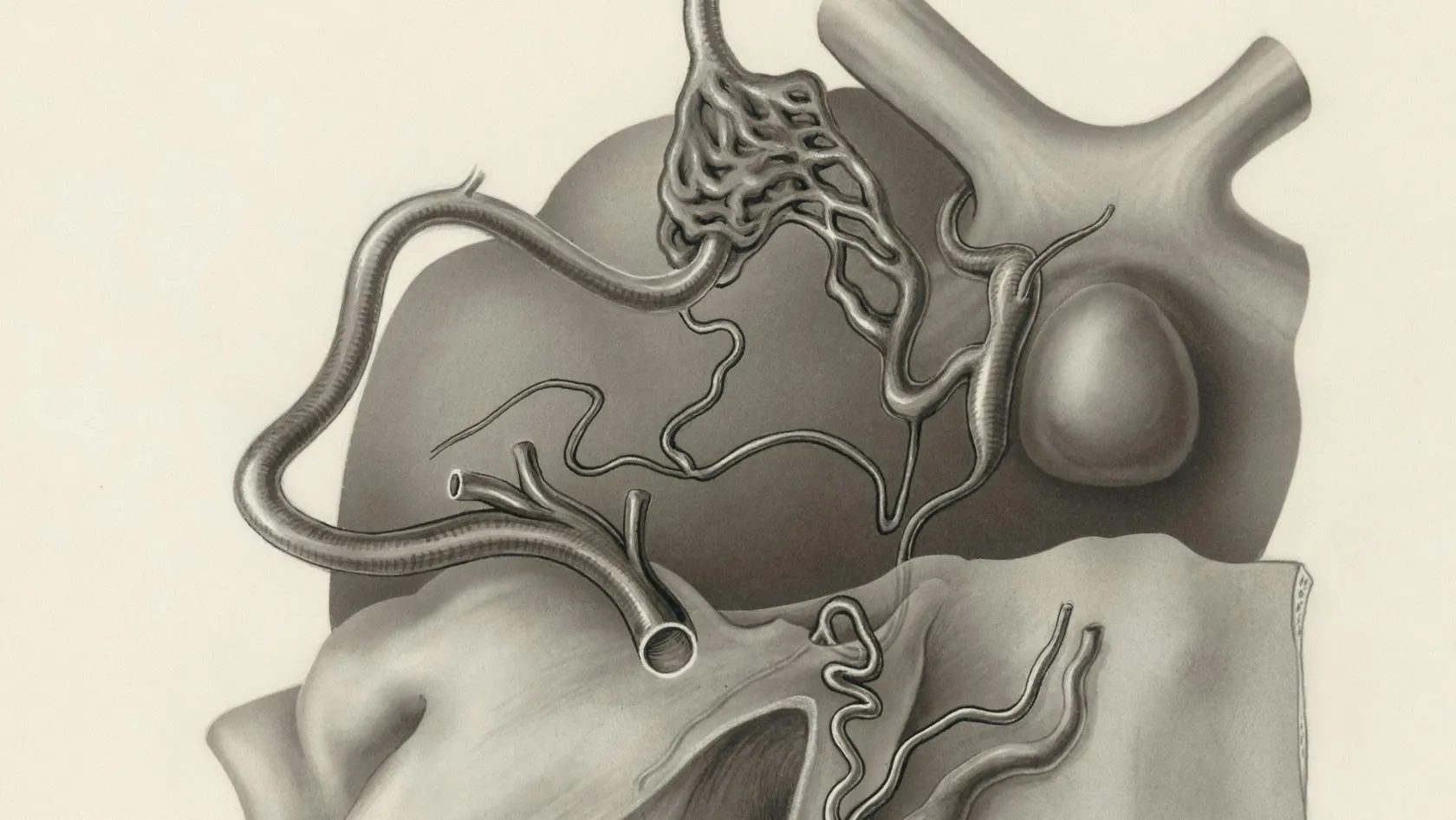
Vasectomy Reversal - Vasovasostomy
A vasectomy reversal is two operations, and the surgeon chooses between them after you are asleep, on a drop of fluid squeezed from the cut tube. Whole sperm in it means the ends can simply be rejoined. No sperm means the epididymis is blocked and a far harder bypass is needed, which many surgeons who advertise reversals cannot perform. This guide covers that decision, pooled figures from 6,633 men, time since the vasectomy, reversal against IVF, repeat attempts and recovery.
About This Department
Your surgeon picks which operation to do after you are asleep. Make sure he can perform both of them.
A drop of fluid squeezed from the cut end of the tube decides everything. Whole sperm in it, and rejoining the two ends works almost every time. No sperm in it, and the blockage has moved into the epididymis, which needs a far harder operation that many surgeons who advertise reversals cannot perform. Nobody knows which case you are until the incision is open.
The choice made after you are asleep
Men book a vasectomy reversal the way they book a car repair. The tube was cut, so the tube gets rejoined, and the price on the website covers it. That description fits around three in four of the men who walk into an operating room for this, and the remaining one needs a completely different operation that gets decided halfway through, on the evidence of a single drop of fluid, while he is unconscious and his partner sits in a waiting room. Here is why. A vasectomy blocks the tube at one point, but the plumbing behind that block keeps producing sperm, and the pressure has to go somewhere. Sometimes it stays contained and the system behind the block holds. Sometimes it forces a second, finer blockage further back in the epididymis, the tightly coiled tube sitting against the testicle where sperm mature, and once that has happened, rejoining the vas achieves nothing at all. Fluid still cannot get through. The operation looks perfect and the semen test three months later shows nothing.
Only one way exists to tell, which is to open the cut end and look at what comes out.
If that fluid is watery and full of whole sperm, the epididymis is intact and a straightforward rejoining of the two vas ends will almost certainly open. If the fluid is thick, pasty and contains no sperm at all, the second blockage has happened, and the correct operation is to bypass the epididymis entirely by sewing the vas directly onto a single tubule of it. That second operation, vasoepididymostomy, is one of the most technically demanding procedures in urology. It takes hours. It requires a genuinely microsurgical skill set. And a surgeon who cannot do it will do the easier operation anyway and let you find out at the semen test three months later. None of this appears on a price list. A clinic advertising vasectomy reversal at a single fixed figure has quietly promised you one of these two operations and priced the other out of the room, which is a commercial decision being made about your fertility while you are unconscious.
Two operations, one incision
The words, before the numbers
Reversal literature is written in abbreviations and the abbreviations hide the thing that matters. These are the terms that appear in a consultation and in an operative note.
Narrow screens scroll this table sideways. Swipe or drag to reach every column.
| Feature | Vasovasostomy | Vasoepididymostomy |
|---|---|---|
| What gets joined | The two cut ends of the vas | The vas onto one tubule of the epididymis |
| Diameter being sewn | Around a third of a millimeter | A fraction of that, roughly the width of a hair |
| Typical operating time | Between one and two hours | Longer, often considerably |
| Who can perform it | Many urologists with microsurgical training | A much smaller group, and skill varies widely |
| Decided when | During the operation, on the fluid | During the operation, on the same fluid |
The drop of fluid
Once the vas is divided and the scarred segment removed, the surgeon milks the testicular end and collects whatever emerges onto a glass slide. It takes seconds. He looks at it with his eyes first, judging whether it runs clear and watery or sits thick and creamy, and then he puts it under a microscope in the room, which is the step that separates a serious unit from a casual one. A reversal performed without a microscope on the fluid is a reversal performed blind, and blind reversals get done every week by units that own an operating microscope for the sewing and never think to point it at the one piece of evidence deciding which operation the man actually needs.
What the microscope shows
Four findings are possible and they sit on a scale. Whole moving sperm is the best of them. Whole sperm that are not moving comes next and means much the same thing surgically. Sperm heads or fragments without tails sit in between and are read cautiously. No sperm at all, in thick pasty fluid, is the finding that changes the operation, because it says the epididymis behind the block has given way.
Columns run past the edge on a small screen. Slide the table across to read them.
| Finding on the slide | What the surgeon does |
|---|---|
| Whole sperm, moving or still | Rejoin the two vas ends, with a high expectation of opening |
| Sperm heads or fragments | Usually rejoin, and counsel the couple that the outlook sits lower |
| Clear watery fluid with no sperm | A judgment call, and many surgeons still rejoin |
| Thick pasty fluid with no sperm | Bypass the epididymis, which is the harder operation |
What that finding is worth
Two surgeons pooled 1,331 consecutive bilateral reversals performed between 2006 and 2013 and asked which factors actually predicted whether the tube opened afterward. The median age was 39 and the median gap since the vasectomy was seven years. Patency came out at 98 percent, with 24 men remaining blocked, and 410 couples reported a conception.
Sit with the shape of that result. Everything a couple can know before the operation predicted almost nothing, and the single thing that predicted a great deal cannot be known until the surgeon is already working. That is an uncomfortable finding for anybody who wants a percentage quoted at a consultation, and it is a clarifying one for anybody choosing where to have the operation done, because it moves the entire question away from your history and onto whether the unit puts that drop of fluid under a microscope and knows what to do with both answers.
The numbers, pooled
A meta analysis gathered 31 studies covering 6,633 men who had undergone microsurgical rejoining of the vas. Mean age at reversal was 38.9 years. The mean gap since the vasectomy was 7.2 years. Weighted by sample size, sperm reappeared in the ejaculate in 89.4 percent and a pregnancy followed in 73.0 percent. Those two figures deserve to be read as a pair rather than as one headline, because the first describes what the surgeon achieved and the second describes what the couple came for, and the sixteen point gap between them is made almost entirely of things that have nothing to do with the operation, meaning the woman's age, her own fertility, how long the couple keeps trying, and whether anybody assessed her before booking a man's surgery.
The same analysis settled an old argument over technique. Surgeons have long divided over whether to sew the vas in one layer or two, with the two layer method taking longer and being taught as the more meticulous option. Pooling the studies produced a ratio of 1.04 for patency between the methods, with a confidence interval touching 1.00, which in plain terms means no difference worth the argument.
So the layers do not matter much. What the surgeon sees before he starts sewing matters a great deal.
Note also that 89 percent is a pooled figure from published series, which are written by units that publish, and those units are not a random sample of everyone offering this operation. Read it as what good microsurgery achieves, and take the trouble to ask any particular surgeon for his own figures instead of accepting a pooled number from the literature as though it described him.
Time since the vasectomy
Almost every man asks this first. The answer turns out to be less frightening than the internet suggests, and it splits in an interesting way between the two outcomes.
One surgeon reviewed 213 reversals and grouped them by the years since the vasectomy. Patency barely moved across the whole range, coming out at 91 percent under five years, 88 percent between five and ten, 91 percent between ten and fifteen, and 89 percent beyond fifteen. Pregnancy behaved differently. It ran at 89 percent, 82 percent and 86 percent across the first three bands, then fell to 44 percent once more than fifteen years had passed, a drop large enough to reach significance. The tube still opens after twenty years. The couple is simply twenty years older, and most of that collapse belongs to the woman's age and not to the man's plumbing. Which points at a practical conclusion that men in this position rarely hear. Where a reversal is going to happen at all, the argument for doing it sooner is an argument about her, and it has nothing to do with any deterioration in the tube being repaired.
That pooled meta analysis reached a softer version of the same conclusion, finding modestly better patency and pregnancy under ten years than over it, with ratios of 1.17 and 1.24 respectively. Both studies point the same way. Time matters, and it matters less to the surgery than to the biology of the couple.
That same review found something counterintuitive in the sperm granuloma data. Men with a granuloma at the vasectomy site, a small tender nodule that forms where sperm leaked out, had patency of 95 percent against 78 percent in men without one, a difference that came close to significance. The explanation makes sense once you see it. A granuloma means the pressure behind the block found somewhere to vent, which protected the delicate epididymis from bursting under it. The thing that felt like a complication after the vasectomy turns out to have been quietly useful.
Reversal against the IVF route
Two roads to the same place
Couples in this situation have two genuine options. Reconnect the plumbing and try naturally, or leave the vasectomy alone, take sperm directly from the epididymis or testicle with a needle, and inject it into eggs collected from the partner. Both work. Where they differ is in who carries the burden, what happens if the attempt fails, and how many children a single procedure can eventually produce for the couple.
- A successful reversal restores fertility instead of producing one pregnancy, so a couple who want two or three children make the trip a single time and try for as long as they like afterward.
- The retrieval route asks the woman to undergo hormone stimulation and egg collection, which carries her own risks and which she repeats for each attempt.
- A reversal that fails leaves the retrieval route still open, since sperm can be taken from the testicle at any time afterward.
This table also scrolls sideways on a narrow screen. Swipe or drag to reach every column.
| Measure | Microsurgical reversal | Sperm retrieval with injection |
|---|---|---|
| Pregnancy | 52 percent | 22.5 percent from the epididymis, 19.5 percent from the testicle |
| Twins or more | 0.7 percent | 15.8 percent |
| Serious complications in the female partner | None, since she has no procedure | Ovarian overstimulation in 5.7 percent, severe in a further 1.4 percent |
| Cost for each baby born | The lower of the two | Roughly five times higher in that analysis |
- That comparison dates from 2000 and both fields have moved since, with injection success rates improving considerably.
- The groups were not randomized, so the couples choosing each route differed from the start.
- The direction of the findings has held up in later work even where the exact numbers have not.
Where the woman is past her late thirties, or where she has a fertility problem of her own, the calculation tilts toward retrieval and injection, because the months a reversal needs before sperm even reappear are months she does not have to spend. Where she is younger and well, and the couple want more than one child, reversal wins comfortably. Either way, a clinic that sells one route without ever asking after her has told you which route it profits from.
When a first reversal failed
Men whose first reversal produced nothing tend to assume the door has closed. It has not.
It is wide open.
A Korean center reported 62 repeat reversals performed after a failed first attempt elsewhere. Patency came out at 92 percent, pregnancy at 57 percent, and natural birth at 52 percent. Those figures sit close to what first attempts achieve, which surprises people, and the reason the authors give is instructive. In most of those men the original operation had failed because the join itself scarred shut rather than because anything was wrong deeper in the system, so a properly performed second attempt had an intact epididymis to work with. Detecting sperm in the fluid during the second operation made no difference to the outcome in their hands, and neither did the years elapsed since the vasectomy. The wife's age was the one factor that predicted pregnancy, which is the pattern this whole subject keeps returning to.
So a failed reversal is a reason to ask hard questions on who performed it and what the operative note says, and it is no reason on its own to abandon the idea.
Get the note.
Any unit that cannot produce one has already told you something useful on how it keeps records.
Recovery, and the waiting
Physical recovery is easy. Genuinely easy. Two weeks of soreness, supportive underwear and no lifting, with desk work resuming in a few days and everything else by three or four weeks, and complications in published series running at a few percent, mostly bleeding into the scrotum or a wound infection, which is much what a vasectomy itself produces on a smaller scale. Nobody finds this part difficult at all, and almost every man who has been through both operations describes the reversal as no worse than the vasectomy was, which is a surprise to them and reflects the fact that the difficulty of this operation belongs to the surgeon and not to the patient.
The hard part is the calendar afterward.
Sperm do not reappear the week after surgery. A rejoined vas typically shows sperm in the ejaculate somewhere between six weeks and six months, and a bypass of the epididymis takes longer still, sometimes a year or more, because the sperm have further to travel through a narrower repair. The first semen test happens at around two or three months, and a result of nothing at that point means very little on its own. Tests continue every two or three months, and a unit that stops testing at six months and declares failure has given up early on a proportion of men who would have opened later. Settle that at the outset. Ten to twelve months of testing is a reasonable commitment to ask for, and a clinic that offers three has told you how it intends to count its own results.
This practical step belongs in the plan from the beginning. Where sperm do appear, freezing a sample immediately protects the couple against late scarring closing the join again, which happens in a minority of men and which is invisible until a test shows it. Freezing costs little compared with the operation and turns a fragile result into a durable one.
Questions worth asking
Six questions separate a microsurgical unit from a clinic with a price list. Not one of them is rude, and the way a surgeon answers the second tells you most of what you need.
- Do you perform vasoepididymostomy yourself, and how many did you do last year.
- If the fluid shows no sperm on one side, what will you actually do, and does the quoted price still hold.
- Is the vasal fluid examined under a microscope in the operating room itself, and by whom.
- What are your own figures for both.
- How many months will you go on testing my semen before calling this a failure.
- Has my partner been assessed, and if not, why are we booking my operation first.
The second question is the one that matters most, because a fixed price advertised for a reversal creates a quiet incentive to perform the cheaper operation whatever the fluid shows, and that incentive works on decent surgeons as reliably as it works on bad ones, since nobody enjoys telephoning a waiting partner to explain that the operation has become longer and more expensive than the website said. A unit that answers it plainly, and prices the harder operation separately and openly before anybody books anything, has aligned itself with your result and not with your deposit. Listen to how quickly the answer comes. A surgeon who has thought about this before will have a rehearsed answer, and a rehearsed answer here is a good sign.
Having this done in Istanbul
Send the date of the vasectomy, the operative note from it if you have one, any previous reversal note, your semen analysis if one has been done, and your partner's age together with any fertility assessment she has had. A urologist reads all of it and replies in writing, free of charge and with no obligation, and where the sensible answer is sperm retrieval with injection instead of surgery on you, the reply says that plainly.
Plan three to four nights. That covers the consultation and blood tests, the operation under general or spinal anesthetic, one night on the ward, and a wound check before you fly. Fitness to fly is confirmed in writing at around day three by a doctor who has examined you that morning, and an aisle seat with supportive underwear handles the flight comfortably. We work in seven languages without booking an interpreter, those being English, Arabic, French, Russian, Serbian, Romanian and Spanish, and anything else gets arranged in advance. One coordinator takes your first message and stays with you through discharge, then keeps answering on WhatsApp once you are home, which on this operation means a correspondence that runs for a year rather than a week. A partner sleeps in the room on a bed the ward provides. Hotel nights either side of the admission and every transfer are booked before you land, and an invitation letter for a visa application leaves our office around ten days ahead of the flight. Meals come halal, vegetarian or adjusted for diabetes, and a prayer room sits on the ward floor.
Bring your partner if you can.
Once you are home, the semen tests can be done locally, and this is where the relationship with a unit abroad either works or quietly falls apart, because a test at month three that shows nothing means something entirely different from a test at month ten that shows nothing, and a man reading either of them without help will draw the wrong conclusion from one of the two. Send us each result. We write back with what it means and what comes next, and where sperm appear we will tell you plainly to go and freeze a sample.
Nobody should have to ask twice.
On cost, we publish no figures. The price turns on whether one side or both need the epididymal bypass, on how long the operation runs, and on whether freezing is arranged afterward. None of that is knowable until a urologist has read what you send, and a single figure quoted before then either excludes the harder operation or has been priced for the easier one.
If it does not work
One man in ten or so leaves a well performed reversal without the tube ever opening, and a larger number open without a pregnancy following. Both of those outcomes deserve a plan made in advance rather than improvised in a clinic room afterward.
Three doors stay open. Name all three in advance. A second reversal, which the Korean series suggests can do nearly as well as a first attempt wherever the original join was the thing that failed. Sperm retrieval with injection, which works whether or not the plumbing was ever repaired and which is unaffected by a failed reversal. And stopping, which is a legitimate answer that nobody in this field says out loud nearly often enough. Each of those three has a different shape and a different cost, and a couple who has weighed all three before the operation faces the result very differently from a couple hearing the options for the first time in a follow up clinic, still carrying the disappointment of the morning. Decide which door you would take, now, while the question stays theoretical and neither of you is upset by it.
One thing to arrange before the operation, and easy to cancel afterward, is a conversation with a fertility counselor for both partners. Couples who book one and never use it lose nothing. Couples who need one and have to find one from scratch, in the weeks after a failed result, describe that search as the worst part of the whole process. There is a particular loneliness to this diagnosis that men describe badly and often do not describe at all, because a failed reversal carries a private sense of having wasted the family's money on a decision the man made years earlier, and that thought sits underneath a great many conversations in which neither partner says anything true. A counselor who works with fertility hears it in the first ten minutes, names it, and takes it off the table as something either of you has to carry privately, which is most of what that hour is for.
Vasectomy reversal FAQ
Is twenty years too long
No. Patency in one series held at 89 percent beyond fifteen years, which is barely different from the figure under five years. What falls is the chance of a pregnancy, and most of that fall belongs to the couple having aged rather than to the surgery.
How soon can we start trying
Intercourse resumes at around three weeks. Sperm generally reappear between six weeks and six months after a rejoining of the vas, and later after an epididymal bypass, so trying from the first month costs nothing while expecting results from it costs a good deal of morale.
Can a reversal be done under local anesthetic
Rarely. A vasectomy takes fifteen minutes and a reversal takes hours under a microscope with the surgeon working at a scale where a flinch matters, so general or spinal anesthesia is standard.
Will it change my testosterone or my sex life
No. The operation works on the tubing and leaves hormone production, nerves and blood supply untouched, exactly as the original vasectomy did.
Should sperm be frozen during the reversal
Many units collect and freeze whatever sperm are found in the fluid during the operation, as insurance against the join closing later. It adds little to the day and removes one route back to the operating room. Settle it beforehand, and not on a consent form at seven in the morning.
Does the join ever close again later
Yes, in a minority of men, generally within the first year or two, as scar tissue tightens around the repair. Nothing warns you. That is the whole argument for freezing a sample while the counts are good.
One layer or two, and does it matter
It does not, on the pooled evidence. Surgeons hold strong views and the meta analysis found the two methods separated by a ratio of 1.04. Whether the fluid goes under a microscope matters incomparably more than any stitching pattern.
References
- Herrel LA, Goodman M, Goldstein M, Hsiao W. Outcomes of microsurgical vasovasostomy for vasectomy reversal, a meta-analysis and systematic review. Urology. 2015;85(4):819-825.
- Ramasamy R, Mata DA, Jain L, et al. Microscopic visualization of intravasal spermatozoa is positively associated with patency after bilateral microsurgical vasovasostomy. Andrology. 2015;3(3):532-535.
- Boorjian S, Lipkin M, Goldstein M. The impact of obstructive interval and sperm granuloma on outcome of vasectomy reversal. Journal of Urology. 2004;171(1):304-306.
- Heidenreich A, Altmann P, Engelmann UH. Microsurgical vasovasostomy versus microsurgical epididymal sperm aspiration or testicular extraction of sperm combined with intracytoplasmic sperm injection, a cost-benefit analysis. European Urology. 2000;37(5):609-614.
- Paick JS, Park JY, Park DW, et al. Microsurgical vasovasostomy after failed vasovasostomy. Journal of Urology. 2003;169(3):1052-1055.
- Baker K, Sabanegh E. Obstructive azoospermia, reconstructive techniques and results. Clinics. 2013;68(Suppl 1):61-73.
Editor's note
Written by the Biruni Hospital medical editorial team. Reviewed by Prof. Dr. Barış NUHOĞLU, Urology.
Medically reviewed by

Prof. Dr. Barış NUHOĞLU
Urology
Related Treatments
View All
Bladder Cancer Surgery
Bladder cancer is treated by two operations that share almost nothing. One scrapes tumor off the inside wall through the urethra in twenty minutes. The other removes the bladder and rebuilds the route urine takes out of the body. The short one is treated everywhere as a minor procedure, and how well it is done decides the staging, the recurrence rate and whether the long one ever becomes necessary.
Fusion Biopsy Prostate - MRI-Guided Prostate Biopsy
Software builds a model of your prostate from the MRI and another from the live ultrasound, then deforms one onto the other so the lesion lands somewhere the needle can reach. Every step of that carries a few millimeters of error. This page covers where the error comes from, what the trials comparing the three targeting methods found, who draws the outline the needle aims at, and why good units still take cores from the rest of the gland.

Inflatable Penile Prosthesis
An inflatable penile prosthesis has three parts, and only one of them gets discussed. The reservoir sits inside the abdomen, decides where the operation gets difficult, and causes most of the reoperations men end up needing. This guide covers the hydraulics, the move from the space of Retzius to high submuscular placement, the evidence on palpability and auto inflation, the link between blood sugar control and infection, recovery week by week, and what the operation means in Istanbul.
Kidney Cancer Surgery - Renal Cancer Surgery
Kidney cancer surgery means two different operations, and the choice between them is made from a scan before anyone knows what the tumor is. The only randomized comparison found that sparing the kidney protected kidney function and did not extend life. This page works through that result, the clamp and the clock, biopsy before surgery, surveillance, and what changed when the disease has already spread.
Kidney Stone Surgery
Three measurements on a CT decide which kidney stone procedure suits you, and none of them is a brand name. The stone free rate a clinic advertises is a different kind of number, because it depends on how hard that clinic looked afterward. This page covers shockwaves, ureteroscopy and percutaneous surgery, what the randomized trials found, and why half of stone formers come back.