
Vasectomy
A vasectomy takes fifteen minutes and becomes contraception only when a laboratory confirms the semen is clear, usually three months later. In one study barely six men in ten returned for that test. This guide covers the confirming appointment and why men skip it, how the cut ends are closed and why that choice drives both effectiveness and infection, risk figures from 133,044 operations, the two kinds of failure, reversal, lasting pain, recovery, and an honest word about traveling for it.
About This Department
A vasectomy becomes contraception in a laboratory. Weeks after the operation everybody remembers.
The cutting takes fifteen minutes and almost never goes wrong. The follow up semen test is what turns the procedure into birth control, and in one published series barely six men in ten came back to have it done. Most of what matters in this operation sits in that gap, along with the choice of how the ends get closed, which patients are rarely offered.
Not contraception yet
Men walk out of a vasectomy feeling finished. The tube has been cut, the wound is a few millimeters across, the whole thing took less time than the drive home, and something in all of that says the job is done. None of that is true yet. Sperm already past the cut point stay in the system, sitting in the vas deferens above the block and in the seminal vesicles, and they keep arriving in the ejaculate for weeks. A man who relies on the operation during that period fathers a child, and the operation gets blamed for something it never promised. Clearing those stored sperm takes time and ejaculations, commonly around three months and a couple of dozen of them, and the only way to know it has happened is a semen sample examined under a microscope. That test marks the moment a vasectomy becomes contraception. Before it, the operation is a good intention. After it, and only after it, a couple can stop using anything else.
Which makes the next figure the most important one on this page. A prospective study that alternated 200 men between two ways of closing the vas reported success rates that were statistically identical, and buried in the same paper is the detail that only 59 of 96 men in one group and 66 of 104 in the other ever produced a sample. Sixty one percent and sixty three percent. Nearly four men in ten walked away from the only step that confirms the operation worked, and the study could say nothing whatever on whether those men were sterile. That criticizes nobody. Life gets busy, the wound heals, a semen sample is an awkward thing to produce and deliver, and nobody chased them. The criticism belongs to how the procedure gets packaged, because a clinic that books the confirming test at the same time as the operation, and telephones the men who miss it, converts a good operation into reliable contraception. A clinic that hands over a leaflet does not.
The operation, in two steps
Getting to the tube, then closing it
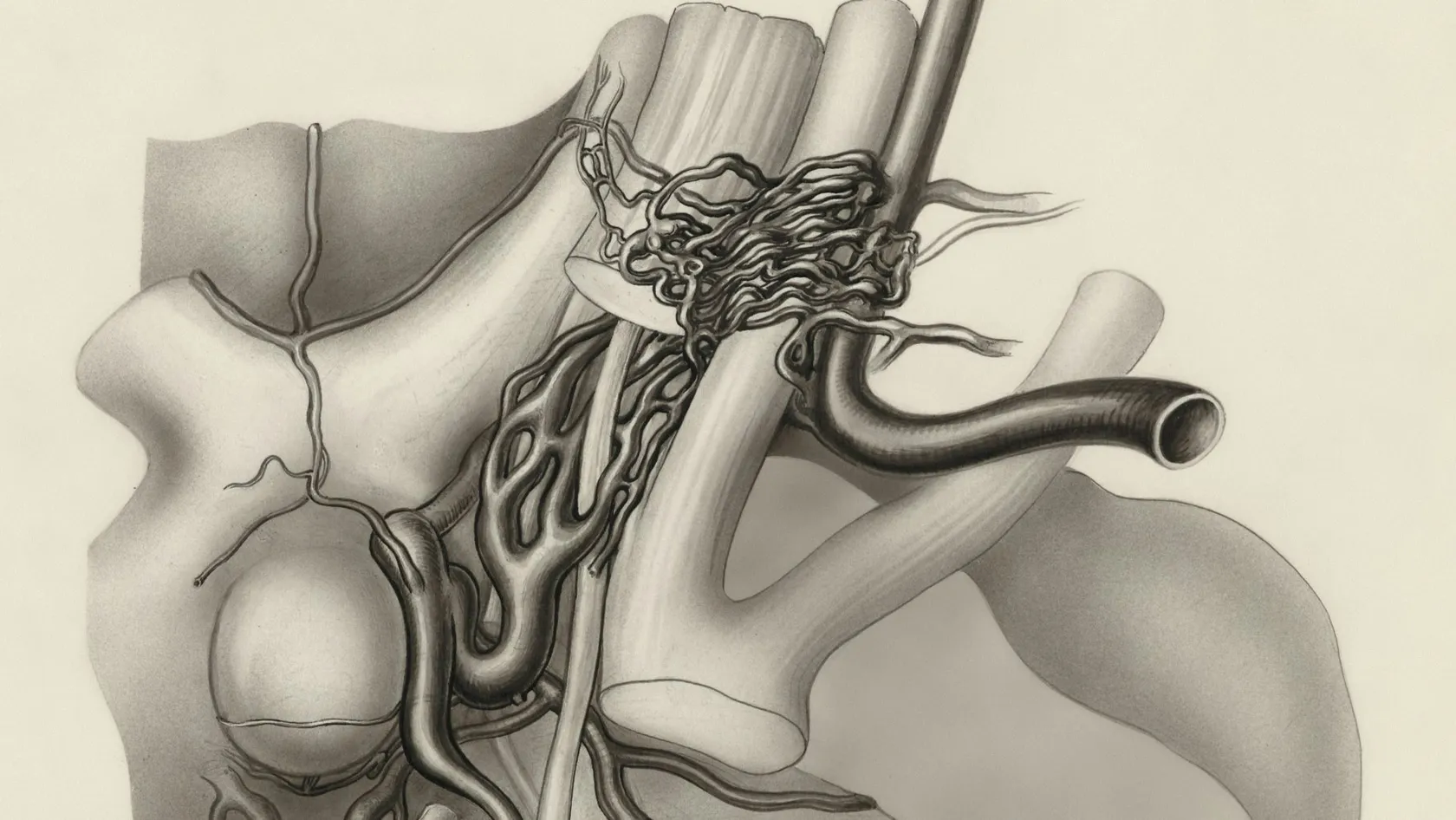
Every vasectomy involves two separate decisions that get discussed as though they were one. The first covers how the surgeon reaches the vas deferens, the firm cord that carries sperm up from each testicle, which he can feel through the skin and fix between his fingers. The second covers what he does to the tube once it is out, meaning how the two cut ends get sealed so that they stay sealed. Men hear a great deal on the first decision and almost nothing on the second, and the published evidence puts effectiveness squarely in the second.
The words you will hear
Vas deferens names the tube being divided, one on each side. No scalpel vasectomy describes a way of reaching that tube through a tiny puncture made with a sharp clamp instead of a cut. Occlusion means whatever is done to close the ends afterward. Ligation means tying them with a suture. Cautery means burning the inner lining of the tube so the walls scar shut. Fascial interposition means pulling a layer of tissue between the two ends and stitching it there, so that they sit in separate compartments. Recanalization means the two ends finding each other again and growing a channel between them. Post vasectomy semen analysis, often shortened to PVSA, is the confirming test. Azoospermia means no sperm in the sample at all.
The appointment that finishes it
An audit of 1,114 confirming tests at one andrology laboratory found that 92.1 percent of men passed on the sample they gave, with 7.9 percent needing further testing. The same group surveyed 78 specialists across 19 countries on what they do with the results, and the answers diverged more than anybody expects from a test this routine.
Most specialists time the test by the calendar rather than by counting ejaculations. Most permit unprotected intercourse only when the sample shows no sperm at all. Given a few non moving sperm, most advise carrying on with other contraception and repeating the test, and opinion on what those few cells actually mean remains genuinely split. Where moving sperm turn up, everybody asks for another test, and repeated moving sperm across several samples is what sends a man back to theater for a second operation. A large share of the specialists surveyed said they request a second confirming test partly because of the possibility of legal action, which tells you how seriously the profession takes this one appointment.
So book it before you leave the building.
Here is the practical version for a patient. Produce the sample at around three months, after a couple of dozen ejaculations, deliver it warm and within the hour, and keep using whatever you were using until somebody tells you in writing that the sample was clear. Where the first sample shows anything at all, expect to repeat it instead of panicking, since most of those men clear on the second attempt, and where samples keep showing moving sperm after several months the operation has failed mechanically and needs doing again, which is uncommon, completely fixable and no reflection on anybody.
Why men do not come back
Nobody has studied this properly, which is itself revealing, so what follows comes from what clinics observe rather than from a trial. The reasons cluster into a small number of patterns, and every one of them can be designed around by a unit that cares to.
Closing the ends
A systematic review sifted 2,058 published titles down to 31 comparative studies, of which only four were randomized, and reported honestly that the overall quality of the evidence was low. Within those limits it reached two conclusions that have held up since. Adding fascial interposition to simple tying and cutting makes the operation more effective. Combining fascial interposition with cautery of the tube lining appears to be more effective still, even when the testicular end is deliberately left open, which is a detail that surprises people and which lowers pressure in the system behind the block. Neither conclusion is dramatic and both have practical consequences, because the difference between the least effective and the most effective closure method shows up as pregnancies in men who did everything they were told to do. Nothing about a cautery device is exotic. A battery powered unit costs very little, fits in a drawer, and adds perhaps a minute to each side of the operation.
Ask which one your surgeon uses.
- Tying and cutting alone. The oldest method, still widely used, and the least effective of the group.
- Tying and cutting with fascial interposition. Better, because a layer of tissue now sits between the two ends.
- Cautery of the lining with fascial interposition. The combination with the best published occlusive effectiveness.
One separate survey of national standards in eight low resource countries found the no scalpel approach adopted almost everywhere, and found that tying and cutting with fascial interposition remains the most common way of closing, with cautery rarely used despite the guidelines recommending it. The gap between what the evidence supports and what gets done is therefore wide, well documented, and entirely fixable with a battery powered cautery device that costs very little.
What no scalpel actually means
The words no scalpel get used as a brand and describe something narrow and real. Instead of cutting the scrotal skin with a blade, the surgeon fixes the vas under the skin with a ring clamp, punctures the skin with a sharp pointed forceps, and spreads the tissue until the tube delivers itself through an opening a few millimeters wide. Most surgeons leave that opening to close on its own, without a stitch. Nothing happens to the tube itself, and the closure step that follows remains a separate decision entirely.
Risk across 133,044 operations
Four high volume practices, in Canada, Colombia, New Zealand and the United Kingdom, pooled their records across periods running from 2006 to 2021 and counted every man who was prescribed an antibiotic for a genital or urinary problem afterward. That gave 133,044 vasectomies and an infection risk of 0.8 percent in Canada, 2.1 percent in Colombia, 1.0 percent in New Zealand and 1.3 percent in the United Kingdom. Around one man in a hundred, in other words, across four health systems and fifteen years.
Read the rest of that audit for what it failed to find. Excising a short segment of tube, painting antibiotic on the skin opening, wearing a surgical mask, changing the skin disinfectant, wearing non sterile gloves. None of those altered the infection rate measurably. A great deal of ritual in this operation turns out to be ritual.
Narrow screens scroll this table sideways. Swipe or drag to reach every column.
| Problem | What it feels like | What happens about it |
|---|---|---|
| Infection | Increasing redness, heat and tenderness after day two, sometimes fever | Antibiotics, rarely anything more, around one man in a hundred |
| Bleeding into the scrotum | Swelling and firmness appearing in the first day or two | Usually settles with support and time, occasionally needs draining |
| Sperm granuloma | A small tender lump at the cut end, weeks later | Often settles alone, and may actually lower pressure in the system |
| Lasting scrotal pain | Ache or dragging discomfort continuing past three months | Needs proper assessment, covered in its own section below |
Failure, early and late
Two completely different things get filed under the word failure and they deserve separating, because one of them is common and harmless and the other is rare and consequential. Early failure means the confirming test still shows sperm, which happens often enough that no clinic treats it as alarming and which clears on a repeat sample or, at worst, with a second operation. Late failure means a man who was confirmed clear fathering a child years later, through the two ends quietly rejoining. That one is rare, and it explains why no honest surgeon calls a vasectomy one hundred percent reliable. A case published in 2024 shows how strange the edges of this can get. A healthy 32 year old had a vasectomy by tying and cutting, with no complications. A semen sample at 48 days showed no sperm. His wife conceived 119 days after the operation, two further samples again showed no sperm, a full term baby arrived at 385 days, and DNA testing confirmed he was the father. Three negative laboratory tests, and a child. The authors concluded that this was probably sperm released from storage rather than the tube rejoining, and noted plainly that the interval between laboratory azoospermia and genuine sterility remains unknown.
Columns run past the edge on a small screen. Slide the table across to read them.
| Kind | When it shows up | What it means |
|---|---|---|
| Early | On the confirming test at three months | Repeat the sample, and occasionally repeat the operation |
| Late | Months or years after a clear result | The ends have rejoined, which is rare and cannot be predicted |
Reversal, and its limits
Reversal exists and it works often enough to justify doing when circumstances change, and it also costs more than the vasectomy, takes several hours under a microscope instead of fifteen, and offers no guarantee of a pregnancy even where the tube has been successfully reconnected and sperm have reappeared in the ejaculate. The single largest factor is how long ago the vasectomy was done, with the outlook worsening steadily as the years pass, and the second factor, which surprises couples who came to discuss his operation, is the woman's age, a variable that has nothing to do with the man's surgery and that quietly decides a great deal of what follows.
This table also scrolls sideways on a narrow screen. Swipe or drag to reach every column.
| Assumption | The more accurate version |
|---|---|
| It can always be undone | Treat a vasectomy as permanent and treat reversal as a second chance that may not arrive |
| Sperm coming back means a baby | Sperm returning to the ejaculate and a pregnancy are two separate outcomes with a gap between them |
| Freezing sperm first is paranoid | Freezing beforehand is cheap insurance for any man with a flicker of doubt |
Pain that lasts
Ordinary soreness settles within two weeks in almost every man. A small minority develop scrotal discomfort that persists past three months, described as a dull ache, a dragging feeling, tenderness on pressure or pain during ejaculation, and reported frequencies vary widely between studies because the definitions vary and because men who are asked directly report more than men who are left to volunteer it. Most of those men improve with time, anti inflammatory medication and support. A small number need more, which can mean a nerve block, a local anesthetic injection to establish where the pain is coming from, and occasionally further surgery. What makes this difficult to counsel on is the absence of any way to identify beforehand who will be affected, since the men who develop it look no different from the men who do not, and it happens after operations that went perfectly. Men who already live with chronic pain elsewhere in the body appear to be at greater risk, which is one reason the consultation should ask.
This deserves saying before the operation and not after it. Lasting pain is uncommon and it is not vanishingly rare, it has no reliable way of being predicted, and a man who would find it intolerable should weigh that honestly against how much he wants the vasectomy. Any surgeon who tells you the risk is zero has not read the literature.
What it leaves alone
A vasectomy divides a tube that carries sperm and does nothing else at all, which means that testosterone, made in the testicles and released into the bloodstream by a route the operation never comes near, carries on exactly as before, and that erections, which depend on nerves and blood vessels sitting well away from the surgical field, carry on too. Sensation stays the same. Desire stays the same.
Ejaculation looks and feels the same, which surprises men who expect a visible difference, and the explanation is arithmetic. Sperm make up a tiny fraction of the volume of semen. Almost all of it comes from the prostate and the seminal vesicles, which carry on producing exactly as before, so the fluid looks identical and the quantity is effectively unchanged.
Two older worries deserve burying. Large studies have not established that vasectomy causes prostate cancer, and the question has been examined repeatedly across very large populations without a convincing signal emerging. Nor does the operation protect against sexually transmitted infection, which anybody whose circumstances change later should keep in mind, since condoms are still condoms and a vasectomy does nothing in that direction.
Where a man's sex life does change after a vasectomy, and it sometimes changes for the better, what has gone is a worry that had been sitting in the room for years.
That one comes up often, and it rarely appears in any leaflet.
Deciding, and regret
Most men who have a vasectomy are content with the decision years later. The men who regret it fall into recognizable groups, and every serious clinic learns to slow down when it meets one, which is a kindness and not an obstacle.
- Young men without children, where a change of mind across the following two decades is simply more likely.
- Men deciding in the middle of a crisis, whether that means a difficult pregnancy, a newborn who has not slept, a financial shock, or a marriage already under strain.
- Men doing it to settle an argument, or to please a partner who wants it more than they do.
- Men who have not said out loud what they would want if their current relationship ended.
None of those is a refusal. They are reasons to take a few months, to have one more conversation, and where doubt remains to freeze a sample first, which costs a fraction of a reversal and removes the whole question. A surgeon who hesitates at any of them is doing the job properly.
The day itself
Almost every vasectomy is done under local anesthetic with the man awake, in a treatment room rather than a main operating theater, and takes between fifteen and thirty minutes for both sides. Local anesthetic goes into the skin and around each cord, which is the part men rate as uncomfortable, and everything after that should feel like pressure and pulling instead of pain. Say so immediately if it does not, because more anesthetic solves it in seconds. Sedation suits men who are extremely anxious or whose anatomy makes the tube hard to find, and general anesthesia becomes necessary occasionally after previous scrotal surgery. Both add cost, recovery time and a fasting requirement, and neither improves the operation itself by a single percentage point. Shave the area the night before if you are asked to, eat normally, bring supportive underwear, and arrange for somebody else to drive you home.
Bring a book. The waiting lasts longer than the operation, and men who have arranged the whole morning around a fifteen minute procedure are usually surprised to find that the consent conversation, the anesthetic and the settling afterward account for most of the time they spend in the building.
The first week
Aching and swelling peak on the second or third day and then fade steadily, so a man who feels worse on day three than on day one is following the ordinary course and not a complication. Two days off is typical, with desk work resuming on day three and the gym at around a week, and most find the whole thing less dramatic than they had braced for.
- Supportive underwear day and night for the first week, which does more for comfort than any medication.
- Ice for twenty minutes at a time on the first day, always with a cloth between the ice and the skin, and never a bag straight from the freezer against bare skin.
- Simple painkillers, while avoiding anything that thins the blood over the first couple of days.
- Nothing heavy lifted for a week, and nothing with a saddle for two.
- Sex when it feels comfortable, generally at around a week, with other contraception still in use.
Who should think again
Situations that change the plan rather than cancel it
Very few men are unsuitable for a vasectomy. A handful of situations change how it should be done or when, and they are worth naming because they get missed in a fifteen minute consultation. Previous scrotal or groin surgery, including hernia repair with mesh, can scar the field enough that the tube becomes hard to find and general anesthesia turns into the sensible choice, and the same applies to an undescended testicle corrected in childhood, to a large varicocele and to a hydrocele, each of which complicates the approach in its own way and none of which anybody discovers halfway through if the consultation asked the right questions. Ongoing scrotal pain of any kind should be investigated and settled before anybody adds a surgical cause to it. A man who arrives with an ache he has had for two years, hoping that a vasectomy will somehow sit alongside it without making things worse, is the man most likely to end up in a chronic pain clinic afterward blaming the operation, and the sequence that protects him is simply to find out first what the ache is. Not one of these situations rules a man out. Each of them changes the anesthetic, the surgeon, the timing or the conversation.
Blood thinning medication deserves its own sentence, since it raises the risk of bleeding into the scrotum considerably and needs a plan agreed with whoever prescribes it. Stopping such a drug without that conversation is more dangerous than the vasectomy.
Men under thirty without children should expect a longer conversation than a man of forty two with three. None of that judges anybody's right to decide. It reflects what the regret data show, and a clinic that skips the conversation to fill a list is not doing the man a favor.
Having this done in Istanbul
An honest word about traveling for it
A vasectomy takes fifteen minutes as a day case, and its effectiveness depends on an appointment three months later. Flying to another country for the fifteen minutes and going home before the three months separates the operation from the only step that confirms it, which is the exact failure this whole page describes. So we say plainly what most clinics will not. Where a competent urologist is available near you, have it done near you, and spend the effort on choosing one who uses cautery with fascial interposition and who books your confirming test on the day. Where no such urologist is within reach, or where you already live in Istanbul, or where you are coming for something else and this fits alongside it, the arrangement is straightforward. Send a short history, a list of your medications with any blood thinner named clearly, and details of any previous scrotal, groin or hernia surgery. A urologist reads it and replies in writing, free, and says whether local anesthetic will do.
The visit, and what happens once you are home
Plan two nights, which covers the consultation, the procedure, and a wound check the following day. Fitness to fly is confirmed in writing before you leave, and a short flight the day after a vasectomy under local anesthetic is comfortable for most men, with an aisle seat and supportive underwear doing most of the work. We work in seven languages without booking an interpreter, those being English, Arabic, French, Russian, Serbian, Romanian and Spanish, and anything else is arranged in advance. One coordinator handles your appointments and stays reachable on WhatsApp afterward. Hotel nights and transfers are booked before you land, and an invitation letter for a visa application leaves our office roughly ten days ahead of the flight.
Then comes the part that matters. Once you get back home, the confirming semen test still has to happen at around three months, and we will write to a laboratory or a doctor near you with the details of what was done and what the sample needs to show. Send us the result and we will tell you in writing whether you can stop using other contraception, because a laboratory report that says a few non motile sperm remain means something quite different from one that says none, and a man reading it alone at his kitchen table has no way of knowing which of those he is holding. Nobody should be left to work that out by himself.
On cost, we publish no figures. The price turns on whether local anesthetic or sedation is used, on whether previous surgery makes the operation longer, and on whether you want sperm frozen beforehand and for how many years that storage is paid for. Nothing there is knowable until a urologist has read your history, and any number quoted before then has been chosen to win an inquiry.
One last conversation
Two people decide most vasectomies and one person has it done.
Say that again slowly. Naming that asymmetry out loud helps, because a man who arrives having been sent, and not having decided, is the man most likely to sit in a clinic years later asking whether it can be undone.
The conversation that seems to help has three parts and takes twenty minutes. What would each of you want if this relationship ended. What would each of you want if a child died, which nobody wants to say aloud and which comes up in reversal clinics constantly. And does any version of the next ten years exist in which one of you wants another baby. Couples who have had that conversation walk into the procedure differently, which sounds like a soft claim and has a hard consequence, since the men who arrive settled are the men who follow the instructions afterward, produce the sample at three months and get the written confirmation that turns the operation into contraception. Couples who have avoided it arrive with the question still open, and an open question does not close itself on an operating table. Have the conversation somewhere other than the clinic waiting room.
If the answers leave any doubt, freeze a sample first and have the vasectomy anyway. Do both. There is no rule against it. Freezing costs little, takes an afternoon, and converts an irreversible decision into a reversible one for a fraction of what a reversal costs.
Vasectomy FAQ
How long until I can stop using contraception
Until a laboratory says so, which lands around three months and a couple of dozen ejaculations later. No amount of time on its own answers this question, and neither does feeling healed.
Does it hurt
Injecting the anesthetic stings for a few seconds and the rest should feel like pressure and tugging. Afterward expect a dull ache for two or three days, well covered by simple painkillers and supportive underwear. Men routinely report it as less unpleasant than the dentist.
Will my testosterone drop
No. Testosterone leaves the testicle through the bloodstream and the operation never touches that route.
Will ejaculation look different
No. Sperm contribute a very small fraction of the volume, and the prostate and seminal vesicles that supply the rest carry on unchanged. Most men notice nothing at all.
Which closure technique should I ask for
Cautery of the lining combined with fascial interposition has the best published record, both for preventing pregnancy and, in the largest audit available, for avoiding infection. Ask your surgeon which he uses and why. A clear answer is a good sign whichever method he names.
Can it be reversed if I change my mind
Sometimes, and the further back the vasectomy was, the worse the outlook. Reversal means a microsurgical operation lasting hours, it costs considerably more, and reconnecting the tube successfully still leaves a pregnancy as a separate question. Plan as though the decision is permanent.
Is there a link with prostate cancer
Large population studies have looked for one repeatedly without a convincing signal emerging. That concern dates back decades and the evidence has never supported it.
References
- Labrecque M, Dufresne C, Barone MA, St-Hilaire K. Vasectomy surgical techniques, a systematic review. BMC Medicine. 2004;2:21.
- Lawton S, Hoover A, James G, et al. Risk of post-vasectomy infections in 133,044 vasectomies from four international vasectomy practices. International Brazilian Journal of Urology. 2023;49(4):490-500.
- Agarwal A, Gupta S, Sharma RK, et al. Post-vasectomy semen analysis, optimizing laboratory procedures and test interpretation through a clinical audit and global survey of practices. World Journal of Men's Health. 2022;40(3):425-441.
- Altok M, Sahin AF, Divrik RT, et al. Prospective comparison of ligation and bipolar cautery technique in non-scalpel vasectomy. International Brazilian Journal of Urology. 2015;41(6):1172-1177.
- Labrecque M. Are evidence-based vasectomy surgical techniques performed in low-resource countries. Gates Open Research. 2019;3:1462.
- Bernardes T, Wu TY, Greves CC, Carlan S. Documented paternity despite azoospermia post-vasectomy. Cureus. 2024;16(10):e72619.
Editor's note
Written by the Biruni Hospital medical editorial team. Reviewed by Prof. Dr. Barış NUHOĞLU, Urology.
Medically reviewed by

Prof. Dr. Barış NUHOĞLU
Urology
Related Treatments
View All
Bladder Cancer Surgery
Bladder cancer is treated by two operations that share almost nothing. One scrapes tumor off the inside wall through the urethra in twenty minutes. The other removes the bladder and rebuilds the route urine takes out of the body. The short one is treated everywhere as a minor procedure, and how well it is done decides the staging, the recurrence rate and whether the long one ever becomes necessary.

Fusion Biopsy Prostate - MRI-Guided Prostate Biopsy
Software builds a model of your prostate from the MRI and another from the live ultrasound, then deforms one onto the other so the lesion lands somewhere the needle can reach. Every step of that carries a few millimeters of error. This page covers where the error comes from, what the trials comparing the three targeting methods found, who draws the outline the needle aims at, and why good units still take cores from the rest of the gland.

Inflatable Penile Prosthesis
An inflatable penile prosthesis has three parts, and only one of them gets discussed. The reservoir sits inside the abdomen, decides where the operation gets difficult, and causes most of the reoperations men end up needing. This guide covers the hydraulics, the move from the space of Retzius to high submuscular placement, the evidence on palpability and auto inflation, the link between blood sugar control and infection, recovery week by week, and what the operation means in Istanbul.

Kidney Cancer Surgery - Renal Cancer Surgery
Kidney cancer surgery means two different operations, and the choice between them is made from a scan before anyone knows what the tumor is. The only randomized comparison found that sparing the kidney protected kidney function and did not extend life. This page works through that result, the clamp and the clock, biopsy before surgery, surveillance, and what changed when the disease has already spread.
Kidney Stone Surgery
Three measurements on a CT decide which kidney stone procedure suits you, and none of them is a brand name. The stone free rate a clinic advertises is a different kind of number, because it depends on how hard that clinic looked afterward. This page covers shockwaves, ureteroscopy and percutaneous surgery, what the randomized trials found, and why half of stone formers come back.