
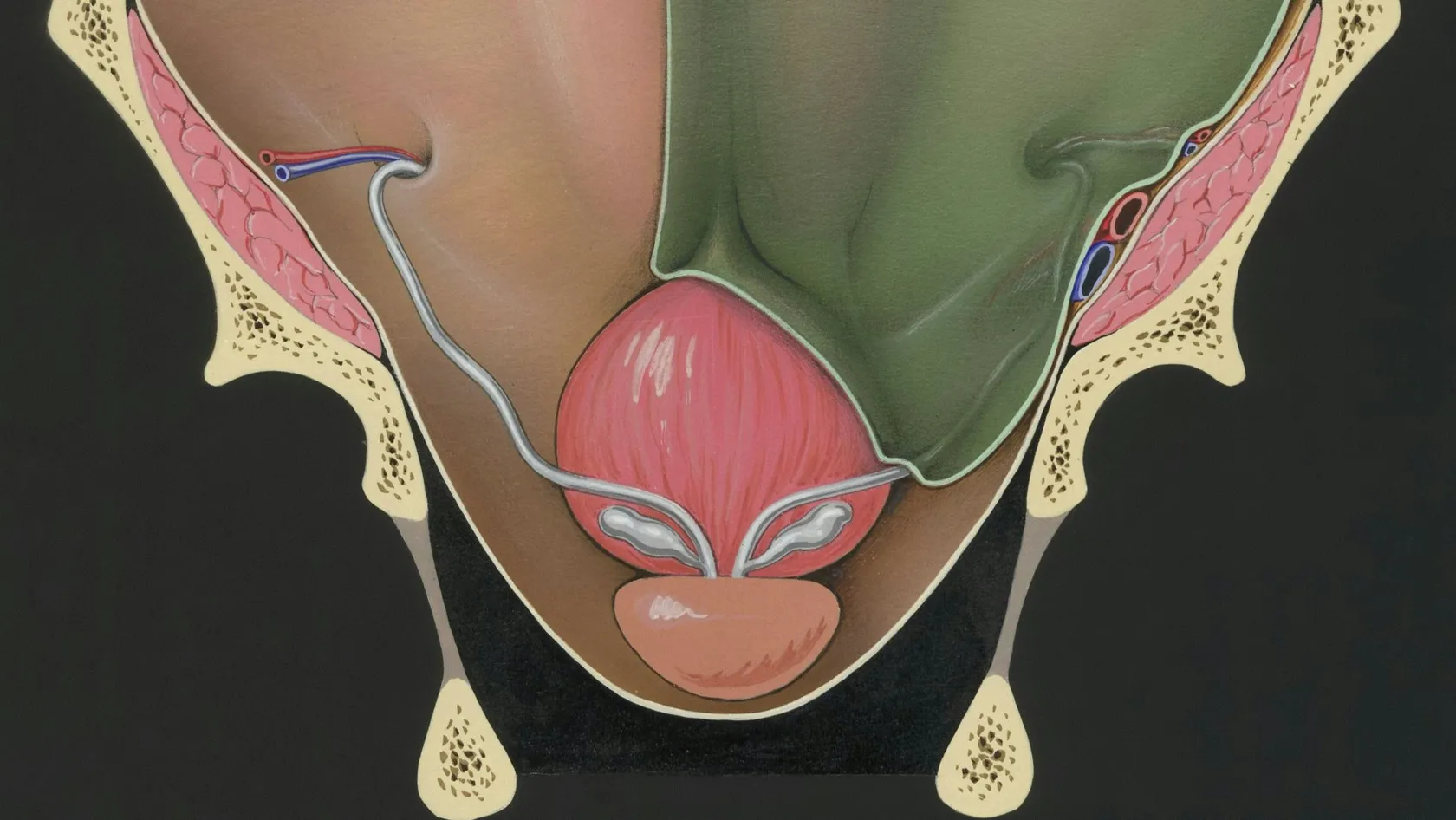
TURP Surgery - Transurethral Resection of the Prostate
This operation removes the inner prostate tissue squeezing the channel, and it relieves obstruction reliably. Symptoms of holding, meaning urgency and getting up at night, belong to the bladder and respond far less predictably, with severe urgency before surgery carrying 5.7 times the odds of persisting afterward. This page gives the numbers against waiting and covers the ejaculation change men are least often warned about.
About This Department
This operation opens a blocked outlet. A bladder keeps its own habits.
Anybody who comes in unable to empty does very well. Men whose worst problem is urgency do less well, and severe urgency before surgery multiplies the odds of still having it six months later by more than five, so this page separates the two situations, gives the numbers against simply waiting, and covers the two consequences men are least often warned about.
What the operation removes
An aging prostate grows inward as well as outward, and the part that causes trouble is the inner zone squeezing the channel that runs through the middle of the gland, so transurethral resection takes that inner tissue away from the inside, through the natural passage, with an electrical loop that shaves it out in strips. The outer shell of the prostate stays where it is, which is the reason men are sometimes confused to hear that their prostate is still there afterward. What has gone is the obstruction, and what remains is a wider tunnel through a gland that still exists. Two things follow from that anatomy and both surprise people. Prostate cancer screening carries on afterward exactly as before, since the outer shell where most cancers arise was never touched, and the PSA blood test drops by roughly half after surgery, so the number your doctor compares against has to be reset rather than read against the old one.
This table scrolls sideways on a narrow screen. Swipe or drag to see every column.
| Approach | Usual size range | What it does | Trade |
|---|---|---|---|
| Transurethral resection | Roughly 30 to 80 milliliters | Shaves the inner tissue out in strips, sends all of it to pathology | A catheter for a day or two and a hospital bed |
| Laser enucleation | Any size, and the usual answer above 80 | Peels the whole inner gland off its shell, then grinds it up | Longer operation, steeper learning curve for the surgeon |
| Vaporization | Small to moderate glands | Boils the tissue away rather than cutting it out | No tissue for pathology, and more repeat procedures in some trials |
| Open or robotic removal | Very large glands where enucleation is unavailable | Reaches the gland through the abdomen | A real incision, a longer stay, more blood loss |
How the resection is done
A resectoscope passes along the passage under direct vision, and a wire loop at its tip carries current that cuts and seals at the same time. The surgeon works in strips, from the bladder neck outward, taking the inner tissue down to the capsule and stopping there. Chips of prostate collect in the bladder and are washed out at the end. Fluid runs continuously through the scope throughout, keeping the view clear, and that fluid is where the interesting engineering question lives. Bleeding is controlled as the surgeon goes, by touching the loop to each vessel and sealing it, and a resection that looks unhurried on the screen is usually the one that ends with a clear view and a short catheter.
Why the fluid matters more than the loop
The older circuit needs a fluid that does not conduct electricity, so it uses a sugar or glycine solution, and when that solution is absorbed through open prostatic veins in quantity it dilutes the blood and produces the complication the operation used to be feared for. The newer circuit returns the current through a second pole on the instrument itself, so it can run in ordinary saline, and saline absorbed in quantity is a much smaller problem than sugar water. That one change is the most consequential thing that has happened to this operation in thirty years, and almost nobody advertises it. There is a second benefit that follows from the first. Because absorption no longer sets a hard ceiling on operating time, a surgeon working in saline can take longer over a larger gland without the clock becoming the dominant safety consideration, and that quietly widens the range of prostates a resection can handle well.
Who it helps most
The group that gets offered surgery too readily
Men in their sixties whose main complaint is getting up three times a night, with a reasonable flow and an empty bladder afterward. That combination is bladder behavior, sleep, fluid habits and sometimes heart or kidney physiology, and removing prostate tissue from it is an operation aimed at the wrong organ. We say so and we are not always thanked for it.
Waiting against operating
Somebody randomized this question properly, which is rarer than it should be. 556 men with moderate symptoms were assigned either to resection or to watchful waiting and followed for five years.
Wide table. Scroll it sideways on a narrow screen to reach every column.
| Measure | Resection | Watchful waiting |
|---|---|---|
| Treatment failure at five years | 10 percent | 21 percent |
| Crossed over to surgery | Not applicable | 36 percent, driven by how much it bothered them |
| Flow improvement in men with poor flow | 85 percent greater than in late crossovers | Less recovered once they finally had surgery |
| Bother after crossover | Similar in both groups | Similar in both groups |
| Serious adverse outcomes | No difference between the groups | No difference between the groups |
Read the whole table before you decide anything. Surgery won on every measure, and two thirds of the men who waited never needed it, and the ones who eventually crossed over ended up feeling much the same as the ones operated on at the start. Waiting remains a legitimate choice for moderate symptoms, and the price of waiting is measured in bladder function rather than in regret.
Medication first
Two families of tablet come before any operation for most men. One relaxes the muscle in the prostate and bladder neck and works within days, and the other shrinks the gland slowly over six months or more and suits larger prostates. Together they delay or prevent surgery for a great many men, and they are the correct first step for moderate symptoms with no complications.
When tablets stop being the answer
Retention that needed a catheter. Bladder stones. Repeated infections. Bleeding from the prostate that keeps coming back. Kidney function falling because of the back pressure. Any one of those moves the conversation to surgery regardless of how the symptom score reads, because the problem has stopped being comfort and started being damage. Short of that list, tablets deserve a proper trial at a proper dose before anybody books an operating room.
The symptom that predicts disappointment
Here is the finding this page exists to pass on, and it comes from a study that set out to find a predictor and found one nobody expected.
Seventy six men with obstruction proven on bladder pressure testing had their prostates treated and were followed for six months with a symptom questionnaire. Bothersome storage symptoms fell from 60.5 percent of them before surgery to 48.7 percent at six weeks and 11.8 percent at six months, so most men did improve and the improvement took months rather than days. What separated the men still suffering at six months was not the pressure testing. Detrusor overactivity, the abnormal bladder contraction that urologists chase with catheters and pressure lines, predicted nothing at all. The simple urgency score the men had written on a questionnaire before surgery predicted a great deal, with odds of persisting symptoms running 5.7 times higher in those who had scored it severe. Read that carefully, because it inverts the usual hierarchy of evidence. The invasive test with a catheter and a pressure line lost to a questionnaire the patient filled in himself in a waiting room, and the practical lesson is that the answers you give on that form deserve as much care as any scan you send.
Why the expensive test loses to the cheap question
Bladder pressure studies measure what the bladder does during twenty minutes of artificial filling in a clinic room. The urgency score measures what it has been doing to a man's life for two years. Reviews of this question agree that symptoms and pressure findings correspond loosely at best, and that formal pressure testing earns its place only where the result would genuinely change the decision. Ask for the test when the picture is confusing. Do not accept it as a substitute for somebody reading your questionnaire.
Getting up at night
Nocturia earns its own section, since it drives more men to seek help than anything else on the list and justifies surgery less often than anything else on the list.
The three causes, and only one is prostatic
A bladder that cannot hold much at night is one cause and it is partly prostatic. Producing too much urine overnight is a second, and it comes from fluid timing, from alcohol and caffeine, from heart or kidney conditions and from swollen legs emptying back into the circulation once a man lies down, and no prostate operation touches any of it. Simply waking for other reasons and then visiting the bathroom is the third, and it is a sleep problem wearing a urological costume. A bladder diary kept for three days separates these three better than any scan, costs nothing, and is skipped almost universally. We ask for one before we discuss surgery with a man whose main complaint is the night. Three days of writing down times and volumes is inconvenient and it is also the single most informative thing available in this whole assessment. Nobody charges for it. Nobody sells it either, which may be related.
The old circuit and the new one
Two meta-analyses settle this, and they reached the same place from different sets of trials.
On a narrow screen this table scrolls sideways. Drag it to reach every column.
| Outcome | What the pooled trials found |
|---|---|
| Symptom score and flow at one year | No clinically meaningful difference between the two circuits |
| Dilution syndrome from absorbed fluid | One case avoided for every 50 men treated with the newer circuit |
| Clot blocking the catheter | One case avoided for every 20 men treated |
| Time with a catheter | Around 22 hours shorter, with irrigation running some 9 hours less |
| Transfusion, strictures, bladder neck scarring | No significant difference either way |
So the modern operation is the same operation with its worst complication mostly designed out, and it sends you home from the catheter roughly a day earlier. Find out which circuit a unit uses. It is a fair question with a one word answer and it tells you something real concerning how current the practice is.
What happens on the day
Spinal anesthesia suits most men, and it carries a quiet advantage, since a man who is awake can tell the anesthetist he feels odd, and feeling odd is the earliest sign of absorbed fluid. A general anesthetic covers the rest. Antibiotics go in beforehand. The urine has to be clear of infection on a culture taken early enough for the result to be back, and a positive one moves the date rather than being treated on the day.
The resection itself runs 45 to 75 minutes for most glands and longer for large ones, with surgeons watching the clock because absorption climbs with operating time, and at the end a catheter goes in with fluid running through it to wash the bladder clear of blood, and that irrigation continues for several hours until what drains out has gone from red to rosé to clear.
One or two nights in hospital covers most men. The chips of prostate go to the laboratory, all of them, and the report comes back within a week. Read it.
The catheter and the first week
Drink more than feels necessary through the first two weeks, since dilute urine passes over a healing surface more comfortably and carries clots out before they organize, and avoid heavy lifting and long drives over the same two weeks. Preventing constipation saves trouble, because straining against a fresh prostatic bed restarts bleeding more reliably than anything else a man can do at home. Blood thinning tablets restart on a schedule the surgeon sets and not on the day you feel ready, and that schedule is one of the things to have in writing before you leave the ward.
Office work resumes at two weeks for most men, and everything else at four to six.
Risks in the order you meet them
- Bleeding needing transfusion. Reported between zero and 8 percent across randomized trials, and around 2 percent in a single surgeon series of more than four thousand operations, where the rate fell as experience accumulated.
- Dilution from absorbed fluid. Roughly half a percent with the older circuit in trial conditions, and close to absent with the newer one.
- Infection. Common enough that antibiotics are given routinely, and the reason a positive culture postpones the date.
- Not passing urine when the catheter comes out. A bladder that has been stretched for years does not always start working immediately, and the catheter goes back in for a week.
- Scarring at the bladder neck. Around 3 percent in that same large series, appearing months later as a stream that slowly narrows again.
- Narrowing of the passage. About 1 percent, from the instrument rather than from the prostate, and treated separately.
What those numbers depend on
Gland size, operating time and the surgeon, in that order. A 40 gram prostate resected in an hour behaves very differently from a 110 gram prostate resected in two, and the published series make the point that a surgeon's own complication rate fell steadily over a career. Ask how many of these a unit performs in a year, and ask what the largest gland they resect transurethrally is before they send a man to a different operation.
Ejaculation
Nearly all men who have this operation stop ejaculating outward. Semen travels backward into the bladder instead and leaves later in the urine, because the bladder neck that used to close during climax has been resected along with the obstruction. Sensation and orgasm generally stay as they were. What goes is the visible part, and for most men it does not come back.
Two things follow from that and both deserve stating before the consent form is signed. Fertility ends for practical purposes, which matters to a smaller group of men than urologists generally assume and matters enormously to that group. And for a considerable number of men the change itself is distressing in a way nobody prepared them for, since a consequence described in one line on a form reads very differently at home three months later. Where this matters to a man, it matters before the decision and not after it, and there are procedures designed to preserve ejaculation that relieve obstruction less completely, which is a genuine trade and one that belongs to the patient to make, and it can only be made by somebody who was told the trade existed.
Raise it. If nobody has raised it with you, that tells you something about the consultation you are having.
Control and erections
Lasting incontinence after this operation happens rarely, and that sentence needs qualifying rather than repeating. Temporary leakage and urgency in the first weeks are usual. They settle in the great majority of men. Permanent leakage happens when the muscle below the prostate is damaged, and in experienced hands it is rare, though it is the complication men fear most and the one to ask a specific number about. A man who was already leaking before surgery deserves particular care here, since an outlet that was partly holding him continent stops doing so once it is opened, and the underlying weakness that was hidden becomes visible.
Erections raise a different question, and the evidence there is mixed. Large reviews find no consistent decline attributable to the operation, and individual men do report change afterward, and disentangling surgery from age, from the conditions that cause prostate growth and from the medication men stopped taking is harder than either side of the argument admits. Where erections already matter and already work, say so before surgery and not afterward. Saying so changes nothing about the operation and it changes how the follow up is handled, which is the part that actually helps.
Whether it lasts
Longer than most operations and not forever. Three separate things can bring a man back to an operating room years later. They behave differently and they deserve naming separately. A stream that narrows again in the first year and a stream that narrows again at twelve years have almost nothing in common except the symptom, and treating them as one thing is how men end up with the wrong second operation.
Ask which of the three a surgeon means.
- Regrowth of the gland. The tissue left behind keeps growing slowly, and in a minority of men it eventually obstructs again after ten years or more.
- Scarring at the bladder neck or in the passage. Appears within the first year or two rather than at ten, and presents as a stream that quietly narrows again.
- A bladder that never recovered. Where obstruction went on for years, the muscle can be permanently weakened, and the outlet is then wide open while emptying stays poor.
That third item is the argument against waiting too long, and it sits in direct tension with the argument for waiting at all. Both are true. A man with moderate symptoms and a decent flow can reasonably wait, and a man whose bladder is already failing has less to gain from any operation than he would have had two years earlier. Nobody can tell you precisely where you sit on that curve. What can be said is that a residual volume climbing year after year, and a flow rate falling while the symptom score stays flat, are both signs that the bladder is compensating quietly and that waiting is no longer free.
Choosing between the operations
Size decides most of it, and it is measured rather than estimated. Below roughly 80 milliliters, resection remains the reference against which everything else is measured. Above that, enucleation with a laser peels the whole inner gland away and handles volumes that would make a resection long and bloody, and pooled trials credit it with better symptom scores and flow at a year alongside a shorter catheter time and no transfusions. Volume is measured on ultrasound or on a scan and it is not guessed from a finger examination, so a man offered a particular operation without a measured volume in his notes is being offered what that unit prefers. Not what his anatomy indicates.
What the alternatives cost you
Enucleation asks more of the surgeon, and a unit that performs a handful a year is not the place to have one, while vaporization sends nothing to the laboratory, so an unsuspected cancer in the resected tissue is never found, and some trials show more men coming back for a second procedure. The newer minimally invasive options that preserve ejaculation relieve obstruction less completely, which is a real trade and an honest one for a man who has weighed it. None is a scandal. Each carries a different set of compromises, and a unit that offers only one of them will tend to find that the one it offers suits you. Put the question plainly. Which of these do you perform here, how many a year, and which would you choose for a gland of my size if you performed all of them. The last clause is the one that does the work, because it asks a surgeon to reason past their own equipment and most will answer it honestly when it is put that way.
What a good result looks like
The three measurements to record before and afterA symptom score out of 35, which typically falls by around 15 points and is the number that tracks how a man feels. A peak flow rate, which typically roughly doubles and is the number that proves the outlet opened. And the volume left in the bladder after passing urine, which should drop toward nothing. Insist on having all three written down before the operation, because without a baseline nobody can tell you afterward whether you improved or merely got used to things. The score at three months is the one to judge by, and the score at six months is the one that settles the storage half of the question.
What the score does not capture
A questionnaire measuring seven symptoms cannot register the change in ejaculation, cannot tell you whether a man feels safe leaving the house, and cannot separate a genuine improvement from the regression toward the middle that anybody scoring at their worst will show at a second attempt. None of that argues for skipping the scoring. They are a reason to write down, in your own words and before surgery, exactly which of your complaints you most want to be rid of, so that you can read it back at three months and judge honestly. Men who do this are harder to mislead, including by themselves, since the memory of how bad things were before an operation is unreliable in both directions and a sentence written in your own handwriting is not.
The one sentence to write down
If this operation fixed only one thing, it should be the following. Men who answer that with a stream or with emptying tend to be delighted afterward. Anybody answering it with the number of times they get up at night deserves the longer conversation this page has been arguing for.
Cost, travel and flying home
Plan on seven to ten nights in the country. That covers arrival and assessment, the culture result, the operation, one or two nights in hospital, catheter removal and a review before you leave, and it leaves a margin for the man whose bladder takes an extra week to start working.
Fitness to fly, and what moves the quote
Flying makes no difference to a healing prostate. What decides the date is whether you are passing urine reliably without a catheter, free of fever and no longer bleeding heavily, and that point arrives for most men between day five and day eight. Flying home with a catheter is possible and we arrange it where somebody has to travel, provided removal is booked at the other end and confirmed before departure, and four things move the cost, namely the size of the gland and the operating time it implies, which circuit and which technique are used, whether the stay runs to one night or three, and whether the pathology on the resected tissue is included in the figure you are quoted. Look at that last item specifically. Tissue examination is the one thing a resection offers that most alternatives do not, and a quote that leaves it out is quoting for a cheaper operation than the one being described.
What to send, and what happens hereSend the symptom questionnaire with the urgency question answered honestly, a flow test with the residual volume, a recent PSA, prostate volume from ultrasound or scan, your current tablets and a recent urine culture. We read all of it and write back at no charge, and where the answer is that tablets deserve another try or that the night time problem is not prostatic, we say that instead. One coordinator handles everything from that first message to your flight home and stays reachable on WhatsApp afterward. English, Arabic, French, Russian, Serbian, Romanian and Spanish are spoken here, other languages are interpreted on request, a companion can stay in the room, halal, vegetarian and diabetic meals are ordinary, there is a prayer room in the building, and visa paperwork goes out around ten days ahead. Follow up once you are home costs nothing, so send the three month questionnaire and flow test and we will read them.
We publish no figures on this page. A price quoted before anyone has seen a prostate volume is a number chosen to win an inquiry.
TURP surgery FAQ
The following seven questions arrive in almost every first message we receive.
Will this stop me getting up at night?
Can I wait instead of having surgery now?
What happens to ejaculation?
Is the bleeding in week two normal?
Does it matter which circuit the surgeon uses?
My urgency is the worst part. Will surgery fix it?
How long will we need to be in Istanbul?
References
- Flanigan RC, Reda DJ, Wasson JH, Anderson RJ, Abdellatif M, Bruskewitz RC. 5-year outcome of surgical resection and watchful waiting for men with moderately symptomatic benign prostatic hyperplasia. A Department of Veterans Affairs cooperative study. Journal of Urology. 1998;160(1):12-16.
- Mamoulakis C, Ubbink DT, de la Rosette JJ. Bipolar versus monopolar transurethral resection of the prostate, a systematic review and meta-analysis of randomized controlled trials. European Urology. 2009;56(5):798-809.
- Tang Y, Li J, Pu C, Bai Y, Yuan H, Wei Q, Han P. Bipolar transurethral resection versus monopolar transurethral resection for benign prostatic hypertrophy. A systematic review and meta-analysis. Journal of Endourology. 2014;28(9):1107-1114.
- Dybowski BA, d'Ancona FC, Langenhuijsen JF, Heesakkers JP. Detrusor overactivity does not predict bothersome storage symptoms after photoselective vaporization of the prostate. Urology. 2014;84(4):898-903.
- Cornu JN, Grise P. Is benign prostatic obstruction surgery indicated for improving overactive bladder symptoms in men with lower urinary tract symptoms. Current Opinion in Urology. 2016;26(1):17-21.
- Medical Advisory Secretariat. Energy delivery systems for treatment of benign prostatic hyperplasia. An evidence-based analysis. Ontario Health Technology Assessment Series. 2006;6(17):1-121.
Editor's note
Written by the Biruni Hospital medical editorial team. Reviewed by Prof. Dr. Barış NUHOĞLU, Urology.
Medically reviewed by

Prof. Dr. Barış NUHOĞLU
Urology
Related Treatments
View All
Bladder Cancer Surgery
Bladder cancer is treated by two operations that share almost nothing. One scrapes tumor off the inside wall through the urethra in twenty minutes. The other removes the bladder and rebuilds the route urine takes out of the body. The short one is treated everywhere as a minor procedure, and how well it is done decides the staging, the recurrence rate and whether the long one ever becomes necessary.
Fusion Biopsy Prostate - MRI-Guided Prostate Biopsy
Software builds a model of your prostate from the MRI and another from the live ultrasound, then deforms one onto the other so the lesion lands somewhere the needle can reach. Every step of that carries a few millimeters of error. This page covers where the error comes from, what the trials comparing the three targeting methods found, who draws the outline the needle aims at, and why good units still take cores from the rest of the gland.

Inflatable Penile Prosthesis
An inflatable penile prosthesis has three parts, and only one of them gets discussed. The reservoir sits inside the abdomen, decides where the operation gets difficult, and causes most of the reoperations men end up needing. This guide covers the hydraulics, the move from the space of Retzius to high submuscular placement, the evidence on palpability and auto inflation, the link between blood sugar control and infection, recovery week by week, and what the operation means in Istanbul.
Kidney Cancer Surgery - Renal Cancer Surgery
Kidney cancer surgery means two different operations, and the choice between them is made from a scan before anyone knows what the tumor is. The only randomized comparison found that sparing the kidney protected kidney function and did not extend life. This page works through that result, the clamp and the clock, biopsy before surgery, surveillance, and what changed when the disease has already spread.
Kidney Stone Surgery
Three measurements on a CT decide which kidney stone procedure suits you, and none of them is a brand name. The stone free rate a clinic advertises is a different kind of number, because it depends on how hard that clinic looked afterward. This page covers shockwaves, ureteroscopy and percutaneous surgery, what the randomized trials found, and why half of stone formers come back.