
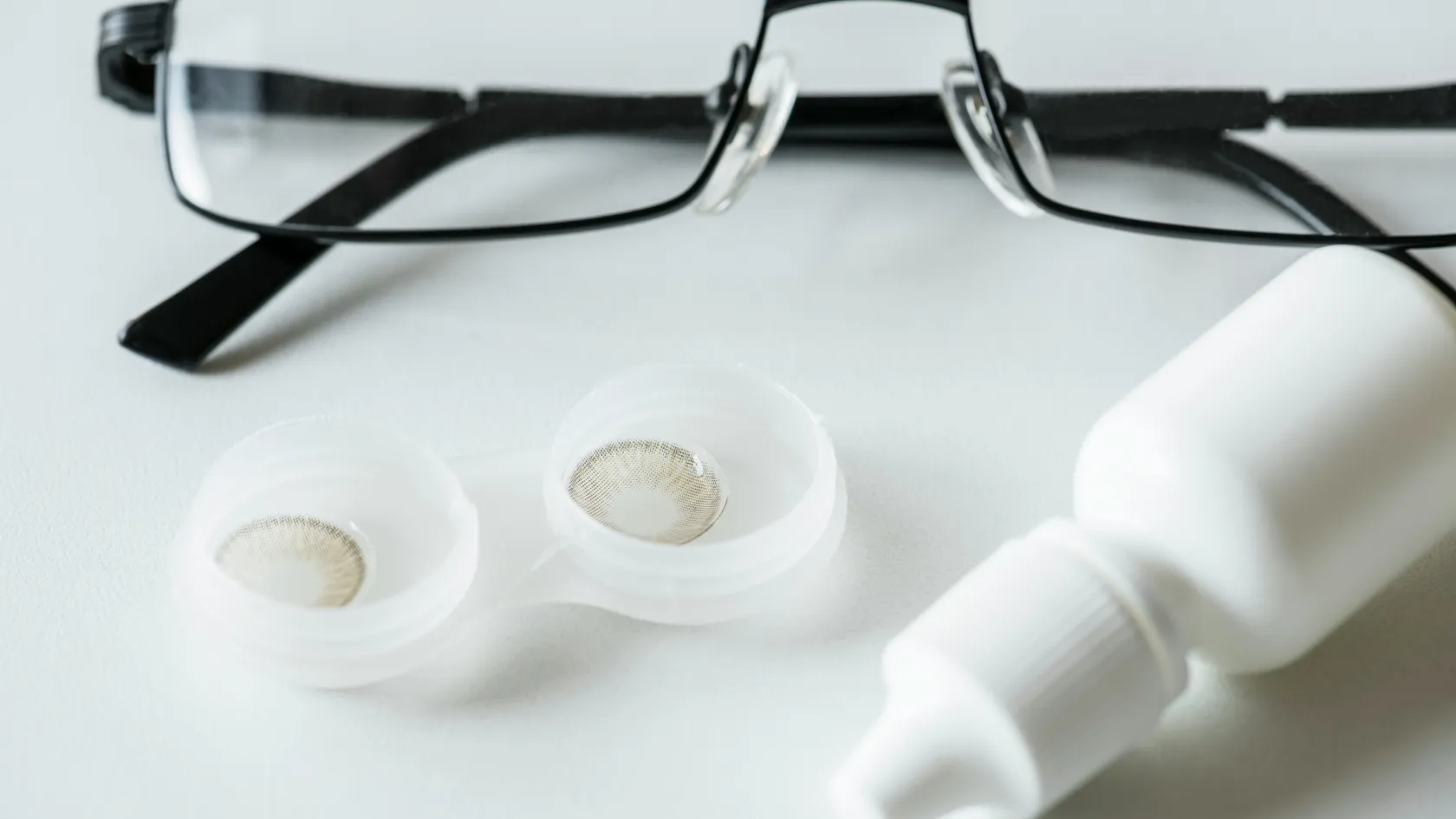
Trifocal Lens Implantation
Trifocal lens implantation replaces the eye's natural lens, during cataract surgery or refractive lens exchange, with an intraocular lens that focuses at near, intermediate and far distances. In a multicenter trial, 80.5 percent of patients never needed glasses at six months. Our ophthalmologists measure each eye, advise who suits a trifocal lens and who does not, treat both eyes within one week and follow you once you are back home.
About This Department
A trifocal lens replaces the natural lens with one that focuses at three distances. Most patients stop needing glasses for reading, screens and driving.
Trifocal lens implantation is eye surgery in which the eye's own lens, clouded by cataract or stiffened with age, is removed and replaced with a trifocal intraocular lens, an artificial lens with three focal points for near, intermediate and distance vision. Surgeons perform it during cataract surgery, or as refractive lens exchange for people over 45 who want to be free of reading glasses. In a multicenter trial, 80.5 percent of patients with a trifocal lens never needed glasses at six months, against 8.2 percent with a standard monofocal lens (Modi and colleagues, Ophthalmology, 2021). The trade-off comes as halos and glare around lights at night, which the majority notice at first and few find troubling after the brain adapts. Careful selection matters more than the lens itself. This page explains what trifocal lenses are, who suits them and who does not, results, halos and glare, how they compare with bifocal and extended depth of focus lenses, the tests, surgery and recovery, risks, and how patients from abroad arrange treatment at Biruni Hospital in Istanbul.
What a trifocal lens is
| Lens | Focus | Glasses afterwards |
|---|---|---|
| Monofocal | One distance, usually far | Reading glasses, often glasses for screens |
| Bifocal | Far and near | Sometimes for computer distance |
| Extended depth of focus, EDOF | Far and intermediate, stretched range | Reading glasses for small print |
| Trifocal | Far, intermediate around 60 centimeters, near around 40 centimeters | Rarely |
The lens splits light between three distances. That is how it gives sharp vision from near to far, and also why lights can show halos at night.
Cataract surgery or lens exchange
Either way, the operation is the same.
In cataract surgery the natural lens has clouded and must come out anyway. The only question is which lens goes in. Refractive lens exchange removes a clear lens, in people past their mid-forties who are tired of reading glasses or who have high long-sightedness, and replaces it with a trifocal lens so that glasses become the exception for reading, screens and driving over the decades that follow. The choice lasts a lifetime. A lens exchanged before a cataract forms also means no cataract can develop later. Under 45, laser eye surgery or an implantable contact lens suit most eyes better.
Who is a good candidate
| Factor | Favors trifocal | Calls for caution |
|---|---|---|
| Eye health | Healthy retina, cornea and optic nerve | Macular disease, glaucoma, corneal irregularity |
| Daily life | Reading, screens, active lifestyle | Professional night driving, precision work in low light |
| Astigmatism | Low, or corrected by a toric trifocal | High irregular astigmatism |
| Expectations | Accepts some halos for fewer glasses | Wants perfectly crisp vision in all conditions |
Who should consider another lens
Eye conditions
Can I have a trifocal lens if I drive at night for work?
Personality
People who notice every small visual imperfection and who dislike any compromise are less satisfied with multifocal lenses, even when the measured result is excellent.
Results
| Measure | Trifocal lens | Monofocal lens |
|---|---|---|
| Never needing glasses | 80.5 percent | 8.2 percent |
| Distance vision | Equivalent | Equivalent |
| Near and intermediate vision | Much better | Reading glasses needed |
Starbursts, halos and glare were the most frequently rated severe symptoms with the trifocal lens. However, less than 5 percent of patients were very bothered at month 6 (Modi and colleagues, 2021).
Halos and glare
- Halos are strongest in the first weeks and fade as the brain learns to ignore them.
- Dry eye makes them worse, and treating it helps.
- A second eye with the same lens improves adaptation.
Adverse visual phenomena were more prevalent with multifocal than monofocal lenses, with a risk ratio of 3.58 for halos and 1.41 for glare (de Silva and colleagues, Cochrane Database of Systematic Reviews, 2016).
A small number never adapt. For them the lens can be exchanged for a monofocal lens, ideally within the first months.
Trifocal, bifocal or EDOF
Compared with bifocal lenses, trifocal lenses may improve uncorrected intermediate visual acuity at one year, with no difference in distance or near vision (Zamora-de La Cruz and colleagues, Cochrane Database of Systematic Reviews, 2020).
| Lens | Strength | Limitation |
|---|---|---|
| Trifocal | Near, intermediate and far without glasses in most patients | Halos and glare at night, slight loss of contrast |
| Bifocal | Near and far | Gap at computer distance, largely replaced by trifocals |
| EDOF | Fewer halos, good far and intermediate | Reading glasses for small print |
| Monofocal with monovision | One eye far, one eye near, few halos | Reduced depth perception, glasses for some tasks |
Setting expectations
No lens restores the eyes of a twenty-year-old.
A trifocal lens frees the majority from glasses for most of the day. Very small print in dim light may still need a lamp. Night driving takes some weeks to feel normal again. Patients who go into surgery knowing all this, and who accept that a small compromise at night buys freedom from glasses by day, report the highest satisfaction afterwards.
Tests before surgery
| Test | Measures | Why it matters |
|---|---|---|
| Optical biometry | Length of the eye, corneal power | Calculates the lens power |
| Corneal topography and tomography | Shape of the cornea, astigmatism | Decides on a toric lens, excludes irregular corneas |
| Macular OCT scan | Layers of the retina | Detects hidden macular disease |
| Pupil size and tear film | Night pupil, dryness | Predicts halos, treats dry eye first |
| If you wear | Stop wearing them | Reason |
|---|---|---|
| Soft contact lenses | One week before | They change the shape of the cornea |
| Rigid or toric contact lenses | Two to four weeks before | Longer recovery of corneal shape |
Surgery day
You are awake, feel no pain, and see only bright lights during the operation.
A companion takes you home. You cannot drive on the day of surgery.
Recovery
The first weeks
Distance vision is often clear the next day. Near and intermediate vision sharpen over the following weeks as both eyes are done and the brain adapts.
When is the second eye done?
| Time | What to expect | Activities |
|---|---|---|
| Day 1 | Check-up, distance vision clearing | Reading and screens allowed |
| Week 1 | Both eyes done, near vision improving | Most office work, flying |
| Weeks 2 to 4 | Drops finished, halos fading | Swimming, sport, makeup |
| Months 3 to 6 | Adaptation complete | Final result assessed |
Risks
| Risk | How common | Treatment |
|---|---|---|
| Posterior capsule clouding | Develops in a share of patients over months to years | A painless laser treatment in the clinic, YAG capsulotomy |
| Residual refractive error | A few percent | Glasses, laser touch-up or lens adjustment |
| Macular swelling | One to two percent | Anti-inflammatory drops |
| Retinal detachment | Uncommon, higher in very short-sighted eyes | Retinal surgery the same week |
| Serious infection | Fewer than 1 in 1,000 | Same-day treatment with antibiotics |
For patients from abroad
One coordinator from the international patients office handles arrangements from the first message through discharge and answers the same WhatsApp number once you are back home. The office works in English, Arabic, French, Russian, Serbian, Romanian and Spanish and books interpreters for other languages, and it arranges the visa invitation letter, airport transfers, daily transport and accommodation near the hospital. Halal, vegetarian and diabetic meals, a prayer room on site, and a female physician on request wherever the rota allows.
Length of stay
Cost
| Item | Included | Priced separately |
|---|---|---|
| Preoperative tests | Biometry, topography, OCT, consultation | Treatment of dry eye or other conditions found |
| Surgery | Lens, operation, anesthesia, day-case stay | Laser touch-up if needed later |
| Aftercare | Drops, check-ups during the stay | YAG laser for capsule clouding in later years |
References
- Modi S, Lehmann R, Maxwell A, et al. Visual and patient-reported outcomes of a diffractive trifocal intraocular lens compared with those of a monofocal intraocular lens. Ophthalmology. 2021;128(2):197-207.
- de Silva SR, Evans JR, Kirthi V, Ziaei M, Leyland M. Multifocal versus monofocal intraocular lenses after cataract extraction. Cochrane Database Syst Rev. 2016;12(12):CD003169.
- Zamora-de La Cruz D, Zúñiga-Posselt K, Bartlett J, Gutierrez M, Abariga SA. Trifocal intraocular lenses versus bifocal intraocular lenses after cataract extraction among participants with presbyopia. Cochrane Database Syst Rev. 2020;6(6):CD012648.
- Yoon CH, Shin IS, Kim MK. Trifocal versus bifocal diffractive intraocular lens implantation after cataract surgery or refractive lens exchange. A meta-analysis. J Korean Med Sci. 2018;33(44):e275.
Editor's note
Written by the Biruni Hospital medical editorial team. Reviewed by Sepide Sadık, Ophthalmology.
Medically reviewed by

Sepide Sadık
Ophthalmology
Related Treatments
View All
Cataract Surgery
The operation takes about fifteen minutes an eye and is performed the same way worldwide. The lens you choose is what differs, and it decides whether you read without glasses, see halos around headlights, or neither. This guide gives the audit numbers, what laser surgery adds and does not, the risks, and how both eyes fit into five days in Istanbul.
Cornea Transplant Surgery - Corneal Transplantation
Surgeons now replace only the layer of the cornea that has failed, the inner cells for Fuchs dystrophy, the front layers for keratoconus, the full thickness for deep scars. The choice decides how quickly you see and how likely rejection is. This guide gives the survival figures, the warning signs, the flying rule after a gas bubble and the days to plan.
Glaucoma Surgery
Glaucoma surgery lowers the pressure inside the eye to protect the sight that remains. The options run from a five-minute laser that frees many patients from drops, to stents placed during cataract surgery, to trabeculectomy and drainage tubes. This guide gives the trial results for each and explains why the larger operations need weeks of follow-up.
Ocular Oncology Surgery - Eye Cancer Surgery
Most eyes with melanoma are now saved with a radioactive plaque sewn to the eye for a few days, and survival matches removal. In children, retinoblastoma is curable when found early. This guide explains uveal melanoma by size and risk, plaque radiotherapy, treatment after spread, retinoblastoma care, and how long each treatment takes in Istanbul.

Premium IOL Implantation - Multifocal Lens Surgery
Premium intraocular lenses replace the eye's natural lens during cataract or lens replacement surgery and focus at more than one distance. A Cochrane review of 20 trials found the same distance vision as standard lenses, far better near vision and less need for glasses, with more halos at night. We explain trifocal, EDOF and toric choices.