Ophthalmology
A cornea transplant now replaces only the layer that has failed. The layer chosen decides how fast you see, how many stitches you carry and how likely rejection is.
For half a century the whole cornea was cut out and replaced. Today surgeons replace the inner cell layer alone for Fuchs dystrophy and swelling after cataract surgery, and keep the patient's own inner layer for keratoconus and scars. In a trial of 1,090 patients, 86 percent of grafts were still clear at five years, whether the donor was under or over 66. Rejection remains possible for life. A gas bubble placed in the eye during some operations rules out flying for days. Send us your eye reports and corneal scans, and a cornea specialist will tell you which transplant fits and how long to plan.
86%
Grafts still clear at five years, moderate-risk eyes
3 types
Full thickness, front layers or inner layer
7 to 14 days
In Istanbul for most transplants
Free
Cornea specialist's review of your scans
Free consultation
Which transplant does my eye need?
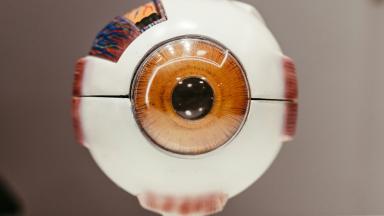
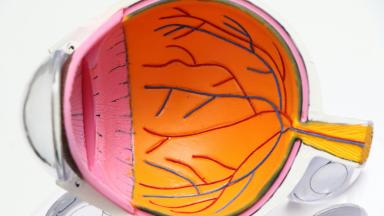
Think of the cornea as the clear window at the front of the eye, half a millimeter thick. Its outer layers give it shape and clarity, and a single inner layer of cells, the endothelium, pumps water out so that it stays transparent. Those cells do not regenerate, and when too many are lost the cornea swells and clouds.
Disease can strike either part.
The transplant follows the disease.
- Penetrating keratoplasty. The full thickness of the central cornea is replaced with a donor disc held by stitches. Used when every layer is damaged, by deep scars, severe infection or a failed earlier graft.
- Deep anterior lamellar keratoplasty, DALK. The front layers are replaced and the patient's own inner cell layer is kept. Used for keratoconus and scars that spare the endothelium.
- Endothelial keratoplasty, DSAEK or DMEK. Only the inner cell layer is replaced, through a small opening, held against the cornea by a bubble of air or gas. Used for Fuchs dystrophy and swelling after cataract surgery.
1
The operation
Under local or general anesthesia, the diseased inner layer is peeled away and a thin donor layer is rolled in through an opening of a few millimeters, unfolded and pressed into place with a bubble. Forty-five to sixty minutes.
2
Lying face up
The bubble holds the graft only while it sits against it, so you lie flat on your back for most of the first day or two. In some eyes the graft detaches partly and a second bubble is injected in the clinic.
3
The weeks after
Vision clears over weeks with DMEK, a little more slowly with DSAEK. Steroid drops continue for months. The bubble absorbs within days or up to two weeks, depending on whether air or gas was used and how much of it the surgeon left in the eye to hold the graft against the back of the cornea.
Endothelial keratoplasty, which selectively replaces the corneal endothelium in patients with endothelial disease, has resulted in more rapid and predictable visual outcomes.
Review of corneal transplantation, The Lancet, 2012
DMEK or DSAEK
DMEK transplants the cell layer alone, a membrane thinner than a hair. DSAEK carries a thin slice of supporting tissue with it, which makes the graft easier to handle. In the DETECT trial, DMEK gave better sharpness of vision than ultrathin DSAEK, while patients' own rating of their vision improved equally, by 9.1 points at three months and 11.6 points at a year on a 100-point scale, with no meaningful difference between the two.
DMEK needs a second bubble more frequently in many series and demands more surgical experience. DSAEK suits eyes where a DMEK graft would be hard to position, such as eyes with previous glaucoma surgery or no natural lens support. The surgeon's experience with each matters as much as the choice itself.
Keratoconus, DALK or full thickness
What the evidence shows
Keratoconus thins the cornea into a cone, and between 10 and 15 percent of patients eventually need a transplant. A Cochrane review found two randomized trials, 111 patients, comparing DALK with full-thickness grafts. Final vision was similar. Rejection was less likely with DALK, odds cut to a third, because the patient keeps the inner cell layer that rejection attacks. Four DALK operations could not be completed as planned and became full-thickness grafts.
Australia's national register, following 13,920 full-thickness grafts, 858 DALKs and 2,287 endothelial grafts since 1996, adds a note of caution. In that register, full-thickness grafts for keratoconus survived longer and gave better vision than DALK over the same period. The two sources disagree. Surgeon experience with DALK decides much of the result.
- Glasses, then rigid or scleral contact lenses, which restore good vision for most patients.
- Corneal cross-linking, to stop the cone from progressing, especially in younger patients.
- Corneal ring segments in selected eyes.
- A transplant, when contact lenses can no longer be worn or the cornea has scarred.
We found some evidence that rejection is more likely to occur following penetrating keratoplasty than DALK.
Cochrane review of DALK and penetrating keratoplasty for keratoconus, 2014
Graft survival and rejection
In the Cornea Donor Study, 1,090 patients with Fuchs dystrophy or swelling after cataract surgery were operated by 105 surgeons with corneas assigned at random from donors aged 12 to 75. At five years, 86 percent of grafts were still clear in both the younger and the older donor groups. Of the grafts that failed, 48 failed through rejection and 46 through a slow loss of donor cells.
Rejection happens when the immune system recognizes the donor tissue. It can occur at any time, even decades later, and most episodes reverse with intensive steroid drops when treated within days. That is why every transplant patient learns four warning signs and keeps a supply of steroid drops at home.
- Redness of the eye that was not there before.
- Sensitivity to light.
- Vision that becomes cloudy or blurred.
- Pain or ache in the operated eye. Any of these means an eye doctor the same day, wherever you are.
This table scrolls sideways on a narrow screen. Swipe or drag to see every column.
The main transplant types compared
| |
Full thickness |
DALK |
DSAEK |
DMEK |
| Layers replaced |
All |
Front layers |
Inner layer with thin support |
Inner layer alone |
| Stitches |
Many, for a year or more |
Many, for a year or more |
One or a few, or none |
None or one |
| Useful vision |
Many months, up to a year |
Many months |
Weeks to months |
Weeks |
| Rejection risk |
Highest |
Low, the inner layer is the patient's own |
Moderate |
Lowest of the donor-cell grafts |
| Main use |
Deep scars, infection, failed grafts |
Keratoconus, front scars |
Fuchs dystrophy, swelling after cataract surgery |
Fuchs dystrophy, swelling after cataract surgery |
1
The first week
A check the day after surgery, then every few days. After endothelial grafts, the position of the graft is checked and a second bubble given if needed.
2
The first year
Steroid drops taper over months. Pressure in the eye is watched, since steroids can raise it. After full-thickness and DALK grafts, stitches are removed in stages over a year or more to shape the cornea.
3
For life
A yearly check and the four warning signs. Keep the report naming your graft type, since every future eye doctor will need it before cataract or laser surgery.
Where the donor cornea comes from
Donor corneas come from eye banks, which test the donor for infections and count the inner cells under a microscope before releasing the tissue. Turkey has its own eye banks, and private hospitals also import tissue from licensed eye banks abroad. A donor cornea can therefore be arranged within days of the decision.
Ask which eye bank supplied the tissue, what cell count it reported and what testing was done. A legitimate hospital will tell you without hesitation, and the answer belongs in your written report.
Days in Istanbul
Plan a week for a full-thickness graft or DALK, and ten to fourteen days for DMEK or DSAEK, since the graft must be seen to stay attached and the bubble must be small enough for flying.
The length of stay follows one rule.
Air expands at altitude, and a gas bubble in the eye during a flight can raise the pressure to dangerous levels, and the surgeon clears you to fly only once the bubble has shrunk enough. Stitches, drops and checks then continue with your own ophthalmologist, who receives a full report before you leave that names the graft type, the donor tissue and its cell count, the drops and their tapering schedule, the pressure readings so far and the plan for stitch removal, so that nothing in the first year depends on memory or on a phone call back to Istanbul.
What decides the cost?
Two things, mainly.
The type of transplant and the donor tissue matter most. Endothelial and lamellar grafts need more surgical time and specialized tissue preparation, and imported tissue carries the eye bank's fee and shipping. Packages published by Istanbul hospitals range widely, and some price DALK and DMEK above full-thickness grafts. The quote should name the technique, the source of the tissue, the number of follow-up visits included, and the cost of a second bubble if one is needed. Your own figure follows the free review of your scans.
One coordinator stays with you from the first message. The team works in English, Arabic, French, Russian, Serbian, Romanian and Spanish, and other languages are interpreted on request. An invitation letter naming the hospital and the surgeon goes out ten days before travel, and the international patients office arranges the airport transfer and a hotel near the hospital for you and a companion, who is needed while you lie flat after an endothelial graft. Halal, vegetarian and diabetic meals are available, there is a prayer room, and a request for a female doctor is passed to the department and met wherever the rota allows. Back home, the coordinator stays reachable on the same WhatsApp number.
Cornea transplant FAQ
How successful is a cornea transplant?
In the Cornea Donor Study of 1,090 patients, 86 percent of grafts were still clear at five years. Results depend on the disease, the type of graft and the health of the rest of the eye.
How long before I see well?
Weeks after DMEK, a few months after DSAEK, and up to a year after full-thickness or DALK grafts, while the stitches are adjusted and removed.
Can my body reject the new cornea?
Yes, at any time, though most episodes reverse with steroid drops when treated within days. Redness, light sensitivity, blurred vision or pain in the operated eye need an eye doctor the same day.
When can I fly after a cornea transplant?
After a full-thickness or DALK graft, usually within a week. After DMEK or DSAEK, only when the surgeon confirms the air or gas bubble has shrunk enough, ten to fourteen days for most patients.
Does the age of the donor matter?
Not for graft survival up to donor age 75, according to the Cornea Donor Study, which found 86 percent survival at five years in both younger and older donor groups.
Can my family come with me?
Yes, and a companion helps while you lie flat after an endothelial graft. The international patients office arranges a hotel near the hospital.
References
- Tan DT, Dart JK, Holland EJ, Kinoshita S. Corneal transplantation. Lancet. 2012;379(9827):1749-1761.
- Cornea Donor Study Investigator Group; Gal RL, Dontchev M, Beck RW, et al. The effect of donor age on corneal transplantation outcome results of the cornea donor study. Ophthalmology. 2008;115(4):620-626.
- Coster DJ, Lowe MT, Keane MC, Williams KA. A comparison of lamellar and penetrating keratoplasty outcomes: a registry study. Ophthalmology. 2014;121(5):979-987.
- Keane M, Coster D, Ziaei M, Williams K. Deep anterior lamellar keratoplasty versus penetrating keratoplasty for treating keratoconus. Cochrane Database of Systematic Reviews. 2014;7:CD009700.
- Ang MJ, Chamberlain W, Lin CC, et al. Effect of Unilateral Endothelial Keratoplasty on Vision-Related Quality-of-Life Outcomes in the Descemet Endothelial Thickness Comparison Trial (DETECT). JAMA Ophthalmology. 2019;137(7):747-754.