
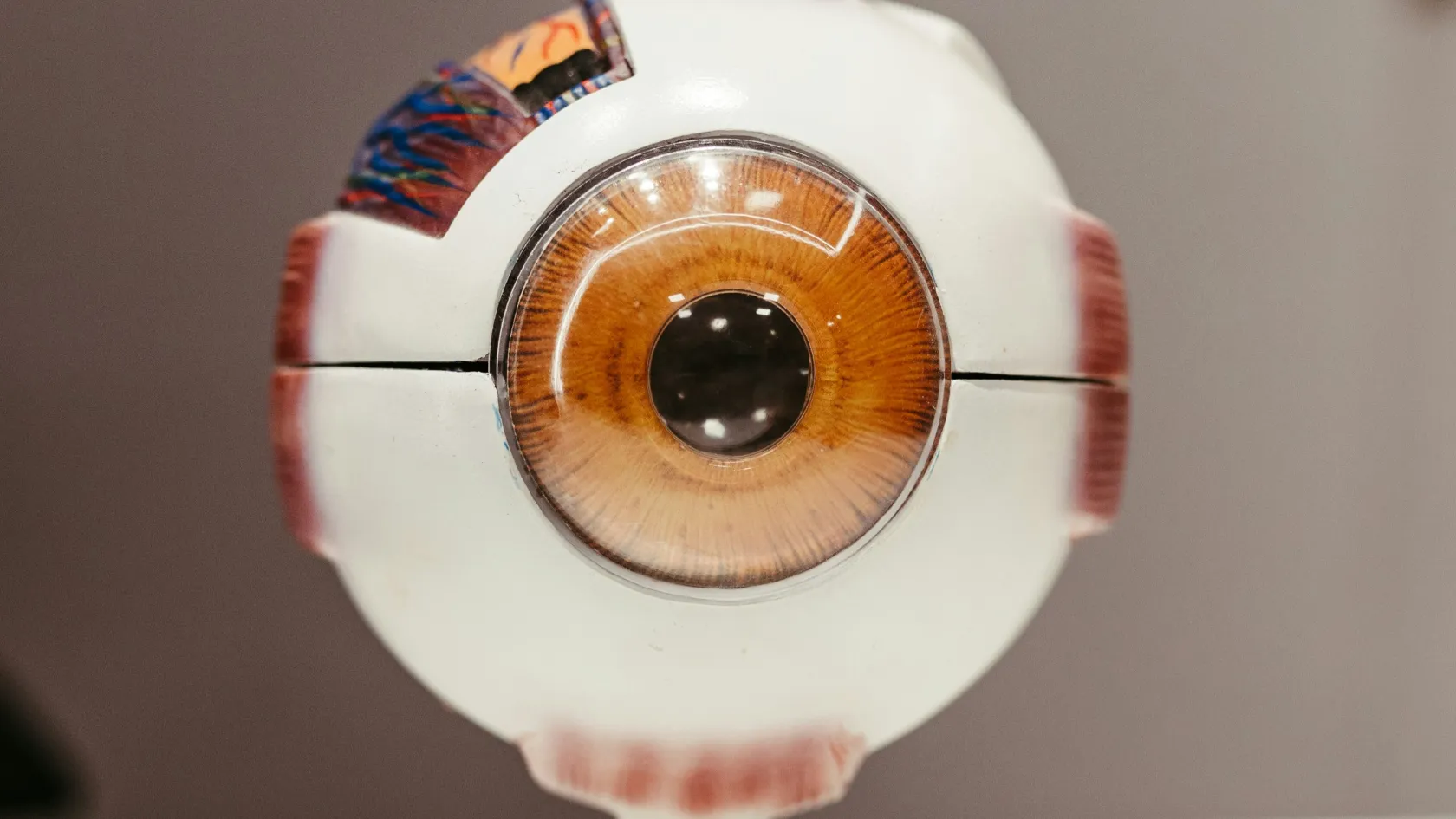
Cataract Surgery
The operation takes about fifteen minutes an eye and is performed the same way worldwide. The lens you choose is what differs, and it decides whether you read without glasses, see halos around headlights, or neither. This guide gives the audit numbers, what laser surgery adds and does not, the risks, and how both eyes fit into five days in Istanbul.
About This Department
Cataract surgery takes about fifteen minutes an eye, under drops or a local injection. In a national audit of 55,567 operations, 91 percent of eyes could read the driving-standard line afterward.
The cloudy natural lens is broken up with ultrasound through an opening under three millimeters wide and replaced with a clear artificial lens. The operation itself is standard worldwide. The lens varies, and the choice between one that sees clearly at one distance and one that tries to see at all of them decides more about life after surgery than any laser or brand. Send us your eye reports and a note of how you use your eyes day to day, and an ophthalmologist will tell you which lens fits, what it will and will not do, and how many days to plan.
What a cataract is, and when to operate
Behind the pupil, the lens starts out clear in youth and slowly clouds with age, diabetes, steroid use, injury or earlier eye surgery. Vision fades, colors dull, lights glare at night and glasses stop helping. Nothing reverses the clouding. Drops sold for the purpose do not work.
Operate when the cataract interferes with what you need to do, reading, driving, working or recognizing faces, and not at a fixed level of blur. Waiting rarely harms the eye. A very dense cataract does make surgery harder. One that crowds the drainage angle can raise the eye pressure, and that changes the timing.
This table scrolls sideways on a narrow screen. Swipe or drag to see every column.
| Lens | Clear vision at | Glasses afterward | Trade-offs |
|---|---|---|---|
| Monofocal | One distance, usually far | Reading glasses for near work | Fewest halos and the sharpest contrast. The standard lens worldwide |
| Monofocal toric | One distance, with astigmatism corrected | Reading glasses | Must sit at an exact angle, for corneal astigmatism |
| Extended depth of focus | Far and intermediate, such as a computer screen | Often for small print | Milder halos than multifocals. Near vision less complete |
| Multifocal or trifocal | Far, intermediate and near | Often none | Halos and glare around lights, lower contrast in dim light. Not for every eye |
Laser-assisted or standard surgery
A femtosecond laser can make the incisions, open the capsule and soften the lens before the ultrasound stage, and many clinics charge considerably more for it. A Cochrane review of 42 randomized trials and 7,298 eyes found little or no difference from standard surgery in complications, final vision or quality of life. The French FEMCAT trial of 907 patients found success rates of 41.1 percent with laser and 43.6 percent without, and standard surgery was the more cost-effective choice.
Some surgeons prefer the laser, and it may help in selected difficult eyes. For most patients the lens choice and the surgeon's experience matter more than the laser, and the extra cost buys little.
Anesthesia
Surgeons used local anesthesia in 95.5 percent of the 55,567 operations in the UK audit, by drops alone or with an injection around the eye. Serious complications of the injection occurred in 0.066 percent, and blunt-cannula techniques were safer than sharp needles. Surgeons keep general anesthesia for patients who cannot lie still or cooperate, and it lengthens the day.
Despite its advanced technology, femtosecond laser was not superior to phacoemulsification in cataract surgery and, with higher costs, did not provide an additional benefit over phacoemulsification for patients or health-care systems.FEMCAT trial, The Lancet, 2020
How do I choose the lens?
Lens choice is the real decision.
What the trials say about multifocal lenses
A Cochrane review of 20 randomized trials and 3,194 eyes compared multifocal with monofocal lenses. Distance vision came out the same. Near vision improved with multifocals, and patients depended less on glasses. Halos around lights were more than three times as common with multifocals, and glare was more common too, with some patients in one trial having the lens exchanged in the first year.
Motivation, the authors concluded, decides it. A patient who reads a great deal and drives little at night is a good candidate. A patient who drives at night for a living, or who needs sharp contrast for fine work, may prefer a monofocal lens and reading glasses.
What are the risks, and what results can I expect?
Serious problems rarely happen. The numbers below come from tens of thousands of real operations, which is the only fair way to judge a procedure that a patient has once in each eye and will live with for the rest of their lives.
Complications, in numbers
Four hundred and six surgeons recorded 55,567 operations in the UK Cataract National Dataset. Posterior capsule rupture, a tear in the bag that holds the lens, occurred in 1.92 percent. Surgeons treat it as the benchmark complication, since it can let lens fragments fall back into the eye and may need a second operation. Fragments retained in the eye occurred in 0.18 percent.
Afterward, 91 percent of all eyes and 94.7 percent of eyes with no other eye disease saw 6/12 or better, the line most countries require for driving. Eyes with other conditions such as macular degeneration or glaucoma did less well, 79.9 percent, because the cataract was not their only problem.
Infection inside the eye, endophthalmitis, is the most serious risk. In the ESCRS study of 16,603 patients across nine countries including Turkey, leaving out an antibiotic injected into the eye at the end of surgery raised the risk almost fivefold, and that injection is now standard. Swelling at the center of the retina, raised pressure, and months or years later clouding of the capsule behind the lens can also occur. A painless laser clears it in minutes.
Use of intracameral cefuroxime at the end of surgery reduced the occurrence of postoperative endophthalmitis.ESCRS multicenter study, 16,603 patients, Journal of Cataract and Refractive Surgery, 2007
- Pain that grows worse after the first day, rather than better.
- Vision that gets worse instead of improving.
- A red, sticky eye with discharge.
- A curtain or shadow across part of the vision, or a shower of new floaters and flashes.
- Nausea and a severe ache around the eye, which can mean high pressure.
Each needs an eye doctor the same day.
How many days in Istanbul, and what decides the cost?
Four to five days cover both eyes.
- Your latest eye examination report, glasses prescription and any scans of the retina.
- A list of other eye conditions and earlier eye surgery, including laser vision correction, which changes the lens calculation.
- Your general health, medicines and allergies, especially blood thinners and tamsulosin or similar prostate medicines, which affect the iris during surgery.
- A few sentences on how you use your eyes, reading, screens, night driving, sport.
What decides the cost
Lens choice decides most of it. A monofocal lens costs least, toric and extended depth of focus lenses more, and trifocal lenses most, and packages published by Istanbul hospitals list a separate price for each brand. The diagnostic measurements, the surgeon's fee, anesthesia, drops and follow-up visits make up the rest, and a femtosecond laser adds a charge that the trials say buys little. Some packages list the pre-operative tests separately.
Ask for a written quote per eye, naming the lens model, and ask what a second procedure would cost if a complication required one. Your own figure follows the free review of your reports.
Postoperative visual acuity of 6/12 or better was achieved for 91.0 percent of all eyes and 94.7 percent of eyes with no co-pathologies.Cataract National Dataset, 55,567 operations, Eye, 2009
- Antibiotic and anti-inflammatory drops for three to four weeks, on a written schedule.
- A shield at night for the first week. No rubbing.
- No swimming for two weeks, while showering, reading and screens are fine from the first day as long as soap and water stay out of the eye.
- A check with your own ophthalmologist at four weeks, who prescribes new glasses once the eye has settled and the measurements are stable.
One coordinator stays with you from the first message. The team works in English, Arabic, French, Russian, Serbian, Romanian and Spanish. Other languages are interpreted on request. An invitation letter naming the hospital and the surgeon goes out ten days before travel. The international patients office arranges the airport transfer, a hotel near the hospital for you and a companion, and the rides to each appointment, and a companion is needed on the day of surgery, since you will not see well enough to travel alone. Halal, vegetarian and diabetic meals are available. There is a prayer room. A request for a female doctor is passed to the department and met wherever the rota allows. Back home, the coordinator stays reachable on the same WhatsApp number, and your report names the lens model and power, which any future eye doctor will need.
Motivation to achieve spectacle independence is likely to be the deciding factor.Cochrane review of multifocal lenses, 2016
Cataract surgery FAQ
Is cataract surgery painful?
Can both eyes be done in one trip?
Is laser cataract surgery better?
Should I choose a multifocal lens?
When can I fly after cataract surgery?
Can my family come with me?
References
- Jaycock P, Johnston RL, Taylor H, et al. The Cataract National Dataset electronic multi-centre audit of 55,567 operations: updating benchmark standards of care in the United Kingdom and internationally. Eye. 2009;23(1):38-49.
- Endophthalmitis Study Group, European Society of Cataract & Refractive Surgeons. Prophylaxis of postoperative endophthalmitis following cataract surgery: results of the ESCRS multicenter study and identification of risk factors. Journal of Cataract and Refractive Surgery. 2007;33(6):978-988.
- Schweitzer C, Brezin A, Cochener B, et al. Femtosecond laser-assisted versus phacoemulsification cataract surgery (FEMCAT): a multicentre participant-masked randomised superiority and cost-effectiveness trial. Lancet. 2020;395(10219):212-224.
- Narayan A, Evans JR, O'Brart D, Bunce C, Gore DM, Day AC. Laser-assisted cataract surgery versus standard ultrasound phacoemulsification cataract surgery. Cochrane Database of Systematic Reviews. 2023;6:CD010735.
- de Silva SR, Evans JR, Kirthi V, Ziaei M, Leyland M. Multifocal versus monofocal intraocular lenses after cataract extraction. Cochrane Database of Systematic Reviews. 2016;12:CD003169.
Editor's note
Written by the Biruni Hospital medical editorial team. Reviewed by Sepide Sadık, Ophthalmology.
Medically reviewed by

Sepide Sadık
Ophthalmology
Related Treatments
View All
Cornea Transplant Surgery - Corneal Transplantation
Surgeons now replace only the layer of the cornea that has failed, the inner cells for Fuchs dystrophy, the front layers for keratoconus, the full thickness for deep scars. The choice decides how quickly you see and how likely rejection is. This guide gives the survival figures, the warning signs, the flying rule after a gas bubble and the days to plan.

Glaucoma Surgery
Glaucoma surgery lowers the pressure inside the eye to protect the sight that remains. The options run from a five-minute laser that frees many patients from drops, to stents placed during cataract surgery, to trabeculectomy and drainage tubes. This guide gives the trial results for each and explains why the larger operations need weeks of follow-up.
Ocular Oncology Surgery - Eye Cancer Surgery
Most eyes with melanoma are now saved with a radioactive plaque sewn to the eye for a few days, and survival matches removal. In children, retinoblastoma is curable when found early. This guide explains uveal melanoma by size and risk, plaque radiotherapy, treatment after spread, retinoblastoma care, and how long each treatment takes in Istanbul.

Premium IOL Implantation - Multifocal Lens Surgery
Premium intraocular lenses replace the eye's natural lens during cataract or lens replacement surgery and focus at more than one distance. A Cochrane review of 20 trials found the same distance vision as standard lenses, far better near vision and less need for glasses, with more halos at night. We explain trifocal, EDOF and toric choices.
Retina Surgery
Retina surgery repairs detachments, closes macular holes, removes scar membranes and clears diabetic bleeding, most often by vitrectomy under local anesthesia. In a randomized trial, 98.7 percent of detached retinas were attached at one year. A gas bubble after surgery means no flying for two to eight weeks, so we plan the stay around it.