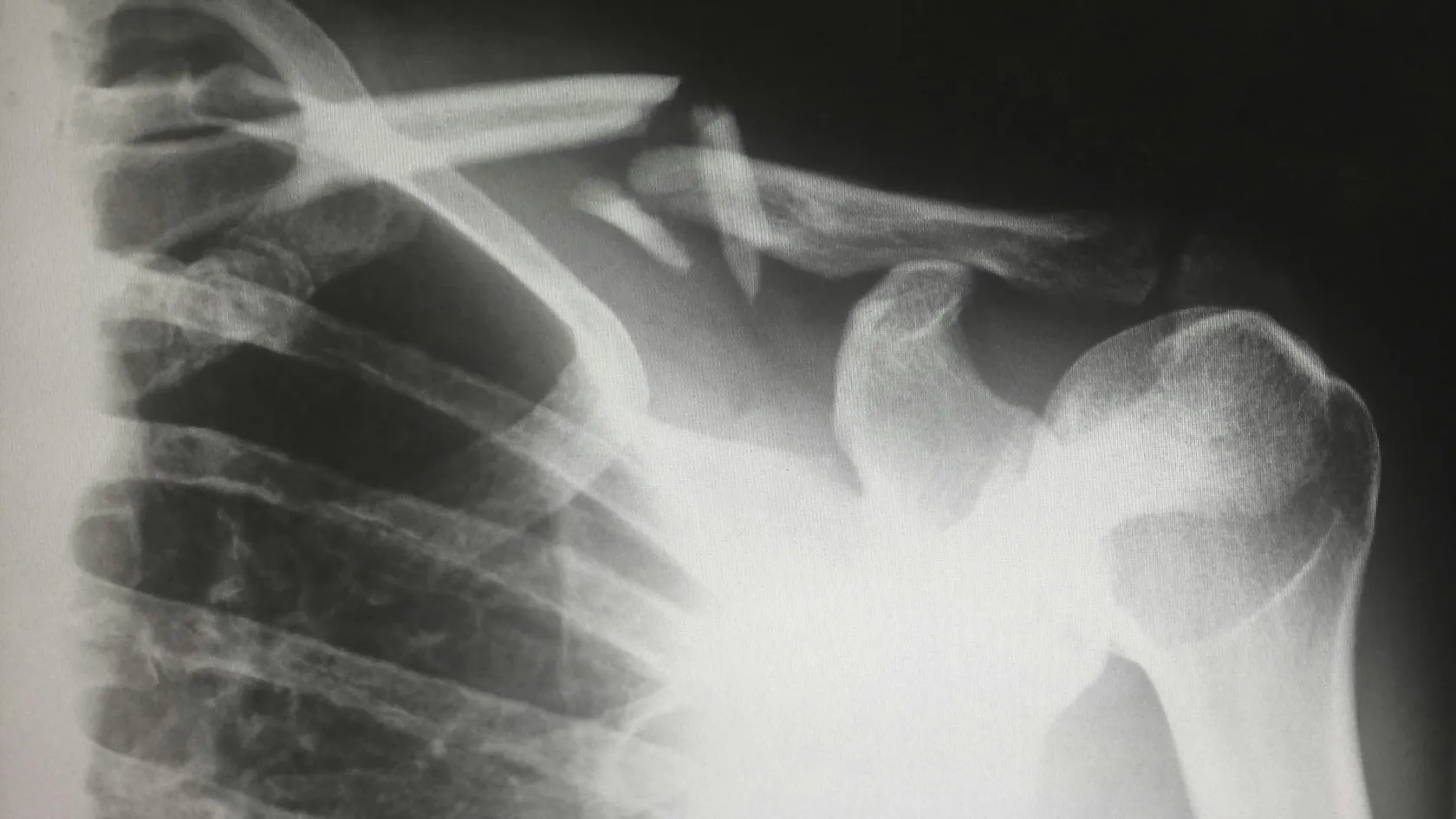
Pain at night, loss of reach and failure of injections and physiotherapy bring patients to surgery. Five conditions lead the list.
Anatomic or reverse
An MRI or CT shows the cuff tendons and the shape of the socket, and those two findings choose the implant.
The rotator cuff decides
With a healthy cuff and enough socket bone, an anatomic replacement restores the most natural movement. With a torn or wasted cuff, a badly worn socket or a fracture, a reverse replacement gives a stable shoulder that lifts. Age and activity tip close cases.
Anatomic total shoulder
At a minimum of two years of follow-up, total shoulder arthroplasty provided better functional outcome than hemiarthroplasty for patients with osteoarthritis of the shoulder.
Meta-analysis of four randomized trials, Journal of Bone and Joint Surgery, 2005
Replacing the socket as well as the ball
Bryant and colleagues pooled four randomized trials in 112 patients with a mean age of 68. Replacing the socket too, rather than the ball alone, gave better function, less pain and 13 degrees more forward elevation at two years.
The socket wears first
Papadonikolakis and colleagues pooled 27 studies of 3,853 anatomic replacements. Lines of loosening around the plastic socket appeared at 7.3 percent a year on X-ray, symptomatic loosening at 1.2 percent a year and revision at 0.8 percent a year, with no sign that the rate had fallen over time.
1
Anesthesia
General anesthesia and a nerve block.
2
Approach
An incision of ten to twelve centimeters at the front of the shoulder, between the deltoid and chest muscles.
3
Preparing the bones
The worn ball is removed, the socket is reshaped, and the surgeon sizes the implants.
4
Implants and repair
The socket and the stemmed ball go in, and the tendon at the front, the subscapularis, is repaired carefully because the joint depends on it.
There was no significant evidence that the rate of symptomatic loosening has diminished over time.
Systematic review of 3,853 replacements, Journal of Bone and Joint Surgery, 2013
Anatomic or reverse for arthritis
For arthritis with an intact cuff, the Australian registry compared 3,795 anatomic replacements with cemented plastic sockets against 8,878 reverse replacements.
Given the absence of survivorship differences at 4 years between rTSA and aTSA, but in light of the differences in the revision risk between men and women, surgeons might select an aTSA with an all-polyethylene glenoid to treat OA, despite the current popularity of rTSA.
Australian registry study of 12,673 replacements, 2021
Reverse total shoulder
How it works
Moving the center of rotation inward and down lengthens the deltoid, so it lifts the arm without help from the cuff. Patients who could not raise the arm before surgery reach above shoulder height after it, though turning the arm outward and reaching behind the back stay limited.
Younger patients
Surgeons designed reverse replacements for older patients. Their use in people under 65 keeps growing. A review of six studies in 245 patients aged 65 or younger found clear gains in function at around four years, with a complication rate of 18 percent, partly because a third had their reverse replacement to revise an earlier failed one.
Although there is a significant improvement in functional outcomes at midterm follow-up for RTSA in the patients aged ≤65 years, the pooled complication rates are high.
Systematic review of 245 patients, Journal of Shoulder and Elbow Surgery, 2019
What the registries show
Call the team the same day
A wound that leaks or reddens, a temperature of 38 degrees or more, a shoulder that suddenly gives way or locks, or numbness and weakness in the hand that last beyond the first day.
This table scrolls sideways on a narrow screen. Swipe or drag to see every column.
Australian registry, shoulder replacement for arthritis
| Finding |
Anatomic, plastic socket |
Reverse |
| Patients |
3,795 |
8,878 |
| Mean age |
69 |
74 |
| Revision at four years |
3.5 percent |
3.0 percent |
| Revision in the first three months |
Lower |
Higher, hazard ratio 2.17 |
| Women after three months |
Higher revision |
Lower revision |
1
Weeks 0 to 6
A sling for comfort, gentle movement guided by a physiotherapist, no lifting or pushing up from a chair with the arm.
2
Weeks 6 to 12
Active movement and light daily use, driving from around six weeks.
3
Months 3 to 6
Strengthening, swimming and golf, with full recovery taking up to a year.
RTSA outperforms all implants regarding revision rates at mid-term follow-up.
Australian registry, patients under 55, Journal of Shoulder and Elbow Surgery, 2023
Four reasons.
- Instability or dislocation, the leading cause after reverse replacement.
- Loosening of the socket after anatomic replacement.
- Failure of the rotator cuff or the repaired subscapularis tendon.
- Infection.
Shoulder replacement under 55
Australian registry data
1,564 replacements in patients under 55
Khoriati and colleagues analyzed every shoulder replacement for arthritis in patients under 55 reported to the Australian registry over more than twenty years. Reverse replacements had the lowest revision rates at mid-term, half replacements with a metal head the highest, and instability led revisions after reverse replacement while loosening and instability led them after anatomic replacement.
This table scrolls sideways on a narrow screen. Swipe or drag to see every column.
Shoulder replacements in patients under 55
| Implant |
Share of procedures |
Leading cause of revision |
| Anatomic total shoulder |
45.7 percent |
Instability, then loosening |
| Resurfacing of the ball |
23.1 percent |
Glenoid erosion |
| Reverse total shoulder |
16.6 percent |
Instability |
| Half replacement, pyrocarbon head |
10.2 percent |
Instability |
| Half replacement, metal head |
4.5 percent |
Glenoid erosion |
Recovery and the stay in Istanbul
Planning the trip
Two or three nights in hospital. Then seven to ten days in Istanbul for physiotherapy and the wound check, long enough for the physiotherapist to teach the exercises your local therapist will continue and for the surgeon to see the wound settle. Fitness to fly follows that check, with the sling on and an aisle seat on the opposite side.
Companion, language, cost and follow-up
Bring someone with you, since dressing, cooking and carrying a bag one-handed are hard for six weeks, and one companion can sleep in your hospital room. Coordinators speaking English, Arabic, French, Russian, Serbian, Romanian and Spanish arrange the hotel and transfers, and follow-up after you return home runs through them with X-rays at six weeks and one year reviewed by our surgeon. The cost depends on the implant type, and the estimate after the free review lists it.
Total shoulder arthroplasty FAQ
How long does a shoulder replacement last?
In the Australian registry, 3 to 3.5 percent of replacements for arthritis were revised within four years. Plastic sockets loosen at 1.2 percent a year in published series.
What is the difference between anatomic and reverse?
An anatomic replacement copies the normal joint and needs a working rotator cuff. A reverse one swaps ball and socket, letting the deltoid muscle do the lifting in a shoulder whose cuff has torn beyond repair.
Will I be able to lift my arm above my head?
With an anatomic replacement and a healthy cuff, most patients reach overhead. After a reverse replacement, lifting improves a great deal, and reaching behind the back stays limited.
How long will I wear a sling?
Around four to six weeks, mostly for comfort and protection of the repaired tendon.
How long will I stay in Istanbul?
Ten to fourteen days in all, including two or three nights in hospital.
References
- Bryant D, Litchfield R, Sandow M, et al. A comparison of pain, strength, range of motion, and functional outcomes after hemiarthroplasty and total shoulder arthroplasty in patients with osteoarthritis of the shoulder: a systematic review and meta-analysis. Journal of Bone and Joint Surgery (American Volume). 2005;87(9):1947-1956.
- Papadonikolakis A, Neradilek MB, Matsen FA. Failure of the glenoid component in anatomic total shoulder arthroplasty: a systematic review of the English-language literature between 2006 and 2012. Journal of Bone and Joint Surgery (American Volume). 2013;95(24):2205-2212.
- Gill DRJ, Page RS, Graves SE, et al. A comparison of revision rates for osteoarthritis of primary reverse total shoulder arthroplasty to primary anatomic shoulder arthroplasty with a cemented all-polyethylene glenoid: analysis from the Australian Orthopaedic Association National Joint Replacement Registry. Clinical Orthopaedics and Related Research. 2021;479(10):2216-2224.
- Khoriati AA, McBride AP, Ross M, et al. Survivorship of shoulder arthroplasty in young patients with osteoarthritis: an analysis of the Australian Orthopaedic Association National Joint Replacement Registry. Journal of Shoulder and Elbow Surgery. 2023;32(10):2105-2114.
- Vancolen SY, Elsawi R, Horner NS, et al. Reverse total shoulder arthroplasty in the younger patient (65 years or younger): a systematic review. Journal of Shoulder and Elbow Surgery. 2020;29(1):202-209.