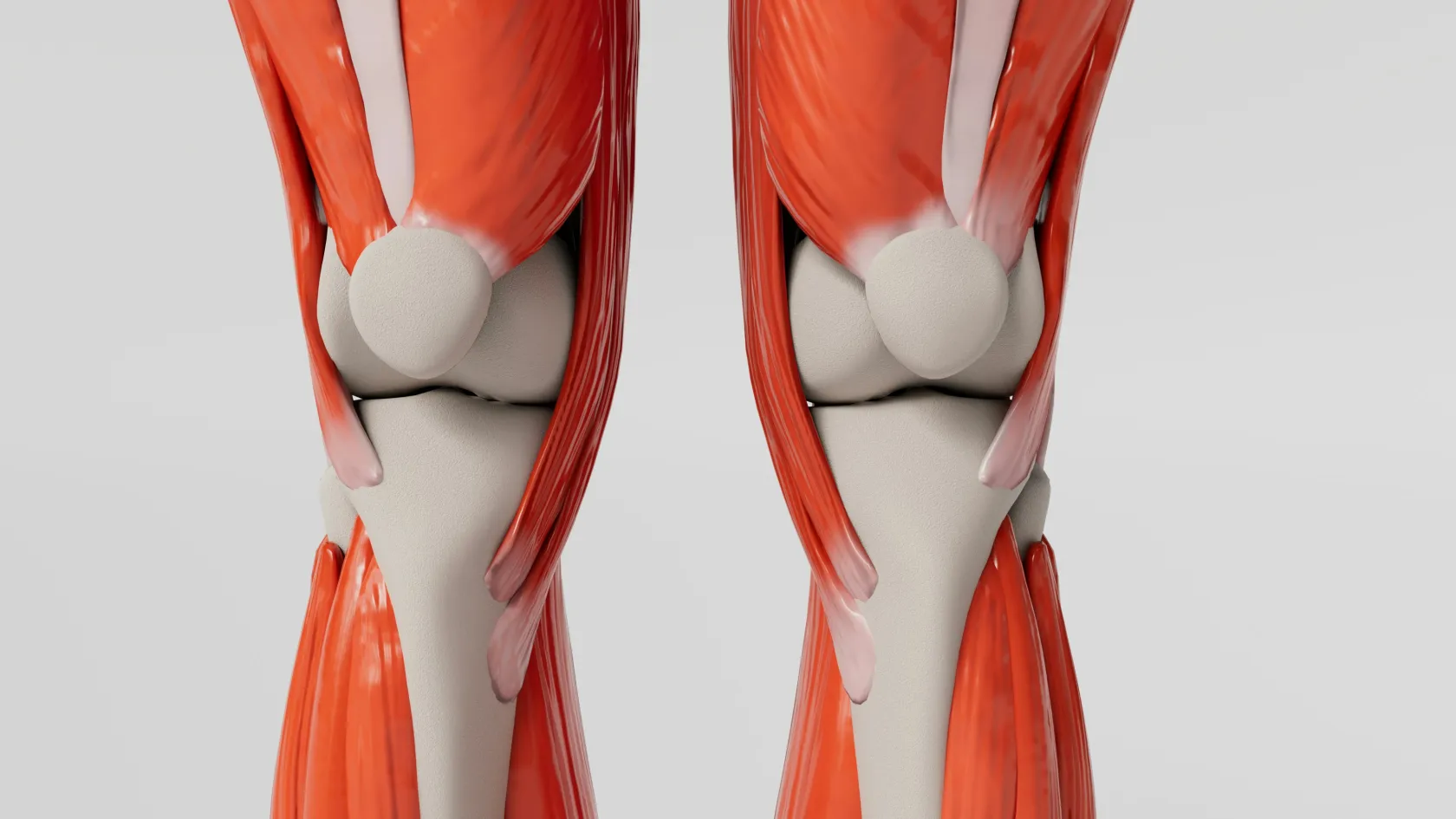
Four in five people are satisfied with a new knee, and the strongest predictor of being in the unhappy fifth is a set of expectations that were never met.
About This Department
Orthopedics
A new knee gives most people their walk back. Knowing what to expect is what makes them glad they did it.
In a Danish randomized trial published in the New England Journal of Medicine, knee replacement followed by physiotherapy doubled the improvement in pain and function at one year compared with physiotherapy, education and painkillers alone.
82%
Total knee replacements still working at 25 years
32.5 vs 16.0
Gain in pain and function scores, surgery against no surgery
10 to 14 days
Usual stay in Istanbul, hospital and hotel together
Free
Review of your knee X-rays before you book
Free consultation
The review costs nothing and carries no obligation. Send X-rays of both knees taken standing, any MRI report and your list of medicines, and an orthopedic surgeon will tell you whether a total or partial replacement fits, and what your health means for the timing. A coordinator replies in your own language.
Arthritis has worn through the cartilage of your knee, pain is waking you at night, and an orthopedic surgeon has suggested a new joint. Total knee arthroplasty, the medical name for total knee replacement, resurfaces the worn ends of the thigh bone and shin bone with metal and places a smooth plastic insert between them, so the knee glides again without bone grinding on bone. Below you will find how to judge whether the time has come, what the operation achieves in numbers, how a partial replacement compares, what the first days and weeks feel like, the risks with their management, how long to stay in Istanbul, and what happens once you are home.
Is it time for a new knee?
Nobody needs a knee replacement because of an X-ray. The decision belongs to the person living with the knee. It turns on pain that limits walking, stairs and sleep despite months of exercise, weight loss where it applies, painkillers and perhaps an injection, on an X-ray or MRI that shows advanced arthritis with the joint space narrowed or gone, and on a body fit enough for an operation and willing to do the rehabilitation afterward, which matters as much as the surgery itself. Age carries less weight. People from their fifties to their late eighties do well, though a younger, very active patient will more likely need a second operation decades later. A surgeon who reviews your X-rays taken standing, your list of medicines and your other illnesses can tell you whether the knee and the rest of you are ready.
Signs it may be time
Pain at rest or at night, a bent or bowed leg, walking limited to a short distance, and treatment without surgery already tried for several months. Stable heart and lung health, and diabetes under control.
Talk to us first
An active infection anywhere in the body, including the teeth or skin of the leg. A recent heart attack or blood clot. Very poor circulation in the leg. Pain that comes from the hip or the back rather than the knee.
Expectations decide satisfaction. In an Ontario study of 1,703 knee replacements, unmet expectations raised the risk of being dissatisfied more than tenfold.
What trying treatment without surgery first means
Three months or more of a structured exercise program with a physiotherapist, weight loss where it applies, simple painkillers and anti-inflammatory gel or tablets used correctly, a walking stick in the opposite hand, and sometimes a steroid injection. If pain still limits walking and sleep after that, the knee has had a fair trial.
What the operation achieves, in numbers
The strongest evidence comes from a Danish trial.
In one line
Surgery roughly doubled the improvement of treatment without surgery, and it lasts for decades in most people.
How the Danish trial worked
One hundred patients with moderate to severe knee arthritis were randomly assigned to knee replacement followed by twelve weeks of physiotherapy, education and dietary advice, or to the same twelve-week program alone. The results were measured at twelve months on a 100-point scale of pain, symptoms, daily activities and quality of life.
This table scrolls sideways on a narrow screen. Swipe or drag to see every column.
Knee replacement outcomes from trials and registries
Question
Answer
Source
Surgery against no surgery
Improvement in pain and function scores of 32.5 points with surgery against 16.0 without, at 12 months.
Skou, New England Journal of Medicine, 2015
Added risk
24 serious adverse events in the surgery group against 6 in the non-surgical group.
Same trial
Lifespan of the implant
About 82 percent still in place 25 years later.
Evans, Lancet, 2019, pooled national registries
Satisfaction
Around four in five. Nineteen percent were not satisfied in a large Canadian survey.
Bourne and colleagues, Ontario, 2010
Two other findings from the Danish trial matter. Most patients assigned to exercise, education and painkillers alone had still not chosen surgery a year later, and those who did have the operation gained far more, which supports the order most surgeons follow, a serious trial of treatment without surgery first and then the operation when that has run its course.
Total or partial knee replacement
Arthritis confined to the inner half of the knee can be treated by replacing that half alone. The TOPKAT trial, published in the Lancet in 2019, randomly assigned 528 patients in 27 British hospitals with arthritis limited to the inner compartment to a partial or a total replacement. Five years on, the knee scores matched. Complications and reoperations were similar too, and the partial replacement cost less and gave slightly more quality of life, so the authors recommended it as the first choice for that pattern of arthritis, while registries show the other side, with partial replacements wearing out sooner, 70 percent still in place at 25 years against 82 percent for total replacements in the Lancet review. Partial replacement leaves the healthy cartilage and both cruciate ligaments in place, which many patients notice as a more natural-feeling knee. Wider damage changes the answer. A knee with arthritis in more than one compartment, a damaged ligament or marked deformity needs the total replacement, and so does a knee with rheumatoid arthritis.
1
X-rays taken standing
Show which compartments have lost their cartilage.
2
Examination of the ligaments
The front cruciate ligament must be intact for a partial replacement.
3
A check of the deformity
A bow or knock-knee that corrects when the leg is straightened suits a partial replacement.
Robotic assistance
Several Istanbul hospitals advertise robot-assisted knee replacement, most often with Stryker's Mako system, which plans the bone cuts from a CT scan and limits the saw to the planned area. The implant then sits closer to the plan. Whether that becomes a knee that feels better or lasts longer for the average patient remains under study. Experience counts for more than the machine.
A CT scan before surgery. The system builds a three-dimensional model of your knee.
A plan for each cut. The surgeon sets implant size, position and alignment on the model.
Boundaries in theater. The robotic arm stops the saw at the planned limits.
A balance check. The surgeon measures the gaps in the bent and straight knee before the final implant goes in.
Inside the new knee
1
Bone surfaces cut
A few millimeters of worn bone and cartilage come off each surface.
2
Trial parts
Temporary components test size, stability and bend.
3
The final implant
The real parts go in, usually with cement, and the wound is closed in layers.
Cemented or cementless
Cement fixes the implant at once and suits most patients. Cementless designs rely on bone growing onto a rough metal surface and are mostly used in younger patients with good bone.
The femoral component. A curved metal cap, usually cobalt-chromium, over the end of the thigh bone.
The tibial component. A flat metal tray on top of the shin bone.
The insert. A highly cross-linked polyethylene spacer between the two, which takes the wear.
The patellar button. A plastic surface on the back of the kneecap, used by some surgeons in every knee and by others only when the kneecap has worn.
Bone cement, which sets within minutes, fixes most components, and some are designed for bone to grow into them instead. Published packages in Istanbul name implants from the large international makers, among them Stryker, Smith and Nephew and Zimmer Biomet. Get the implant name and model in writing. A surgeon at home will need it if the knee ever needs attention.
The operation and the days on the ward
Start before you travel
Exercises that strengthen the thigh muscles in the weeks before surgery make the first days afterward easier.
On a phone, swipe the table sideways to read every column.
Checks before the operation
Check
Why it matters
Blood tests and ECG
Anemia, kidney function, diabetes control and heart rhythm before anesthesia.
X-rays taken standing
Plan the size and alignment of the implant.
Skin and teeth
Any infection gets treated first, because bacteria can settle on the new joint.
Medicine review
Blood thinners and some diabetes and arthritis drugs are paused or adjusted.
1
Anesthesia
A spinal anesthetic with sedation or a general anesthetic, combined with a nerve block or local anesthetic around the knee to keep the first day comfortable.
2
The operation
One to two hours. The surgeon removes the worn surfaces, balances the ligaments so the knee is stable bent and straight, and fixes the new parts in place.
3
Day one
Standing and walking with a frame, usually on the day of surgery or the next morning, with a physiotherapist beside you. Clot prevention starts with medicine, stockings or foot pumps.
4
Discharge
Published Istanbul packages list three to seven nights in hospital, with discharge often around the fifth day once you can walk with crutches, manage a step and bend the knee to about 90 degrees.
Risks, with what is done about each
Serious problems are uncommon. Still, the Danish trial recorded four times as many serious adverse events with surgery as without it, so the decision deserves time.
Blood clots
Clots in the leg veins, and rarely in the lungs, are the reason for early walking, clot-prevention medicine for several weeks, and calf exercises on the flight home. Sudden calf pain, swelling of the whole leg, chest pain or breathlessness need a hospital the same day.
Infection
Uncommon but serious, because bacteria can settle on the implant. Antibiotics at the time of surgery and a careful check of skin and teeth beforehand reduce the risk. An infected knee needs a washout and, sometimes, a two-stage replacement of the implant.
Stiffness
A knee that will not bend past 90 degrees by six weeks. Intensive physiotherapy treats most, and some need a gentle manipulation under anesthesia.
Persistent pain
A minority of people still have pain a year later despite a well-placed implant. Realistic expectations and a pain plan agreed before surgery help, and a surgeon reviews any knee that stays painful.
Loosening and wear
The main reason for a second operation many years later, and the reason for a yearly or two-yearly X-ray in the long run.
Recovery week by week
Swelling is normal
The knee stays warm and swollen for weeks, and sleep can be poor for the first month. Ice, elevation and exercise settle both.
On a phone, swipe the table sideways to read every column.
A typical recovery after total knee replacement
When
What to expect
Days 1 to 5
Walking with a frame, then crutches. Swelling and bruising. Exercises several times a day.
Weeks 1 to 2
Outpatient physiotherapy, wound check, stitches or clips out around day 12 to 14.
Weeks 3 to 6
One crutch or a cane, then none. Driving once you can brake hard and are off strong painkillers, often around week six.
Months 2 to 3
Most daily activities, desk work, swimming and a static bicycle.
Months 6 to 12
The knee keeps improving, and swelling settles fully.
Kneeling stays uncomfortable for many people, and running and jumping sports are best given up for walking, cycling, swimming and golf.
How long to stay in Istanbul
Ten to fourteen days covers the trip for most people. Published packages agree on that window, with three to seven of those nights in hospital and the rest in a hotel close by, where outpatient physiotherapy continues and the wound gets checked before the flight.
Flying home
The surgeon issues a fit-to-fly letter once the wound is dry, walking is safe on crutches and clot prevention is in place, usually ten to fourteen days after surgery. Four habits keep the long flight safe.
1
The fit-to-fly letter
Issued by the surgeon after the wound check.
2
An aisle seat
Room to stretch the leg and to stand up.
3
Stockings and medicine
Compression stockings on, and the clot-prevention dose taken on the day.
4
Walk every hour
Up the aisle, with ankle pumps in the seat between walks.
Both knees in one trip?
Replacing both knees under one anesthetic is possible for fit patients with arthritis in both knees, and it means one anesthetic, one recovery and one trip, at the cost of a harder first two weeks and a higher risk of heart and clot complications than a single knee. Many surgeons prefer a different plan for patients over 75 or with heart or lung disease. Two operations a few days apart in the same admission is one option. Two trips months apart is another. Your health decides this, never the travel plan.
What decides the cost
One knee or two sets the largest difference. The implant model, a robot-assisted operation, the number of hospital nights, the physiotherapy sessions in Istanbul and the hotel nights before and after each move the total. Your own health moves it as well, and this is the part a published package cannot know. Diabetes that needs tighter control before surgery, heart disease that calls for a cardiology review and an echocardiogram, a body mass index high enough to lengthen the operation, blood thinners that have to be stopped and bridged, anemia that needs treating first, and a previous operation on the same knee with old scars and metalwork all add tests, sometimes an extra night or two, and occasionally a different implant. With your X-rays and your medicine list in hand, a surgeon can say in advance which of these apply, and the figure you receive then reflects your knee rather than an average one.
Published Istanbul packages list the surgeon and anesthesia fees, the implant, preoperative tests and X-rays, the hospital nights, physiotherapy sessions, airport transfers, an interpreter and, in some, hotel nights. Crutches, medicines after discharge, flights and extra nights sit outside many of them.
A quote you can compare names the implant model, counts the hospital nights and physiotherapy sessions, and says whether a hotel, crutches and medicines sit inside it. That figure comes only from a surgeon who has seen your X-rays taken standing. The review costs nothing.
Arranging the trip
A coordinator answers your first WhatsApp message and stays with you to discharge. The number still works after you fly home. The team speaks English, Arabic, French, Russian, Serbian, Romanian and Spanish, arranges interpreters for other languages, and puts a companion bed in your room so one person can stay throughout the admission, while the international patients office books the hotel for the nights either side and sends the invitation letter for a medical visa about ten days before travel. Transfers are arranged. Halal, vegetarian and diabetic meals come from the hospital kitchen, a prayer room sits on site, and a request for a female physician goes to the department with your first message.
Pack loose trousers and flat shoes with a back.
Bring your current medicines in their boxes.
Once you are back home
Exercises continue for at least three months. A physiotherapist at home helps in the first weeks. A review at six weeks, by video with the Istanbul surgeon or in person with a local orthopedic surgeon, checks the bend and the wound, and an X-ray at one year confirms the implant is settled. Tell any dentist or doctor treating an infection that you have a joint replacement.
A red, hot, swollen knee with fever, a wound that leaks after the first week, calf pain or breathlessness. Each needs a doctor the same day. A local emergency department sees you first, using the English discharge file with the implant details, and the coordinator relays the details to the surgeon who operated.
Total knee arthroplasty FAQ
How long does a knee replacement last?
About 82 percent of total knee replacements are still working 25 years later, according to pooled national registry data published in the Lancet in 2019.
How long is the hospital stay?
Three to seven nights in published Istanbul packages, and ten to fourteen days in Istanbul in total.
When can I walk after knee replacement?
On the day of surgery or the next morning, with a frame and a physiotherapist. Most people use one crutch or a cane by three to four weeks.
Is a partial knee replacement better?
For arthritis limited to the inner half of the knee, the TOPKAT trial found the same results at five years, with lower cost. Partial replacements wear out somewhat sooner, and they do not suit knees with wider damage.
Can both knees be replaced at the same time?
Yes, for fit patients. The first weeks are harder and the risks somewhat higher, so a surgeon decides from your health.
Can my husband or wife stay with me?
Yes. One companion stays in your room on the companion bed, and the international patients office arranges the hotel.
References
Skou ST, Roos EM, Laursen MB, et al. A randomized, controlled trial of total knee replacement. N Engl J Med. 2015;373(17):1597-1606.
Evans JT, Walker RW, Evans JP, Blom AW, Sayers A, Whitehouse MR. How long does a knee replacement last? A systematic review and meta-analysis of case series and national registry reports with more than 15 years of follow-up. Lancet. 2019;393(10172):655-663.
Bourne RB, Chesworth BM, Davis AM, Mahomed NN, Charron KDJ. Patient satisfaction after total knee arthroplasty: who is satisfied and who is not? Clin Orthop Relat Res. 2010;468(1):57-63.
Beard DJ, Davies LJ, Cook JA, et al. The clinical and cost-effectiveness of total versus partial knee replacement in patients with medial compartment osteoarthritis (TOPKAT): 5-year outcomes of a randomised controlled trial. Lancet. 2019;394(10200):746-756.
Editor's note
Written by the Biruni Hospital medical editorial team. Reviewed by Assistant Professor Şafak SAYAR, Orthopedics and Traumatology.