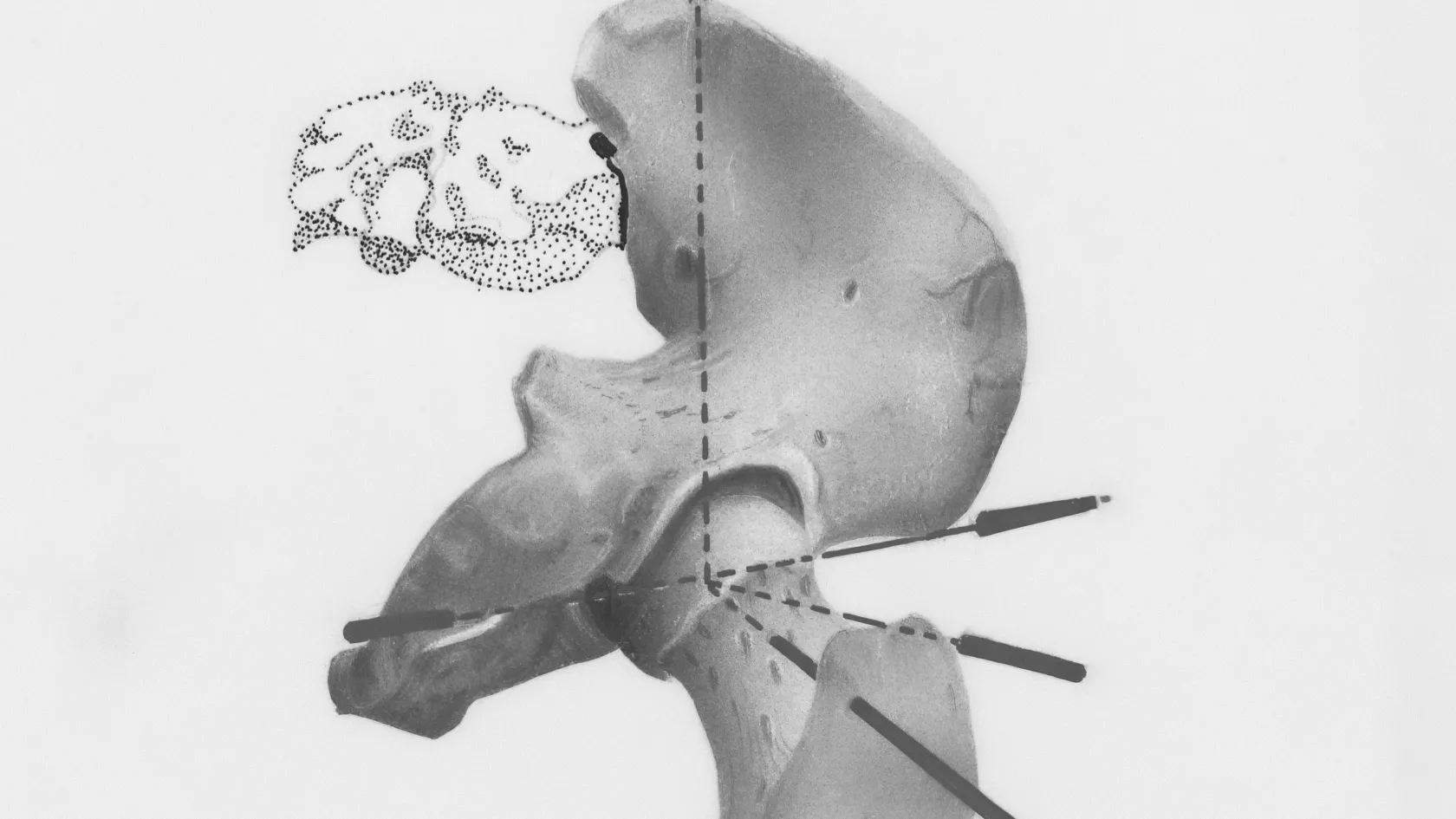
Total hip replacement swaps both sides of a worn hip joint for artificial parts. The surgeon removes the damaged ball at the top of the thigh bone and fits a metal stem with a new ball on it, then lines the socket in the pelvis with a cup and a smooth inner liner. Osteoarthritis causes most of the damage, followed by loss of blood supply to the ball (avascular necrosis), hip dysplasia from childhood, rheumatoid arthritis and fractures.
Four parts make up the prosthesis.
The surfaces that rub together, the bearing, decide much of how long the hip lasts.
When is the right time for a hip replacement?
Pain sets the timing, and X-rays alone do not. A hip replacement makes sense when pain wakes you at night, limits walking to a few hundred meters, makes socks and shoes a struggle, and has not settled with weight loss, physiotherapy, painkillers and a walking stick. Age by itself rules nobody in or out. Waiting has a cost, though. Patients who reach surgery after their function has fallen far finish with a worse result than those operated on before that fall, which is one reason surgeons no longer tell people to hold out as long as they can bear it.
Signs that the time has come
Night pain that painkillers no longer control. Limping that has started to hurt the back or the other knee. A walking distance that keeps shrinking. Giving up travel, work or family life because of the hip. Any of these, with an X-ray showing worn cartilage, is a reason to ask for an assessment.
Cemented or uncemented fixation?
Surgeons fix the prosthesis to bone in one of two ways. Bone cement, a quick-setting acrylic, grips the stem or the cup at once. Uncemented parts have a rough, coated surface that bone grows into over six to twelve weeks. Hybrids combine a cemented stem with an uncemented cup.
The survival of cemented implants for total hip replacement was higher than that of uncemented implants in patients aged 65 years or older.
Nordic Arthroplasty Register Association, 347,899 hips, BMJ, 2014
This table scrolls sideways on a narrow screen. Swipe or drag to see every column.
Ten-year implant survival by fixation and age, Nordic registers
| Age group |
Cemented |
Uncemented |
| 55 to 64 |
92.2 percent |
91.8 percent |
| 65 to 74 |
93.8 percent |
92.9 percent |
| 75 and over |
95.9 percent |
93.0 percent |
Proven combinations hold up
A Bristol review of 15 randomized trials covering 3,177 hips found no newer implant combination that lowered the risk of revision below a cemented, small-head, metal-on-polyethylene hip. Ceramic and cross-linked polyethylene suit younger patients for wear, and uncemented fixation suits good-quality bone, but the surgeon chooses each part for your age and bone, and a brand or a price tag says little about how long it will last.
Sport, work and the trip home
Sports return in a set order.
- Walking, from the first day.
- Stationary cycling at four to six weeks.
- Swimming once the wound has healed fully, at six weeks.
- Golf, outdoor cycling, hiking and doubles tennis from three to six months.
Activities to avoid
Contact sports, jogging on hard surfaces and jumping put high loads through the bearing and raise the risk of wear and loosening. Many surgeons accept light jogging in fit, experienced runners after a year, and the decision rests with your surgeon and the implant used.
A great majority of patients RTS and RTW after THA within a timeframe of 28 and 17 weeks, respectively.
Systematic review of 37 studies, Sports Medicine, 2018
Driving and work
Driving returns at four to six weeks.
You need to brake hard without pain and be off strong painkillers first. Desk work resumes at four to six weeks, and heavy manual work at three months. In the Amsterdam review of 37 studies, patients returned to sport at a level slightly above their level just before surgery, and to work in one to seventeen weeks.
Back to a desk or to manual work
Office workers start with half days. Jobs with lifting, ladders or long hours standing come back in stages over three months. A letter from the surgeon helps the employer plan.
The case for not waiting too long
In 379 patients from Boston and Montreal, the weakest before surgery stayed weakest after it.
Surgery performed later in the natural history of functional decline due to OA of the knee, and possibly of the hip, results in worse postoperative functional status.
Boston and Montreal cohort, 379 patients, Arthritis and Rheumatism, 1999
Staying in Istanbul
Plan on ten to fourteen days in Istanbul. That covers the assessment day, three to four nights on the ward and a week in a hotel close to the hospital with daily physiotherapy, ending with the wound check before the flight.
Physiotherapy fills that week.
What moves the cost
The implant design, the bearing and the fixation change the figure, together with one hip or both, the nights on the ward, any extra physiotherapy sessions and the hotel stay. Patients with diabetes, heart disease, blood thinners or a previous hip operation need more tests before surgery, and in some cases a night or two longer on the ward, while a complex hip, such as one with dysplasia from childhood, a previous fracture or a failed earlier implant, calls for special components, bone graft and more time in theater. Both hips in one stay cost less than two separate trips but ask more of the body. Published packages for hip replacement in Turkey include the operation, anesthesia, the named implant, the ward nights, physiotherapy before discharge, the interpreter and transfers, and leave out flights, insurance and the treatment of complications. A written estimate, free after the surgeon reads your X-rays, names the implant and the nights it assumes.
Newer implant combinations were not found to be better than the reference implant combination (metal-on-polyethylene (not highly cross linked), small head, cemented) in terms of risk of revision surgery or Harris hip score.
Network meta-analysis of randomized trials, BMJ, 2017
Flying home and follow-up
1
Before the flight
Wound check, a written discharge letter with the implant details and sticker, and clot prevention for four to five weeks.
2
Six weeks and one year
An X-ray and a review with your local orthopedic surgeon, with the images sent to the team here for comparison.
3
Every few years
A check X-ray to catch wear or loosening before it causes pain.
Your companion, language and food
What the international patients office arranges
A companion bed in your room for one family member each night of the admission, hotel nights before and after, the airport pickup, daily transport to physiotherapy, and the invitation letter for your visa, sent ten days before you fly.
Your coordinator speaks English, Arabic, French, Russian, Serbian, Romanian or Spanish from the first message, and stays on the same WhatsApp number after you are back home. Halal, vegetarian and diabetic meals, a prayer room on site, and a female surgeon on request wherever the rota allows.
If something changes years later
New groin or thigh pain, a limp that returns, or a hip that starts to click years after surgery can mean wear or loosening, and an X-ray sent to the team here gets a written opinion on whether revision is needed.
Total hip replacement FAQ
How long does a hip prosthesis last?
In the Nordic registers, 92 to 96 percent of hip replacements were still in place at ten years, depending on age and fixation.
Which hip prosthesis is the best?
No single brand. Trials found no newer combination better than a cemented, small-head, metal-on-polyethylene hip, and the surgeon matches the parts to your age and bone.
When can I fly home?
Ten to fourteen days after surgery, after the wound check, with clot prevention and leg exercises during the flight.
Can my husband or wife stay with me?
Yes. One family member sleeps on the companion bed in your room every night of the admission.
Can both hips be replaced at once?
In fit patients, yes, under one anesthetic. Many surgeons prefer two operations some weeks apart for patients with heart or lung conditions.