
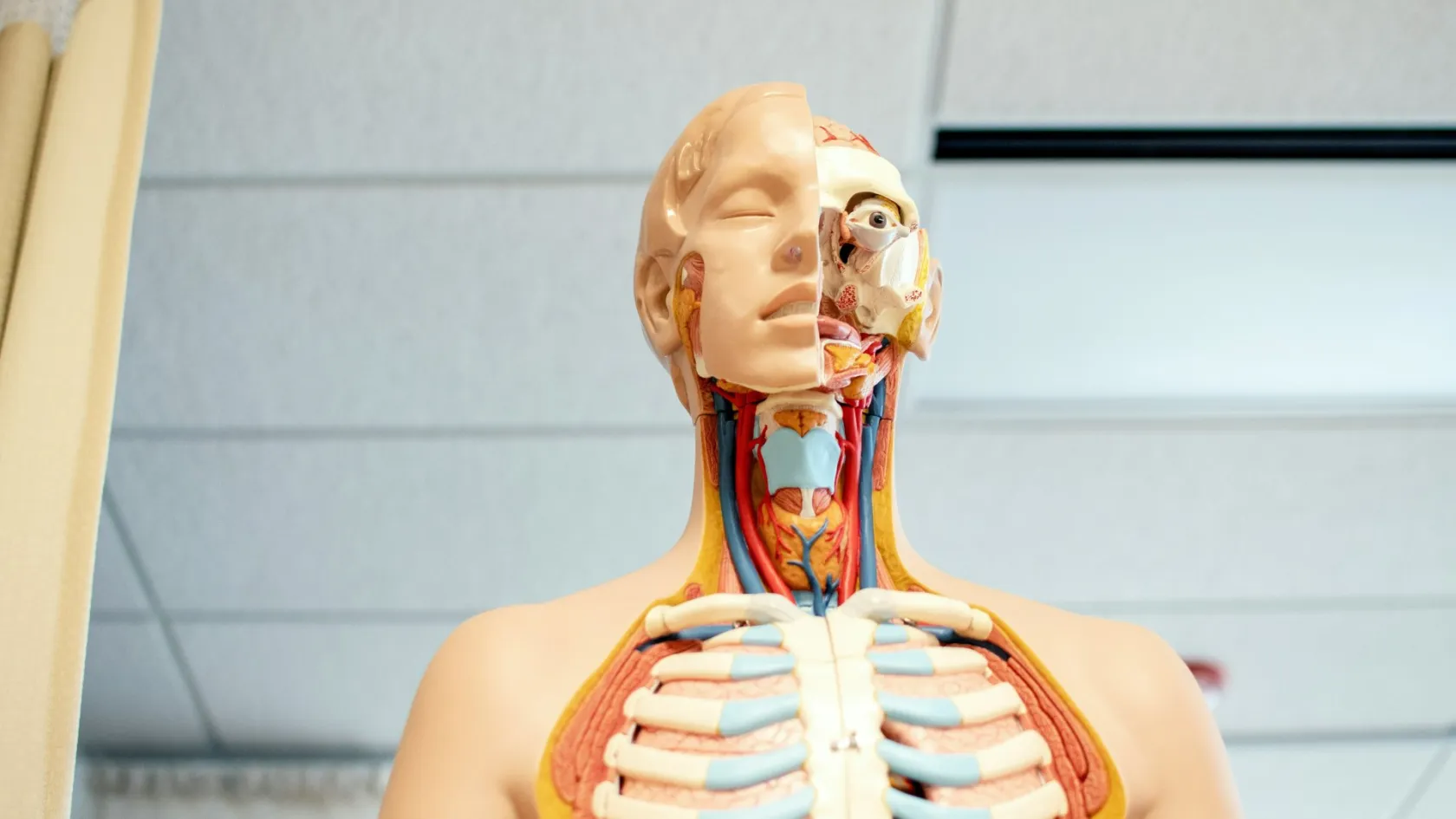
Thyroid Cancer Surgery
Nineteen out of twenty small papillary cancers watched for a decade never needed anything doing. Here is how surgeons decide who to operate on, and how much of the gland comes out.
About This Department
Every other cancer operation begins with the question of how to remove the tumour. Thyroid cancer begins one step earlier, with a question that sounds alarming and is asked seriously by every good endocrine surgeon in the world. Does this need an operation at all? For a small papillary cancer the answer is frequently no, or not yet, and the direction of travel across the last decade has run steadily towards doing less. This page sets out both decisions, in the order a specialist would put them.
Free consultation
Send the ultrasound report and the needle biopsy result
What decides everything here is the size of the nodule in millimetres, whether it touches the back of the gland where the nerve runs, and whether any neck lymph nodes look abnormal on ultrasound. That comes off the scan and the report. Attach the ultrasound with its measurements and any images, the fine needle aspiration cytology with its Bethesda category, any molecular testing, and a note of whether you have had radiation to the neck or a family history of thyroid cancer. What comes back is an opinion on whether an operation is needed now, how much of the gland it would involve, and what taking a tablet every day for the rest of your life would actually mean. The review costs nothing and carries no obligation.
Whether to operate at all
Thyroid cancer diagnoses have multiplied across the developed world over the last thirty years while deaths from thyroid cancer have stayed almost flat. Cancer epidemiologists have a name for that pattern and it is overdiagnosis, meaning the detection of tumours that were always there and would never have caused symptoms in a normal lifetime. Better ultrasound found them. Nothing made more of them appear. That distinction matters more than any other sentence on this page.
That fact sits underneath the entire subject. It is why surgeons began asking whether small papillary cancers need removing at all, and why the guidelines that once pushed everybody towards the operating theatre now spend several paragraphs describing the alternative before they describe the surgery.
What happened to 2,509 people who chose to watch instead
A Japanese hospital followed patients with low-risk papillary microcarcinoma who chose observation over immediate surgery, and reported outcomes on 2,509 of them. Progression was defined strictly, as the tumour enlarging by 3 mm or more, or a new lymph node metastasis appearing, and across ten years the progression rate in the largest group was 5.0 percent, and in the whole untreated cohort 6.1 percent. Older patients did better, with those over sixty at roughly a sixth the odds of progression compared with the young, while a separate review of the international experience found these tumours mostly unchanged in size or shrinking, nodal spread uncommon and easily handled by delayed surgery, and no distant metastases reported.
Nineteen out of twenty people who watched a small papillary cancer for a decade did not need to do anything about it, and the twentieth had an operation later that worked.
Active surveillance is not for everyone, and the honest limits deserve stating. It applies only to papillary cancers under a centimetre, sitting away from the back of the gland and away from the windpipe, with no abnormal nodes anywhere on the ultrasound and no aggressive features on the biopsy, and every one of those conditions has to hold, not most of them. It requires an ultrasound every six to twelve months, indefinitely, performed by somebody competent to measure the same nodule the same way each time. And it suits an older patient better than a younger one, both because progression is less likely and because a thirty year old is committing to decades of scans. For an international patient the surveillance requirement is the hard part rather than the decision, since the scans have to happen where you live and the person measuring the nodule in year four needs to be measuring it the same way as the person who measured it in year one, which is easier to arrange with an endocrinologist at home than with a hospital several time zones away. Raise it anyway. Say the words out loud. A surgeon who will not discuss it is telling you something about how the rest of your care will be decided.
Half the gland or all of it
Where an operation is the right answer, the second decision is how much thyroid comes out, and it matters far more to your life than to your cancer. The gland has two lobes joined by a bridge. Removing one lobe leaves the other producing hormone, so most people need no tablet afterwards. Removing both means taking a tablet every morning for the rest of your life and accepting a higher risk of the two specific complications described later on this page.
This table scrolls sideways on a narrow screen. Swipe or drag to see every column.
| Operation | What it involves, and what it commits you to |
|---|---|
| Lobectomy | One lobe and the bridge come out. Frequently a day case. Most people need no thyroid tablet, only one nerve and two parathyroid glands are at risk, and radioiodine is not an option afterwards because half the gland remains. |
| Total thyroidectomy | Both lobes come out. A tablet every morning for life, both nerves and all four parathyroid glands at risk, and the option of radioiodine and of following a blood marker for recurrence. |
| Completion thyroidectomy | A second operation to take the remaining lobe, done when the pathology after a lobectomy turns out worse than the biopsy suggested. Needed in a minority, and a reason the lobectomy conversation includes it. |
| Total with neck dissection | Adds removal of the lymph node compartments where disease has been proven. A longer operation with more risk to the nerve and the parathyroids, and reserved for nodes that are actually involved. |
Guidelines now permit either operation for low-risk cancers, and the evidence behind that permission repays reading in full rather than in summary.
Recurrence and survival, in 2,939 patients
A meta-analysis of six studies covering patients with papillary cancers of a centimetre or less, followed for a mean of nearly eleven years, compared taking the whole gland against taking one lobe. Recurrence occurred in 4.4 percent after total thyroidectomy and 8.3 percent after lobectomy, a difference that was statistically clear. Death from the disease occurred in 0.3 percent and 1.1 percent respectively, a difference that was not statistically significant and rested on seventeen deaths in total. The authors are careful about that second figure, noting that the number of deaths is too small to establish any correlation between the extent of resection and long-term survival.
Read that honestly and the position is specific. Taking the whole gland halves the chance of the cancer coming back somewhere in the neck, which is a real benefit and mostly means avoiding a second operation. It has not been shown to make you live longer. And it costs you a daily tablet and a higher complication rate, permanently. Which way that trade falls depends on you and not on a guideline. A lobectomy suits a low-risk cancer under about four centimetres, confined to one lobe, with clean nodes on ultrasound and no history of neck radiation. Total thyroidectomy is the answer for larger tumours, for cancer in both lobes, for proven nodal disease, for aggressive subtypes on the biopsy, and where the patient would rather have the certainty and the blood marker than the tablet-free life, which is a preference and not a medical error and is treated as one by any surgeon who has had this conversation more than a few hundred times.
The lymph nodes in the neck
Papillary thyroid cancer reaches the lymph nodes often, and in most patients it does not matter very much, which is a sentence that takes some getting used to.
Microscopic deposits in the nodes immediately around the gland are found in a large proportion of patients if a surgeon goes looking, and they have little effect on survival. That is why removing those nodes routinely, when the ultrasound showed nothing wrong with them, has fallen out of favour, since it adds risk to the nerve and to the parathyroid glands in exchange for finding disease that behaves harmlessly. Nodes that look abnormal on ultrasound are a different matter and they are removed, in compartments rather than picked out one at a time. A good preoperative ultrasound covering the whole neck as well as the gland is therefore the investigation that most changes what operation you have, and it is the one most often done badly, since scanning the thyroid takes ten minutes while scanning the whole neck properly takes half an hour and pays for itself only when it finds something. Insist on the half hour.
Ask whether your ultrasound covered the lateral neck compartments as well as the gland itself.
The operation itself
Ninety minutes to three hours. How much comes out and whether the neck is dissected decides where in that range you land, and the anaesthetic itself is straightforward in a way that anaesthetics for the abdominal cancer operations described elsewhere on this site are not.
The incision
Four to six centimetres, transverse, placed in a natural skin crease low in the neck so that it settles into the line and not across it. Surgeons mark it with the patient sitting up, since the crease moves when you lie down. Skin flaps are then raised and the strap muscles separated in the midline rather than cut.
Finding the nerve
The nerve supplying the voice box runs in a groove behind the gland and is identified deliberately before anything near it is divided. A second, smaller nerve supplying pitch runs near the upper pole and is protected there. Unhurried, this step determines more about your voice than anything else in the operation. Speed here costs nothing and risks a great deal.
Saving the parathyroids
Four glands the size of a grain of rice sit on the back of the thyroid and control your blood calcium. They are identified, and crucially their tiny blood supply is preserved by dividing vessels close to the thyroid capsule, and a gland that loses its blood supply is transplanted into a neck muscle, where it usually recovers.
Closing
Out comes the gland, the strap muscles are put back together and the skin is closed with an absorbable stitch or glue. A drain is used less often than it once was. Many units send patients home the same day after a lobectomy and keep them one night after a total, purely to check the calcium.
Scarless approaches exist, going in through the armpit, the breast or the inside of the lower lip. They move the scar. They do not remove it. They take longer, cost more and are appropriate for selected patients in experienced hands. Somebody offering one for a cancer that needs a proper node clearance is prioritising the wrong thing.
The voice, and the monitor
Almost everybody has a slightly altered voice for a few weeks afterwards, from the breathing tube, from the swelling and from the strap muscles being disturbed. That resolves. What people mean when they ask about the voice is the nerve. Bruising the nerve produces hoarseness and a weak cough that recover over weeks to months. Dividing it produces a permanent change in the voice on one side, which is uncommon in experienced hands and is the complication surgeons work hardest to avoid. A second nerve supplying the upper part of the voice box affects pitch and projection instead of hoarseness, and its injury is the reason some singers notice a change nobody else can hear. Anybody who uses their voice professionally should say so before the operation and not afterwards, because it changes how the upper pole is dissected and it changes whether the vocal cords are examined beforehand so that a comparison exists.
Which brings us to the device that is marketed hardest in this field.
Intraoperative nerve monitoring puts an electrode on the breathing tube and turns nerve stimulation into an audible signal, and it is offered by many hospitals as a reason to choose them.
What the randomised trials found
A Cochrane review pooled five randomised trials covering 1,558 patients and 2,895 nerves at risk, comparing monitoring plus visual identification against visual identification alone, and permanent nerve palsy showed a relative risk of 0.77 and transient palsy 0.62, and neither reached statistical significance. Operating time was the same. Rates of low calcium were the same. The authors graded the evidence as very low certainty and concluded that there is currently no conclusive evidence of superiority either way.
That is not an argument against using a monitor, and most high-volume surgeons do use one, particularly in reoperations and where the anatomy is difficult. It is an argument against choosing a hospital because it advertises one, since the evidence says that careful identification by an experienced surgeon is what protects your voice, and the monitor has not been shown to add to that.
The calcium problem
Of everything on this page, the calcium is what decides how long you stay in hospital and how long you should stay in the country, and it applies only when the whole gland comes out.
Your four parathyroid glands sit on the back of the thyroid and are the only thing in the body that raises blood calcium, and removing the thyroid disturbs them even when all four are saved, because their blood supply is measured in fractions of a millimetre. Published figures put a temporary fall in calcium after total thyroidectomy at somewhere between 30 and 60 percent of patients in the first day, and up to 90 percent of those recover parathyroid function within weeks to months.
What it feels like, and what is done about it
You will feel it before a blood test finds it. Tingling around the lips and in the fingertips and toes comes first, then cramping in the hands and feet, and it is uncomfortable rather than dangerous when it is treated promptly with calcium tablets, usually calcium carbonate one to three times a day and frequently with active vitamin D, correct it while the glands recover.
Permanent hypoparathyroidism, where the glands never recover and calcium and vitamin D become lifelong medication, is the reason total thyroidectomy is not chosen lightly for a cancer that a lobectomy would treat adequately.
Practically, that is why nobody should fly home two days after a total thyroidectomy. The calcium needs checking and the dose needs settling, and finding out at 30,000 feet that your hands have gone into spasm is a bad way to discover you were discharged too early.
The tablet and the iodine
Levothyroxine replaces what the gland was making, and after a total thyroidectomy you take it every morning for the rest of your life. The starting dose is calculated on your weight and is then adjusted by blood test at around six weeks, and again after that, until the level sits where your team wants it, so take it on an empty stomach with water, wait thirty to sixty minutes before eating, and keep calcium and iron supplements several hours away from it since they block absorption. After a lobectomy most people need nothing, and a minority find the remaining lobe cannot keep up and start the tablet later. Two situations change the dose sharply and both catch people out. Pregnancy raises the requirement immediately and needs the level checked as soon as the test is positive and not at the next appointment, and starting or stopping oestrogen or a proton pump inhibitor shifts absorption enough to matter.
Radioactive iodine has been used far more widely in the past than it is now, and the reason it was ever used so freely is elegant. Thyroid cells absorb iodine and cancer cells derived from them absorb it too, so a radioactive dose finds and destroys residual tissue anywhere in the body, which is an elegant treatment for the disease it suits. For low-risk papillary cancers completely removed at surgery, current guidance no longer recommends it routinely, and giving it means a period of isolation, dietary restriction beforehand and a small long-term risk of second cancers.
If it is offered, ask what it is expected to achieve in your specific case. It remains genuinely valuable for higher-risk disease, for known residual cancer and for distant spread, and it is unnecessary for a small tumour that has been fully excised, which is exactly why the practice has narrowed so sharply over the past decade in the countries that publish their outcomes.
Recovery and the scar
Recovery from thyroid surgery is the gentlest of any cancer operation described on this site, and patients who have read about the others are frequently surprised by how ordinary it turns out to be.
- Eat and drink the same evening. Nothing in the digestive tract was touched.
- Expect a sore throat for a few days. The breathing tube causes more of it than the operation does.
- Expect the neck to feel tight and the front of it to be numb, and expect that numbness to take months to go.
- Move the neck normally from the start. Holding it still causes more stiffness than the surgery does.
- Report tingling in the lips or fingers immediately, and do not sit on it to see whether it settles, because the treatment is a tablet and the alternative is a night of cramping hands that nobody needs to have.
Most people are back to desk work in one to two weeks and to full activity in three to four. Heavy lifting waits a fortnight. Beyond that there is no long convalescence to plan around, no equipment to hire and no months of rehabilitation, which is the single largest practical difference between this operation and the others described across this section of the site.
The scar goes through a predictable and alarming middle phase. It looks neat at two weeks, becomes red, raised and thickened between six weeks and three months, and then fades and flattens across the following year, so patients who were not warned about the middle phase spend it convinced something has gone wrong. Sun protection through the first year genuinely helps, silicone gel or tape earns its place, and the one thing that does not help is inspecting it every morning in the mirror. Judge it at twelve months. Not before that.
How long you stay
Seven to ten days in the country for a lobectomy, and ten to fourteen for a total thyroidectomy. The difference between those two numbers is the calcium. Nothing else.
Assessment takes two to three days, which is shorter than for any other cancer operation on this site. A neck ultrasound performed here as well as reported elsewhere, a fine needle aspiration if one has not been done or the slides cannot be reviewed, thyroid function and calcium, vocal cord assessment before surgery, and a multidisciplinary discussion. A CT scan is added where the tumour is large or the nodes are involved, and it changes the radioiodine plan afterwards because the contrast contains iodine. The hospital stay is a day case or one night after a lobectomy, and one to two nights after a total thyroidectomy, followed by five to seven days nearby, covering the wound check, the pathology discussion that determines whether anything more is needed, the calcium recheck and the first thyroid function test if the timing allows. Nobody sits in a hotel for a fortnight waiting, and most patients spend the second week doing ordinary things with a slightly stiff neck and a growing sense that the worst part was the waiting.
When you are cleared to fly
Flying is cleared at around a week after a lobectomy and ten to fourteen days after a total, once calcium has been stable off adjustment for several days. That last condition is the one that matters and it is the reason the two timelines differ, and where radioiodine is planned it usually happens six to twelve weeks later and is a second trip, or is arranged at home, and that has to be settled before you leave.
What drives the cost
Among the cancer operations described on this site, thyroid surgery is one of the least expensive, and that changes the shape of the conversation. Seven things move the total, and two of them are decided in theatre rather than before it.
- Whether one lobe or the whole gland comes out, which changes theatre time, ward nights and the calcium monitoring that follows.
- Whether a neck dissection is added, which roughly doubles the operating time.
- Whether a scarless or remote-access approach is chosen, which costs considerably more and takes longer.
- Nerve monitoring, energy sealing devices and any parathyroid imaging agent used in theatre.
- Frozen section during the operation, where the plan depends on what the pathologist says at the time.
- The final pathology, including any molecular testing that guides the follow-up.
- Radioiodine, if it is indicated, including the isolation stay it requires.
The costs that carry on after you fly home
Two running costs continue afterwards and neither appears on a surgical quotation. Levothyroxine, which is inexpensive nearly everywhere but permanent, and the blood tests that keep its dose right. Where the parathyroid glands never recover, calcium and active vitamin D join that list for good, and although the tablets themselves are cheap almost everywhere, the blood tests that keep the doses safe are an annual commitment that no surgical quotation has ever included.
Packages here ordinarily cover the transfers, the pre-admission workup, the operating fees, the stated ward nights, an interpreter, accommodation and the appointments before departure. Outside it sit the flights, the insurance, any extra nights, the treatment of a complication, radioiodine where it is needed and the lifelong medication, and the last of those is the item people forget entirely when they set two quotations side by side and pick the smaller number.
Five questions to ask before you accept a figure
Five questions turn a headline into a quotation. Does the figure assume a lobectomy or a total thyroidectomy, and what changes if the frozen section forces the larger operation. Is a neck dissection included if the nodes turn out to be involved. Are the calcium and thyroid blood tests after discharge inside the figure. Is nerve monitoring itemised separately. And is radioiodine included or quoted apart.
No quotation means anything until somebody has read your ultrasound and your cytology. That review is free.
Once you are home
Follow-up here is mostly a blood test and an ultrasound with no scan involved, which is unusual among cancers and makes it straightforward to arrange wherever you live, with thyroid function checked at six weeks and then at intervals until the dose settles, which for most people means three or four blood tests across the first year and one a year after that. After a total thyroidectomy a blood marker called thyroglobulin is followed, and it works precisely because no normal thyroid tissue remains to produce it, which is one of the real advantages of taking the whole gland. Neck ultrasound is repeated at six to twelve months and then less often, and by the third or fourth year most patients are seeing a doctor about this once a year and thinking about it a good deal less often than that.
Five documents should leave the building with you, in English, because a family doctor abroad will be running your care from them for years.
- The operative note, stating what was removed and whether the parathyroid glands were seen and preserved.
- The full pathology, with tumour size, subtype, margin status and the number of nodes examined and involved.
- Your levothyroxine dose and the blood level your team is aiming for, which is not the same for every patient.
- The calcium and vitamin D prescription, if you are taking one, with instructions on reducing it.
- The follow-up schedule, with the dates of the blood tests and the neck ultrasound.
Get in touch here for tingling or cramping that returns, a voice that is not recovering after several weeks, a wound that opens or swells rapidly, difficulty breathing, or thyroid results that will not settle despite dose changes. Most of those are answered by message within hours, and the levothyroxine dose in particular is adjusted remotely without difficulty once somebody here has the blood result in front of them and knows what target your team set at discharge. Give us the numbers themselves, not a description of them.
Frequently asked questions about thyroid cancer surgery
Could I avoid surgery altogether?
Do I need the whole gland removed?
Will my voice change?
Why do my lips and fingers tingle afterwards?
Do I definitely need radioactive iodine?
How long do I need to stay abroad, and when can I fly?
References
- Yamamoto M, Miyauchi A, Ito Y, Fujishima M, Sasaki T, Kudo T. Active surveillance outcomes of patients with low-risk papillary thyroid microcarcinoma according to levothyroxine treatment status. Thyroid. 2023;33(10):1182-1189.
- Smulever A, Pitoia F. Conservative management of low-risk papillary thyroid carcinoma, a review of the active surveillance experience. Thyroid Research. 2023;16(1):6.
- Vaccarella S, Franceschi S, Bray F, Wild CP, Plummer M, Dal Maso L. Worldwide thyroid-cancer epidemic? The increasing impact of overdiagnosis. The New England Journal of Medicine. 2016;375(7):614-617.
- Macedo FIB, Mittal VK. Total thyroidectomy versus lobectomy as initial operation for small unilateral papillary thyroid carcinoma, a meta-analysis. Surgical Oncology. 2015;24(2):117-122.
- Cirocchi R, Arezzo A, D'Andrea V, et al. Intraoperative neuromonitoring versus visual nerve identification for prevention of recurrent laryngeal nerve injury in adults undergoing thyroid surgery. Cochrane Database of Systematic Reviews. 2019;1(1):CD012483.
Editor's note
Written by the Biruni Hospital medical editorial team. Reviewed by Prof. Dr. Özcan YILDIZ, Medical Oncology.
Medically reviewed by
Prof. Dr. Özcan YILDIZ
Medical Oncology
Related Treatments
View All-
Bilateral Mastectomy
Whether you carry a BRCA mutation, have cancer in one breast or in both, bilateral mastectomy removes both breasts in one operation, and how much it helps depends on which of those three paths brought you to it.
-
Breast Conserving - Lumpectomy Surgery
Keeping the breast has never been the less thorough choice, and the largest recent studies now point the other way. This page explains who can have breast conserving surgery, what the margin report decides, and how long a woman traveling for it needs to stay.
-
Cytoreductive - Tumor Reduction Surgery
Patients cleared of every visible deposit lived 30 months in one gastric series. Those left with anything at all lived 7.3 months, however little remained.
-
Debulking - Ovarian Cancer Tumor Reduction
Two women with the same diagnosis on the same morning can get operations that share almost nothing. What decides it is who measured the disease first.
-
Debulking Surgery
Surgeons removed a median of 57 lymph nodes from women already cleared of visible disease. It bought no extra months, and tripled deaths within 60 days.