

Cytoreductive - Tumor Reduction Surgery
Patients cleared of every visible deposit lived 30 months in one gastric series. Those left with anything at all lived 7.3 months, however little remained.
About This Department
Removing every visible trace gave a median of 30 months. Leaving a scattering under a millimeter gave 7.3.
In one published series of gastric cancer that had spread across the abdominal lining, patients whose surgeons removed every visible trace of disease lived a median of 30 months. Patients left with anything at all, even a scattering of deposits under a millimeter across, lived 7.3 months. Leaving a little behind bought them nothing over leaving a lot.
Who this operation is for
Cancer that has spread across the lining of the abdomen, from the appendix, the bowel, the ovary, the stomach or the peritoneum itself, and that a surgeon believes can be removed in its entirety. The operation does not treat cancer that has reached the liver interior, the lungs or the bones, and it does not serve to reduce a tumor burden that cannot be cleared completely.
What the operation removes
The peritoneum lines the inside of the abdominal wall as a thin membrane and wraps every organ within it. Certain cancers spread across that surface instead of traveling through the bloodstream, seeding deposits that coat the bowel, the diaphragm, the liver capsule and the fatty apron called the omentum. Chemotherapy given into a vein reaches those deposits poorly, because the peritoneum has a limited blood supply of its own.
Cytoreduction attacks that problem mechanically. The surgeon strips the affected peritoneum away in sheets, a set of maneuvers called peritonectomy procedures, and removes whatever organs the disease has involved beyond saving.
Everything a full cytoreduction can include
In practice a full cytoreduction can include removing the omentum, the spleen, the gallbladder, segments of small and large bowel, part of the stomach, the uterus and ovaries, and the peritoneal lining stripped from under both diaphragms and off the pelvic side walls. Not every patient needs all of it. What determines the extent is where the disease has landed, and a surgeon planning this operation is effectively planning several operations that happen to occur through one incision on one day.
Hence the length of the operation, and hence its concentration into units that perform it often.
Complete, or not worth doing
Surgeons grade the result of a cytoreduction on a four-point scale recording how much disease remained at the end. Surgeons call it the completeness of cytoreduction score, and it carries more weight than any other number in this field.
Drag the table sideways where a phone cuts off the last column.
| Score | What remains | What it means in practice |
|---|---|---|
| CC-0 | No visible disease anywhere in the abdomen | The goal. This is the group in which survival improves |
| CC-1 | Deposits under 2.5 mm left behind | Counted as complete for some tumor types, where the drugs can reach that far |
| CC-2 | Deposits between 2.5 mm and 2.5 cm remaining | An incomplete result, with survival close to that of no surgery at all |
| CC-3 | Deposits larger than 2.5 cm remaining | The disease was too widespread to clear, and the operation has not achieved its purpose |
According to PubMed, a study of 125 patients with gastric cancer spread to the peritoneum found a median overall survival of 30 months in the group cleared to CC-0, against 7.3 months in everyone left with any residual disease, and no statistically significant difference between the CC-1, CC-2 and CC-3 groups when they were compared with one another (Ji et al, 2021). The authors advised against incomplete cytoreduction.
Read that finding carefully, because it inverts what most people assume about cancer surgery. Taking out most of a tumor burden is not most of a benefit. Either the operation achieves a complete clearance, or it exposes a patient to a very large procedure for very little return. So the entire discipline is built around predicting, before the incision, whether complete clearance is achievable.
Measuring the disease before deciding
Surgeons quantify how far the disease has spread using the peritoneal cancer index, a score built in three steps.
- The abdomen is divided into thirteen regions, nine across the cavity itself and four along the small bowel.
- The largest deposit in each region is scored from zero, for nothing visible, to three, for a deposit over five centimeters or a confluent sheet of disease.
- The thirteen scores are added, giving a total somewhere between 0 and 39.
A low total describes disease confined to a corner of the abdomen. A high total describes disease everywhere.
The index predicts whether a complete clearance is likely, and the threshold shifts by tumor type. Appendiceal and colorectal disease tolerates a higher score than gastric disease does. In the gastric study above, the point at which the chance of achieving a complete removal fell to fifty percent ranged from an index of 16 down to as low as 5, depending on when the spread appeared and whether tumor markers were raised.
Selection carries the whole discipline, and a unit that turns you down has still given you an answer.
Five findings routinely lead a specialist unit to advise against operating.
- Disease spread through the abdomen at a level where clearing all of it is not realistic.
- Extensive involvement of the small bowel and its blood supply, since removing enough of it would leave a person unable to absorb food.
- Cancer that has also spread to the liver interior, the lungs, the bones or distant lymph nodes.
- Disease that grew while on chemotherapy, which suggests biology that surgery will not outrun.
- Fitness that would not carry a person through eight hours of anesthesia, a spell in intensive care and a fortnight on the ward afterward.
A unit that declines to operate on those grounds is applying the evidence. A unit that agrees to operate without discussing any of them deserves a second opinion.
One honest complication sits inside all of this. Scans consistently underestimate peritoneal disease, particularly small deposits on the bowel, so the final decision is sometimes taken during a diagnostic laparoscopy or in the first hour of the operation itself, and every patient consenting to a cytoreduction should understand that the surgeon may open the abdomen, find more than the imaging showed, and close again without proceeding. That is a good outcome disguised as a disappointing one.
HIPEC, and what the trials show
Once the visible disease is out, many units wash the abdomen for thirty to ninety minutes with chemotherapy heated to around 42 degrees, a step called hyperthermic intraperitoneal chemotherapy, or HIPEC. The reasoning runs that heat improves drug penetration, and that delivering the drug straight into the abdomen reaches microscopic cells left behind at concentrations a vein could never achieve.
HIPEC is also the part of this treatment most heavily marketed to international patients, which makes the trial evidence worth quoting exactly.
Where it did not help
According to PubMed, a French randomized trial assigned 265 patients with colorectal cancer spread to the peritoneum, all of whom had already undergone a complete or near-complete cytoreduction, to receive oxaliplatin HIPEC or nothing further. Median overall survival was 41.7 months with HIPEC and 41.2 months without it, a hazard ratio of exactly 1.00, and serious complications at 60 days were more common in the HIPEC group at 26 percent against 15 percent (Quénet et al, 2021). The investigators concluded that cytoreductive surgery alone should be the cornerstone of treatment for these patients.
Where it did help
A Dutch trial in a different disease reached the opposite result. Among 245 women with stage III ovarian cancer having interval cytoreduction after chemotherapy, adding cisplatin HIPEC extended median recurrence-free survival from 10.7 to 14.2 months and median overall survival from 33.9 to 45.7 months, with grade 3 or 4 side effects occurring at a similar rate in both groups, at 25 and 27 percent (van Driel et al, 2018), also according to PubMed.
So HIPEC is disease-specific. Ask which trial applies to your cancer.
Cytoreductive surgery alone should be the cornerstone of treatment for these patients.The investigators’ own conclusion from the French randomized trial, after adding heated chemotherapy changed median survival by half a month and doubled serious complications.
If a hospital presents HIPEC as the reason to travel, or describes it as an advanced therapy without naming the tumor types where it has been shown to work, treat that as marketing. The surgery removes the disease. The wash may or may not add to it, and which of those is true depends entirely on what the cancer started as. The decision does not sit with one surgeon either. A peritoneal surface malignancy meeting here looks at the imaging, the pathology and the disease burden together before an operation this large is offered, and an international patient's case can go to that meeting before they fly, so the plan you travel for is a plan several specialties have already argued about rather than one opinion formed at a first consultation.
Which cancers it helps, and how much
Results vary enormously by where the cancer began, and a single survival figure quoted across all of them would be meaningless.
On a phone this table scrolls. Swipe it left to reach the remaining columns.
| Origin | Where cytoreduction stands |
|---|---|
| Appendix, including pseudomyxoma peritonei | The clearest indication, with long survival and sometimes cure after a complete clearance in low-grade disease |
| Ovary | Cytoreduction is standard care, and HIPEC has randomized evidence behind it in the interval setting |
| Colon and rectum | Complete cytoreduction improves survival in selected patients, though the trial evidence does not support adding HIPEC |
| Peritoneal mesothelioma | A recognized indication in specialist units, where surgery offers more than systemic treatment alone |
| Stomach | The hardest group, where benefit is confined to a narrow band of patients cleared completely |
Real-world figures from specialist centers put this in proportion. PubMed indexes an international registry of 1491 women treated for ovarian peritoneal disease across 11 units reported a complete or near-complete clearance in 81.3 percent of cases and median survival of 58 months when surgery came first, 60 months in the interval setting, and 42 months for recurrent disease (Torun et al, 2023). Five-year survival ran from 45 percent down to 28 percent across those same groups.
The operation and the days after it
The day has a shape, and knowing it removes most of what is frightening about the length of it.
The shape of a long day
Intensive care follows for one to three days, and the team books that bed before the operation starts. Close monitoring is part of the design rather than a sign something has gone wrong. Fluid shifts after an operation of this length are large, and they move fast enough to need hourly attention rather than daily review. Body temperature has been deliberately manipulated, so it has to be brought back and held there. And the abdomen has lost a great deal of its lining, which is the surface that normally regulates what crosses in and out of it. Three reasons, one bed.
Feeding restarts slowly, because bowel that has been handled for eight hours takes days to wake up, and nutrition goes in intravenously during the interval. Ward stay then runs one to three weeks.
Complications, stomas and the real numbers
Cytoreductive surgery carries a complication rate that matches its size, and the units publishing their own results say so directly.
What the registry data shows
Across 1491 patients treated in 11 specialist units, treatment-related mortality was 0.8 percent and major complications of grade 3 to 5 occurred in 25.1 percent, meaning one patient in four. Higher disease burden, incomplete clearance, low albumin and raised inflammatory markers before surgery all predicted a more difficult course (Torun et al, 2023), according to PubMed.
Surgeons watch hardest for a leak from a bowel join. It tends to declare itself between the fifth and tenth day, which is one reason the ward stay runs into weeks, and it can force a return to theater and a stoma. Deep infection inside the abdomen, bleeding and a collection needing drainage account for much of the rest, alongside kidney injury from the chemotherapy and blood clots. Where HIPEC is used, the intraperitoneal drug carries a specific risk of bone marrow suppression. Stomas deserve a direct answer. Where bowel has been removed and the surgeon judges a join too risky to make immediately, an ileostomy or colostomy is formed, and this is common enough that every patient should go into the operation knowing it might happen. Many are temporary and reversed after some months. Some are permanent. Ask your surgeon what the realistic likelihood is in your case, and ask to meet a stoma nurse while you are still deciding.
Recovery measured in months
Recovery from a cytoreduction is slower than most patients are led to expect, and the difference between the hospital timeline and the real one causes a great deal of unnecessary worry.
The four things that surprise people
Fatigue is underestimated more than any other symptom, and it persists for two to three months, sometimes longer where chemotherapy resumes afterward. The long abdominal wound needs three months before it has real strength, which rules out lifting anything substantial inside that window. Bowel habit changes after extensive resection whether or not a stoma was needed, so dietary advice from a dietitian belongs early rather than late. And resuming systemic chemotherapy resets the whole clock, which is expected rather than a setback. Discharge marks the beginning. Appetite takes weeks to return, and weight loss of several kilograms during the admission counts as normal, so eating small amounts frequently matters more than eating well in the first month. Patients underestimate fatigue more than any other symptom, and it persists for two to three months, sometimes longer where chemotherapy resumes afterward. The long abdominal wound needs three months before it has real strength, which rules out lifting anything substantial in that window. Feeling recognizably yourself again takes three to six months. Resuming systemic chemotherapy resets that clock. Where a stoma was formed, managing it is its own process and needs a specialist nurse near home. Bowel habit changes after extensive resection whether or not a stoma was needed, so arrange dietary advice with a dietitian early.
Stay, flying and the trip
Budget generously, and treat any itinerary that looks tight as a warning about the unit offering it.
The trip breaks into three unequal parts, and the last one is the part people forget to book.
- Before surgery, several days for imaging review, blood tests, anesthetic and nutritional assessment and the consultation itself, and sometimes a diagnostic laparoscopy to confirm the disease can be cleared.
- The admission itself, with intensive care and ward stay together occupying two to four weeks.
- After discharge, a further period before a long flight, because the wound has to be healed enough, eating has to be established, and clotting risk after a long abdominal cancer operation stays elevated for weeks.
Several days go at the start to imaging review, blood tests, anesthetic assessment, nutritional assessment and the consultation itself, and sometimes a diagnostic laparoscopy to confirm the disease can be cleared. Intensive care and ward stay together occupy two to four weeks. A further period after discharge is needed before a long flight, because the wound has to be healed enough, eating has to be established, and clotting risk after a long abdominal cancer operation stays elevated for weeks. Six weeks in the country is a more realistic plan than three. Two practical points get overlooked. If chemotherapy is due to resume afterward, whoever prescribes it needs the operative note and the pathology, and the timing of the first cycle is a decision that belongs to one team holding the whole picture. And if a stoma was formed, supplies and a trained nurse have to be arranged at home before departure, since arriving back without either is a genuinely difficult position to be in.
Nobody should make this trip alone. A companion bed sits in the patient rooms here, and accommodation either side of the admission is arranged through the international patients office rather than left to you. One thing does have to be organized at your end. If a stoma is formed, supplies and a nurse who knows how to teach you to manage it need to be waiting at home, because arriving back to neither is a genuinely difficult position and it is far easier to arrange from a ward than from an airport.
What drives the cost
Quotes for this operation vary widely, and the variation is genuine.
How much has to be removed sets the baseline, since a cytoreduction involving three organ resections and bilateral diaphragm stripping is a longer and more resource-intensive procedure than one clearing a limited area. Theater time carries its own charge, and these operations run to eight hours or more. Adding HIPEC brings a further drug and equipment cost that some quotes itemize and others absorb. Nights in intensive care rank among the largest single components. Nobody knows in advance how many will be needed. Bowel joins, stoma formation and the appliances that follow afterward appear as separate lines on some quotes and are folded silently into others. Where nutrition has to be given intravenously for a period, that carries a daily cost of its own, and blood products appear on the bill separately again. Patient factors move the figure too, particularly age, nutritional state, previous abdominal surgery leaving adhesions, kidney function and how much chemotherapy has already been given.
Published packages in this market for peritoneal surgery cover surgeon and anesthesiologist fees, theater time, a defined number of hospital and intensive care nights, pre-operative imaging and blood work, histopathology, and transfers with interpreting. Flights, accommodation past the stated nights, treatment of a complication, a return to theater, stoma supplies and any systemic chemotherapy sit outside them. Major complications run at one in four. So the terms covering an extended stay matter more here than the headline figure does.
Four questions to settle before accepting a quote
How many intensive care nights does the figure assume, and what does each additional night cost. Is HIPEC inside it. What happens financially if the abdomen is opened and the surgeon then decides against proceeding. Are stoma supplies and the first follow-up covered. That third question is the one nobody thinks to ask, and surgeons encounter the situation regularly.
Only a surgeon who has reviewed your own scans can answer any of it, and that review costs nothing.
Once you are home
Take the operative note, the completeness of cytoreduction score, the full histopathology and a copy of the postoperative imaging with you, and make sure the pathology reaches your own oncologist directly once it is issued.
That score matters well beyond the operating theater. It determines what your oncologist does next, and a report that records it clearly saves a conversation that is otherwise conducted through guesswork across two countries.
Follow-up then runs on two tracks. Surveillance imaging of the abdomen and chest continues at intervals over years, arranged near where you live, alongside tumor marker blood tests where they were raised at diagnosis, while systemic chemotherapy, where it forms part of the plan, resumes once the wound has healed enough to tolerate it, on a judgment the surgical and medical oncology teams reach together.
Keep the operating surgeon reachable. A scan at home showing something ambiguous in an abdomen that has had its entire lining stripped is difficult to interpret without input from the person who did the stripping, and post-surgical change is easily mistaken for recurrence by a radiologist seeing it for the first time.
The review costs nothing and commits you to nothing. Send the most recent CT of the chest, abdomen and pelvis with the actual images, any PET scan, the pathology report, and a summary of the chemotherapy given so far. A surgeon will tell you what the imaging suggests about the extent of disease and whether removing all of it is a realistic goal, which is the only question that matters before anything else is discussed.
Frequently asked questions
Is it worth having the operation if not everything can be removed?
The published evidence says no for most tumor types. In one study of gastric peritoneal disease, patients cleared completely lived a median of 30 months while those left with any residual disease lived 7.3 months, with no meaningful difference between small and large amounts left behind. This is why specialist units decline to operate when a complete clearance looks unachievable, and why that refusal reflects clinical judgment.
Does HIPEC add anything to the surgery?
It depends on the cancer. A randomized trial in colorectal peritoneal disease found identical survival with and without HIPEC after a complete cytoreduction, and more late complications in the HIPEC group. A separate randomized trial in stage III ovarian cancer found HIPEC extended both recurrence-free and overall survival without extra side effects. Ask which of those situations matches your diagnosis, and treat any hospital that promotes HIPEC without naming the tumor type with caution.
Will I need a stoma?
Possibly, and it is common enough that every patient should consent to the operation prepared for it. A stoma is formed when bowel has been removed and the surgeon judges an immediate join too risky to make safely. Many are temporary and reversed after several months, though some are permanent. Ask for an assessment of the likelihood in your own case, and meet a stoma nurse before surgery.
How many weeks abroad does a cytoreduction really take?
Plan on around six weeks. Several days are needed before surgery for imaging review, blood tests and anesthetic and nutritional assessment, intensive care and ward stay together commonly occupy two to four weeks, and a further period is needed after discharge before a long flight can be cleared. Wait for the surgical team to name a date before you book anything home.
What happens if the surgeon opens my abdomen and decides not to continue?
Scans consistently underestimate how far peritoneal disease has spread, so this happens and it is not a failure. If the surgeon finds disease that cannot be cleared completely, closing without proceeding spares you a very large operation that the evidence says would not have helped. Ask in advance what the financial arrangement is in that situation, since surgeons encounter it regularly.
How dangerous is the operation itself?
In an international registry of 1491 patients treated across 11 specialist units, treatment-related mortality was 0.8 percent and major complications occurred in around one patient in four. Higher disease burden, an incomplete clearance and poor nutritional state before surgery all predicted a harder course. Those figures come from units that perform the operation regularly, which is one of the arguments for having it done somewhere that does.
References
- Quénet F, Elias D, Roca L, et al. Cytoreductive surgery plus hyperthermic intraperitoneal chemotherapy versus cytoreductive surgery alone for colorectal peritoneal metastases (PRODIGE 7). A multicentre, randomized, open-label, phase 3 trial. Lancet Oncol. 2021;22(2):256-266.
- van Driel WJ, Koole SN, Sikorska K, et al. Hyperthermic Intraperitoneal Chemotherapy in Ovarian Cancer. N Engl J Med. 2018;378(3):230-240.
- Ji ZH, Yu Y, Liu G, et al. Peritoneal cancer index based patient selecting strategy for complete cytoreductive surgery plus hyperthermic intraperitoneal chemotherapy in gastric cancer with peritoneal metastasis. A single-center retrospective analysis of 125 patients. Eur J Surg Oncol. 2021;47(6):1411-1419.
- Torun BC, Glehen O, Kepenekian V, et al. Peritoneal metastasis of advanced epithelial ovarian carcinoma treated with cytoreductive surgery and hyperthermic intraperitoneal chemotherapy. A retrospective international multicentric data analysis. Eur J Surg Oncol. 2023;49(8):1489-1494.
Editor's note
Written by the Biruni Hospital medical editorial team. Reviewed by Prof. Dr. Özcan YILDIZ, Medical Oncology.
Medically reviewed by

Prof. Dr. Özcan YILDIZ
Medical Oncology
Related Treatments
View All-
Bilateral Mastectomy
Whether you carry a BRCA mutation, have cancer in one breast or in both, bilateral mastectomy removes both breasts in one operation, and how much it helps depends on which of those three paths brought you to it.
-

Breast Conserving - Lumpectomy Surgery
Keeping the breast has never been the less thorough choice, and the largest recent studies now point the other way. This page explains who can have breast conserving surgery, what the margin report decides, and how long a woman traveling for it needs to stay.
-
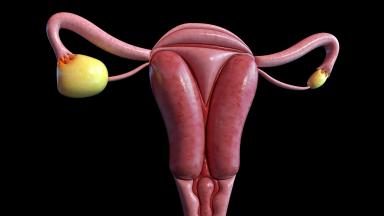
Debulking - Ovarian Cancer Tumor Reduction
Two women with the same diagnosis on the same morning can get operations that share almost nothing. What decides it is who measured the disease first.
-
Debulking Surgery
Surgeons removed a median of 57 lymph nodes from women already cleared of visible disease. It bought no extra months, and tripled deaths within 60 days.
-

Esophageal Cancer Surgery
Nothing is put back where it was. Your stomach is turned into a narrow tube, pulled up through the chest and joined to what remains of the gullet, and almost everything about eating and sleeping afterwards follows from that.