
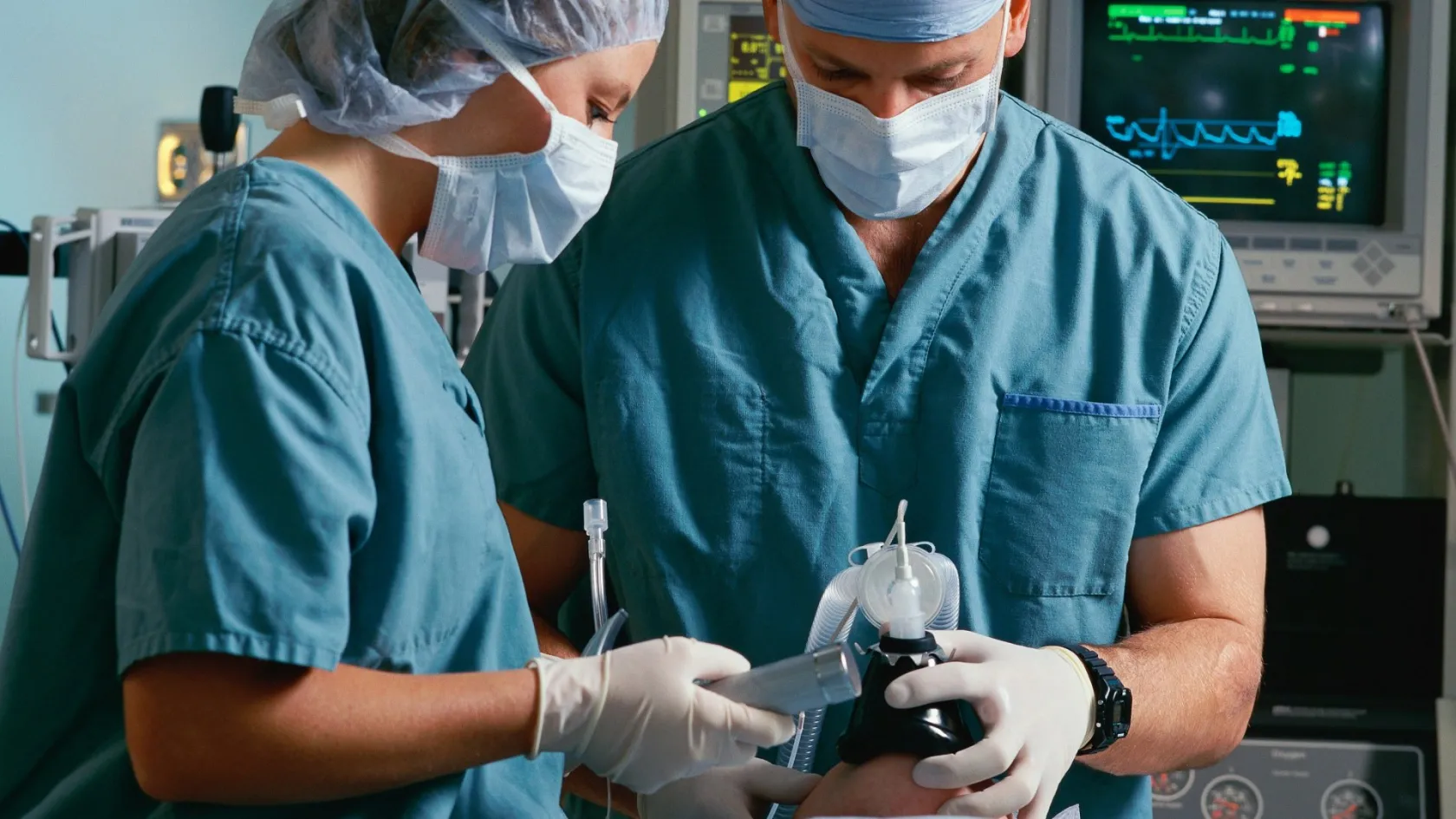
Testicular Cancer Surgery
This cancer is cured in almost everybody who gets it, which makes the interesting questions different. Sperm stored, markers drawn, the right incision agreed, and none of the three can be done afterwards.
About This Department
Every other page on this site has to be careful about survival. This one does not. Testicular cancer gets cured in the overwhelming majority of men who get it, including a great many whose disease has already spread when they are diagnosed, and that single fact reorganises everything that follows. The field has spent thirty years working out how to cure people with less treatment rather than more, because the men being treated are young and will live with the consequences for forty years.
Free consultation
Send the scrotal ultrasound and the marker blood tests
Three blood values matter enormously here and they need drawing before anything is removed, so if they have not been taken yet, say so and we will tell you which ones to request. Send the scrotal ultrasound with images, the alpha-fetoprotein, beta hCG and LDH results with their dates, any CT of the chest, abdomen and pelvis, and a note of your age and whether you want children. That last question is not a formality. It determines whether sperm storage has to happen this week, and the window does not reopen once treatment begins. The review costs nothing and carries no obligation. Nobody here will rush you into an operating theatre before the fertility question has been settled properly, because that is the one decision on this page that cannot be revisited afterwards, whatever anybody would prefer, and no amount of urgency about the tumour changes it.
Start with the outcome
Most men reading this are between twenty and forty, have found a lump that was not there before, and have spent several nights assuming the worst. So the outcome goes first rather than last.
What the figures look like
Testicular germ cell cancer is among the most curable solid tumours in medicine. Disease confined to the testicle is cured in almost every case, and disease that has spread to the lymph nodes is cured in the large majority of men who have it. Even disease that has reached the lungs is frequently curable, which is true of almost nothing else, and it is the reason this cancer is taught to medical students as the example of what treatment can achieve. Very few cancers behave this way. Almost none behaves this way once it has spread, which is why oncologists talk about this disease differently from every other one they treat and why the tone of this page is different from every other page on the site.
Why that changes the questions
That changes what the decisions on this page are about.
With cure close to assured, the interesting questions become how much treatment you actually need, what it will cost you over the next forty years, and what has to be protected before anybody starts. Those questions occupy the rest of this page, because they are the ones that will still matter to you in 2065.
Three things before the scalpel
Everything else on this page can be revisited later, whereas these cannot, and all of them are frequently rushed past in the few days between a scan and an operating list.
This table scrolls sideways on a narrow screen. Swipe or drag to see every column.
| Before surgery | Why the timing is fixed |
|---|---|
| Store sperm | Semen quality is frequently already reduced by the tumour itself, and it falls further with surgery and much further with chemotherapy. Storing beforehand costs a day. Not storing cannot be undone, and men who declined at diagnosis are the ones who regret it years later. |
| Draw the markers | Three blood proteins are produced by these tumours and their levels before surgery are part of the staging system itself. Take them afterwards and the pre-treatment value is gone permanently, which weakens the staging and complicates every later interpretation. |
| Agree the incision | The testicle must come out through the groin with the cord divided high, and not through the scrotum. The reason is anatomical and permanent, and the next section explains what happens when the wrong route is taken. |
| Decide about an implant | A prosthesis can be placed at the same operation or later, and placing it later means a second anaesthetic. Deciding beforehand is easier than deciding afterwards, and being asked at all turns out to be less universal than it should be. |
How much time this actually costs
None of those four takes more than a day to arrange. The pressure to operate immediately is almost always felt rather than clinical, since germ cell tumours are fast by the standards of cancer and slow by the standards of a week.
The operation itself
Thirty to forty-five minutes, general or spinal anaesthetic, and home the same day in most units.
The incision
Five to eight centimetres in the groin crease on the affected side, following a natural line so that it settles almost invisibly. Nothing gets cut on the scrotum at all, which surprises men who had assumed otherwise.
Controlling the cord first
The spermatic cord, carrying the artery, veins and vas deferens, is isolated and clamped before the testicle is handled at all. Doing it in that order means no tumour cells can be squeezed into the circulation while the testicle is being mobilised.
Delivering the testicle
Up out of the scrotum comes the testicle, through the same groin opening, without the scrotal skin being entered. The surgeon then divides the cord high, at the internal ring, and ties it with a long marker suture so that any future surgeon can identify the stump precisely.
Implant and closure
Where a prosthesis has been agreed it goes into the empty scrotal sac now, through the groin opening, and is anchored so that it sits at the right level rather than riding upward. The wound closes in layers with absorbable stitches under the skin.
What is not involved
No drain, no catheter, no packing. Most men walk out the same afternoon.
Why the groin and not the scrotum
Testicles develop inside the abdomen and descends before birth, dragging its blood supply and its lymphatic drainage down with it. Those lymphatics run back up to nodes deep in the abdomen alongside the great vessels, so the first place this cancer spreads is nowhere near the groin. The scrotum drains somewhere entirely different, to nodes in the groin itself.
Cut through the scrotum and you introduce tumour into a lymphatic territory the disease had no business being in, which is the entire reason for an incision that seems, to a patient, to be in the wrong place.
Twenty-one studies on taking the wrong route
Outcomes were examined in a systematic review after testis-sparing surgery and after scrotal violation in men with masses suspicious for germ cell tumour. Scrotal violation carried a higher aggregate risk of local recurrence than a proper groin approach, at 2.5 percent against 0.0 percent. Most patients who had been operated on through the scrotum went on to receive additional treatment they would otherwise have avoided, and 9.3 percent were found to still harbour primary tumour when the scrotal scar was later excised. Short-term metastasis and survival did not appear to be affected. Testis-sparing surgery carried a local recurrence risk of 7.5 percent at three to five years despite most patients receiving adjuvant radiotherapy or chemotherapy afterwards, which is a considerable amount of additional treatment to accept in exchange for keeping part of an organ, and it explains why the approach stays reserved for men with a single remaining testicle or tumours on both sides rather than being offered as a general alternative.
How serious this actually is
Read the survival line carefully, because it is genuinely reassuring. A man operated on through the scrotum has not lost his chance of cure. What he has acquired is a local recurrence risk, a likely course of treatment he did not need, and possibly a second operation to excise the scar.
If it has already happened
If this has already happened to you, say so early. It stays manageable and it changes the plan.
What about keeping part of the testicle
Keeping part of it
Removing only the tumour and preserving the rest of the testicle sounds attractive and is reserved for narrow circumstances, principally a small tumour in a man's only remaining testicle or tumours in both. The recurrence figure above explains why it is not offered more widely.
Fertility, including the hard case
One healthy testicle produces enough sperm and enough testosterone for a normal life, so losing one does not by itself make a man infertile or require hormone replacement. Take that as the reassurance, and note the two qualifications attached.
One is that men with testicular cancer frequently have below-average semen quality before anything is done to them, for reasons connected to whatever made them susceptible in the first place. The other is that chemotherapy, where it becomes necessary, damages sperm production for months to years and occasionally permanently.
Why storing beats hoping
Hence storing beforehand rather than hoping.
When there is nothing to store
Some men are told at diagnosis that their sample contains no sperm at all, which is a brutal thing to hear in the same week as a cancer diagnosis and is, importantly, not the end of the matter.
Searching the tissue itself
Nine men with severe absence of sperm were reported by a tertiary centre, with severe absence of sperm in their semen who underwent microsurgical sperm extraction at the same operation as their orchidectomy, searching both testicles under an operating microscope. Sperm was retrieved in three of the nine, once from the affected side, once from the other side and once from both. No complications occurred and no man developed low testosterone afterwards. Two of the three went on to assisted conception, producing two pregnancies, one healthy live birth and one miscarriage. That is a small series, and it describes nine men who would otherwise have had nothing stored at all.
Three men out of nine hardly counts as a high success rate and hardly counts as nothing either, and the alternative was certainty of nothing. This has to be planned before the operation rather than requested afterwards, because the tissue is gone once the specimen leaves theatre.
Ask about it if your semen analysis comes back empty. Nobody offers it routinely. It exists all the same.
The implant nobody mentions
Silicone prostheses can be placed in the empty side, either at the original operation or at any point afterwards. Men divide about whether they want one, entirely reasonably, and the interesting finding in the literature is about who gets asked.
Fifty-nine men, asked afterwards
Implants were always available at one Portuguese centre, and cost played no part in the decision surveyed men who had undergone orchidectomy. Of the 59 who replied, 86.4 percent had chosen an implant and 96.1 percent of those were satisfied with it, though 25.5 percent described it as too firm. Among the minority who went without one, 37.5 percent had feared complications and 37.5 percent had felt it unnecessary, while 25 percent said it had simply never been offered to them. Sexual function scores showed no significant difference between men with and without an implant, and self-esteem scores were similar in both groups, which suggests that the decision matters more for how a man feels about being asked than for anything measurable afterwards. Being asked is the part that matters. Choosing either way afterwards appears to leave men in much the same place.
A quarter of the men who did not have an implant went without one because nobody raised the subject. Carry that finding into your own consultation.
Two practical points
Two practical points. An implant feels firmer than a testicle and always will, and a quarter of otherwise satisfied men still mentioned it. And placing it at the same operation avoids a second anaesthetic, though it can be done later without difficulty if you would rather decide once the cancer question is settled.
What the blood tests do
Three substances in the blood carry more weight in this disease than imaging does, which is unusual enough to explain properly.
Two of them are produced by the tumour itself while the third reflects how much tumour is present overall, and all three behave in ways that make them unusually informative. Their levels before surgery form part of the formal staging system, so a value taken after the testicle is gone is not the same measurement and cannot substitute for it.
How the numbers are used
What happens next is the elegant part. Each of these substances disappears from the blood at a known rate once its source is removed, so the team can predict where your level should be at one week and at two. Falling as predicted means the testicle was the only source. Falling too slowly, or plateauing, means something somewhere else is still producing it, and that is a diagnosis of residual disease made from a blood test rather than from a scan. Hence the blood tests continuing on a strict schedule after the operation and why missing one is not a minor administrative matter at all. A single delayed test can hide a rising level for a month, and a month is a long time in a disease that moves this quickly when it moves.
When the markers stay normal
Not every tumour produces markers, and a normal result does not mean there is no cancer. In men whose markers were never raised, the scans and the examination carry the whole load.
After the operation, for most men
Around three quarters of men have disease confined to the testicle when they are diagnosed, which means the operation has already removed every trace of cancer anybody can find and the question becomes what, if anything, to do next. The question then is whether to do anything more.
Several answers count as legitimate here.
This table scrolls sideways on a narrow screen. Swipe or drag to see every column.
| Option | What it involves |
|---|---|
| Surveillance | No further treatment, and a schedule of markers, examinations and scans that is demanding at first and tapers across five to ten years. A minority relapse and are treated then, with outcomes as good as if they had been treated at the start. Requires reliable access to imaging wherever you live. |
| One cycle of chemotherapy | Cuts the relapse rate substantially by giving everybody a short course, which means the majority who would never have relapsed receive toxicity they did not need. Shorter follow-up and considerably less waiting. |
| Radiotherapy | Effective and largely abandoned for this purpose, because what it does to cardiovascular risk and second cancers three decades later outweighs the convenience it offers now. |
| Node surgery | An option for some men with limited nodal disease rather than for stage I, covered further down, and the only route that avoids both chemotherapy and radiation entirely. |
Which of them applies to you
Only three of those four apply to disease confined to the testicle, and the direction of travel across thirty years has been steadily towards the first.
The trade, stated plainly
Stark describes the trade, and it deserves stating plainly. Surveillance means more scans, more anxiety and a real chance of needing full treatment later. Adjuvant treatment means certainty now and toxicity you may not have needed.
The factor that decides it for travellers
For an international patient, one practical factor dominates that choice. Surveillance only works if the scans and blood tests actually happen on schedule where you live, and a man who cannot guarantee that is choosing something different from what the guidelines describe.
The second operation
Where disease has reached the lymph nodes at the back of the abdomen, one option is to remove those nodes surgically instead of giving chemotherapy, which is a genuine alternative rather than a lesser one. This is substantial abdominal surgery, and the nerves controlling ejaculation run through exactly the territory being cleared.
Those nerves can be identified and preserved, and whether that is done well is the single technical question that matters most to a young man.
Seventy-six men, node surgery instead of chemotherapy
Researchers at a German centre reported 76 men with limited nodal disease and normal markers who underwent nerve-sparing node dissection as their primary treatment, with none receiving chemotherapy afterwards. Median age was 30 and median follow-up 29 months. Operating time averaged 131 minutes, blood loss was under 150 mL and hospital stay averaged 4.5 days. A significant complication occurred in 10.9 percent. Normal forward ejaculation was preserved in 90.8 percent. An average of 19 nodes were removed, and 14.5 percent turned out to have no cancer in them at all. Relapse outside the dissected field occurred in 9.2 percent, all of whom were then successfully treated with chemotherapy, which is the safety net that makes the whole approach defensible in the first place, since a man who relapses after node surgery has lost nothing except the time, and still has the full chemotherapy option waiting for him.
What that series shows
What that series demonstrates is a genuine alternative rather than a compromise. Nine men in ten kept normal ejaculation, none needed chemotherapy at the time, and the one in eleven who relapsed still had chemotherapy available and worked.
Where this needs to be done
Everything hinges on the phrase experienced hands. Only a small number of centres perform this operation well and adequately in a great many others, and the difference shows up in ejaculation rates and in whether the dissection was complete.
Ask how many the surgeon performs each year. That number matters more here than for any other operation described on this site.
What being cured costs
Cured at twenty-eight, a man has sixty years ahead of him, which makes the long-term consequences of treatment a bigger subject than the treatment itself. Chemotherapy and radiotherapy for this disease carry real late costs, among them cardiovascular disease, second cancers, hearing loss, nerve damage and reduced testosterone, and all of those arrive decades after everybody has stopped thinking about the cancer.
Surgery alone appears to be a different matter, and somebody went looking for the evidence.
A hundred studies, on men treated by surgery alone
Reviewers screened 604 articles and examined 100 studies to establish what happens long term to men with stage I seminoma treated by orchidectomy without any further therapy. The available evidence suggested no increased risk of cardiovascular disease, metabolic syndrome or kidney dysfunction compared with the general population. Sperm counts were lower than in age-matched men initially and had normalised when reassessed five years later. Data were simply not reported for this group on bone health, second cancers, testosterone deficiency, fertility outcomes or any psychological measure, and the reviewers describe that absence as the main finding of their review, which is an unusual and useful thing for reviewers to say rather than filling the gap with reassurance nobody had measured. Absence of evidence appears here as absence of evidence, which is the correct way to report it.
Two things that follow
Two things follow from that. Surgery alone does not appear to carry the cardiovascular and metabolic burden that chemotherapy does, which is the strongest argument in favour of surveillance rather than adjuvant treatment for men who can commit to it. And nobody has properly measured the rest, which is a gap rather than a reassurance.
What to have checked anyway
Testosterone at a year and then periodically, because a minority of men run low afterwards and the symptoms of that are vague enough to be attributed to everything else. Blood pressure, lipids and glucose from your forties, on ordinary population grounds rather than cancer ones. And the remaining testicle examined by you regularly, since a small increased risk of a second tumour on the other side persists for decades.
Recovery
Physically this ranks among the shortest recoveries of any cancer operation. Emotionally it frequently does not.
This table scrolls sideways on a narrow screen. Swipe or drag to see every column.
| When | What to expect |
|---|---|
| Day one | Home the same day or after a single night, walking normally within a day or two and needing little more than paracetamol. |
| Week one | Bruising and swelling of the scrotum are universal, look considerably worse than they are and start settling. Supportive underwear helps more than anything else. Desk work is reasonable. |
| Weeks two to three | Sex when it is comfortable, which for most men falls in this window. Numbness in a patch of skin at the top of the thigh or scrotum is common and usually temporary. |
| Week four | Gym and heavy lifting resume, with contact sport waiting until around six weeks so that the groin repair is fully settled. |
| Months one to three | The strangest part for most men, and nothing to do with the wound. Being told you are cured while waiting for scan results, and looking at your own body differently, are ordinary reactions rather than signals that something is wrong. |
The part nobody prepares you for
Going back to work while carrying something you have not told anybody about is harder than the wound ever is, and men consistently underestimate it beforehand and then assume they are handling it badly when it arrives.
Say something to somebody
Talk to somebody about it. Young men with this diagnosis do that less than any other group in oncology, and they do not do better for it.
How long you stay
Ten to fourteen days, and almost none of that is recovery time. The operation itself would allow you to fly within three days, and the reason for staying is that the pathology and the falling marker levels together determine whether anything else is needed.
Assessment takes two to three days. Scrotal ultrasound reviewed here, markers drawn if they have not been, CT of the chest, abdomen and pelvis, semen analysis and sperm storage, and a discussion covering the implant. Where the semen sample is empty, arranging surgical sperm retrieval alongside the operation is decided in this window.
Expect a day case or a single night. Then eight to twelve days nearby, covering the wound check, the pathology at around a week, and the repeat markers that establish whether they are falling as they should.
When you are cleared to fly
Physically you could travel at around five days, once the wound is dry. Practically, staying for the full period means being told your stage and your plan face to face rather than reading it in an email, and for a disease where the plan can change from nothing to chemotherapy on the strength of one blood result, that is worth the extra week.
Settle this before leaving
Where node surgery or chemotherapy is likely, settle before leaving whether it happens here or at home, and get the surveillance schedule written down either way.
What drives the cost
The orchidectomy is among the least expensive operations described on this site, and almost everything that costs money sits either side of it. Six things move the figure.
- Whether a prosthesis is placed, since the device carries its own cost.
- Sperm analysis and storage, and the annual fee for keeping samples frozen afterwards.
- Surgical sperm retrieval where the semen sample is empty, which adds microsurgical time and a second specialist.
- The staging investigations, particularly the CT scan and the marker panel repeated over time.
- The pathology on the whole testicle, which is more detailed than most specimens and determines everything that follows.
- Whether node surgery is being considered, which is a different operation in a different price bracket entirely.
The part that lasts a decade
Surveillance is the real long-term item and it is invisible on any surgical quotation. Scans and blood tests several times a year at first, tapering across five to ten years, all of it happening at home and all of it necessary. Frozen sperm carries a storage fee for as long as you keep it. Neither of those belongs to the operation and both belong in your arithmetic.
Packages here ordinarily cover the transfers, the assessment, the operating fees, the stated hospital stay, an interpreter, accommodation and the appointments before you fly. Outside them sit the flights, insurance, extra nights, chemotherapy or node surgery, sperm storage fees and everything described above.
Five questions to ask before you accept a figure
Is the prosthesis included or itemised separately. Is sperm analysis and storage inside the figure, and what the ongoing storage fee is. Is the accommodation for the days after discharge covered. Are the repeat marker blood tests before departure included. And what surgical sperm retrieval would cost if the semen sample turns out to be empty.
Nothing here means anything until a urologist has seen your ultrasound and your markers. That review costs nothing.
Once you are home
Follow-up here is the most intensive of any cancer on this site in the first two years and the most complete afterwards, which is a fair description of a disease that is usually cured and needs watching closely to stay that way. Expect markers and examination every two to three months at first, scans at defined intervals, and a schedule that tapers across five to ten years.
Five documents should travel home with you, in English, since the person running that schedule was not in the operating theatre.
- The full pathology, naming the tumour type and its components, the size, and whether there was invasion of blood or lymphatic vessels or of the rete testis.
- Every marker value with its date, before the operation and after, so that the rate of fall can be reconstructed by anybody.
- Your stage and risk group, with the surveillance schedule written as intervals and dates rather than as general advice.
- The sperm storage details, including where the samples are held, the reference number and the annual fee.
- The operative note, stating the approach used and whether a prosthesis was placed.
Get in touch here for a lump or change in the remaining testicle, back pain that is persistent and unexplained, breathlessness or a cough that will not settle, swelling of a leg, or markers that stop falling. Any of those needs assessing rather than watching, and none of them is a reason to assume the worst.
The habit worth keeping
Examine the other side once a month for the rest of your life. A second tumour on the remaining side happens to a small percentage of men and it is found early by exactly the same means that found the first one.
Frequently asked questions about testicular cancer surgery
Why must the incision be in the groin rather than the scrotum?
Will I still be fertile with one testicle?
What if my semen sample has no sperm in it?
Should I have an implant?
Will node surgery affect ejaculation?
How long do I need to stay, and when can I fly?
References
- Patel HD, Gupta M, Cheaib JG, Sharma R, Zhang A, Bass EB, Pierorazio PM. Testis-sparing surgery and scrotal violation for testicular masses suspicious for malignancy, a systematic review and meta-analysis. Urologic Oncology. 2020;38(5):344-353.
- Cirigliano L, Falcone M, Gul M, et al. Onco-TESE, testicular sperm extraction, insights from a tertiary center and comprehensive literature analysis. Medicina. 2023;59(7):1226.
- Araujo AS, Anacleto S, Rodrigues R, Tinoco C, Cardoso A, Oliveira C, Leao R. Testicular prostheses, impact on quality of life and sexual function. Asian Journal of Andrology. 2024;26(2):160-164.
- Heidenreich J, Gossmann R, Seelemeyer F, Pfister D, Paffenholz P, Heidenreich A. Primary retroperitoneal lymph node dissection in testicular germ cell cancer in clinical stage IIA and B. Die Urologie. 2024;63(11):1129-1136.
- Soon JA, Anton A, Torres J, Lawrence R, Parente P, McKendrick J, Davis ID, Pezaro C. Exploring the spectrum of late effects following radical orchidectomy for stage I testicular seminoma, a systematic review of the literature. Supportive Care in Cancer. 2019;27(2):373-382.
Editor's note
Written by the Biruni Hospital medical editorial team. Reviewed by Prof. Dr. Mustafa Teoman YANMAZ, Medical Oncology.
Medically reviewed by

Prof. Dr. Mustafa Teoman YANMAZ
Medical Oncology
Related Treatments
View All-
Bilateral Mastectomy
Whether you carry a BRCA mutation, have cancer in one breast or in both, bilateral mastectomy removes both breasts in one operation, and how much it helps depends on which of those three paths brought you to it.
-

Breast Conserving - Lumpectomy Surgery
Keeping the breast has never been the less thorough choice, and the largest recent studies now point the other way. This page explains who can have breast conserving surgery, what the margin report decides, and how long a woman traveling for it needs to stay.
-
Cytoreductive - Tumor Reduction Surgery
Patients cleared of every visible deposit lived 30 months in one gastric series. Those left with anything at all lived 7.3 months, however little remained.
-
Debulking - Ovarian Cancer Tumor Reduction
Two women with the same diagnosis on the same morning can get operations that share almost nothing. What decides it is who measured the disease first.
-
Debulking Surgery
Surgeons removed a median of 57 lymph nodes from women already cleared of visible disease. It bought no extra months, and tripled deaths within 60 days.