
Stomach Tumor Removal
Not every stomach tumor needs the stomach removed. Early cancers come out through an endoscope, a GIST through a few keyhole cuts, and only deeper cancers need a partial or total gastrectomy. This page explains which tumors suit each approach, how laparoscopic and open surgery compare, where chemotherapy and imatinib fit, how eating changes afterwards and how a stay in Istanbul is planned.
About This Department
Stomach tumor removal ranges from cutting out an early cancer through an endoscope to removing part or all of the stomach. The type of tumor and its depth decide which.
Endoscopic removal or surgery treats stomach cancer, gastrointestinal stromal tumors and other growths of the stomach wall. This page explains which tumors suit endoscopic removal, how a GIST is taken out, what partial and total gastrectomy involve, how laparoscopic and open surgery compare, where chemotherapy fits, how eating changes afterwards and what to send for a free review.
Which stomach tumors are removed
Cancers of the stomach lining
Adenocarcinoma, the common stomach cancer, starts in the inner lining and grows outward through the wall. When it stays in the lining or the layer just below it, the tumor counts as early gastric cancer, and an endoscope removes some of these without any cut on the skin. Deeper tumors need a gastrectomy with the nearby lymph nodes.
Tumors under the lining
Gastrointestinal stromal tumors, called GISTs, grow from the muscle wall. Neuroendocrine tumors and benign growths such as leiomyomas sit in the same layer. Lymph nodes rarely matter here. GISTs seldom spread to them, so the surgeon removes the tumor with a clear rim of stomach and leaves the rest.
Removal through the endoscope
Endoscopic submucosal dissection, or ESD, lifts the lining off the muscle with fluid and cuts the tumor out in one piece through a flexible tube passed through the mouth. The stomach stays whole. It suits tumors confined to the lining, without an ulcer, small enough to lift in one piece and well differentiated on biopsy. The procedure takes one to three hours under sedation or general anesthesia, and soft food follows the next day. An endoscopist trained in the technique works through the same tube, using a fine electric knife and clips that seal any bleeding vessel. In six studies with 2,045 patients aged 75 or older, five-year survival reached 82.9 percent after ESD and 77.4 percent after surgery, and deaths from recurrence fell from 4.9 to 1.9 percent. Recurrence itself ran higher after ESD, 8.5 against 4.3 percent, so endoscopic checks follow at set intervals. Treatment in these studies followed each doctor's choice.
This table scrolls sideways on a narrow screen. Swipe or drag to see every column.
| Measure | ESD | Surgery |
|---|---|---|
| Five-year survival | 82.9% | 77.4% |
| Recurrence | 8.5% | 4.3% |
| Deaths from recurrence | 1.9% | 4.9% |
| Tumors confined to the lining | 78.8% | 38.3% |
The last row explains part of the gap. ESD went to shallower tumors.
When the endoscope is not enough
Close to 15 percent of ESD procedures leave cancer at the edge or show deeper spread under the microscope. Across 17 studies with 5,880 such patients, a follow-up gastrectomy cut the risk of death by 60 percent, a hazard ratio of 0.40, against watching or repeating the endoscopy.
Removing a GIST
How the surgeon removes it
For gastric GISTs larger than 5 centimeters, nine studies with 547 patients found that laparoscopic removal meant less blood loss, eating sooner and a shorter stay than open surgery, with the same complete resection and recurrence rates. High-risk GISTs continue with imatinib tablets. In the Scandinavian and German trial, three years of imatinib lowered the risk of death over ten years by 45 percent against one year.
Partial or total gastrectomy
Laparoscopic, robotic or open surgery
Two trials settled the question. The Korean KLASS-02 and Chinese CLASS-01 trials randomized 2,106 patients with locally advanced cancer to laparoscopic or open distal gastrectomy. Pooled data on 1,820 of them showed five-year survival of 82.7 percent after laparoscopy and 83.3 percent after open surgery, with faster recovery after laparoscopy but more anastomotic leaks. Tumors that had grown through the outer wall, stage pT4, recurred more frequently after laparoscopy, a hazard ratio of 1.377, so open surgery stays the choice for those tumors and for any tumor that looks like pT4 on the scans. Across ten randomized trials, minimally invasive and open gastrectomy gave the same five-year survival.
On a phone, slide this table sideways to read all of its columns.
| Measure | Laparoscopic | Open |
|---|---|---|
| Patients analyzed | 900 | 920 |
| Five-year survival | 82.7% | 83.3% |
| Five-year survival free of recurrence | 76.9% | 77.9% |
| Recovery | Faster | Slower |
| Anastomotic leak | More frequent | Less frequent |
Chemotherapy before and after surgery
In the German FLOT4 trial, 716 patients received either four cycles of FLOT before surgery and four after it, or the older ECF regimen given around the operation in the same way. Median survival rose from 35 to 50 months. Fifteen extra months. Serious side effects matched, at 27 percent in each group, and the hazard ratio for death was 0.77.
- Four cycles of FLOT before surgery, one every two weeks
- Scans to confirm the tumor has not grown
- The gastrectomy
- Four more cycles once you recover, which your oncologist at home can give
Eating after stomach surgery
- Chew slowly and stop at the first sense of fullness
- Drink between meals and keep meals dry
- Cut sugary food if sweating and a racing heart follow meals, a pattern called dumping
- Vitamin B12 injections for life after a total gastrectomy, with checks of iron and vitamin D
After surgery
Your time in Istanbul
One published package for total gastrectomy, at Anadolu Medical Center in Gebze just outside Istanbul, lists 10 days in hospital, one of them in intensive care, with airfare and hotel excluded. We plan two to three nights for ESD and three to five for a laparoscopic wedge resection. Gastrectomy takes longest.
- Day one, endoscopy review, CT and blood tests
- Day two, tumor board and consent
- Day three, the procedure
- Ward days, walking, first meals and drain care
- Before the flight, the pathology report, a meal plan and the treatment plan for home
Support during your stay
One coordinator answers on WhatsApp from your first question to the last follow-up call once you are back home. Our staff work in English, Arabic, French, Russian, Serbian, Romanian and Spanish, and an interpreter covers other languages. A relative stays with you on the companion bed. Airport collection, a hotel near the hospital and rides to each appointment come arranged for you, and on request a female surgeon operates, subject to the rota, while the kitchen cooks halal, vegetarian and diabetic food and the hospital keeps a prayer room. The visa invitation letter reaches you ten days before departure. A fresh abdominal wound and a smaller stomach make long travel days tiring, so we arrange wheelchair help at both airports, small snacks for the flight and a walk in the aisle every hour against clots. Back home, your oncologist and dietitian receive the reports in English, and the surgeon follows your weight and recovery by video call.
Call us the same day for fever, vomiting that does not stop, black stools, new abdominal pain, yellow skin, or calf or chest pain. Day or night.
What the cost depends on
Cost depends on ESD, wedge resection or gastrectomy, partial or total removal, laparoscopic, robotic or open surgery, the nights on the ward and in intensive care, and any chemotherapy given in Istanbul, so a short stay after ESD and a total gastrectomy with a night in intensive care sit at opposite ends of the range. A firm figure follows the free review of your reports. It arrives in writing.
The quote names every item it covers. Chemotherapy cycles given at home stay outside it.
Stomach tumor removal FAQ
Endoscopy reports, biopsy results and scan images settle the plan before you travel.
Can I live without a stomach?
Is every stomach tumor cancer?
How much weight will I lose?
Do I need chemotherapy?
What should I send for a free review?
Images on a download link or disc show the depth of the tumor better than reports alone.
References
- Chang HK, Ji X, Zhang Q, Li P. [Efficacy and safety of endoscopic submucosal dissection versus surgery for early gastric cancer in patients aged 75 years and above: a systematic review and meta-analysis]. Zhonghua Yi Xue Za Zhi. 2026;106(35):3790-3797.
- Li S, Tian X, Wei J, Shi Y, Zhang H, Huang Y. Long-term outcomes of additional surgery versus non-gastrectomy treatment for early gastric cancer after non-curative endoscopic submucosal dissection: a meta-analysis. Chin Med J (Engl). 2023;136(5):528-535.
- Pita Araujo FA, Lopes VNN, Barbosa JPCVL, Martins MRDF, Barbosa J. Laparoscopic versus open surgery in gastric gastrointestinal stromal tumors larger than 5 cm: a systematic review and meta-analysis. Arq Bras Cir Dig. 2023;35:e1711.
- Joensuu H. KIT and PDGFRA variants and the survival of patients with gastrointestinal stromal tumor treated with adjuvant imatinib. Cancers (Basel). 2023;15(15):3879.
- Hu Y, Hyung WJ, Huang H, et al. Long-term outcomes of laparoscopic distal gastrectomy for locally advanced gastric cancer: an individual patient data meta-analysis of KLASS-02 and CLASS-01 randomized controlled trials. Chin J Cancer Res. 2025;37(3):365-376.
- Nasri S, Laamiri G, Ben Safta A, et al. Five-year survival after minimally invasive versus open gastrectomy: a meta-analysis of randomized controlled trials with trial sequential analysis. Surg Oncol. 2026;67:102488.
- Al-Batran SE, Homann N, Pauligk C, et al. Perioperative chemotherapy with fluorouracil plus leucovorin, oxaliplatin, and docetaxel versus fluorouracil or capecitabine plus cisplatin and epirubicin for locally advanced, resectable gastric or gastro-oesophageal junction adenocarcinoma (FLOT4): a randomised, phase 2/3 trial. Lancet. 2019;393(10184):1948-1957.
Editor's note
Written by the Biruni Hospital medical editorial team. Reviewed by Prof. Dr. Mustafa Teoman YANMAZ, Medical Oncology.
Medically reviewed by
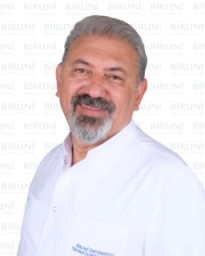
Prof. Dr. Mustafa Teoman YANMAZ
Medical Oncology
Last updated:


