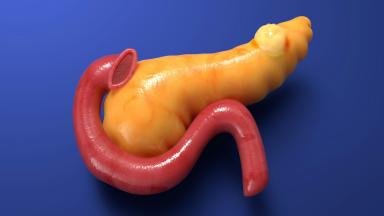
Carcinoid Tumor Surgery
Carcinoid tumor surgery removes a neuroendocrine tumor of the bowel, appendix, rectum, stomach or lung together with its lymph nodes, and in selected patients the liver deposits as well. This guide explains tumor grades, carcinoid syndrome and the heart, the scans that come first, small bowel surgery, site-by-site operations, liver surgery, protection against carcinoid crisis, treatment afterwards and a typical Istanbul stay.
About This Department
Remove the tumor, its lymph nodes and the liver disease that can safely go. With octreotide ready against carcinoid crisis.
In a Mayo Clinic series, half of patients with small bowel carcinoid had more than one tumor in the bowel and 92 percent had lymph node spread, which is why the operation includes the nodes and a check of the whole bowel.
Carcinoid tumors grow from hormone-making cells scattered through the gut and lungs, and doctors now call them well-differentiated neuroendocrine tumors, or NETs. Many grow slowly for years. Some turn up by chance during an appendix operation or a colonoscopy, while others announce themselves through flushing and diarrhea once they have reached the liver. Only surgery can remove the disease completely, and even when cure is out of reach, taking out the primary tumor, the lymph nodes around it and as much liver disease as is safe can ease symptoms and lengthen life. This guide covers where carcinoid tumors arise, the tests that come first, how small bowel, appendix, rectal, stomach and lung tumors are operated on, liver surgery, protection against carcinoid crisis during the operation, treatment afterwards, the recovery, how long to stay in Istanbul and the follow-up at home.
What a carcinoid tumor is
The main sites, in rough order of frequency, are
- the small bowel, mostly its last part, the ileum,
- the lungs and airways,
- the rectum and the appendix,
- and the stomach.
Neuroendocrine cells release hormones such as serotonin into the blood. When they form a tumor, the pathologist grades it by how fast its cells divide, measured with a stain called Ki-67. Grade guides treatment.
On a narrow screen, swipe the table sideways to read every column.
| Grade | Ki-67 index | Usual behavior |
|---|---|---|
| Grade 1 | Below 3 percent | Slow growth over years |
| Grade 2 | 3 to 20 percent | Moderate growth |
| Grade 3 | Above 20 percent | Faster growth, often treated with drugs first |
An analysis of the American SEER cancer registry found that the yearly rate of new neuroendocrine tumors rose 6.4-fold between 1973 and 2012, to 6.98 per 100,000 people, with the increase seen at every site and stage. Better scans and more endoscopy explain part of that rise, because tumors that once went unnoticed until they caused symptoms are now found early on images taken for other reasons, and many of these small tumors can be removed completely with a short operation. Survival improved over the same years, most of all for tumors that had already spread.
Carcinoid syndrome and the heart
Removing the hormone-making tissue is the most direct way to quiet the syndrome.
Tests before the operation
Scans come first. Each test answers a different question.
Why the scan does not replace the surgeon's hands
For the review, please send
- the PET-CT and CT or MRI images on disc or by download link,
- the pathology report with the Ki-67 grade,
- any chromogranin A or 5-HIAA results,
- and a list of the medicines you take, including any octreotide or lanreotide injections.
Small bowel carcinoid surgery
The operation
Lymph node spread is the rule in small bowel carcinoid. In the same Mayo series, 92 percent of patients had cancer in the nodes. A hard, scarred mass around the mesenteric vessels, caused by the tumor's fibrous reaction, can choke the bowel's blood supply and cause pain after meals or blockage, so clearing these nodes protects the remaining bowel even when the liver already holds disease. Open surgery suits this work. Keyhole surgery with a small hand-assist cut serves selected patients.
Appendix, rectum, stomach and lung
The site table also scrolls sideways on small screens.
| Site | Smaller tumors | Larger or invasive tumors |
|---|---|---|
| Appendix | Appendectomy alone below 1 cm | Right hemicolectomy above 2 cm or with risk features |
| Rectum | Endoscopic removal below 1 cm | Rectal resection with lymph nodes |
| Stomach | Endoscopic removal or surveillance for type 1 | Partial gastrectomy for type 3 |
| Lung | Segmentectomy or lobectomy | Lobectomy with lymph node dissection |
Tumor size and depth decide how much tissue comes out.
When the tumor has reached the liver
A Mayo Clinic study followed 170 patients who had liver resection for neuroendocrine metastases, 120 of them carcinoid. Two patients died after surgery, and complications occurred in 14 percent. The operation controlled symptoms in 104 of 108 patients with hormone symptoms. Five-year survival reached 61 percent and ten-year survival 35 percent, although the disease came back in the liver or elsewhere in 84 percent by five years. Surgeons therefore aim to remove at least most of the visible liver disease, combining resection with ablation of small deposits, and reserve the approach for grade 1 and 2 tumors where the primary can also be removed. Surgery bought time. The same study found that no patient developed carcinoid heart disease after the operation, and urine 5-HIAA levels fell sharply, which matters because those levels drive the valve damage described above. When deposits fill both lobes, the operation can be split into two stages a few weeks apart so that the remaining liver has time to grow.
- Liver resection removes one or more segments or a whole lobe.
- Ablation destroys small deposits with heat from a needle probe placed under ultrasound guidance during the same operation.
- Embolization blocks the blood supply of deposits that cannot be removed.
Protecting against carcinoid crisis
Handling a hormone-active tumor can release a flood of serotonin. Blood pressure then drops. An American center gave a continuous high-dose octreotide drip before, during and after 179 operations for advanced small bowel NETs and recorded crisis in 3.4 percent. A Mayo Clinic review of 169 liver resections found no confirmed crisis at all.
Treatment after surgery
Somatostatin analog injections
PRRT
Chemotherapy and targeted drugs
The recovery
In hospital
Walking starts the day after surgery. Sips of fluid come first. Most bowel operations mean five to seven days on the ward, and major liver surgery a little longer.
The first weeks
Loose stools follow a long ileal resection or right hemicolectomy and settle over weeks, helped by diet changes and medicine. Avoid lifting more than a few kilograms for six weeks after open surgery. Fatigue fades slowly.
How long to stay in Istanbul
Plan for two to three weeks.
Small intestine resection packages listed on Bookimed for Turkish hospitals give ten days in the country, and published Istanbul packages range from five to eleven nights on the ward. We plan longer so that the final pathology report, the first wound check and the treatment plan for any remaining disease are ready before you fly. Liver surgery adds about a week.
What decides the cost
The site of the tumor, open or keyhole surgery, whether liver disease is treated in the same operation, the nights in hospital and the drugs that follow shape the estimate. Your scans and pathology report let our team prepare it at no charge.
Arranging the trip
The documents listed under the tests above, sent on WhatsApp, open the review. Your coordinator then plans tests, admission and hotel nights around the operation. A relative stays on the companion bed, and seven languages are spoken by the staff, with interpreters for others. The international office books the hotel, sends the visa invitation letter ten days before travel and arranges airport transfers, and halal, vegetarian and diabetic meals, a prayer room and a female physician are available on request.
Once you are back home
Follow-up lasts years. Carcinoid tumors can recur a decade after surgery. Scans and blood or urine markers are repeated every three to six months at first, then yearly, for at least ten years. Your coordinator stays reachable for questions and new results. Seek care quickly for cramping pain with vomiting, a swollen belly, or new flushing and diarrhea.
Carcinoid tumor surgery FAQ
Is a carcinoid tumor cancer?
Can surgery cure it?
Is surgery worthwhile if the liver is affected?
Will I need injections afterwards?
Can a family member stay with me?
References
- Dasari A, Shen C, Halperin D, et al. Trends in the incidence, prevalence, and survival outcomes in patients with neuroendocrine tumors in the United States. JAMA Oncol. 2017;3(10):1335-1342. doi:10.1001/jamaoncol.2017.0589
- Zhang C, Gudmundsdottir H, Takahashi H, et al. Accuracy of DOTATATE PET imaging in the preoperative planning of small bowel neuroendocrine tumor resection. J Surg Oncol. 2023;128(7):1072-1079. doi:10.1002/jso.27413
- Sarmiento JM, Heywood G, Rubin J, Ilstrup DM, Nagorney DM, Que FG. Surgical treatment of neuroendocrine metastases to the liver: a plea for resection to increase survival. J Am Coll Surg. 2003;197(1):29-37. doi:10.1016/S1072-7515(03)00230-8
- Woltering EA, Wright AE, Stevens MA, et al. Development of effective prophylaxis against intraoperative carcinoid crisis. J Clin Anesth. 2016;32:189-193. doi:10.1016/j.jclinane.2016.03.008
- Kinney MAO, Nagorney DM, Clark DF, et al. Partial hepatic resections for metastatic neuroendocrine tumors: perioperative outcomes. J Clin Anesth. 2018;51:93-96. doi:10.1016/j.jclinane.2018.08.005
Editor's note
Written by the Biruni Hospital medical editorial team. Reviewed by Prof. Dr. Mustafa Teoman YANMAZ, Medical Oncology.
Medically reviewed by

Prof. Dr. Mustafa Teoman YANMAZ
Medical Oncology
Last updated: