
Sarcoma Resection
Sarcoma resection removes a soft tissue sarcoma in one piece with a wide margin of healthy tissue, and today most limb sarcomas are treated without amputation. This guide explains the common subtypes, why biopsy and planning come first, how the operation and reconstruction are done, radiotherapy before or after surgery, chemotherapy for high-risk tumors, retroperitoneal sarcoma, rehabilitation and a typical Istanbul stay.
About This Department
Remove the sarcoma whole, keep the limb. With radiotherapy planned around the operation.
In a Canadian trial of 190 patients with limb sarcoma, radiotherapy before surgery used a lower dose than after it, 50 against 66 Gy, with slightly better survival.
A deep lump in the thigh, arm, trunk or abdomen has kept growing, an MRI has shown a solid mass, and a core needle biopsy has confirmed a soft tissue sarcoma, a cancer of fat, muscle, nerve, vessel or connective tissue. Sarcoma resection removes the tumor in one piece with a cuff of healthy tissue around it, called a wide margin, because cells at the edge of a sarcoma reach into the tissue around it in ways that scans cannot show. Today the great majority of limb sarcomas are removed without amputation, with radiotherapy before or after surgery and, for some high-risk tumors, chemotherapy. Sarcomas are rare. Results improve when one experienced team plans the biopsy, the operation and the radiotherapy together. Below you will find the types of sarcoma, why biopsy and planning come first, how the operation is done, what the trials found on radiotherapy and chemotherapy, retroperitoneal sarcoma, the risks, rehabilitation, how long to stay in Istanbul, and the follow-up at home.
What soft tissue sarcomas are
More than fifty subtypes exist. They arise anywhere. Half grow in the limbs, mostly the thigh, and a smaller share deep in the abdomen behind the bowel, the retroperitoneum.
Common subtypes
On a narrow screen, swipe the table sideways to read every column.
| Subtype | Typical site | Behavior |
|---|---|---|
| Liposarcoma | Thigh, retroperitoneum | Well differentiated types grow slowly, dedifferentiated ones spread |
| Undifferentiated pleomorphic sarcoma | Limbs of older adults | High grade, can spread to the lungs |
| Leiomyosarcoma | Retroperitoneum, large vessels, uterus | Often high grade |
| Synovial sarcoma | Near joints in young adults | Sensitive to chemotherapy |
Warning signs
When a lump should raise concern
Biopsy and planning come first
The first operation is the best chance to remove a sarcoma completely.
How the operation is done
Wide resection
The surgeon removes the tumor without seeing it, inside an envelope of normal muscle, fat or fascia, together with the biopsy track. Where the tumor touches a nerve or vessel, its thin outer sheath comes away with the tumor, and a graft replaces any vessel the tumor encases. Bone stays unless the tumor has grown into it.
Swipe the margin table sideways on a phone.
| Result | Meaning |
|---|---|
| R0 | No tumor at the inked edge, the aim of surgery |
| R1 | Tumor cells at the edge under the microscope |
| R2 | Visible tumor left behind |
Reconstruction
A muscle or skin flap closes large defects, moved from nearby or transferred with its own blood supply, so that the wound heals even after radiotherapy and the limb keeps its function. Tendon transfers restore movement. They help when a muscle group must go.
This table also scrolls sideways.
| Option | Used for |
|---|---|
| Local muscle flap | Covering vessels and bone in the thigh or calf |
| Free flap | Large defects, joined to new vessels under the microscope |
| Vessel graft | Replacing an artery or vein removed with the tumor |
Radiotherapy before or after surgery
Radiotherapy guards the tumor bed. It lowers the chance of the sarcoma coming back where it started. The proof is old but clear. A United States trial randomized 91 patients with high-grade limb sarcomas after limb-sparing surgery to radiotherapy or none. Local recurrence fell markedly with radiotherapy, while overall survival did not change, and the loss of limb strength and the swelling were mostly temporary.
Timing
Scroll this table sideways on small screens.
| Feature | Before surgery | After surgery |
|---|---|---|
| Dose | 50 Gy in 25 sessions | 66 Gy in 33 sessions |
| Wound complications | 35 percent | 17 percent |
| Overall survival | Slightly better | Slightly lower |
Why the timing changes side effects
Chemotherapy for high-risk tumors
Chemotherapy is reserved for high-risk tumors.
Large, deep, high-grade sarcomas of the limbs or trunk sometimes receive three cycles of epirubicin and ifosfamide before surgery. An international trial of 287 patients tested chemotherapy tailored to each subtype against this standard regimen. Tailoring failed. Disease-free survival at 46 months reached 62 percent after the standard treatment against 38 percent after tailored treatment. The standard regimen stays.
Sarcoma deep in the abdomen
Retroperitoneal sarcomas grow large before they are found. They lie against the kidney, colon, large vessels and back muscles. The operation removes the tumor in one block with any organ it touches, mostly a kidney or part of the colon, to leave no tumor behind.
Which organs may come out
Swipe sideways for the full table.
| Test | Why |
|---|---|
| Kidney function scan | Confirms the other kidney works well |
| CT of chest, abdomen and pelvis | Maps the tumor and looks for spread |
| Core biopsy | Confirms the subtype and grade |
Risks and how they are managed
Early problems
Longer-term effects
Nerve weakness
Rehabilitation
Hospital stay runs from three days after a small limb resection to one to two weeks after a retroperitoneal operation. Physiotherapy starts the next day. Drains come out once output falls. Pain eases daily. Walking aids help while the wound heals. Daily activities return within six to twelve weeks for most people.
- Keep the limb raised when resting for the first weeks.
- Start the exercises the physiotherapist sets before you leave hospital, and keep doing them every day for the first months, even when the limb feels stiff.
- Protect any skin treated with radiotherapy from sun and friction.
How long to stay in Istanbul
Plan for two to three weeks around surgery, and longer if radiotherapy before surgery is given in Istanbul.
A Bookimed package for complex excision of a malignant soft tissue tumor at an Istanbul hospital lists six days in hospital with tests, an oncology consultation and transfers. We plan longer so that drains are out, the wound is checked, the final pathology is discussed and any further treatment is arranged before you fly. Radiotherapy before surgery takes five weeks and is followed by surgery three to six weeks later.
What decides the cost
Tumor site and size, reconstruction with a flap or vessel graft, nights in hospital, and radiotherapy or chemotherapy before or after surgery shape the figure.
Get them in writing. Ours follows a free review of your MRI, chest CT and biopsy by our surgical oncology team.
Arranging the trip
An MRI, a chest CT and the biopsy report sent on WhatsApp let our sarcoma team look at your case. From the first answer, one coordinator stays with you through planning, surgery, rehabilitation and the scans at home. Seven languages are covered. Interpreters handle the rest. A relative may sleep on the companion bed in your room. The international office books your hotel, sends a visa invitation letter ten days before travel and arranges transfers. Halal, vegetarian and diabetic meals, a prayer room and a female physician are available on request, and radiotherapy and chemotherapy take place on the same site.
Once you are back home
MRI of the operated area and CT of the chest every three to six months for the first two to three years, then yearly, watch for recurrence. Most recurrences appear in the first five years, and you can send the scans through the coordinator for review.
Tell your doctor quickly about
- a new lump at or near the scar,
- a cough or breathlessness that does not settle,
- fever with redness or discharge from the wound,
- and swelling or pain in the calf.
Sarcoma resection FAQ
Will I lose my arm or leg?
Do I need radiotherapy?
Why must the biopsy be planned?
How long is follow-up?
Can a family member stay with me?
References
- O'Sullivan B, Davis AM, Turcotte R, et al. Preoperative versus postoperative radiotherapy in soft-tissue sarcoma of the limbs, a randomised trial. Lancet. 2002;359(9325):2235-2241.
- Yang JC, Chang AE, Baker AR, et al. Randomized prospective study of the benefit of adjuvant radiation therapy in the treatment of soft tissue sarcomas of the extremity. J Clin Oncol. 1998;16(1):197-203.
- Gronchi A, Ferrari S, Quagliuolo V, et al. Histotype-tailored neoadjuvant chemotherapy versus standard chemotherapy in patients with high-risk soft-tissue sarcomas (ISG-STS 1001), an international, open-label, randomised, controlled, phase 3, multicentre trial. Lancet Oncol. 2017;18(6):812-822.
- Bonvalot S, Gronchi A, Le Péchoux C, et al. Preoperative radiotherapy plus surgery versus surgery alone for patients with primary retroperitoneal sarcoma (EORTC-62092, STRASS), a multicentre, open-label, randomised, phase 3 trial. Lancet Oncol. 2020;21(10):1366-1377.
Editor's note
Written by the Biruni Hospital medical editorial team. Reviewed by Prof. Dr. Mustafa Teoman YANMAZ, Medical Oncology.
Medically reviewed by
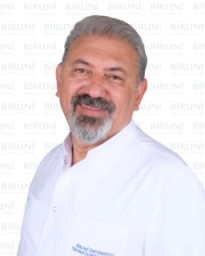
Prof. Dr. Mustafa Teoman YANMAZ
Medical Oncology
Last updated:


