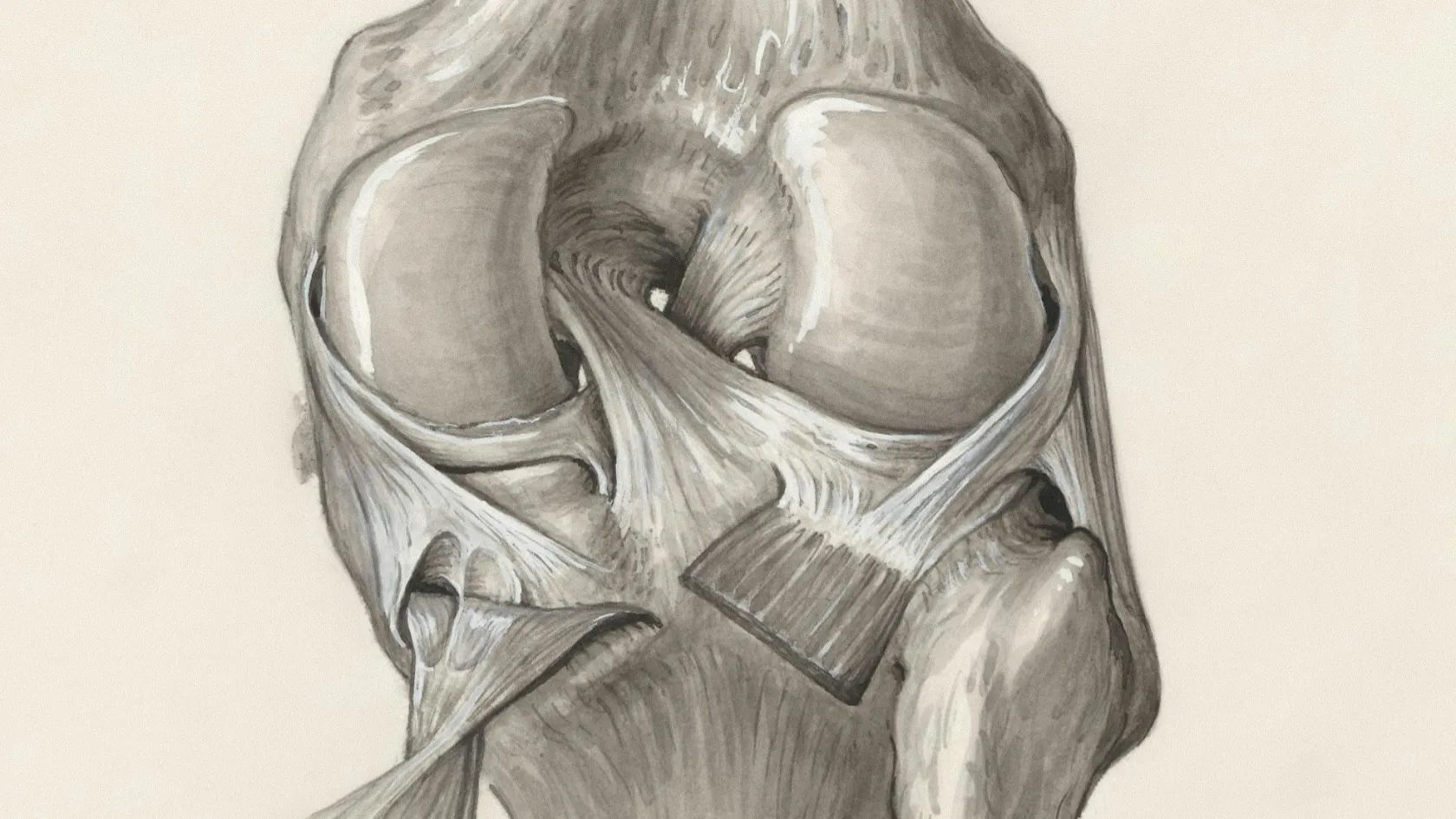
Revision Knee Replacement Surgery - Failed Knee Replacement Surgery
Knee replacements fail for a handful of reasons, loosening and infection above all, and the right revision depends on which one it is. This guide explains the signs of a failing knee, how infection is ruled in or out, one-stage and two-stage revision, the results by cause and the stay in Istanbul.
About This Department
Orthopedics
A failed knee replacement has a cause. Revision starts by finding it.
In 781 revision knee operations at the Rothman Institute in Philadelphia, loosening caused 39.9 percent of failures and infection 27.4 percent, and the right revision depends on which one it is. Send the X-rays of the knee, the original operation note and implant details, and any blood or joint fluid tests, and our orthopedic team will tell you what has gone wrong and what a revision would involve.
39.9%
Revisions caused by loosening, the most common late cause
27.4%
Revisions caused by infection, the most common early cause
97.7%
Sensitivity of the 2018 international test for joint infection
Revision knee replacement removes part or all of an earlier knee prosthesis and replaces it with new components. More knee replacements are done every year, and more people live long enough to outlast theirs, so revisions grow in number too. The operation runs longer and asks more of the surgeon than the first one, because bone has been lost, scar tissue fills the joint and the new implant has to anchor deeper in the bone.
The first question decides everything else.
What to send for a free review
Standing X-rays of the knee from the front and side, and older X-rays for comparison if you have them.
The original operation note with the implant make and size, any CT or bone scan, and results of blood tests (CRP, ESR) and joint fluid tests if done.
A short note of symptoms, when they started after surgery, and any wound problem or antibiotic course. An orthopedic surgeon reviews the file and the coordinator replies in your language.
Signs of a failing knee replacement
What patients notice
Pain that returns after a good first year, pain on standing up and the first steps, a knee that gives way or feels loose, swelling that comes back, a knee that will not bend or straighten, or a wound that leaked or healed slowly after the first operation. Pain from the first day that never settled points to a different set of causes from pain that starts years later.
Why knee replacements fail
Loosening
Over years the bond between implant and bone can weaken, from wear particles that trigger bone loss or from an implant that was not perfectly aligned. The X-ray shows a dark line around the implant, and the patient feels pain on loading.
Infection
How infection is diagnosed
Blood tests (CRP, ESR, D-dimer) and a sample of joint fluid drawn with a needle carry most of the answer. The fluid's white cell count, a test strip for leukocyte esterase and the alpha-defensin test score points under the 2018 international definition, and a total of 6 or more confirms infection. Antibiotics stop for two weeks before the sample when possible, so that bacteria grow in the culture.
Infection was the most common failure mechanism for early revision (<2 years from primary) and aseptic loosening was the most common reason for late revision.
Rothman Institute, 781 revision knees, Journal of Arthroplasty, 2014
See a doctor the same day
A knee that turns hot, red and more swollen, a fever, a wound that opens or leaks, or a sudden increase in pain. Infection treated within days of onset can sometimes be cured by washing out the joint and changing the plastic insert alone.
Instability, stiffness and fracture
A knee that wobbles or gives way has ligaments that no longer balance the implant. Stiffness from scar tissue, arthrofibrosis, limits bending. A fall can break the bone around the implant. Each of these needs its own repair, and the Philadelphia series lists instability at 7.5 percent of revisions, fracture at 4.7 percent and stiffness at 4.5 percent.
The new criteria demonstrated a higher sensitivity of 97.7% compared to the MSIS (79.3%) and International Consensus Meeting definition (86.9%), with a similar specificity of 99.5%.
2018 definition of joint infection, Journal of Arthroplasty, 2018
Available evidence from aggregate published data suggest the one-stage revision strategy may be as effective as the two-stage revision strategy in treating infected knee prostheses in generally unselected patients.
Meta-analysis of 118 studies, 5,552 patients, PLoS One, 2016
Levels of patient-reported knee function, general health, and satisfaction after revision are varied and related to the reason for revision.
National Joint Registry data, 797 revisions, Clinical Orthopedics and Related Research, 2012
One stage or two for an infected knee
Two-stage revision, the most widely used method, runs as follows.
The infected implant comes out, the joint is cleaned thoroughly and an antibiotic-loaded cement spacer fills the gap.
Six weeks of antibiotics.
Blood tests and, when the numbers leave doubt, a fresh sample of joint fluid drawn after a two-week break from antibiotics show that the infection has cleared.
The new revision implant goes in, six to twelve weeks after the first operation.
A one-stage exchange, removing and replacing in the same operation, suits patients whose bacteria are known and sensitive to antibiotics and whose soft tissues are healthy. A review of 118 studies found re-infection in 7.6 percent after one stage and 8.8 percent after two.
When revision is the wrong answer
A painful knee with a well-fixed, well-aligned implant, normal infection tests and no instability rarely improves with revision. Pain from the hip, the spine or nerve damage around the knee can feel like knee pain, and the team checks for them before recommending another operation.
How does a revision operation work?
The surgeon opens the knee through the old scar, removes the failed components while saving as much bone as possible, and measures the bone loss on the femur and tibia. The operation takes two to four hours. Revision implants carry long stems that reach into healthy bone above and below the joint, and metal cones or sleeves fill cavities where bone has worn away.
Bone loss sets the difficulty
Small defects fill with cement or bone graft. Larger ones need metal augments, cones or sleeves. When the ligaments no longer hold the knee steady, a constrained or hinged implant takes over their job, and the surgeon plans for each of these on CT before the operation.
Implants used in revision
Revision femoral and tibial components with long stems, porous metal cones and sleeves for bone defects, thicker inserts with a post that controls rotation, and rotating hinge knees for severe instability or bone loss. The surgeon brings a full set to theater, because the bone often looks different once the old implant is out.
How often each cause leads to revision
Loosening and infection together explain two thirds of revisions.
This table scrolls sideways on a narrow screen. Swipe or drag to see every column.
Why knee replacements failed in 781 revisions
Cause
Share of revisions
Typical timing
Loosening
39.9 percent
Years after the first operation
Infection
27.4 percent
Most often in the first two years
Instability
7.5 percent
Months to years
Fracture around the implant
4.7 percent
After a fall, at any time
Stiffness (arthrofibrosis)
4.5 percent
In the first year
Results and the risk of re-revision
Revision restores a working knee for the majority, with less gain than a first replacement.
There remains a high rate of failure in revision TKA, with infection being the most common reason for failure.
OrthoCarolina, 1,632 revision knees, Journal of Arthroplasty, 2020
This table scrolls sideways on a narrow screen. Swipe or drag to see every column.
Outcomes six to twelve months after revision, by reason
Group
Improvement in Oxford Knee Score
Satisfied patients
First knee replacement, for comparison
15 points
83 percent
All aseptic revisions
10 points
66 percent
Revision for loosening
11 points
72 percent
Revision for stiffness
6 points
47 percent
Revision helps most when the cause is clear and mechanical.
In 1,632 revision knees followed for five years on average at OrthoCarolina, 22.8 percent needed another revision, and a third of knees revised for infection failed again, two thirds of them from repeat infection. Being younger than 65, being male and an infected first knee raised the risk.
Stop smoking.
Bring blood sugar under control, with an HbA1c below 7.5 to 8, working with your own doctor in the months before the trip.
Treat any dental, skin or urine infection first.
Lose weight where possible.
Why these steps matter
Smoking, poorly controlled diabetes and obesity each raise the risk of infection and wound breakdown after revision. Every one of them can be changed in the weeks before surgery, and the team times the operation to give you that chance.
The stay in Istanbul and the trip home
1
Revision for loosening or instability
Four to seven nights in hospital and two weeks in a hotel nearby with daily physiotherapy. Flight home at around three weeks, with clot prevention.
Your companion, your language, your food
One family member sleeps on the companion bed in your room every night. The international patients office books the hotel, the airport pickup and the daily car to physiotherapy, and sends the visa invitation letter ten days before travel.
Your coordinator works in English, Arabic, French, Russian, Serbian, Romanian or Spanish and arranges interpreters for others. The kitchen cooks halal, vegetarian and diabetic meals, the hospital has a prayer room, and the department arranges a female surgeon on request wherever the rota allows.
2
Two-stage revision for infection
First stage with five to seven nights in hospital and the start of antibiotics, then six to twelve weeks at home on antibiotics with a written handover, and a second trip for the new implant.
Follow-up after you return home
Once you are back home, X-rays at six weeks, six months and one year go to the surgeon here.
The coordinator stays on the same WhatsApp number.
The implant decides most of the cost, since a revision that swaps only the plastic insert, one that replaces both components with long stems, one that needs metal cones or sleeves to fill lost bone, and a rotating hinge knee for a joint whose ligaments have failed differ widely in price, while the number of stages, the nights in hospital, the physiotherapy sessions and the hotel stay add to it. A written estimate follows free once the surgeon has read your X-rays. Published revision packages in Turkey include the operation, anesthesia, the named implants, the ward nights, physiotherapy before discharge, the interpreter and transfers, and leave out flights, insurance and the treatment of complications.
Revision knee replacement FAQ
How do I know my knee replacement has failed?
Pain that returns after a good period, swelling, a loose or stiff knee, or a wound problem. X-rays and blood and joint fluid tests confirm the cause.
Is revision surgery more difficult than the first knee replacement?
Yes. It takes longer, uses implants with stems and cones, and recovery is slower. Results depend on the cause, best for loosening and least good for stiffness.
How long will I stay in Istanbul?
About three weeks for a single-stage revision. An infected knee treated in two stages needs two trips, six to twelve weeks apart.
Can a family member stay with me?
Yes. One family member sleeps on the companion bed in your room every night.
Will the doctors speak my language?
Your coordinator works in English, Arabic, French, Russian, Serbian, Romanian or Spanish and joins your consultations.
References
Sharkey PF, Lichstein PM, Shen C, Tokarski AT, Parvizi J. Why are total knee arthroplasties failing today: has anything changed after 10 years? Journal of Arthroplasty. 2014;29(9):1774-1778.
Parvizi J, Tan TL, Goswami K, et al. The 2018 Definition of Periprosthetic Hip and Knee Infection: An Evidence-Based and Validated Criteria. Journal of Arthroplasty. 2018;33(5):1309-1314.e2.
Kunutsor SK, Whitehouse MR, Lenguerrand E, Blom AW, Beswick AD. Re-Infection Outcomes Following One- And Two-Stage Surgical Revision of Infected Knee Prosthesis: A Systematic Review and Meta-Analysis. PLoS One. 2016;11(3):e0151537.
Baker P, Cowling P, Kurtz S, Jameson S, Gregg P, Deehan D. Reason for revision influences early patient outcomes after aseptic knee revision. Clinical Orthopaedics and Related Research. 2012;470(8):2244-2252.
Geary MB, Macknet DM, Ransone MP, Odum SD, Springer BD. Why Do Revision Total Knee Arthroplasties Fail? A Single-Center Review of 1632 Revision Total Knees Comparing Historic and Modern Cohorts. Journal of Arthroplasty. 2020;35(10):2938-2943.
Editor's note
Written by the Biruni Hospital medical editorial team. Reviewed by Assoc. Prof. Dr. Suat BATAR, Orthopedics and Traumatology.