
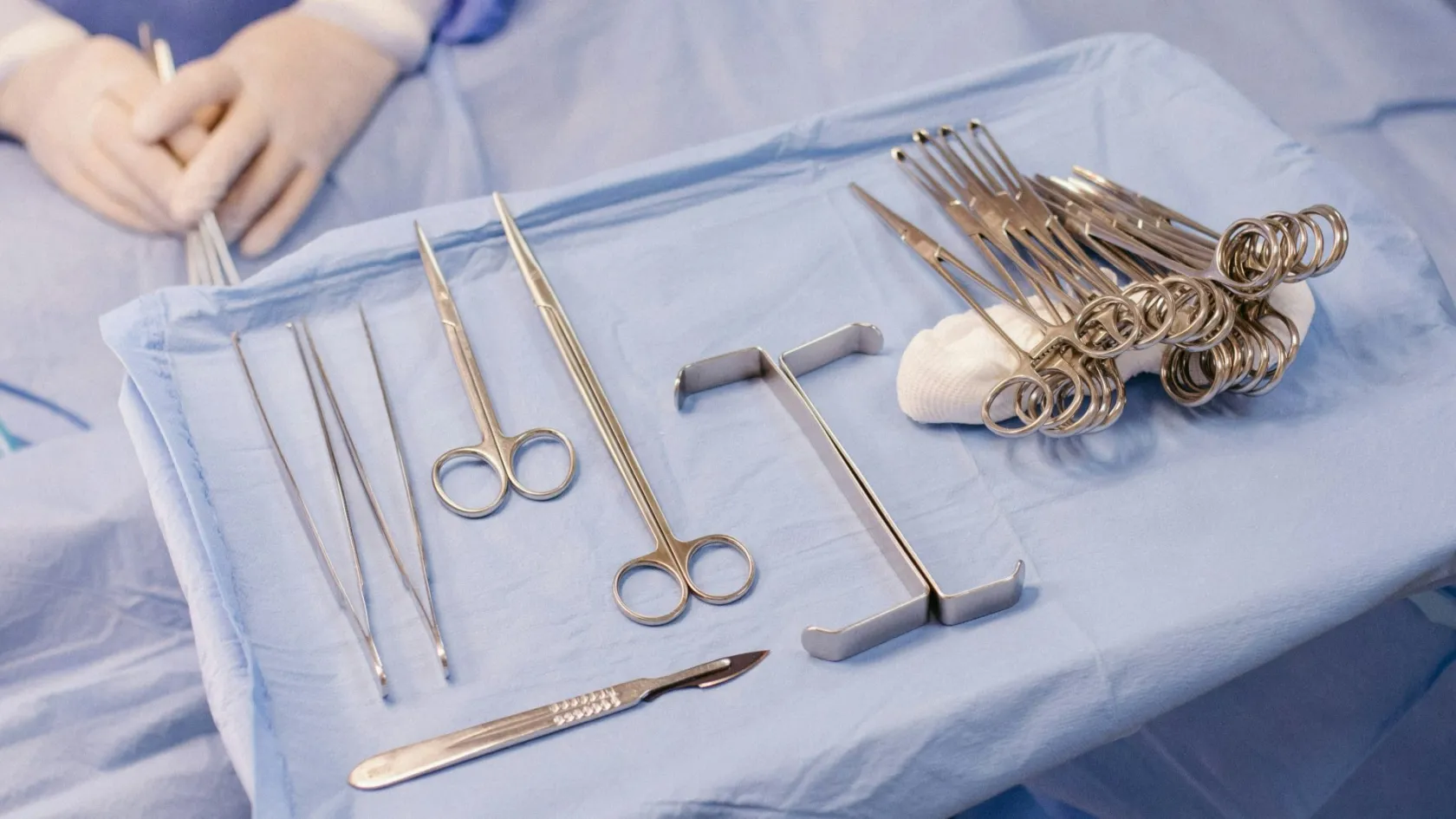
Reconstructive Oncology Surgery
Patients arrive wanting to know which operation they will have. The question that decides most of the outcome is when, and it is settled in meetings they are not present for.
About This Department
Patients arriving in a reconstructive clinic want to know which operation they will have. The question that decides most of their outcome is a different one, and it is when. Cancer treatment runs to a timetable set by the tumour and by the radiotherapy that may follow it, and the rebuild has to fit inside that timetable without pushing anything back. Get the sequence right and a great many technical choices become straightforward. Get it wrong and the best flap in the world arrives at the wrong moment.
Free consultation
Send the oncology plan as well as the scan
A reconstructive opinion given without knowing whether radiotherapy is coming is close to worthless, so the single most useful document you can send is the treatment plan from your oncologist. Along with it, send the imaging, the pathology, a list of previous operations in the area, your medication, and a straight answer on smoking and diabetes, because both change what is safely possible. What comes back is an opinion on whether reconstruction belongs at the same operation or later, which options your own anatomy supports, and how many stages the whole thing realistically takes. The review costs nothing and carries no obligation.
What the field actually covers
Reconstructive oncology is the surgery of putting the body back together after cancer has been removed from it. That covers the breast after mastectomy, the mouth and jaw after a head and neck resection, a limb after a sarcoma has been taken out of the muscle, the chest wall, the abdominal wall, the pelvis and perineum, and large areas of skin after wide excision of a melanoma or an aggressive skin cancer. It also, increasingly, covers the lymphatic system, which is the newest part of the field and the part patients have most often never heard of.
What it is not is cosmetic surgery performed on cancer patients.
That distinction is practical, not a matter of wording. A cosmetic operation is elective, can be postponed indefinitely, and is planned around what the patient wants. A reconstructive operation in cancer is planned around what the oncology permits, cannot wait for a convenient month, and is sometimes the only reason a wide enough resection is possible in the first place. A surgeon who can close a defect the size of a hand allows the oncological surgeon to take a defect the size of a hand, which changes what can be cured rather than merely what it looks like afterwards. The individual operations are described elsewhere on this site under the cancers they belong to. What follows here is the set of decisions that are the same wherever the tumour sits, and they are the decisions patients are least often walked through in a consultation because they feel administrative rather than surgical. They are not administrative. They determine the result more completely than the choice of flap ever will, and they are settled in meetings you are not present for.
The rule that comes first
Reconstruction must not delay cancer treatment. Every other consideration in this field sits underneath that sentence. Chemotherapy and radiotherapy work on schedules with evidence behind them, and a wound that breaks down or a flap that needs a second operation pushes those schedules back. So the honest question about any reconstructive plan is not whether it produces a good result, but whether it puts the cancer treatment at risk. That question has been studied most thoroughly in breast reconstruction, where the numbers are reassuring without being unanimous, and where the volume of surgery is large enough that even small effects would have shown themselves by now.
Does rebuilding delay the chemotherapy
Fourteen studies were gathered in a systematic review covering 5,270 patients who went on to adjuvant chemotherapy, of whom 1,942 had immediate reconstruction and 3,328 had mastectomy alone. Seven studies found no significant difference in the time to starting chemotherapy, four found a significant delay averaging between 6.6 and 16.8 days, and one found chemotherapy started 12.6 days sooner after reconstruction. The reviewers concluded that immediate reconstruction does not necessarily delay chemotherapy to a clinically relevant extent, and remains a valid option in non-metastatic disease.
Two weeks, inside a treatment that runs for months, is generally absorbed without consequence. What causes real delay is not the reconstruction itself but a complication of it, so the risk factors further down this page deserve more of your attention than the choice of technique.
Immediate, delayed, or in between
Three timings exist and each of them is correct in the right circumstances.
This table scrolls sideways on a narrow screen. Swipe or drag to see every column.
| Timing | What it means, and when it is the right answer |
|---|---|
| Immediate | Rebuilt at the same operation as the removal. One anaesthetic, one hospital stay, one recovery, and tissue planes that have not yet scarred. This is the default wherever the defect must be closed to heal at all, and wherever radiotherapy is unlikely. |
| Delayed | Rebuilt months or years later, once all cancer treatment is finished. Chosen when radiotherapy is certain and would damage the reconstruction, when the margins are uncertain, when a patient is too unwell for a long operation, or when somebody simply wants time to decide. |
| Delayed immediate | A holding step at the first operation, most often a temporary expander, with the definitive rebuild after radiotherapy finishes. Preserves the skin envelope and keeps options open when nobody yet knows whether radiation is coming. |
| No reconstruction | A legitimate choice that gets discussed less than it should. Fewer operations, faster return to normal life, and for some patients a better answer than a rebuild they did not particularly want. It should be offered, not merely permitted. |
Delayed reconstruction is the safe-sounding option and it carries its own price, which patients are rarely told about. Operating through scarred, previously dissected tissue is harder than operating through untouched planes, and the results reflect that.
What waiting cost, in a leg sarcoma series
A single-surgeon series of 32 patients having flap reconstruction after lower limb sarcoma resection compared 25 done immediately against 7 done later. Complications of any kind occurred in every one of the delayed cases and in 28 percent of the immediate ones, and haematoma occurred in 28.6 percent against none. Dehiscence, seroma, infection, clotting and flap loss all ran higher in the delayed group without reaching statistical significance. The authors argue for referring patients to a reconstructive surgeon early rather than late. Seven patients is a small number and the finding should be read as a signal rather than a settled fact.
Read alongside the breast data, a consistent picture emerges. Rebuilding at the same operation is usually safer and usually better, and the situations that argue for waiting are specific ones rather than a general preference for caution.
The radiotherapy problem
Radiation is what makes reconstructive timing difficult, and understanding why makes the rest of the decisions legible.
Radiotherapy damages small blood vessels and drives fibrosis in the tissue it passes through, and it goes on doing so for years after the last session. A reconstruction sitting in that field becomes firmer, tighter and less elastic over time, and how badly depends entirely on what the reconstruction is made of.
This table scrolls sideways on a narrow screen. Swipe or drag to see every column.
| Reconstruction | What radiation does to it |
|---|---|
| Implant or expander | Suffers most. Scar contracting around a fixed object has nowhere to go, and rates of capsule formation, distortion and implant loss rise substantially after radiation. This is the combination most reconstructive surgeons work hardest to avoid. |
| Your own tissue, moved | Tolerates radiation considerably better, because living tissue with its own blood supply remodels rather than simply tightening. It still firms up and shrinks somewhat, and it is the reason autologous reconstruction is favoured where radiation is expected. |
| Skin graft | Poorly suited either way. A graft needs a well vascularised bed, and an irradiated bed rarely provides one, so grafts inside a treated field frequently fail to take. |
| Operating into an old field | The reverse problem. Vessels in previously irradiated tissue are less reliable and the wounds heal slowly, which is why prior radiotherapy is one of the first questions asked and why tissue is usually imported from outside the field. |
So radiation cuts in both directions, complicating a reconstruction placed before it and complicating any operation attempted afterwards.
Three practical consequences follow. Where radiotherapy is certain, a staged approach with the definitive rebuild afterwards protects the result. Where it is certainly not coming, immediate reconstruction is straightforwardly better. Where nobody knows yet, which is the commonest and most frustrating situation, a holding step buys the information without losing the skin, and it is the option that gets skipped most often because it requires two conversations instead of one, and because a patient who has just been told they have cancer rarely has the appetite to ask for a second opinion about the sequencing of their own treatment. None of which can be decided by a reconstructive surgeon working alone. That is the argument for having the radiation oncologist in the room before the first operation rather than consulted after it, and it is a reasonable thing to ask about directly, since a unit that runs joint clinics will say so immediately and one that does not will change the subject.
How the method gets chosen
Surgeons were taught for decades to climb a ladder, starting with the simplest technique that could close a wound and moving up only when it failed, and that model has quietly been replaced by something closer to a lift, where you go directly to the floor the problem needs.
Direct closure and skin grafts
Adequate for small defects with a healthy base underneath. A graft needs a bed with a blood supply, so it will not sit on bare bone, exposed tendon or an irradiated field, and knowing that ruled out is half the decision.
Local and regional flaps
Tissue moved from immediately beside the defect, keeping its own blood supply and rotated into place, which means no microsurgery, a shorter operation and one wound rather than two, but which is limited by how much spare tissue the neighbourhood has and by whether that neighbourhood was irradiated.
Free tissue transfer
Tissue disconnected from one part of the body and reconnected under a microscope at another site. It brings its own healthy blood supply into a hostile bed, which is exactly what an irradiated or infected site needs, and it is the reason limbs and jaws are salvageable that once were not.
Implants, prostheses and printed parts
Manufactured, not borrowed. Breast implants, bone endoprostheses after tumour resection, patient-specific plates and meshes designed from your own scan and printed before the operation, all of them quick to insert and permanently vulnerable to infection and to radiation in a way that living tissue is not.
That analogy carries a warning with it. Going straight to the most sophisticated option is right when the defect demands it and wrong when a simpler operation would have done the same job with less risk, and telling those apart is most of the skill.
Ask why the proposed method was chosen over the one below it on that list. A clear answer is a good sign.
The donor site nobody asks about
Every flap creates a second wound somewhere else, and consultations concentrate almost entirely on the first one.
That second site has its own scar, its own healing time, its own complications and sometimes its own permanent functional cost, and patients who were fully briefed about the reconstruction and barely briefed about the donor area are frequently more troubled by the second than the first a year later. The commonest example is the abdomen, used to rebuild breasts, where the specific worry is the wall itself.
Hernia and bulge after an abdominal flap
Seventy-four studies published between 2000 and 2022 were pooled in a meta-regression examining abdominal wall problems after deep inferior epigastric perforator flaps, finding that hernia occurred in 0.18 percent and bulge, meaning a wall that is weakened without being herniated, in 1.26 percent. Increasing age, previous abdominal surgery and pregnancy history were associated with hernia, while active smoking and pregnancy history were associated with bulge, while neither the number of perforating vessels taken nor which side they came from made any difference, and placing prophylactic mesh was not associated with fewer problems.
Two useful things come out of that. The abdominal wall complication most people fear is genuinely uncommon in modern perforator technique, and the mesh some units add routinely to prevent it does not appear to be earning its place.
Whatever the site, ask three things before consenting. Where exactly the tissue is coming from. What the scar will look like and how long it will take to settle. And what, if anything, that part of your body will no longer do as well.
What you can change before surgery
Complications in this field are common enough to plan for and predictable enough to reduce.
Who runs into trouble, pooled across sixteen studies
A systematic review and meta-analysis of prediction models for complications after flap surgery put the pooled complication rate at 14.8 percent, with a confidence interval running from 10.7 to 19.0 percent, and body mass index, smoking history, a long reconstruction, diabetes, high blood pressure and postoperative infection all emerged as independent risk factors. The authors are candid that all sixteen included studies carried a high risk of bias and that external validation is largely missing, so the individual model outputs deserve less confidence than the overall direction of the findings.
Four of those six are things you have some influence over in the weeks before an operation, which is unusual in cancer care and worth acting on.
The four you can move
Stopping smoking is the intervention that changes the arithmetic most. Nicotine narrows exactly the small vessels a flap depends on, and stopping four to six weeks before surgery measurably improves wound healing and flap survival, which is a short enough window to be achievable even after a cancer diagnosis has taken over your life. Getting blood sugar under control matters nearly as much and is achievable in the same period. Blood pressure and weight move more slowly and are still worth raising with whoever manages them at home. One item on that list is not about you at all, since a long reconstruction is itself a risk factor, and operating time depends on the team, on how often they do this and on whether two teams work simultaneously. It is legitimate to ask how many of these a unit performs each year, and the answer tells you something about operating time that no brochure will.
Lymphatic surgery
Swelling of an arm or a leg after lymph nodes have been removed or irradiated used to be managed with compression garments and massage, and nothing else, until supermicrosurgery changed it by making it possible to join lymphatic channels less than a millimetre across to nearby small veins, so that fluid drains into the venous system instead of accumulating.
Results are real, and more modest than the marketing around them.
Surgery against compression, in a randomised trial
Women with early breast cancer related arm swelling were allocated in a multicentre randomised trial to lymphaticovenous anastomosis or to conservative therapy, and reported an interim analysis at six months with 46 patients in each group. The surgical group improved significantly in the physical and mental function domains of a validated lymphoedema questionnaire, while the total score did not differ significantly between groups. Limb volume did not fall significantly in either group. Forty-one percent of the surgical patients had partly or completely stopped wearing compression garments at six months, against none of the conservatively treated group.
So the operation does something worthwhile and it is not what most patients assume. The arm did not get measurably smaller. What changed was how people felt and whether they were still living inside a compression sleeve, and for anybody who has worn one daily for years that second outcome is not a consolation prize.
Who it suits
Candidacy depends on lymphatic channels still being open, which is assessed with fluorescent imaging before any decision is made, and early swelling responds considerably better than swelling that has been sitting there for many years, so anybody promising you a normal-sized limb should be asked plainly what they are basing that on.
Recovery, and why it takes stages
Finished reconstructions almost never come from a single operation, and this is the expectation gap that causes the most disappointment.
- The first operation restores bulk, coverage and blood supply. It is judged on whether the tissue survives, with appearance assessed much later.
- Swelling distorts everything for two to three months, so nothing about the final shape can be assessed before then.
- A refinement operation follows in most cases, thinning, reshaping, adjusting symmetry or revising a scar, and it is a planned part of the process rather than a sign anything went wrong.
- Detail work comes last where it applies, such as nipple reconstruction and tattooing, or dental implants into a rebuilt jaw.
- Scars mature over a full year, going through a red, raised phase in the middle that alarms people who were not warned about it.
Judging the result before twelve months have passed is judging an unfinished thing.
Sensation, and what comes back
Sensation follows its own timetable and rarely returns completely. Reconstructed tissue is numb at first, then gradually regains a patchy and imperfect sensation from the edges inward across one to two years, and it may never feel like the tissue it replaced, whereas where a nerve has been deliberately coapted, which some units now do routinely in breast reconstruction, sensation returns more reliably. Ask whether that is part of the plan.
How long you stay
Two to three weeks in the country for microsurgical reconstruction, and ten to fourteen days for implant-based or local flap work, and the single biggest variable is whether vessels are being joined under a microscope, because that is what dictates monitoring, mobility and the early return to theatre if something clots. Assessment runs two to four days. Vessel imaging of the intended donor area, which changes the plan in a meaningful minority of patients, review of the oncology plan and its radiotherapy timetable, anaesthetic assessment, photographs, and a joint discussion between the cancer surgeon and the reconstructive team. Where lymphatic surgery is being considered, fluorescent lymphography is added, and it is the investigation that most often changes the answer from yes to not yet, which is a disappointing thing to hear and a considerably better thing to hear before an operation than after one.
Hospital stay runs five to eight days for a free flap, with hourly monitoring for the first two or three, and two to four days for implant or local flap reconstruction, followed by a further week to ten days nearby for wound checks, drain removal, and the discussion of what the pathology means for the next stage.
When you are cleared to fly
Around two weeks after microsurgery and ten days after implant-based work, once wounds are dry, drains are out and the flap has been stable for several days, and compression stockings and moving about the cabin matter more than usual on that flight, because a long operation and a long flight are both risks for clotting and this combination stacks them. Plan on returning for the refinement stage, or on having it done at home by somebody willing to take over. Settle which of those it will be before you leave, since a surgeon at home inheriting a reconstruction they did not perform is a conversation better had in advance than discovered by letter six months later. Some surgeons at home will take it on willingly and some will not, and finding out which you have is a phone call rather than a gamble. Make that call before you book anything, because the answer occasionally changes where the whole treatment should happen.
What drives the cost
Quotations in this field describe one operation while reconstructions take several, and that gap is where people get caught. Seven things move the figure.
This table scrolls sideways on a narrow screen. Swipe or drag to see every column.
| Driver | Why it matters to the total |
|---|---|
| Microsurgery or not | A free flap means a longer operation, specialist monitoring and higher dependency nights. This one distinction separates the two ends of the range more than anything else on this list. |
| Own tissue or implant | Implants carry a device cost and a shorter operation. Autologous tissue carries a longer operation, a second surgical site and no device to replace later. |
| How many stages | The number that matters. A quotation covering only the first operation is describing perhaps two thirds of what will actually be done. |
| Planning and printing | Virtual surgical planning, printed cutting guides and patient-specific implants are billed separately by most units and are worth their cost in bone reconstruction specifically. |
| Two teams | Simultaneous resection and reconstruction shortens the anaesthetic and costs two surgical fees, which is generally a trade worth making. |
| Lymphatic work | Supermicrosurgery needs specialist imaging beforehand and specialised equipment, and it sits outside most reconstruction packages entirely. |
| Complications | A pooled complication rate approaching one in seven means the arrangements for an unplanned return to theatre are not a hypothetical clause. Establish who pays for it. |
Packages here ordinarily cover the transfers, the assessment, the operating fees, the stated hospital nights, an interpreter, accommodation and the appointments before you fly, while outside them sit the flights, insurance, additional nights, later stages, garments and physiotherapy, and treatment of any complication.
Five questions to ask before you accept a figure
Five questions turn a headline into a quotation. How many operations does this figure cover, and what does stage two cost. What happens financially if the flap needs an unplanned return to theatre, and who decides that it was unplanned. Is the imaging inside the figure, and any virtual planning. Is the refinement surgery expected here or at home. And does the quotation assume immediate reconstruction, with what changing if the oncology forces a delay.
Nothing here means anything until somebody has seen your imaging and your treatment plan. That review is free.
Once you are home
Cancer follow-up and reconstruction follow-up are separate things running on separate clocks, and confusing them is a common way for people to fall between two services, since your oncology team continues to look for recurrence on a schedule of its own. The reconstructive review is about the rebuild itself, at roughly six weeks, three months and a year, and it is mostly a conversation and a photograph, with imaging rarely involved.
Four documents should travel home with you, in English, because whoever picks up your care was not in the room.
- The operative note, naming the flap, the vessels used and anything implanted, with the manufacturer and reference of any device.
- The staging plan, stating plainly what the next operation is meant to achieve and when.
- The oncology handover, so that the surgical episode and the cancer treatment plan reach the same doctor together.
- Photographs taken before discharge, which is the only reliable way anybody later can tell what has changed.
Report a flap that changes colour, a wound that opens, spreading redness or fever, and any sudden swelling of the reconstructed area, remembering that most things in the first fortnight are answered by message and a photograph within hours, and the ones that are not are the ones you want somebody looking at quickly and without ceremony. One last thing, which sits oddly on a surgical page and belongs here anyway. Reconstruction changes how a body looks and feels permanently, and people underestimate how long that takes to absorb emotionally. Feeling detached from a rebuilt part for months is ordinary. Say so to somebody rather than deciding it means the operation failed, because the two are unrelated and a great many people conclude otherwise in the quiet months after everybody else has stopped asking how they are. Reconstruction restores a shape. Coming to terms with the shape is a separate piece of work, and it is one this hospital expects rather than treats as a complication.
Frequently asked questions about reconstructive oncology surgery
Will reconstruction delay my cancer treatment?
Should I have it done at the same time or wait?
How does radiotherapy affect the reconstruction?
How likely is a complication, and can I reduce it?
Can surgery fix the swelling in my arm or leg?
How many operations does a reconstruction take, and how long do I stay?
References
- Xavier Harmeling J, Kouwenberg CAE, Bijlard E, Burger KNJ, Jager A, Mureau MAM. The effect of immediate breast reconstruction on the timing of adjuvant chemotherapy, a systematic review. Breast Cancer Research and Treatment. 2015;153(2):241-251.
- Zhou S, Azzi AJ, Safran T, Zadeh T. A comparison of delayed versus immediate reconstruction following lower-extremity sarcoma resection. Archives of Plastic Surgery. 2020;47(1):49-53.
- Rezania N, Harmon KA, Frauchiger-Ankers R, et al. A DIEP dive into patient risk factors for hernia and bulge development, a meta-regression. Journal of Reconstructive Microsurgery. 2025;41(3):237-247.
- Yang J, Qin X, Hou L, Liu Y. Risk prediction models for complications after flap repair surgery, a systematic review and meta-analysis. BMC Surgery. 2025;25(1):398.
- Jonis YMJ, Wolfs JAGN, Hummelink S, et al. The 6 month interim analysis of a randomized controlled trial assessing the quality of life in patients with breast cancer related lymphoedema undergoing lymphaticovenous anastomosis versus conservative therapy. Scientific Reports. 2024;14(1):2238.
Editor's note
Written by the Biruni Hospital medical editorial team. Reviewed by Prof. Dr. Özcan YILDIZ, Medical Oncology.
Medically reviewed by
Prof. Dr. Özcan YILDIZ
Medical Oncology
Related Treatments
View All-
Bilateral Mastectomy
Whether you carry a BRCA mutation, have cancer in one breast or in both, bilateral mastectomy removes both breasts in one operation, and how much it helps depends on which of those three paths brought you to it.
-
Breast Conserving - Lumpectomy Surgery
Keeping the breast has never been the less thorough choice, and the largest recent studies now point the other way. This page explains who can have breast conserving surgery, what the margin report decides, and how long a woman traveling for it needs to stay.
-
Cytoreductive - Tumor Reduction Surgery
Patients cleared of every visible deposit lived 30 months in one gastric series. Those left with anything at all lived 7.3 months, however little remained.
-
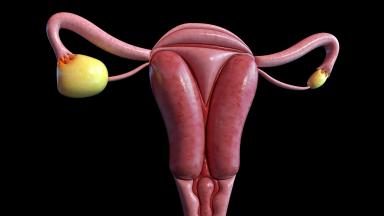
Debulking - Ovarian Cancer Tumor Reduction
Two women with the same diagnosis on the same morning can get operations that share almost nothing. What decides it is who measured the disease first.
-
Debulking Surgery
Surgeons removed a median of 57 lymph nodes from women already cleared of visible disease. It bought no extra months, and tripled deaths within 60 days.