
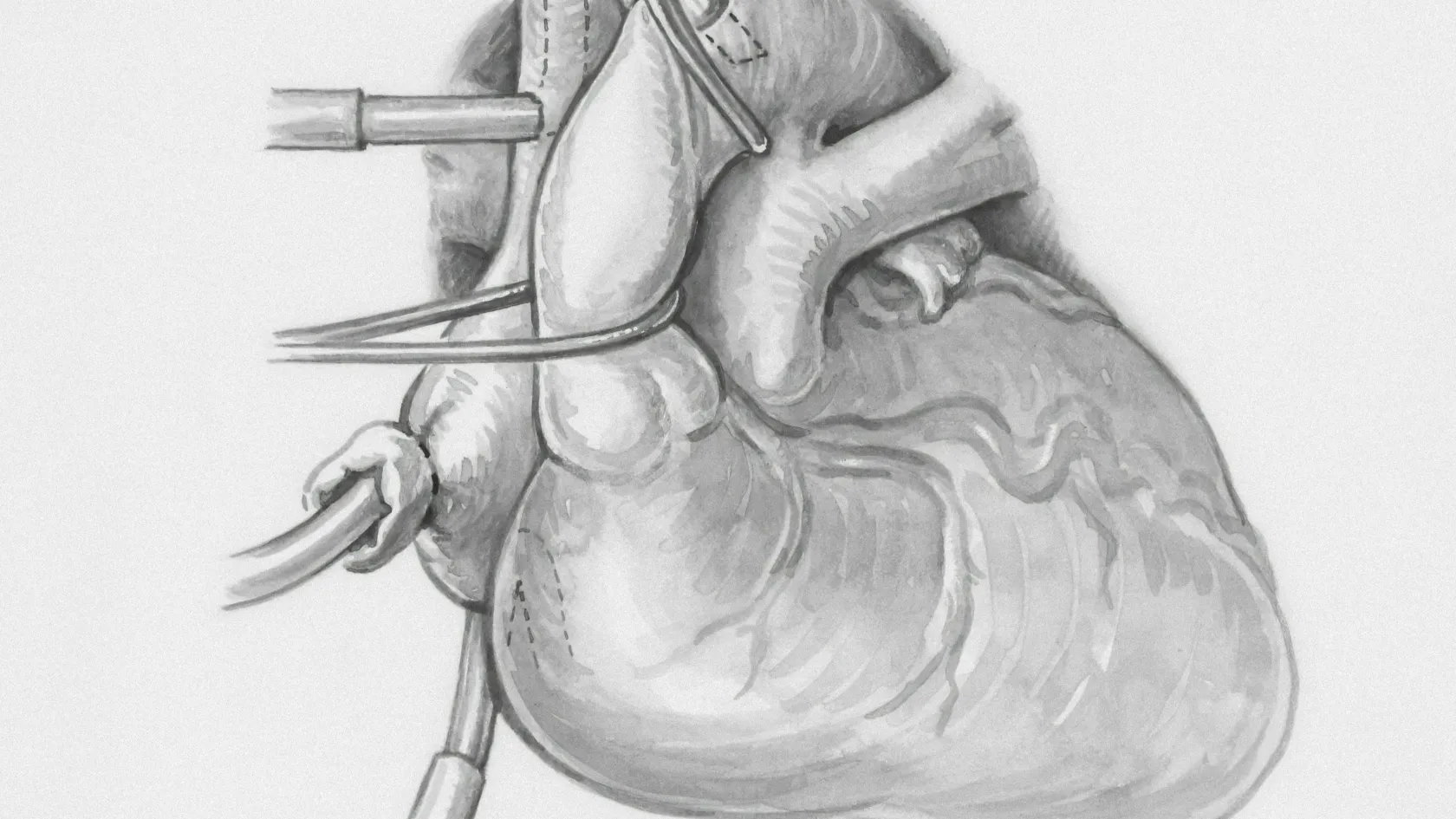
RFA - Radiofrequency Ablation
Heat does the work. A needle placed in a liver tumor, a thyroid nodule, a faulty leg vein or a patch of precancerous lining is warmed past 60 degrees, and the tissue dies where it sits. This guide sets out the randomized trials for each use, the recurrences and complications they recorded, who is a candidate, and how many days each procedure takes in Istanbul.
About This Department
A needle heated to 60 degrees for a few minutes does what a scalpel used to. For a small liver cancer, ten-year survival matched surgery in a randomized trial.
Radiofrequency ablation passes an alternating current through a needle placed inside a tumor, a thyroid nodule, a faulty vein or a patch of abnormal lining, and the heat that builds around the tip destroys the tissue in place. The same technique now serves the liver, the thyroid, the legs, the esophagus, the heart and the spine, and the trials behind each use are set out below, along with the recurrences and the complications they recorded. Send us your scans and reports, and the specialist for your organ will tell you whether ablation fits and what it would replace.
Cells die above 60 degrees. Radiofrequency ablation produces that temperature in a controlled sphere around a needle tip without cutting anything open. The needle goes in through the skin, or through an endoscope or a catheter, under ultrasound, CT or X-ray guidance. A generator sends an alternating current at radio frequency down the needle, ions in the tissue vibrate, and friction heats a zone of two to five centimeters across. Heating takes ten to thirty minutes for most targets. The dead tissue stays where it is. Over months it shrinks and turns to scar.
Why the size of the target matters so much
Where is it used, and what did the trials find?
Liver cancer
Thyroid nodules
Varicose veins
Barrett's esophagus
Heart rhythm
Bone, nerves and pain
- A liver tumor of more than three centimeters, or more than three tumors, does worse with a single needle. Surgery, microwave ablation, embolization or transplant are weighed instead.
- A tumor against the main bile ducts, the bowel, the gallbladder or the diaphragm can be ablated only with protective measures, and in some positions not at all.
- A thyroid nodule that is suspicious or malignant on cytology belongs to surgery in most guidelines, with ablation reserved for selected tiny cancers in patients who cannot have an operation.
- A varicose vein that is very tortuous or very close to the skin is treated by foam or by removing it through small cuts.
- Barrett's esophagus with a visible nodule needs the nodule removed endoscopically first, and ablation of the flat lining afterward.
This table scrolls sideways on a narrow screen. Swipe or drag to see every column.
| Use | Trial | Compared | Result |
|---|---|---|---|
| Early liver cancer | Randomized, 218 patients, British Journal of Surgery 2017 | Ablation against surgical removal | Five-year survival 66.4 against 66.5 percent. Ten-year 41.8 against 47.6, within chance. Shorter stay and less blood loss with ablation. |
| Benign thyroid nodules | Meta-analysis, 12 studies, 1,186 nodules, Endocrine 2020 | Volume before and after | Volume down 68 percent at six months, 75 at one year, 87 at three years. Symptoms and appearance improved. |
| Varicose veins | Randomized, 500 patients, British Journal of Surgery 2011 | Radiofrequency, laser, foam, stripping | Vein reopened at one year in 4.8, 5.8, 16.3 and 4.8 percent. Least pain and fastest recovery with radiofrequency and foam. |
| Barrett's esophagus with precancerous change | Randomized, sham-controlled, 127 patients, New England Journal of Medicine 2009 | Ablation against a sham procedure | Precancerous change eradicated in 81 to 91 percent against 19 to 23. Cancers 1.2 against 9.3 percent. Stricture in 6 percent. |
| Atrial fibrillation | Randomized, 2,204 patients, JAMA 2019 | Catheter ablation against drugs | Recurrence 49.9 against 69.5 percent. Death or cardiovascular admission reduced. Hard outcomes not significantly different. |
Who is a candidate?
- A target the imaging can see clearly and a needle can reach without crossing a vital structure.
- For the liver, one tumor of three centimeters or less, or up to three small ones, in a patient whose liver function and clotting allow a needle, with or without cirrhosis.
- For the thyroid, a benign nodule, confirmed twice, that causes pressure, swallowing difficulty, a visible swelling or anxiety, in a patient who would rather not lose half the gland.
- For the legs, reflux in the saphenous vein on ultrasound, with symptoms or skin changes.
- For the esophagus, Barrett's change with dysplasia confirmed by two pathologists.
- Anyone turned down for surgery because of age, heart or lung disease, or a liver too damaged to lose a segment, since ablation asks far less of the body.
Most referrals from abroad come under the last point. Ablation began as a treatment for patients who could not have an operation, and it remains the treatment that the frail, the elderly and the cirrhotic can have when nothing else is on offer. For a fit patient with a small tumor the choice against surgery is closer. The trial above is the fairest guide to it.
This table scrolls sideways on a narrow screen. Swipe or drag to see every column.
| Organ | Ablation suits | The alternative suits |
|---|---|---|
| Liver | One tumor of three centimeters or less, or up to three, in a patient unfit for surgery or who chooses to avoid it | Larger or more numerous tumors, tumors against the hilum or the bowel, patients fit for resection who prefer the lower recurrence of removal |
| Thyroid | A benign nodule with symptoms, a patient who wants to keep the gland working | Suspicious or malignant nodules, very large multinodular goiters, nodules behind the breastbone |
| Veins | A straight saphenous trunk with reflux | Tortuous veins, recurrent veins after previous surgery, very superficial veins close to the skin |
| Esophagus | Flat Barrett's lining with confirmed dysplasia | A visible nodule, which is removed endoscopically first |
| Kidney | A small mass in a patient with one kidney, poor kidney function or a high surgical risk | Larger masses and fit patients, where partial removal is standard |
How do I prepare, and what does the day involve?
- The scans that show the target, as images, since a report alone cannot show a path. For the liver a recent contrast CT or MRI, for the thyroid the ultrasound and both cytology reports. For the veins, the duplex ultrasound. For the esophagus, the endoscopy and pathology reports.
- Blood tests, including clotting, platelets, liver and kidney function, and for the thyroid the hormone levels.
- A full list of medicines, with blood thinners marked, and any allergy to local anesthetic or contrast.
- Earlier treatments to the same organ, including surgery, embolization, radiotherapy and previous ablation.
Sedation or general anesthetic
This table scrolls sideways on a narrow screen. Swipe or drag to see every column.
| Organ | Guidance | Anesthetic | Time | Stay |
|---|---|---|---|---|
| Liver | Ultrasound or CT, through the skin | General anesthetic or deep sedation | One to two hours | One night, two after a large or awkward tumor |
| Thyroid | Ultrasound, through the skin | Local, with sedation optional | 30 to 60 minutes | Home the same day after two hours |
| Veins | Ultrasound, catheter through a puncture | Local | 45 to 60 minutes per leg | Home the same day, walking within the hour |
| Esophagus | Endoscope | Sedation | 30 to 45 minutes | Home the same day |
| Kidney | CT or ultrasound | General anesthetic | One to two hours | One night |
What are the risks?
Liver
Thyroid
Veins
Esophagus
Among 109 patients treated by ablation and 109 by surgery for early liver cancer, mortality and complication rates were similar, while treatment time, blood loss and hospital stay were all lower with ablation.Randomized trial, British Journal of Surgery, 2017
Warning signs after you leave
Some symptoms cannot wait.
Go to a local emergency department the same day for severe or worsening pain, a swelling that grows, fever above 38 degrees, faintness, vomiting blood or black stools, yellowing of the eyes after a liver procedure, a hot swollen calf after a vein procedure, or difficulty swallowing that worsens after an esophageal one. Take the procedure report with you.
How many days do I need, and what decides the cost?
Three nights covers the thyroid, the veins and the esophagus, with the procedure on the second day and a check on the third. Liver and kidney ablation need five to seven, because the night in hospital is followed by a few days nearby before flying and a blood count before you go. A second session for a rim of surviving tumor is planned at the one-month scan, on a return visit or, for patients who stay, within the same trip.
Then the flight.
Fly two days after a thyroid, vein or esophageal procedure. After the liver or kidney, wait four to five days, until the blood count is stable and the pain is controlled, because delayed bleeding from the liver, rare as it is, shows itself in that window and is far easier to deal with in a hospital that knows what was done than in a cabin over the sea. On any long flight after vein ablation, walk every hour and wear the compression stocking you were given.
The needle sets the base of the price. Single-use, priced by size. Anesthesia adds an anesthesiologist for the liver and kidney and not for the thyroid or veins. Imaging before, during and after is charged by the scan. The contrast CT at one month belongs to the treatment. Nights in hospital, protective measures such as fluid injection, a second session, and treatment of any complication are separate lines, and combined procedures, above all ablation with chemoembolization for the liver, are quoted together and cost far more than ablation alone. Your own condition moves the figure. Cirrhosis, poor clotting, a pacemaker and diabetes each add checks and sometimes a longer stay.
Packages differ more than procedures do.
Packages published by hospitals in Istanbul for liver ablation range from a day-case procedure with a week in the city to a bundle with chemoembolization and three nights in hospital, and the two are different treatments for different patients. Find out which is proposed for you, and why. Thyroid packages list the procedure, the consultation and transfers, and little else, because the procedure itself is the whole of the treatment. Your own figure follows the free review of your scans.
One coordinator from the international patients team is assigned from your first message and stays with you until you fly. The team works in English, Arabic, French, Russian, Serbian, Romanian and Spanish and arranges interpreting in other languages on request, and an interpreter attends the consultation and consent. An invitation letter naming the hospital and the treating physician is sent about ten days before travel. The international patients office arranges the airport transfer, the hotel for you and a companion, and the rides to the hospital, and a companion is needed on the day of any procedure done under sedation. Rooms for patients admitted overnight have a companion bed. Halal, vegetarian and diabetic meals are available, a prayer room is on site, and a request for a female doctor is passed to the department and met wherever the rota allows. Back home, the coordinator stays reachable on the same WhatsApp number, and the follow-up scans can be sent to the treating physician for comment, with the images and not only the reports.
Radiofrequency ablation FAQ
Is radiofrequency ablation as good as surgery for liver cancer?
Does RFA hurt?
How much does a thyroid nodule shrink after RFA?
How long do I need to stay in Istanbul?
Can RFA be repeated?
Can my family come with me?
References
- Ng KKC, Chok KSH, Chan ACY, et al. Randomized clinical trial of hepatic resection versus radiofrequency ablation for early-stage hepatocellular carcinoma. British Journal of Surgery. 2017;104(13):1775-1784.
- Trimboli P, Castellana M, Sconfienza LM, et al. Efficacy of thermal ablation in benign non-functioning solid thyroid nodule: A systematic review and meta-analysis. Endocrine. 2020;67(1):35-43.
- Rasmussen LH, Lawaetz M, Bjoern L, Vennits B, Blemings A, Eklof B. Randomized clinical trial comparing endovenous laser ablation, radiofrequency ablation, foam sclerotherapy and surgical stripping for great saphenous varicose veins. British Journal of Surgery. 2011;98(8):1079-1087.
- Shaheen NJ, Sharma P, Overholt BF, et al. Radiofrequency ablation in Barrett's esophagus with dysplasia. New England Journal of Medicine. 2009;360(22):2277-2288.
- Packer DL, Mark DB, Robb RA, et al. Effect of Catheter Ablation vs Antiarrhythmic Drug Therapy on Mortality, Stroke, Bleeding, and Cardiac Arrest Among Patients With Atrial Fibrillation: The CABANA Randomized Clinical Trial. JAMA. 2019;321(13):1261-1274.
Editor's note
Written by the Biruni Hospital medical editorial team. Reviewed by Assistant Professor Yunus Emre AKPINAR, Radiology.
Medically reviewed by

Assistant Professor Yunus Emre AKPINAR
Radiology
Related Treatments
View All
Biliary Stenting - Bile Duct Stent Placement
Draining the bile before a pancreatic cancer operation doubles the complication rate, metal stents beat plastic ones by months, and both sides of a blocked liver do no better than one. Each of those findings came from trials, and each overturned what doctors assumed. This guide gives them plainly, along with the routes, the risks and the days to plan.
Bone Marrow Biopsy
Collecting the marrow takes 10 to 30 minutes, while the genetic tests on it can take three weeks, and that wait decides how long a trip to Istanbul should last.
Cryoablation - Tumor Freezing Surgery
Cryoablation destroys a tumor with a ball of ice grown around it through needles the width of a pencil lead, with no incision and one night in hospital. For small kidney tumors it matched surgery in the Mayo Clinic series, and it treats lung metastases and painful bone metastases.
CT-Guided Biopsy - Computed Tomography Guided Biopsy
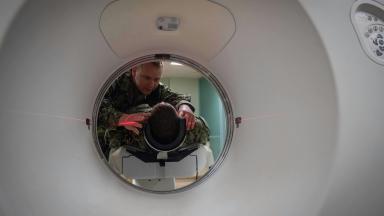
A CT-guided biopsy uses the scanner to steer a needle into a lung nodule, a deep abdominal mass, a bone lesion or a lymph node and remove cores of tissue for diagnosis and molecular testing, under local anesthetic in about twenty minutes. This page explains when CT guidance is chosen, why a core of tissue matters, what the day involves, the risks of lung biopsy and of other sites with figures from large studies, what the report means, and how patients from abroad arrange it in Istanbul.
Irreversible Electroporation - Nanoknife Surgery
Irreversible electroporation, known by the brand name NanoKnife, destroys a tumor with high-voltage electrical pulses between needle electrodes while sparing the blood vessels, bile ducts and nerves around it. It covers how it works, which pancreatic, liver, prostate and kidney tumors it treats, what the registry and trial data show and what they do not, the procedure, the risks, the follow-up, and how patients from abroad arrange it in Istanbul.