
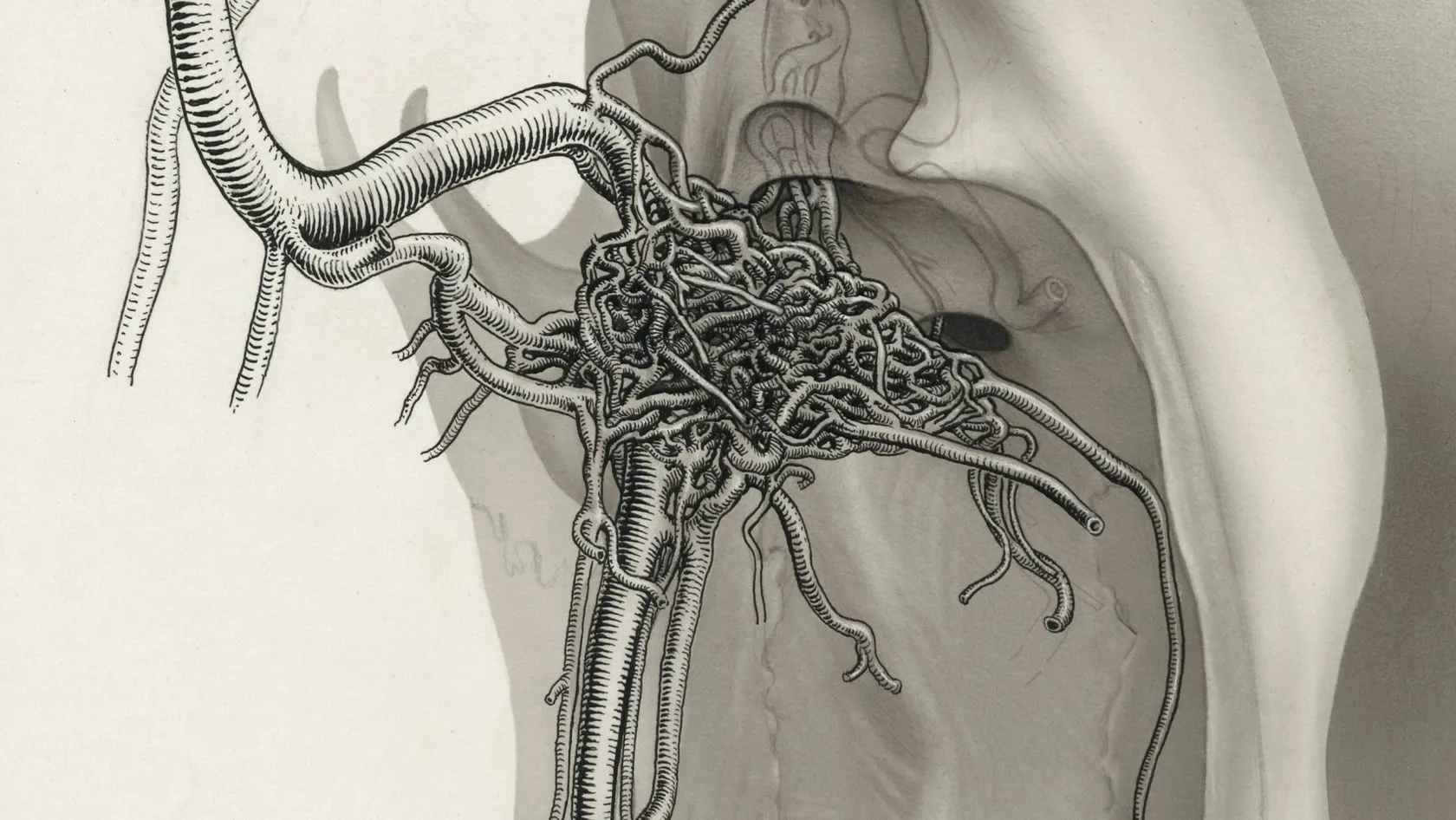
Radical Orchiectomy - Testicle Removal Surgery
Radical names one maneuver, the division of the spermatic cord high in the groin before the testis is touched, and nothing else about the operation is large. The care around it is where things go wrong. Across 593 men at three American referral centers, care departed from guidelines in thirty percent, and those men relapsed at two and a half times the rate. This page covers the operation, the errors and the questions that catch them.
About This Department
Removing a testis is forty minutes of standardized surgery. The care around it is not standardized at all.
Three American referral centers went back through 593 consecutive cases and found that nearly a third had been managed outside the guidelines, most often by ordering the wrong imaging or by treating men who needed no treatment. Those men relapsed at two and a half times the rate. This page explains what the operation is, what the word radical actually names, and where the errors cluster.
What the word radical is doing
Radical sounds like a warning. In surgical language it carries no such weight, and here it names one specific maneuver and not the scale of the operation or the seriousness of the disease, since a radical orchiectomy divides the spermatic cord at the deep inguinal ring, high up inside the groin, before the testis is touched. Nothing else separates it from the alternatives. Everything about the procedure otherwise resembles a hernia repair, the wound runs five or six centimeters along the groin crease, and men walk out of hospital the same day or the following morning, which is why men hearing the word for the first time tend to be caught off guard, several of those who write to us having spent a week believing they were booked for major abdominal surgery. The confusion makes sense. Radical prostatectomy, radical cystectomy and radical nephrectomy all describe far larger undertakings, and the same adjective attached to this operation does not scale alongside them at all.
Divide the cord low down and the operation stops being radical, whatever anybody writes in the notes.
One name, several different operations
Orchiectomy appears on operating lists for reasons that have almost nothing in common. A twenty six year old with a lump has one. So does a seventy eight year old whose prostate cancer has spread to bone, and the two of them are undergoing different procedures for different purposes with different consequences, since the younger man loses one organ through the groin as part of diagnosing and curing a cancer that began inside it. The older man loses both through the scrotum, with no cancer anywhere near them, purely to switch off a hormone feeding a tumor somewhere else entirely, and a third version exists for testes that have died from torsion, been destroyed by infection or become a source of pain nobody can settle, which sits closer to a minor scrotal procedure than to either of the others. Websites, consent forms and insurance codes frequently fail to distinguish between them, which is how a man ends up reading about hormone replacement and hot flushes when none of it applies to him.
Confusing the versions is not a pedantic worry. A man booked for the wrong one gets an incision in the wrong place, and in testicular cancer the incision determines which set of lymph nodes the disease can reach afterward.
Everything below assumes the first of those three operations, the one done when a tumor is suspected. Where the other two differ, we say so.
Plain words, and what each version costs
Eight or nine terms carry most of the meaning here.
Plain words for the terms on this page
The spermatic cord is the bundle running from the abdomen down to the testis, carrying its artery, its veins and the tube that moves sperm, while the deep inguinal ring is the opening in the abdominal wall where that bundle starts, and dividing the cord there is what makes an orchiectomy radical. Inguinal means belonging to the groin. Frozen section means a piece of tissue examined under a microscope during the operation, while the patient is still asleep, so the surgeon can act on the answer. Markers name the three blood substances that some testicular tumors release, alpha fetoprotein, beta hCG and LDH. Onco-TESE means retrieving sperm directly from the removed testis in the laboratory. A prosthesis means a silicone implant placed in the emptied scrotum. Androgen deprivation means shutting off testosterone to treat prostate cancer, either by removing both testes or by injecting drugs that do the same thing chemically. Seminoma and nonseminoma name the two families germ cell tumors come in, and a pathologist decides from the specimen which of them you have, a distinction that sets the whole treatment vocabulary from that point onward. A multidisciplinary meeting means the weekly session where surgeons, oncologists, radiologists and pathologists review each case together before any treatment is added.
What separates the three versions
- The incision. Groin for the cancer operation, scrotum for the other two, and that choice is made before the patient is asleep.
- How much comes out. The radical version removes the testis with its coverings and the whole length of cord. The others take less.
- What happens to the specimen. A cancer specimen goes to a pathologist who stages the disease from it. A specimen from a dead testis is often barely examined.
- What follows. One leads into scans, markers and years of surveillance. Another ends the matter that afternoon.
The operation, step by step
What happens once you are asleep
- An incision is made in the groin crease on the affected side, following the natural skin line so the scar settles almost invisibly.
- The inguinal canal is opened and the spermatic cord identified where it emerges at the deep ring.
- A soft clamp goes across the cord at that level before anything below is disturbed, which is the maneuver the word radical describes.
- The testis is delivered upward out of the scrotum through the groin wound, with its coverings intact.
- The cord is tied with a long marker suture and then divided, so that any surgeon operating in that area years later can find the stump quickly.
- An implant is placed if that was agreed beforehand, and the layers are closed with dissolving stitches.
Order matters in that list. Clamping the cord before the tumor is handled means that anything squeezed out of the growth during the lifting has nowhere to travel, which is the reasoning behind the sequence, and the benefit has never been measured in a trial. Surgeons call it the no touch principle and they follow it because following it costs nothing.
Why nobody biopsies a testis first
Everywhere else in cancer medicine the tissue diagnosis comes before the organ is removed. Here the order reverses, and men find that hard to accept because it means consenting to lose a testis on the strength of a picture. Two reasons sit behind it. A needle passed through the scrotal wall opens a second lymphatic territory the disease had no access to, and these tumors seed readily along such tracks, while removing the organ whole also serves as the biopsy, since a testis weighs less than twenty grams and taking it through the groin keeps everything inside one drainage basin. A third reason goes unsaid and carries real weight. A needle sample of a testicular tumor is frequently uninterpretable, because these growths contain several different tissue types sitting side by side and a core taken from one corner tells a pathologist very little about the rest. Whole organ examination is what allows a report to list every component and the percentage each one occupies, and those percentages change what happens next.
Which puts unusual weight on the scan. In fifty men presenting with acute scrotal pain and a testicular lesion nobody could characterize, ordinary ultrasound reached a definitive diagnosis in 34 and contrast enhanced ultrasound reached one in 48, with sensitivity of 76 percent against 96 percent and specificity of 45 percent against 100 percent. Those were difficult cases and not routine ones, and plain ultrasound performs far better against an obvious solid mass in a young man. The lesson generalizes anyway. Where the picture is equivocal, ask for a better picture and a proper discussion before anybody books a theater slot.
What the removed testis still holds
Once the organ leaves the body it gets treated as a specimen, which is to say as the answer to a question about staging. Nobody thinks of it as anything more. Researchers reviewed the slides from 214 consecutive radical orchiectomies and looked for something nobody had gone looking for, which was whether mature sperm still sat in the healthy parenchyma alongside the tumor. Sperm turned up in 145 of the 214, or 67.8 percent. Tumor size predicted the answer and nothing else did, with sperm found in 83 percent of testes carrying a tumor under four centimeters and in 49 percent of those at four centimeters or more. Consider what that means in ordinary terms. A testis carrying a cancer has not stopped working, and in two thirds of cases it goes on doing the job it was built for right up to the morning somebody removes it. The tumor occupies part of the organ. The rest simply carries on.
Narrow screens scroll this table sideways. Swipe or drag to reach every column.
| Group | Sperm present in the specimen | What follows from it |
|---|---|---|
| All 214 men | 67.8 percent | Most removed testes still carry usable tissue |
| Tumor under four centimeters | 83 percent | Small tumors leave most of the organ working |
| Tumor four centimeters or larger | 49 percent | Still close to half, which is more than most people expect |
| Men with no sperm in their semen | 58 percent | The group for whom this changes everything |
The third of men managed off guideline
Three academic centers in the United States pooled the records of 593 men who came to them with testicular cancer between 2007 and 2016, then checked each case against the national treatment guidelines in force at the time. Care departed from those guidelines in 177 of the 593, which comes to thirty percent. Remote hospitals working without specialists did not produce that figure. Referral centers did, and most of the departures had already happened elsewhere before the man reached them, in general practice, in emergency departments and in district hospitals where somebody meets this disease perhaps twice a year, since testicular cancer is uncommon enough that a family doctor may see three cases across a whole career and familiar enough by reputation that everybody feels able to recognize it, which turns out to be a difficult combination. Confidence outruns experience. A study like this one is where the gap between them shows up.
Then the authors did the thing that makes the study matter. Controlling for race, stage and tumor type, they modeled relapse against whether care had followed the guidelines, and found a hazard ratio of 2.49 with a confidence interval from 1.61 to 3.85, which means men managed off guideline relapsed at two and a half times the rate of men managed on it. For a disease cured in the overwhelming majority, that is an enormous and entirely avoidable gap, produced not by bad surgery but by ordering the wrong scan, treating somebody who needed watching, or watching somebody who needed treating. One qualification belongs here. This was a retrospective review, so men whose care went off guideline may have differed in ways no model could capture, and a hazard ratio from that kind of design overstates causation more often than it understates it. Halve the effect and it would still be worth avoiding.
Where the errors actually fall
Inappropriate imaging accounted for 44 percent of the departures and overtreatment for 40 percent, so the two together made up most of the problem, with misdiagnosis following at 24 percent and undertreatment at 16 percent, while giving somebody the wrong treatment outright stayed rare at 6 percent. Read that distribution carefully, because it is not the distribution most men fear. Almost nobody is having the wrong operation. What happens is a scan that should not have been ordered, or a course of chemotherapy given to a man whose disease had already left with the testis, or a delay while somebody treats a suspected infection that was never an infection. The misdiagnosis figure deserves a sentence of its own. Almost a quarter of the departures involved a testicular tumor being handled as epididymitis or orchitis, usually with two or three courses of antibiotics across several weeks, and the men who describe this to us all say the same thing, which is that the lump never hurt the way an infection hurts.
Every one of those is a decision made in a clinic room, in a few minutes, by somebody who sees this disease a handful of times a year.
Correcting them takes no specialist. A scan ordered by protocol and not by habit, a case discussed at a meeting before treatment is added, and a lump in a young man's testis scanned on the day instead of after a course of antibiotics would between them remove most of that thirty percent. Administrative fixes to a clinical problem rarely get made, which is largely the explanation for why these ones keep not happening.
The questions that catch them
Six questions, asked out loud, close most of the gap described above. Not one of them requires medical training and not one of them is rude.
- Which incision are you using, and why that one.
- Have my markers been drawn today, before the anesthetic, and can I have the numbers.
- What imaging am I having, which guideline are you following, and does that guideline call for exactly this set of scans.
- Is anybody from the fertility laboratory involved, and has my semen been analyzed.
- Who presents my case at the multidisciplinary meeting, and on what day does that meeting sit.
- How many men carrying this diagnosis does the unit treat in a year, and how many of them does this particular surgeon see.
Drag the table below sideways where a phone cuts off the last column.
| Type of departure | Share of departures | What it looks like from a patient seat |
|---|---|---|
| Inappropriate imaging | 44 percent | Scans you did not need, or a scan missing that you did |
| Overtreatment | 40 percent | Chemotherapy or radiation for disease already gone |
| Misdiagnosis | 24 percent | Weeks of antibiotics for an infection that was a tumor |
| Undertreatment | 16 percent | Discharged to watching when treatment was indicated |
| Inappropriate treatment | 6 percent | The rarest category, and the one men worry about most |
Recovery, and what surprises men
Physically this counts as a small operation and the recovery reflects that. Men go home the same day or the following morning, walk normally within a day or two, and return to desk work inside a week, while the pain sits in the groin, feels much like a pulled muscle, and yields to simple painkillers. General anesthesia is usual, and the operation can also be done under a spinal block for men in whom a general anesthetic carries extra risk. Nobody needs a catheter. Nobody needs a drain. Eating starts as soon as the anesthetic wears off, and the only real restriction across the first two weeks is on lifting anything heavy, because the layers of the groin have to knit before they can take load.
Three things catch people out and none of them is a complication. Bruising travels downward under gravity and turns the scrotum and the upper thigh a spectacular color around day three, which looks alarming and means nothing, while swelling on the operated side can last three weeks and supportive underwear worn day and night does more for it than any medication. A patch of numb skin at the top of the inner thigh is common, because a small sensory nerve crosses the incision, and sensation returns over months in most men. A fourth surprise arrives later and is emotional. Men report that the absence registers most in ordinary moments, getting dressed or sitting in a bath, and that it fades without ever quite disappearing. An implant helps some men and does nothing at all for others. Talking to somebody who has been through the same operation helps more than most surgeons expect, and we can arrange that.
Day by day, and when to call
Columns run past the edge on a small screen. Slide the table across to read them.
| When | What is normal | What to do |
|---|---|---|
| Operation day | Groin ache, a dressing, some nausea from the anesthetic | Walk to the bathroom, eat when you feel like it, go home |
| Days one to three | Bruising spreads downward, swelling builds, ache settles | Supportive underwear constantly, short walks, no lifting |
| Week one to two | Wound sealed, bruising fading to yellow, energy returning | Desk work, gentle cycling, shower normally |
| Weeks three to six | Swelling gone, scar softening, pathology discussed | Back to sport and lifting, and to the surveillance schedule |
Living with one testis, and the decades after
One testis supplies enough testosterone for most men and most fertility, and the great majority notice nothing beyond the absence itself. Where this deserves more attention is the longer horizon. Ten year survival in testicular cancer now exceeds 95 percent, and because diagnosis arrives around thirty, effective treatment has bought the average man several extra decades of life. Those decades come with a bill attached in a minority of cases, since the international literature on survivorship records second cancers, cardiovascular disease, nerve damage, kidney and lung toxicity, reduced testosterone, reduced fertility and psychological difficulty as recognized late consequences, mostly of platinum chemotherapy and not of the operation. Put the two halves together and the shape of the problem comes clear. This disease kills very few of the men who get it and leaves a meaningful minority carrying something else for decades, so the whole point of getting the early decisions right is to avoid treatment that was never needed, since every course of chemotherapy avoided is a set of late effects avoided, which is the substantial argument for surveillance in men who qualify for it.
Two habits follow. Stay in follow up long after anybody feels the cancer is a live question, and treat blood pressure, cholesterol and smoking with the seriousness of someone whose cardiovascular risk has already been nudged upward. Neither habit sounds dramatic. Both matter more, in absolute terms, than anything that happened in the operating room.
The other orchiectomy
Removing both testes shuts off roughly ninety five percent of a man's testosterone within hours, which is the treatment advanced prostate cancer needs. Injections achieve the same end and have almost entirely replaced the operation. A Swedish national study of 41,362 men on androgen deprivation illustrates how completely, since 26,959 of them were on injections and only 3,747 had surgery. Several things explain the replacement and only some of them are medical. Injections can be stopped, which matters where treatment is intermittent or where a man may come off it later, and they also spread the decision across years of appointments, so nobody has to consent to something permanent in a single afternoon. Set against that, an injection schedule means a lifetime of clinic visits, a first dose that raises testosterone before it lowers it, and a running cost that never stops. The operation does its work in one morning and then asks nothing further of anybody.
The same study measured what each route costs. Cardiovascular disease risk rose in both groups against an age matched comparison, with a hazard ratio of 1.21 on injections and 1.16 after surgery, and the risk concentrated sharply in the first six months among men who already had cardiovascular events behind them. So the two approaches are close on harm, the operation works immediately where injections cause a testosterone surge first, and the operation ends the matter in a morning without committing a man to appointments for years. A man who prefers not to have a hollow scrotum can be offered the subcapsular version, which removes the hormone producing tissue and leaves the shell, and in one comparison thirty seven men had that version against thirty seven who had the standard operation, with testosterone landing at 21 nanograms per deciliter in both groups and the same PSA response and the same survival.
Surgery will not suit everybody. It deserves to be put on the table as an option, which it seldom is.
Having this done in Istanbul
Send the scrotal ultrasound with its images, any marker results and their dates, any scan already performed and the pathology if surgery has happened elsewhere. A urologist reads all of it and writes back, at no charge and with no obligation. Our team works in English, Arabic, French, Russian, Serbian, Romanian and Spanish, with interpreting arranged for other languages on request, and one coordinator stays with you from the first message through to discharge and afterward on WhatsApp once you are home. A companion sleeps in your room on a bed we provide, hotel nights either side of the admission and every airport and clinic transfer are arranged for you, and an invitation letter for a visa application goes out roughly ten days before you fly. Meals come halal, vegetarian or adjusted for diabetes, and there is a prayer room on the ward floor, and you can send the files by WhatsApp or by email, whichever suits you, with an answer back inside a working day.
We publish no figures on this page for one reason. How much the treatment costs turns on whether an implant is placed, whether sperm banking and laboratory retrieval are included, how many nights the ward keeps you, and whether anything beyond the operation enters the plan once the pathology lands. Nothing there can be settled before a urologist has read your scan. A price quoted before that point is a number chosen to win an inquiry. What we can tell you before you travel is which of those items your case will need, and that estimate comes from somebody who has looked at your imaging, arriving in writing and itemized, holding unless the pathology changes the plan, in which case we tell you what changed and why before anything gets booked.
One thing we do differently, and it comes straight from the evidence on this page. Every case is put to a multidisciplinary meeting before any treatment is added after the operation, because overtreatment accounted for 40 percent of the guideline departures in that American series and a meeting is what catches it.
Radical orchiectomy FAQ
Seven questions arrive in almost every first message we receive.
Does radical mean they take more than the testis?
Why not biopsy it before removing it?
My semen test came back empty. Is fertility over?
How likely is it that something gets mishandled?
How long until I can lift and play sport again?
Is this the same operation done for prostate cancer?
How long do I need to be in Istanbul?
References
- Wymer KM, Pearce SM, Harris KT, Pierorazio PM, Daneshmand S, Eggener SE. Adherence to National Comprehensive Cancer Network guidelines for testicular cancer. Journal of Urology. 2017;197(3 Pt 1):684-689.
- Shoshany O, Shtabholtz Y, Schreter E, Yakimov M, Pinkas H, Stein A, Baniel J, Golan S. Predictors of spermatogenesis in radical orchiectomy specimen and potential implications for patients with testicular cancer. Fertility and Sterility. 2016;106(1):70-74.
- Valentino M, Bertolotto M, Derchi L, Bertaccini A, Pavlica P, Martorana G, Barozzi L. Role of contrast enhanced ultrasound in acute scrotal diseases. European Radiology. 2011;21(9):1831-1840.
- O'Farrell S, Garmo H, Holmberg L, Adolfsson J, Stattin P, Van Hemelrijck M. Risk and timing of cardiovascular disease after androgen-deprivation therapy in men with prostate cancer. Journal of Clinical Oncology. 2015;33(11):1243-1251.
- Zhang XZ, Donovan MP, Williams BT, Mohler JL. Comparison of subcapsular and total orchiectomy for treatment of metastatic prostate cancer. Urology. 1996;47(3):402-404.
- Travis LB, Beard C, Allan JM, Dahl AA, Feldman DR, Oldenburg J, Daugaard G, Kelly JL, Dolan ME, Hannigan R, Constine LS, Oeffinger KC, Okunieff P, Armstrong G, Wiljer D, Miller RC, Gietema JA, van Leeuwen FE, Williams JP, Nichols CR, Einhorn LH, Fossa SD. Testicular cancer survivorship. Research strategies and recommendations. Journal of the National Cancer Institute. 2010;102(15):1114-1130.
Editor's note
Written by the Biruni Hospital medical editorial team. Reviewed by Prof. Dr. Barış NUHOĞLU, Urology.
Medically reviewed by

Prof. Dr. Barış NUHOĞLU
Urology
Related Treatments
View All
Bladder Cancer Surgery
Bladder cancer is treated by two operations that share almost nothing. One scrapes tumor off the inside wall through the urethra in twenty minutes. The other removes the bladder and rebuilds the route urine takes out of the body. The short one is treated everywhere as a minor procedure, and how well it is done decides the staging, the recurrence rate and whether the long one ever becomes necessary.
Fusion Biopsy Prostate - MRI-Guided Prostate Biopsy
Software builds a model of your prostate from the MRI and another from the live ultrasound, then deforms one onto the other so the lesion lands somewhere the needle can reach. Every step of that carries a few millimeters of error. This page covers where the error comes from, what the trials comparing the three targeting methods found, who draws the outline the needle aims at, and why good units still take cores from the rest of the gland.

Inflatable Penile Prosthesis
An inflatable penile prosthesis has three parts, and only one of them gets discussed. The reservoir sits inside the abdomen, decides where the operation gets difficult, and causes most of the reoperations men end up needing. This guide covers the hydraulics, the move from the space of Retzius to high submuscular placement, the evidence on palpability and auto inflation, the link between blood sugar control and infection, recovery week by week, and what the operation means in Istanbul.
Kidney Cancer Surgery - Renal Cancer Surgery
Kidney cancer surgery means two different operations, and the choice between them is made from a scan before anyone knows what the tumor is. The only randomized comparison found that sparing the kidney protected kidney function and did not extend life. This page works through that result, the clamp and the clock, biopsy before surgery, surveillance, and what changed when the disease has already spread.
Kidney Stone Surgery
Three measurements on a CT decide which kidney stone procedure suits you, and none of them is a brand name. The stone free rate a clinic advertises is a different kind of number, because it depends on how hard that clinic looked afterward. This page covers shockwaves, ureteroscopy and percutaneous surgery, what the randomized trials found, and why half of stone formers come back.