
Radical Orchiectomy
Radical orchiectomy removes a testicle with a tumor through a short cut in the groin and is both the diagnosis and the first treatment of testicular cancer, one of the most curable cancers. This guide explains why the groin route matters, sperm banking before surgery, the testicular prosthesis option, how the pathology decides between surveillance, carboplatin and BEP, the recovery, a typical one-week Istanbul stay and follow-up at home.
About This Department
Diagnosis and first treatment in one operation. For one of the most curable cancers.
After orchiectomy and one course of BEP, no patient died of stage I nonseminoma in a 517-man Scandinavian series.
A painless lump or swelling in one testicle has been found, an ultrasound shows a solid tumor inside it, and blood tumor markers have been taken, so the urologist has recommended removing the testicle. A radical orchiectomy removes the affected testicle together with its spermatic cord through a cut in the groin, leaving the scrotal skin untouched so that cancer cells stay out of new lymph channels. It is both the diagnosis and the first treatment of testicular cancer, the most common cancer in young men and one of the most curable. Most patients go home the same day or the next morning. Recovery is quick. Below you will find why the groin route matters, what to do about fertility before surgery, the operation and the prosthesis option, how the pathology decides the next step, what the trials show for treatment after surgery, the recovery, how long to stay in Istanbul, and the follow-up at home.
Why the testicle is removed through the groin
Two separate drainage routes
Needles stay out. A testicular tumor is almost never biopsied with one. The lymph channels of the testicle drain to nodes beside the aorta in the back of the abdomen, while the scrotal skin drains to the groin. Operating through the groin keeps those routes separate and lets the surgeon clamp the cord before the testicle is handled, so that tumor cells cannot escape into the blood.
What the tumor markers are
Fertility before surgery
Sperm banking should be offered before the operation. A German study of 163 men who banked semen before orchiectomy for a testicular tumor found a median total sperm count of 56.9 million per sample, against 207 million in healthy donors and 152 million in men with other cancers. Reduced fertility is part of the disease itself in many men, before any treatment.
Bank sperm first. It takes one visit and keeps options open.
How the operation is done
Swipe the day plan sideways on a phone.
| Time | What happens |
|---|---|
| Morning | Markers drawn, consent, marking of the side |
| Midday | The operation, one hour |
| Evening | Walking, eating, and home or an overnight stay |
- General or spinal anesthesia, and a 5 to 8 centimeter cut in the groin crease.
- The cord is clamped.
- The testicle is eased up from the scrotum and removed with the cord.
- A silicone prosthesis is placed if you choose one.
- The wound is closed with dissolving stitches.
It takes an hour.
What the pathology decides
On a narrow screen, swipe the table sideways to read every column.
| Type | Features | Usual next step for stage I |
|---|---|---|
| Seminoma | Grows slowly, very sensitive to treatment | Surveillance, or one dose of carboplatin |
| Nonseminoma | Mixed cell types, often raises AFP or hCG | Surveillance, or one course of BEP if lymphovascular invasion is present |
What lymphovascular invasion means
Treatment after surgery
Stage I testicular cancer is cured in nearly every man, whichever path follows surgery.
Seminoma
In a European trial of 1,447 men with stage I seminoma, one infusion of carboplatin matched radiotherapy, with 94.7 and 96.0 percent free of relapse at five years. Cancer in the other testicle appeared in 2 men after carboplatin and 15 after radiotherapy.
Nonseminoma
In Norway and Sweden, 517 men with stage I nonseminoma received one course of BEP chemotherapy after orchiectomy. After almost eight years of follow-up, relapse at five years was 3.2 percent with lymphovascular invasion and 1.6 percent without it, and no patient died of testicular cancer.
Risks and how they are managed
The recovery
Walking starts the same day. Most men go home that evening or the next morning. Desk work returns within a week and lifting and sport after four to six weeks.
- Wear supportive underwear for two weeks.
- Shower from the second day, with no bath until the wound has healed.
- Avoid cycling until the groin is comfortable.
How long to stay in Istanbul
Plan for one week.
Orchiectomy packages listed on Bookimed for Istanbul hospitals include one night in hospital, and the platform's sample itinerary runs three to four days. We plan a week so that the staging CT, the repeat tumor markers and the pathology are complete, and the next step is agreed before you fly.
What decides the cost
Sperm banking, the prosthesis, the staging CT, nights in hospital and any carboplatin or BEP afterward shape the figure.
Ask for each one by name. We quote free of charge once our surgical oncology team has looked at your ultrasound, the marker results and any CT you already have, so the figure reflects your own case and the treatment it is likely to need afterward.
Arranging the trip
One WhatsApp message with the scrotal ultrasound and your AFP, hCG and LDH results starts things. Because this cancer moves quickly, we aim to operate within days of arrival. The coordinator who answers that first message stays your contact until the last follow-up scan. Seven languages are spoken by the team. Interpreters cover others. Someone close to you can sleep in your room on a companion bed, and our international office organizes the hotel, the visa invitation letter ten days ahead and the airport pickup. Meals come halal, vegetarian or diabetic. There is a prayer room, a female physician on request, and chemotherapy and radiotherapy under the same roof.
Once you are back home
Follow-up runs for five years or more, with tumor markers and CT scans at set intervals that depend on the type and the treatment chosen, and you send the results through the coordinator for review. Examining the other testicle monthly matters for life.
Contact your doctor quickly about
- a new lump in the remaining testicle,
- back pain that does not settle,
- a cough or breathlessness without a cold,
- and fever or a red, swollen wound.
Radical orchiectomy FAQ
Will I still be able to have children?
Will my sex life change?
Is a prosthesis safe?
Why not a needle biopsy?
How soon will I know the stage?
References
- Ruf CG, Hochmuth-Tisch J, Salzbrunn A, et al. Pre-orchiectomy semen analysis in patients with testicular germ cell tumours and comparison with healthy men and with patients with other malignancies. Urol Int. 2025;109(4):346-354.
- Robinson R, Tait CD, Clarke NW, Ramani VA. Is it safe to insert a testicular prosthesis at the time of radical orchidectomy for testis cancer, an audit of 904 men undergoing radical orchidectomy. BJU Int. 2016;117(2):249-252.
- Oliver RT, Mead GM, Rustin GJ, et al. Randomized trial of carboplatin versus radiotherapy for stage I seminoma, mature results on relapse and contralateral testis cancer rates in MRC TE19/EORTC 30982 study (ISRCTN27163214). J Clin Oncol. 2011;29(8):957-962.
- Tandstad T, Ståhl O, Håkansson U, et al. One course of adjuvant BEP in clinical stage I nonseminoma mature and expanded results from the SWENOTECA group. Ann Oncol. 2014;25(11):2167-2172.
Editor's note
Written by the Biruni Hospital medical editorial team. Reviewed by Prof. Dr. Özcan YILDIZ, Medical Oncology.
Medically reviewed by
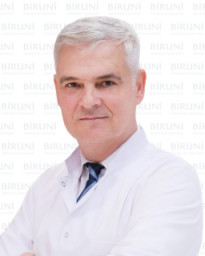
Prof. Dr. Özcan YILDIZ
Medical Oncology
Last updated:


