
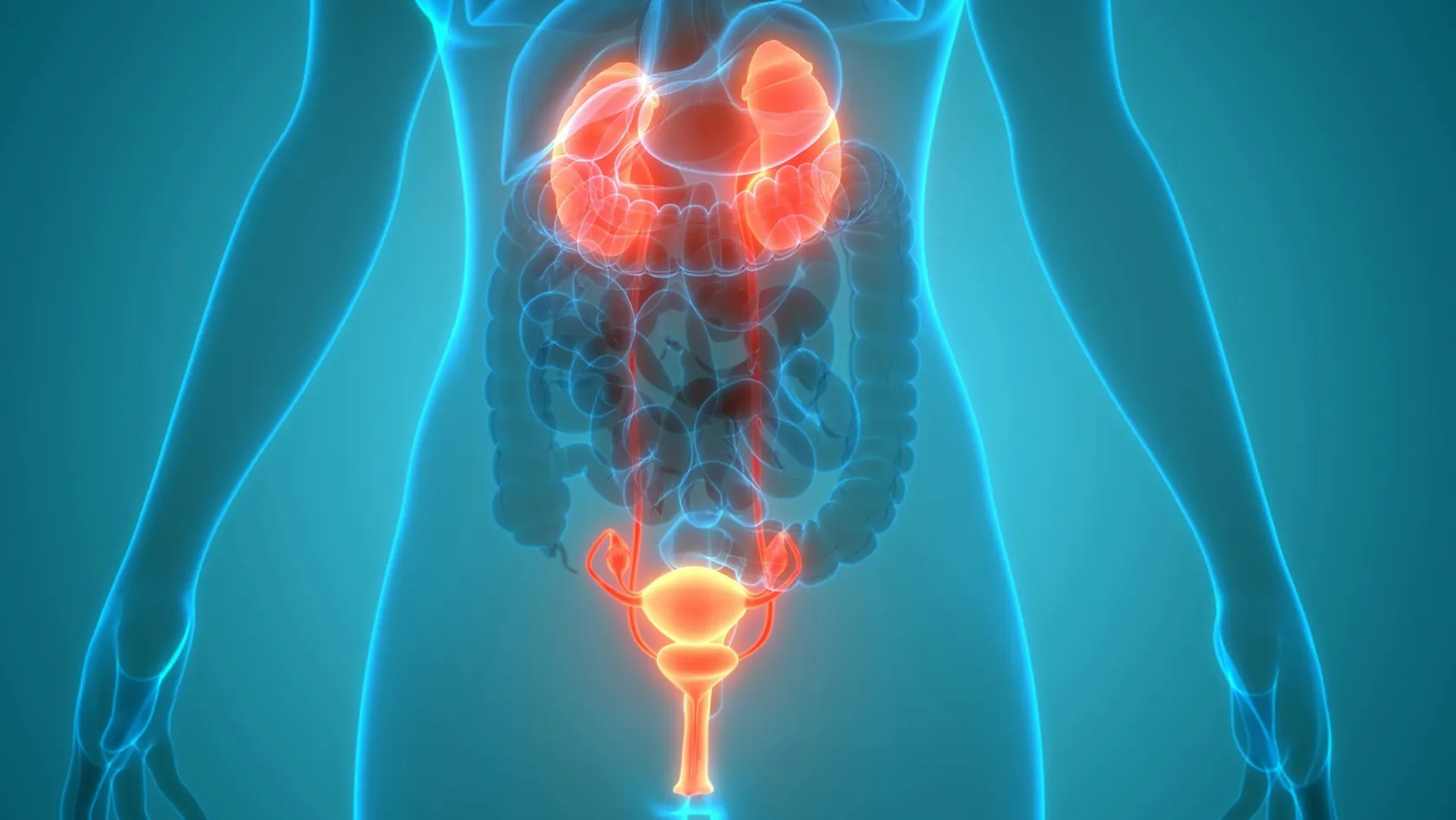
Prostate Cancer Surgery
Radical prostatectomy saved one life for every eight men treated in prostate cancer that announced itself, and saved none across fifteen years in cancer a PSA test uncovered in men who felt well. This page sets the randomized trials beside each other, states what surgery costs in continence and erections, leaves the robot argument where the evidence puts it, and explains what follows if the PSA rises again.
About This Department
One operation saves eight men and none at all. How the cancer was found decides which.
Radical prostatectomy saved one life for every eight men treated in cancers that announced themselves, and saved none over fifteen years in cancers a blood test uncovered in men who felt well. Both results come from randomized trials. This page separates the two situations, states the two functions surgery reliably changes, and leaves the machine argument where the evidence puts it.
What the surgeon takes out
A radical prostatectomy removes the whole prostate gland along with the seminal vesicles sitting behind it, and the surgeon then joins the bladder directly to the urethra, since the tube carrying urine out of the body used to run through the middle of what has just gone. Three structures sit close enough to make this an operation of millimeters. The urinary sphincter, a ring of muscle holding urine in, lies immediately below the gland. Two thin bundles of nerve responsible for erections run along the back and sides of it, close enough to touch. The bladder neck above has to be reshaped to fit the urethra being sewn to it, and lymph nodes come out of the pelvis in the same sitting when the cancer carries enough risk to justify taking them. Every decision the surgeon makes concerns those structures, and every trade described further down this page traces back to how close the dissection went to one of them. Prostate tissue produces most of the fluid in semen, so ejaculation ends permanently with the gland. PSA, a protein made only by prostate tissue, should fall below the limit of detection within six weeks, and that single number becomes the instrument a man is followed with for the next twenty years.
Surgeons agree on all of it.
Argument begins one step earlier, at the question of which men should have the operation at all, and two large randomized trials asked exactly that and produced answers looking flatly contradictory until you notice what separated the men inside them. One recruited before PSA testing reached the population, from men whose cancer had announced itself. The other recruited men whose cancer surfaced on a blood test taken while they felt perfectly well. Surgery saved lives in the first trial. Across fifteen years in the second, it saved none.
Where the decision actually sits
Pages on this subject open with technique. We open with the decision, because a man choosing among three reasonable options needs different information from a man who has already chosen surgery and wants to know how his week will go. Both readers came to this page. The second half of it belongs to the second reader.
Every figure quoted here comes from a randomized trial listed at the end. Where trials disagree, we say so and explain what separated the men inside them, since that separation carries most of the meaning.
Two diseases share one name
Prostate cancer found because a man could no longer pass urine, or because his back hurt and a scan showed the reason, behaves very differently from prostate cancer found because a screening blood test came back at 4.5 in a man who felt entirely well. Cells from the two can look identical under a microscope. The populations they were drawn from do not resemble each other at all. Screening pulls in a large number of cancers that would never have surfaced in a lifetime, mixed together with a smaller number that would have surfaced and killed, and no pathologist separates those two reliably on a slide, no scanner manages it either, and so every trial of screen detected cancer ends up measuring the average of a mixture. Trials recruiting before PSA testing existed measured something much closer to pure disease. That one difference explains nearly all of the apparent contradiction between the two headline results, and it explains why a man reading a survival figure has to know which kind of cancer produced it before the figure tells him anything at all.
Both trials below recruited before a change in practice. Current practice adds an MRI ahead of the biopsy and aims the needles at what the scan shows, which has cut the number of harmless cancers being found, so those trial results still stand while describing a slightly different mixture of men from the one walking into a clinic today.
The men this operation saves
Swedish investigators randomized 695 men between 1989 and 1999, before PSA screening reached that population, so nearly every cancer in the trial had made itself known. Half went to surgery. Half were watched. At 23 years of follow up, 63 of 347 men in the surgical group had died of prostate cancer against 99 of 348 among those watched, a relative risk of 0.56 and an absolute gap of 11 percentage points. Eight operations prevented one prostate cancer death. Hormone treatment was needed 25 percentage points less frequently after surgery, which counts for a great deal across the years a man actually lives, since hormone treatment costs him energy, muscle and sexual function long before it runs out of effect.
- Men under 65 at diagnosis gained most, with the relative risk falling to 0.45 in that group.
- Men with intermediate risk disease gained almost as much, with a relative risk of 0.38.
- Men whose tumor had already reached beyond the capsule still gained, since surgery removed the bulk of it and delayed everything downstream.
- Men with low risk disease gained the least, and a large share of the watched group finished the trial having needed no palliative treatment of any kind.
That remains the strongest evidence surgery has anywhere, and screening has quietly made the men who supplied it rare.
What a second trial added
American investigators ran the same comparison inside the screening era. 731 men went to surgery or observation and were followed for a median of 12.7 years. Death from any cause reached 61.3 percent after surgery and 66.8 percent under observation, a difference falling just short of statistical significance, and prostate cancer killed 7.4 percent of the operated men against 11.4 percent of the observed men, again landing just short of it. Buried underneath those averages sits the finding that changed practice everywhere. Surgery lowered death from any cause by 14.5 percentage points in men with intermediate risk disease, by 0.7 points in low risk disease and by 2.3 points in high risk disease. Treatment for progression was needed 26.2 percentage points less frequently after surgery, and most of that progression consisted of a rising PSA in a man who felt nothing wrong.
- Low risk disease. Surgery bought almost nothing across twelve years, and the harms arrived in full.
- Intermediate risk disease. The largest absolute gain in the trial, and the group with the clearest case for an operation.
- High risk disease. Modest gain from surgery on its own, since cancer already leaving the gland needs more than the removal of the gland.
Set the two trials beside each other and one pattern holds across both of them. Surgery pays where the cancer had time to matter and the man had years to lose, and neither trial found low risk disease benefiting from an operation while both found continence and erections suffering in every risk group alike.
What the operation reliably costs you
Every man considering this operation should be able to state its two reliable consequences aloud before signing a consent form. Neither one is a rare complication. Urinary leakage arrives immediately in nearly everyone and improves across six to twelve months, ending anywhere from complete dryness to one pad a day, and erections weaken or stop altogether, recover partially across one to three years where both nerve bundles were spared, and recover considerably less where they were sacrificed.
Questionnaires from those same 1,643 men were collected before diagnosis, at six and twelve months, and every year afterward, with completion rates above 85 percent for most measures, and of the three options surgery had the worst effect on sexual function and on urinary continence, with some recovery arriving later while both stayed worse in the surgical group across the whole six years reported. Radiotherapy hit sexual function hardest at six months, recovered some ground and then held steady, left continence largely alone, and damaged bowel function instead, including a rising frequency of bloody stools that surgery never produced. Sexual and urinary function declined gradually under monitoring as well, since men age during a trial and nothing stops that, while anxiety, depression and general quality of life showed no difference between the three groups at any point across the six years.
The two numbers to request from any surgeonThe share of his own patients using no pad at twelve months, and the share with erections sufficient for intercourse at twenty four months, counted by questionnaire and given as a figure. A unit measuring its results will have both ready in a minute. A unit that has never measured them will describe them instead, and description is what people offer when they have nothing to count. Published series from experienced centers report continence between 80 and 95 percent at one year, and potency after sparing both nerve bundles between 40 and 70 percent in men with good erections beforehand. Any figure sitting far above those ranges deserves a question about how it was collected and from whom.
Both numbers depend more on the man than on the surgeon.
The three paths side by side
Cancer still inside the gland has three reasonable answers. The table below sets them against each other on the measures that actually separate them, using the fifteen year trial for the survival rows and the questionnaire study for the function rows.
This table scrolls sideways on a narrow screen. Drag or swipe to reach every column.
| Measure | Active monitoring | Surgery | Radiotherapy with hormones |
|---|---|---|---|
| Died of prostate cancer | 3.1 percent | 2.2 percent | 2.9 percent |
| Developed metastases | 9.4 percent | 4.7 percent | 5.0 percent |
| Needed long term hormone treatment | 12.7 percent | 7.2 percent | 7.7 percent |
| Urinary continence | Slow decline with age alone | Worst of the three, partial recovery, still worse at six years | Largely untouched |
| Sexual function | Slow decline with age alone | Worst of the three from the first questionnaire onward | Sharp fall at six months, then partial recovery |
| Bowel function | Unchanged | Unchanged | Worse, with bloody stools growing more frequent over time |
| What it asks of you | Tests every few months, scans, repeat biopsies, and living with a known cancer | One admission, one recovery, and a year of rehabilitation | Weeks of daily treatment and months of hormone therapy |
Read one column down before comparing across. A man of 55 with low risk disease and thirty years ahead of him reads this table very differently from a man of 68 with grade group 3 disease and a PSA of 12, and the table itself decides nothing for either of them. It does stop a decision being made on one number overheard in a corridor.
Active monitoring in practice
Monitoring earned its column in that table on outcome, and it fails in ordinary practice for an entirely different reason, since 133 of the 545 men assigned to monitoring in the fifteen year trial, close to a quarter of them, reached the end alive with no prostate cancer treatment of any kind behind them. Those men kept their continence, kept their erections and lost nothing at all, and the cost landed on the other three quarters, who were treated eventually and carried the knowledge of an untreated cancer for however long the waiting lasted.
What a monitoring program has to contain
Monitoring without structure amounts to neglect with paperwork attached. A real program measures PSA every three to six months, repeats the MRI on a written schedule, and repeats the biopsy when the PSA trend or the scan reports a change. Grade on the repeat biopsy drives the decision far more than PSA does. One man whose repeat shows grade group 1 in a single core out of twelve has a completely different conversation from the man whose repeat shows grade group 2 in six cores, and the second man gets treated. Any unit offering you monitoring should hand over the schedule in writing at the start, naming who reads the scans, how frequently the biopsy repeats, and which finding ends the monitoring and starts treatment. Two items go missing most frequently, the written schedule and the named radiologist, and a program lacking either one has handed you a promise in place of a plan.
What ends it
Grade rising on a repeat biopsy ends it. A lesion growing on MRI ends it. A PSA climbing steadily across several consecutive tests ends it, since one isolated high reading follows infection, a long cycle ride and sex as readily as it follows cancer, and anxiety that will never settle ends it too, with no man owing anybody an apology for that reason.
Robot against open hands
Marketing around this operation concentrates almost entirely on the machine, and the machine carries the thinnest evidence of anything on this page, a gap Australian investigators closed by randomizing 326 men to robotic or open radical prostatectomy and following them for two full years with validated questionnaires. Urinary function scores showed no significant difference at six, twelve or twenty four months, and sexual function scores showed no significant difference either, 37.4 against 38.6 at six months and 45.7 against 46.9 at twenty four months, with the erectile function questionnaire agreeing at every point. Cancer control measures matched as well. The authors concluded that the benefits of a robotic approach relate largely to its minimally invasive nature, which is a careful way of stating that the smaller incisions are real and the functional promises made in brochures are decoration.
What the trial actually compared
One surgeon did all the robotic cases. Another did all the open ones.
Both were experienced and both worked at a single center, a design answering a much narrower question than the marketing implies, since the trial compared two good surgeons holding two different tools and never compared the tools themselves in average hands. No larger randomized comparison has overturned the result since. Registry figures showing better outcomes after robotic surgery mostly reflect which hospitals could afford robots and which men were referred to those hospitals.
What a robot genuinely changes
Blood loss falls sharply, transfusion becomes uncommon, the incisions are small and men leave hospital a day sooner. Those advantages hold up, and they matter for roughly a week. Continence and erections are settled by how the sphincter and the nerve bundles were handled, by the surgeon's judgment on how close to cut, and by the age and erectile function a man brought into the room, so case volume predicts results better than equipment does and the question to put to a unit concerns how many of these operations the named surgeon performs each year.
Nerve sparing and what it promises
Two ribbons of nerve run along either side of the prostate carrying the signals that produce an erection, and sparing them means dissecting the gland away without cutting, stretching or burning them. Sparing both is possible when the cancer sits away from both sides. Sparing one is the compromise when the tumor approaches the capsule on the other. Sparing neither is the correct answer when cancer presses against the capsule on both sides, since a preserved nerve lying beside a positive margin has preserved some of the cancer along with it, and this call gets made in the operating room with the gland in front of the surgeon, guided by the MRI, the biopsy map and what the tissue looks like once it has been exposed. Every man should hear which of the three is planned before he goes to sleep, and what finding would change the plan, since recovery of erections after sparing both sides runs one to three years, depends heavily on age and on function beforehand, and runs with tablets or injections supporting a man through the wait.
Nobody recovers what he did not have beforehand.
Penile rehabilitation programs, meaning regular tablets or injections started early to keep the tissue oxygenated, run in most units and the evidence behind them stays mixed, and we use them anyway because the downside is small and the possible gain is real. What we decline to do is promise a man a specific result, since the published range after sparing both sides in men with normal function beforehand runs from 40 to 70 percent at two years, and the man sitting in front of us lands somewhere inside that range for reasons no one controls.
The PSA test afterward
PSA after a radical prostatectomy carries more information than any scan, since every molecule of it came from prostate tissue and the prostate has gone. The first test happens around six weeks. A result below the reporting limit, commonly written as under 0.1, means the operation removed everything producing the protein. Testing then runs every three to six months for two years and less frequently after that, with the pathology report on the removed gland arriving inside the same few weeks and carrying the other half of the prognosis.
The three lines on the pathology reportMargin status, meaning whether cancer cells reached the cut edge of the specimen. Stage, meaning whether the tumor stayed inside the capsule, pushed through it, or reached the seminal vesicles. Grade group measured on the whole gland, which frequently differs from the grade read on the biopsy because the pathologist now holds all of the tissue instead of twelve needle cores. Those three lines, read together with the first PSA, decide whether anything further gets recommended and when. Take a copy of the report home and keep it somewhere safe, since every doctor you meet for the next twenty years will want those three items and nobody else will be holding them.
Wide table. Scroll it sideways on a narrow screen to reach every column.
| Result | Usual meaning | What follows |
|---|---|---|
| Under 0.1 at six weeks | Nothing left producing PSA | Routine testing on schedule |
| Detectable at six weeks and steady | Some prostate tissue remains, benign or otherwise | Repeat testing before any decision gets made |
| Two readings of 0.2 or above, rising | Biochemical recurrence | Discussion of salvage radiotherapy to the prostate bed |
| Doubling in under six months | Faster biology than average | Imaging first, then a fuller conversation |
| One higher reading that falls back | Laboratory variation | Repeat in the same laboratory before anyone reacts |
Few men ever meet the lower rows. For the minority who do, a rising PSA after surgery opens a conversation and closes nothing, since the interval between biochemical recurrence and anything visible on a scan is measured in years.
If the PSA starts rising
Salvage radiotherapy treats the prostate bed after surgery, and the argument for twenty years concerned timing alone. One school irradiated every man whose pathology report looked dangerous, immediately after the operation, on the grounds that microscopic disease dies most easily when there is least of it, and the other school waited, tested every few months and treated only the men whose PSA actually began to climb. Each position had its defense. The first policy treats everybody and cures a number of men the surgery had already cured, while the second accepts a delay in exchange for sparing a large group of men radiotherapy altogether.
What the pooled comparison found
Three randomized trials ran the comparison and their investigators agreed in advance to pool the results, a design decision that removed the usual temptation to choose an analysis after seeing the answer. 2,153 men were included, 1,075 assigned to immediate radiotherapy and 1,078 to a policy of waiting and treating early if the PSA rose, with median follow up running between five and six and a half years and a maximum of eleven. Event free survival at five years reached 89 percent under immediate treatment and 88 percent under the waiting policy, a difference of one percentage point with a confidence interval running from minus two to plus three. The hazard ratio came out at 0.95. Only 421 of the 1,078 men in the waiting group had needed radiotherapy by the time of analysis, so six men in every ten had been spared it entirely without any cost to their outcome.
Guidance on both sides of the Atlantic changed after that result, and early salvage is now the default.
The day and the weeks after
Admission happens the afternoon before or the same morning, with the anesthetist and the surgeon seeing you and the consent conversation repeated from the beginning, and the operation itself runs two to four hours under general anesthesia. A catheter goes in during surgery and stays seven to fourteen days while the join between bladder and urethra seals itself, and most men walk the same evening, eat normally the following day and leave hospital on the second or the third. Pain stays moderate and tablets control it after the first day, and the small incisions of a robotic or laparoscopic approach hurt appreciably less than an open wound.
The day the catheter comes out is the one every man remembers.
Leakage begins the moment that catheter comes out and it frightens men who were never warned properly. Expect pads. Expect several a day in the first week and fewer each week after, with the largest improvement arriving between weeks four and twelve, and pelvic floor exercises taught before the operation and restarted the day the catheter leaves shorten the whole process measurably. Lifting stays limited for six weeks while the internal repair heals. Desk work resumes at two to three weeks and physical work at six. Erections do not return inside that window, and men expecting them at six weeks conclude wrongly that nothing will ever happen, since the nerve recovery clock runs on years and gives almost no sign in the first months. Driving waits until an emergency stop causes no hesitation, which for most men falls somewhere in the third week.
Cost, travel and flying home
Plan on ten to fourteen nights in the country. That span covers arrival and assessment, the operation itself, two or three nights in hospital, the first stretch of recovery and a review before departure, and it leaves room for the man whose catheter needs a few extra days.
Flying with a healing surgical join carries no particular danger, and the questions deciding your date are different ones entirely, since we clear a man to fly once he walks freely, runs no fever, passes urine after catheter removal and has stopped bleeding. Most men reach that point between day nine and day thirteen. Flying home with the catheter still in place works perfectly well where its removal has been arranged and confirmed at the other end, and we write to that doctor before you leave the building. Compression stockings and regular movement on the aircraft reduce the clot risk, which sits above normal for several weeks after any pelvic operation, and we prescribe injections covering the journey where lymph nodes came out. Four things move the cost of this operation. Whether the lymph nodes are removed, whether the approach is open, laparoscopic or robotic, how many nights the hospital stay runs to, and whether pathology on the whole gland sits inside the figure quoted to you. Confirm that fourth item in writing.
Send us the biopsy report with the grade group and the number of positive cores, the PSA history with a date attached to every value, the MRI report together with the images, any bone or PSMA scan, and a list of your medications. A urologist reads all of it and writes back at no charge, and where the answer is that your cancer suits monitoring or radiotherapy better than an operation, that is the answer arriving in your inbox. One coordinator stays with you from that first message through to your flight home and remains reachable on WhatsApp afterward, and seven languages are spoken in this building, English, Arabic, French, Russian, Serbian, Romanian and Spanish, with anything else interpreted on request. A companion sleeps in the room. Hotel rooms and airport transfers are booked around the surgical dates. Halal, vegetarian and diabetic meals are ordinary here and a prayer room sits inside the building. Visa invitation letters go out around ten days ahead of travel. The coordinator arranges all of it. Follow up costs nothing once you are home, so send us the six week PSA and every result after it and a urologist here will read them.
No figures appear on this page. A price quoted before anyone has read your pathology is a number chosen to win an inquiry.
Prostate cancer surgery FAQ
Seven questions reach us in almost every first message from abroad.
Will this operation cure me?
Surgery or radiotherapy?
Is the robot better than open surgery?
How long until I stop leaking?
Will I be able to have sex again?
What happens if the PSA comes back?
How long do we need to be in Istanbul?
References
- Hamdy FC, Donovan JL, Lane JA, Metcalfe C, Davis M, Turner EL, et al. Fifteen-year outcomes after monitoring, surgery, or radiotherapy for prostate cancer. New England Journal of Medicine. 2023;388(17):1547-1558.
- Bill-Axelson A, Holmberg L, Garmo H, Rider JR, Taari K, Busch C, et al. Radical prostatectomy or watchful waiting in early prostate cancer. New England Journal of Medicine. 2014;370(10):932-942.
- Wilt TJ, Jones KM, Barry MJ, Andriole GL, Culkin D, Wheeler T, et al. Follow-up of prostatectomy versus observation for early prostate cancer. New England Journal of Medicine. 2017;377(2):132-142.
- Donovan JL, Hamdy FC, Lane JA, Mason M, Metcalfe C, Walsh E, et al. Patient-reported outcomes after monitoring, surgery, or radiotherapy for prostate cancer. New England Journal of Medicine. 2016;375(15):1425-1437.
- Coughlin GD, Yaxley JW, Chambers SK, Occhipinti S, Samaratunga H, Zajdlewicz L, et al. Robot-assisted laparoscopic prostatectomy versus open radical retropubic prostatectomy, 24-month outcomes from a randomised controlled study. Lancet Oncology. 2018;19(8):1051-1060.
- Vale CL, Fisher D, Kneebone A, Parker C, Pearse M, Richaud P, et al. Adjuvant or early salvage radiotherapy for the treatment of localised and locally advanced prostate cancer, a prospectively planned systematic review and meta-analysis of aggregate data. Lancet. 2020;396(10260):1422-1431.
Editor's note
Written by the Biruni Hospital medical editorial team. Reviewed by Gökhan Yazıcı, Urology.
Medically reviewed by

Gökhan Yazıcı
Urology
Related Treatments
View All
Bladder Cancer Surgery
Bladder cancer is treated by two operations that share almost nothing. One scrapes tumor off the inside wall through the urethra in twenty minutes. The other removes the bladder and rebuilds the route urine takes out of the body. The short one is treated everywhere as a minor procedure, and how well it is done decides the staging, the recurrence rate and whether the long one ever becomes necessary.
Fusion Biopsy Prostate - MRI-Guided Prostate Biopsy
Software builds a model of your prostate from the MRI and another from the live ultrasound, then deforms one onto the other so the lesion lands somewhere the needle can reach. Every step of that carries a few millimeters of error. This page covers where the error comes from, what the trials comparing the three targeting methods found, who draws the outline the needle aims at, and why good units still take cores from the rest of the gland.

Inflatable Penile Prosthesis
An inflatable penile prosthesis has three parts, and only one of them gets discussed. The reservoir sits inside the abdomen, decides where the operation gets difficult, and causes most of the reoperations men end up needing. This guide covers the hydraulics, the move from the space of Retzius to high submuscular placement, the evidence on palpability and auto inflation, the link between blood sugar control and infection, recovery week by week, and what the operation means in Istanbul.
Kidney Cancer Surgery - Renal Cancer Surgery
Kidney cancer surgery means two different operations, and the choice between them is made from a scan before anyone knows what the tumor is. The only randomized comparison found that sparing the kidney protected kidney function and did not extend life. This page works through that result, the clamp and the clock, biopsy before surgery, surveillance, and what changed when the disease has already spread.
Kidney Stone Surgery
Three measurements on a CT decide which kidney stone procedure suits you, and none of them is a brand name. The stone free rate a clinic advertises is a different kind of number, because it depends on how hard that clinic looked afterward. This page covers shockwaves, ureteroscopy and percutaneous surgery, what the randomized trials found, and why half of stone formers come back.