

Prostate Cancer Surgery
Across fifteen years and 1,643 men, surgery, radiotherapy and simply monitoring produced the same survival. Which makes continence and erections the decision rather than a footnote to it.
About This Department
On most pages about cancer surgery the side effects arrive near the bottom, after the operation has been explained and the case for it made, whereas here they belong at the top, because for a great many men with prostate cancer the operation is not what decides how long they live. What it decides is how they urinate and whether they can have sex, and any page that buries those two facts under a description of surgical technique has the order wrong.
Free consultation
Send the biopsy, the MRI and every PSA you have ever had
The last of those matters more than men expect, since a PSA that has climbed steadily over four years tells a different story from one that jumped in a single test. Send the biopsy report with the Gleason grade group and the number of cores involved, the multiparametric MRI with its PI-RADS score, any PSMA PET, and a note of your age, your general health and whether erections and urination are normal now. Answers to those last two set the baseline that everything afterwards gets measured against. Be exact about them. Nobody here is embarrassed, and what comes back is an opinion on whether surgery, radiotherapy or monitoring fits your case, and what each would realistically cost you. The review costs nothing and carries no obligation, and it will tell you which of the three legitimate paths described below actually applies to your grade, your stage and your age. Send it all. Partial information produces a partial answer and wastes a fortnight.
Why the side effects are the decision
British researchers spent more than two decades answering the question every man in this position asks, and they answered it properly, by randomising men to different treatments and following them for fifteen years. What they found should be the first thing anybody reads about prostate cancer surgery, and it almost never is.
Fifteen years, 1,643 men, three treatments
Men with localised prostate cancer found through PSA testing were randomly assigned to active monitoring, to surgery or to radiotherapy, and 98 percent were followed to the end. Death from prostate cancer occurred in 45 of them, which is 2.7 percent overall, split as 3.1 percent under monitoring, 2.2 percent after surgery and 2.9 percent after radiotherapy, a difference nowhere near statistical significance. Death from any cause was 21.7 percent and near identical across the three, and where the groups did diverge was in spread and progression. Metastases occurred in 9.4 percent under monitoring against 4.7 percent after surgery, and clinical progression in 25.9 percent against 10.5 percent. More than a third of these men had intermediate or high-risk disease at diagnosis. Of those monitored, 24.4 percent reached the end of follow-up having had no prostate cancer treatment at all, and long-term hormone therapy was started in 12.7 percent of them against 7.2 percent after surgery.
Reading it in both directions
Both halves of that need reading, because each half gets quoted on its own by people arguing opposite cases.
Surgery did not extend life in this trial, though it halved the chance of the cancer spreading and roughly halved the chance of needing hormone therapy or facing progression, which are real benefits that matter to how you live and to what treatments you may need in your sixties and seventies. What it did not do was change how many men died of the disease across fifteen years, and that number was low in every group. So the question here is not whether the operation works, but what you are prepared to trade for a reduced chance of spread, and the currency is continence and erections. This page treats that as the main event, because the men who regret this decision almost never regret the cancer outcome and very frequently regret having been told the side effects would probably be fine. That is the failure this page exists to avoid.
Three legitimate paths
Different men reasonably choose differently on identical scans, and none of them is being reckless.
This table scrolls sideways on a narrow screen. Swipe or drag to see every column.
| Path | What it involves, and who it tends to suit |
|---|---|
| Active surveillance | PSA every three to six months, repeat MRI, repeat biopsy on a schedule, and treatment only if the disease changes. Suits low-risk disease and men who would rather keep function now and accept regular testing. Requires access to good imaging wherever you live, which is the hard part for an international patient. |
| Surgery | One operation, a definitive answer from the pathology, and a PSA that should fall to undetectable and stay there. Side effects arrive immediately and improve over one to two years. Suits younger men, higher grade disease, and anybody who wants the gland out and the question settled. |
| Radiotherapy | Daily treatment over several weeks, frequently with hormone therapy alongside it. Continence is generally better preserved and bowel symptoms are the trade instead. Erectile function declines more gradually rather than dropping immediately. Suits older men and those unfit for anaesthesia. |
| Focal treatment | Treating only the part of the gland containing the tumour, with heat, cold or electrical pulses. Function is better preserved and long-term cancer outcomes are less established than for the three above, so it belongs in careful hands with honest consent. |
One thing tilts the decision more than any other and it is rarely your scan, since what tilts it is how many years you are likely to live. A man of fifty with twenty-five or thirty years ahead of him has time for a slow cancer to become a problem, which is the argument for treating it. A man of seventy-five with other conditions may not, and treating him aggressively spends his function to prevent something that was unlikely to reach him.
The operation itself
Radical prostatectomy removes the entire prostate along with the seminal vesicles and then rejoins the bladder to the urethra, taking two to four hours, under general anaesthetic, through small keyhole incisions in the great majority of units today.
Access and exposure
Five or six small ports through the abdominal wall, the space in front of the bladder opened, and the prostate exposed. An alternative approach reaches the gland from behind the bladder without disturbing the front supports at all, which some surgeons believe returns continence sooner.
Separating the nerves
Two bundles of nerves controlling erections run along the sides of the prostate, in a layer only millimetres thick. Where the cancer allows, they are peeled away and left behind, and where it does not, they come out with the gland, and that decision is made on the day using everything known beforehand.
The urethra
The prostate is divided from the urethra just above the sphincter that holds urine in. Preserving the maximum length of urethra below that cut, along with the supporting tissue around it, is what most influences whether you are dry in three months or in twelve, and it is one of the few technical points where surgeons genuinely differ from one another in ways that show up in their results.
Rejoining and closing
The bladder neck is sewn to the urethral stump around a catheter, watertight, and the specimen removed through one of the port sites. The catheter stays in for around a week while that join heals, which is the single thing patients dislike most about the whole episode.
Some units add frozen section of the nerve-side margins during the operation, so that a surgeon who spared nerves can go back and remove more if the pathologist finds cancer at the edge. It lengthens the operation and it lets more men keep their nerves safely, which is a fair thing to ask whether a unit offers.
Nerve sparing, and what it promises
Nerve sparing is described in consultations as though it were a switch, when a dial describes it better, and the dial has four settings rather than two.
This table scrolls sideways on a narrow screen. Swipe or drag to see every column.
| Extent of sparing | What it requires, and what it offers |
|---|---|
| Both sides spared | Best chance of erections returning, and it requires cancer sitting well inside the gland on both sides. Recovery still takes eighteen to twenty-four months, and it is a chance rather than a guarantee. |
| One side spared | The usual compromise where disease sits on one side only. Erectile recovery is possible and slower, and one working bundle achieves considerably more than none. |
| Partial sparing | A slightly wider layer taken on one or both sides, trading some nerve fibres for a safer margin. Chosen where imaging or feel suggests the tumour is close without clearly reaching the edge. |
| Neither side spared | The correct operation when cancer sits against the bundles. Spontaneous erections will not return, and erections achieved with a device, injections or an implant remain available and work well. |
Three things need saying about the top row of that table, because it is the one that gets promised.
Sparing the nerves does not mean preserving function, since the bundles are stretched and bruised even when perfectly preserved, they recover slowly over eighteen to twenty-four months, and some men who had both bundles spared never return to what they had, which is a sentence that belongs in the consultation rather than a leaflet handed over afterwards. Ask for it out loud. A surgeon who will say it before the operation will also be there afterwards. Second, your erections before the operation set the ceiling, and a man with borderline function beforehand does not get better ones afterwards. Third, no surgeon can promise sparing before seeing the gland, since the decision belongs partly to what the tissue looks like on the day and partly to what a frozen section says while you are still asleep. None of that is evasion. It is the honest limit of what anybody can commit to in a clinic four weeks beforehand.
Anybody guaranteeing nerve sparing before the operation is guaranteeing something outside their control.
Continence, in numbers
Every man leaks when the catheter comes out, and that is not a complication, it is the starting point, and knowing it in advance changes how the first fortnight feels.
Your prostate sits above one of the two mechanisms that keep urine in, and removing it leaves the other one doing the whole job. That remaining sphincter is a muscle, and like any muscle it can be trained.
What the training evidence supports
An umbrella review gathered eighteen systematic reviews and meta-analyses covering 29,925 patients to establish what actually helps continence after prostatectomy. Pelvic floor muscle training improved incontinence, and adding biofeedback, meaning a device or a therapist showing you whether you are contracting the right muscle, produced additional benefit in the short and medium term. Electrical stimulation was not supported by strong evidence, while training supervised by a therapist worked better and was more acceptable to patients than unsupervised exercises. The reviewers note that all eighteen included studies were of critically low methodological quality, so the direction of the findings deserves more confidence than any individual figure quoted from them, and a hospital that cites a precise percentage from this literature is quoting something the literature does not really support, which is a useful thing to notice when comparing two brochures that both promise a specific continence rate.
Two practical conclusions follow from that. Learn the exercise from somebody who can confirm you are doing it correctly, because a large proportion of men squeeze the wrong muscles for months without knowing, and months spent training the wrong muscle are months you do not get back. And start before the operation rather than after it, since the evidence for preoperative training is mixed but the cost of trying is a few weeks of effort.
Recovery follows a shape that is worth knowing in advance.
This table scrolls sideways on a narrow screen. Swipe or drag to see every column.
| When | What most men experience |
|---|---|
| Catheter out, week one | Leaking with any movement, several pads a day, and no erections. This is universal and it is not the result. |
| One to three months | Steady improvement in continence, dry at night before dry by day, leaking mainly on standing, coughing or lifting. Occasional partial erections in some men where nerves were spared. |
| Three to twelve months | Most of the continence recovery happens here, with many men down to one pad or none. Erections continue improving slowly and rarely reach their eventual level within the first year. |
| Twelve to twenty-four months | The point at which both functions are judged. Continence gains after a year are smaller and still occur. Erectile recovery genuinely continues to two years, so nobody should conclude anything at six months. |
If it does not settle
Where leaking persists beyond a year despite proper training it remains treatable, and a sling or an artificial sphincter fitted as a second, smaller operation resolves it for most men, and knowing that option exists from the start spares a great deal of despair at month eighteen.
Erections, in numbers
Men read this section first, and hospital pages write it most vaguely. So, plainly, and with numbers.
Spontaneous erections stop immediately after the operation, in everybody, including men whose nerves were completely preserved. Recovery when it comes is gradual and takes one to two years, and how much comes back depends on your age, on how good your erections were beforehand, on whether one, both or neither nerve bundle was spared, and on the surgeon. Orgasm remains possible without an erection and without ejaculate, which surprises men who were not told, and fertility ends with the operation unless sperm was stored beforehand. What men most want to know is whether anything actively speeds recovery, and here the evidence is unusually clear about what does and does not.
Sixteen strategies compared, in 2,711 men
A network meta-analysis of twenty-two randomised trials compared sixteen different rehabilitation strategies against placebo after nerve sparing prostatectomy. Only two beat placebo significantly, and the first of them was a regular daily or nightly 100 mg dose of sildenafil raised the odds of erectile recovery fourfold with moderate certainty, and pelvic floor muscle training raised them more than fivefold with low certainty. Regular high dosing with any drug of that class outperformed placebo. Taking the same tablets only when wanted, which is how most men are given them, was not shown to be better than placebo as a rehabilitation strategy, and the reviewers state that on-demand dosing should not be considered a rehabilitation strategy at all. That finding sits in a major urology journal. It has simply not reached most consultation rooms, where men are still sent home with a box of tablets and told to use them when they want to, which is a treatment for tonight and not a programme for the next two years.
Read the last sentence twice, because it contradicts what a great many men are sent home with. A tablet taken before sex is a treatment for an erection you want tonight, whereas the same tablet taken every night at a proper dose is a rehabilitation programme, and only the second use has trial evidence behind it for recovering function.
When tablets are not enough
Where tablets fail, vacuum devices, injections and eventually an implanted prosthesis all work, and men who reach the last of those report high satisfaction. Tablets do not end the road. Nobody should leave believing they do.
Say all of this to your partner early, because the men who cope best with this year are almost invariably the ones who did not try to manage it privately.
Does the robot change anything
Few operations in medicine get marketed as hard as robotic prostatectomy, and it has been tested against open surgery in a randomised trial rather than left to comparisons between hospitals.
Robot against open, randomised, out to two years
326 men with localised prostate cancer were randomly assigned to robotic or open surgery at a single Australian centre and followed for twenty-four months. Urinary function scores did not differ significantly at six, twelve or twenty-four months, and sexual function scores did not differ at any of those points either, on either of the two questionnaires used. The authors advise caution over the cancer outcomes because postoperative management was not standardised, and they conclude that clinicians and patients should view the benefits of a robotic approach as being largely related to its minimally invasive nature, which is a remarkable sentence to find in a paper written by robotic surgeons and it deserves to be quoted more often than it is. Read it again. The trial says it, not a critic of the trial, and it was written by the surgeons who performed the operations in it.
These are genuine benefits and most men would take them, since less blood loss, smaller incisions, less pain, a shorter stay and a quicker return to normal activity all follow from operating through keyholes rather than an open wound, and most men would choose that given the option.
What the trial did not find was any advantage in the two outcomes men choose a hospital for. Continence and erections at two years came out level. The practical lesson is to stop comparing machines and start comparing surgeons. How many of these operations the person does each year, and what their own continence and margin figures are, predicts your result far better than which console they sit at. Get their numbers directly. A surgeon who audits their outcomes will have them, and one who has never looked is telling you something.
The lymph nodes
Pelvic lymph nodes are removed during surgery for men whose risk of nodal disease is high enough to justify it, and the argument has always been about how far the dissection should extend.
Extended against limited, in 1,440 men
A randomised trial assigned 700 men to a limited node dissection and 740 to an extended one during radical prostatectomy. The extended template retrieved a median of 14 nodes against 12, and found positive nodes in 14 percent against 12 percent. Over a median of 3.1 years there was no significant difference in biochemical recurrence between the groups. Complication rates were similar, at 6.4 percent for extended and 7.3 percent for limited dissection. The authors observe that the difference in node counts between the two templates was smaller than expected, and they call for a trial comparing node dissection against no dissection at all, which is a question nobody has yet answered properly despite the operation being performed hundreds of thousands of times a year across the world. That gap between how common an operation is and how well it has been tested recurs throughout surgery.
Node dissection remains valuable for staging, because knowing whether the nodes are involved changes what happens next and changes what is watched for afterwards. Its therapeutic benefit remains unproven, so a surgeon proposing a very extensive dissection should be able to explain what they expect it to achieve in your case beyond information.
PSA afterwards
Once the prostate is gone, nothing in your body should be making PSA, which turns the blood test into an unusually clean signal. The number should fall to undetectable within six to eight weeks and stay there.
Testing runs every three months for the first year or two and then less often, and men find these appointments a great deal harder than they expect, since a number arriving by email carries no reassurance with it. The technical term for a rise is biochemical recurrence, and it means the number has climbed above a threshold, generally 0.2, on two occasions. That does not mean the cancer has spread, and it does not mean anything is happening that you would feel.
What happens if it does rise
Salvage radiotherapy to the area where the prostate was cures a substantial proportion of men in that situation, and it works best when given early, at a low PSA. Which is the practical reason for testing on schedule rather than when you remember, since the window in which a rising number is most treatable is the window in which it is easiest to ignore.
Find out what your PSA target is and what number would trigger a conversation. Take that answer home in writing. Not from memory.
Recovery, week by week
Physical recovery from keyhole prostatectomy is much easier than men expect, and what dominates the experience is the catheter and the leaking, with pain barely featuring.
- Home after one or two nights, walking the same day, eating normally almost immediately.
- Catheters stay in around seven days and is the main inconvenience of the first week. Bladder spasms and blood-tinged urine are both normal.
- Expect swelling and bruising of the genitals for a couple of weeks, which alarms men who were not warned and settles without treatment.
- Desk work at two to three weeks, heavy lifting and cycling at six.
- Pelvic floor exercises begin as soon as the catheter is out and continue daily for months, not weeks.
Some changes last permanently and neither of them does any harm. Ejaculation ends, so orgasm becomes dry, and the penis frequently shortens slightly, which is a real phenomenon and not imagination, and it lands far better when somebody has mentioned it beforehand.
How long you stay
Twelve to sixteen days, with the catheter and not the surgery setting that number, since removing it here, and confirming that you are passing urine properly afterwards, is the milestone worth staying for. Assessment runs two to three days. Review of the MRI and biopsy, PSA repeated here, PSMA PET where the risk profile calls for it, anaesthetic assessment, a baseline questionnaire on urinary and sexual function, and a first session with the physiotherapist to learn the pelvic floor exercise properly before it matters. Expect one or two nights in hospital. Then eight to eleven days nearby, covering the catheter removal at around day seven, a check that the bladder empties, the pathology discussion and the first physiotherapy review with the catheter out. Very little of that compresses. The catheter week runs to its own timetable regardless of what anybody would prefer.
When you are cleared to fly
Around two to three days after the catheter comes out and you have urinated normally, which puts most men at ten to fourteen days from surgery. Flying with a catheter still in place is possible and it is a considerably worse experience, which is the main argument for the twelve to sixteen day timetable rather than a shorter one. Take pads and a spare set of clothes in your hand luggage, because the first flight after catheter removal is not the moment to discover you underestimated the leaking.
Pathology from the removed gland arrives within a week to ten days and determines whether radiotherapy is likely to be recommended. Settle before you leave who will be reviewing your PSA at home and on what schedule.
What drives the cost
Prostatectomy runs to a fairly standard pattern, so the spread comes from the equipment and the staging rather than from the surgery. Seven things move the figure.
- Robotic, laparoscopic or open, since console time and single-use robotic instruments are the largest single variable here.
- Whether a node dissection is performed, and how extensive it is.
- Frozen section of the nerve-side margins during surgery, where a unit offers it.
- Staging investigations, particularly PSMA PET, which is expensive and is not needed by every man.
- Whether an MRI or a repeat biopsy has to be done here rather than accepted from home.
- The pathology on the whole gland, which is more involved than a biopsy report.
- Length of stay, and the accommodation across the catheter period rather than the hospital nights.
The costs that continue afterwards
Pelvic floor physiotherapy runs for months, and pads are a real household expense across the first six to twelve of them. Erectile rehabilitation means a nightly tablet for a year or more, and possibly a vacuum device or injections. Salvage radiotherapy, if the pathology or a rising PSA calls for it, is an entirely separate course of treatment. None of those appear on a surgical quotation and all of them belong in your arithmetic. Add them up before you compare two figures. Over two years, the operation accounts for the smaller half. Packages here ordinarily cover the transfers, the assessment, the operating fees, the stated hospital nights, an interpreter, accommodation and the appointments before you fly. Outside them sit the flights, insurance, extra nights, the treatment of a complication, and everything in the paragraph above it. Establish which of those the quotation assumes you will handle at home, because that assumption is usually silent and it is usually where the difference between two figures actually lives.
Five questions to ask before you accept a figure
Does the figure assume robotic surgery, and what changes if it does not. Is the accommodation for the whole catheter period included, or only the hospital nights. Are the physiotherapy sessions inside the figure. Is a node dissection included if the risk assessment calls for one. And is PSMA PET quoted separately or assumed.
Nothing here means anything until a urologist has read your MRI and your biopsy. That review is free.
Once you are home
Follow-up here means a blood test and a conversation, which makes it the easiest of any cancer on this site to run from another country, with PSA at six to eight weeks, then every three months for two years, then less often. Nothing else gets done routinely unless the number rises. Five documents should travel home with you, in English, since your care will be run from them by somebody who was not in the room.
- The operative note, stating whether nerves were spared on one side, both or neither, and whether nodes were removed.
- The full pathology, with grade group, stage, margin status in millimetres and the node count.
- The PSA schedule, with the threshold that would trigger a discussion about radiotherapy.
- The pelvic floor programme, written down, with how long to continue it.
- The erectile rehabilitation plan, naming the drug, the dose and whether it is nightly or on demand.
Get in touch here for fever, worsening pain, inability to pass urine after the catheter is out, a wound that opens, or leaking that is not improving at all by three months. Also get in touch about the things men do not report, which are the ones this operation is actually hard for. Persistent low mood, avoidance of a partner and the feeling of having become a different person are common enough to be expected and are treatable. Say something. Enduring it quietly is the one approach that reliably does not work. Most men, a year and a half out, are dry, have found a workable answer on erections, and are getting on with their lives. That describes the realistic destination, and reaching it takes longer than anybody wants it to. Eighteen months is the realistic horizon. Judging any of this at six is judging an unfinished thing.
Frequently asked questions about prostate cancer surgery
Will surgery make me live longer?
How long will I leak urine?
Will I be able to have erections afterwards?
Is robotic surgery better than open surgery?
What does it mean if my PSA rises after surgery?
How long do I need to stay abroad, and when can I fly?
References
- Hamdy FC, Donovan JL, Lane JA, et al. Fifteen-year outcomes after monitoring, surgery, or radiotherapy for prostate cancer. The New England Journal of Medicine. 2023;388(17):1547-1558.
- Coughlin GD, Yaxley JW, Chambers SK, et al. Robot-assisted laparoscopic prostatectomy versus open radical retropubic prostatectomy, 24-month outcomes from a randomised controlled study. The Lancet Oncology. 2018;19(8):1051-1060.
- Touijer KA, Sjoberg DD, Benfante N, et al. Limited versus extended pelvic lymph node dissection for prostate cancer, a randomized clinical trial. European Urology Oncology. 2021;4(4):532-539.
- Yang JM, Ye H, Long Y, et al. Effect of pelvic floor muscle training on urinary incontinence after radical prostatectomy, an umbrella review of meta-analysis and systematic review. Clinical Rehabilitation. 2023;37(4):494-515.
- Sari Motlagh R, Abufaraj M, Yang L, et al. Penile rehabilitation strategy after nerve sparing radical prostatectomy, a systematic review and network meta-analysis of randomized trials. The Journal of Urology. 2021;205(4):1018-1030.
Editor's note
Written by the Biruni Hospital medical editorial team. Reviewed by Prof. Dr. Metin GÜDEN, Radiation Oncology.
Medically reviewed by
Prof. Dr. Metin GÜDEN
Radiation Oncology
Related Treatments
View All-
Bilateral Mastectomy
Whether you carry a BRCA mutation, have cancer in one breast or in both, bilateral mastectomy removes both breasts in one operation, and how much it helps depends on which of those three paths brought you to it.
-

Breast Conserving - Lumpectomy Surgery
Keeping the breast has never been the less thorough choice, and the largest recent studies now point the other way. This page explains who can have breast conserving surgery, what the margin report decides, and how long a woman traveling for it needs to stay.
-
Cytoreductive - Tumor Reduction Surgery
Patients cleared of every visible deposit lived 30 months in one gastric series. Those left with anything at all lived 7.3 months, however little remained.
-
Debulking - Ovarian Cancer Tumor Reduction
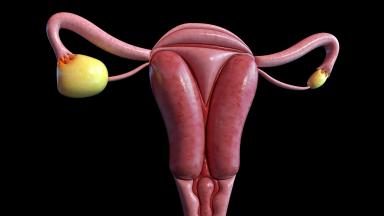
Two women with the same diagnosis on the same morning can get operations that share almost nothing. What decides it is who measured the disease first.
-
Debulking Surgery
Surgeons removed a median of 57 lymph nodes from women already cleared of visible disease. It bought no extra months, and tripled deaths within 60 days.