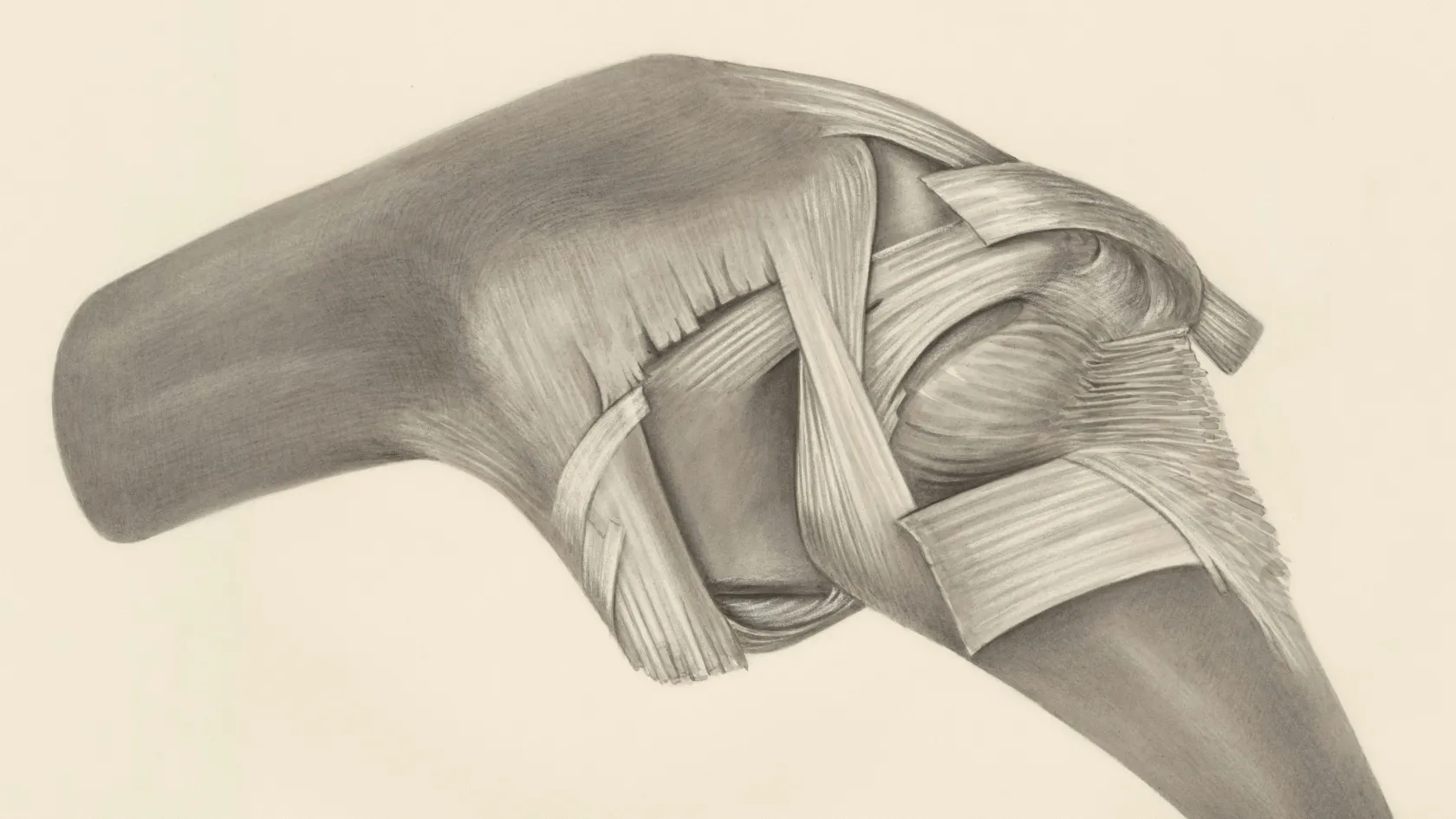
A kneecap that keeps dislocating, a broken patella or arthritis behind the kneecap each has its own operation, and patella surgery starts by measuring the groove, the kneecap height and the bone alignment so the repair fixes the real cause.
About This Department
Orthopedics
A kneecap that keeps slipping out is a shape problem. The operation is matched to that shape.
In a 2025 meta-analysis of 1,571 knees with a shallow kneecap groove, redislocation after stabilizing surgery was 0.7 percent.
0.7%
Redislocation after stabilizing surgery in 1,571 knees
348 in 1,000
Recurrence after a first dislocation treated without surgery
5 to 10 days
Usual stay in Istanbul for kneecap surgery
Free
Review of your MRI and X-rays before you book
Free consultation
The review costs nothing and carries no obligation. Send knee X-rays, an MRI and a short history of each dislocation or the injury, and an orthopedic surgeon will tell you whether surgery is needed, which operation fits your knee, and how long to plan for. A coordinator replies in your own language.
Your kneecap has slipped out of place once or several times, it has broken in a fall, or it grinds and aches every time you climb stairs or stand up from a chair. Patella surgery, also called kneecap surgery, covers the operations that stabilize a kneecap that dislocates, fix a broken patella, realign a kneecap that tracks badly, and resurface a worn kneecap joint. Below you will find the common kneecap problems and what fixes each, what the trials say about surgery after a first dislocation, how MPFL reconstruction and bone realignment work, how patella fractures are fixed, the options for kneecap arthritis, the risks, the recovery, how long to stay in Istanbul, and the follow-up at home.
Common kneecap problems
The kneecap rides in a groove at the end of the thigh bone, held there by the shape of that groove, the pull of the thigh muscles and a band of tissue on its inner side, the medial patellofemoral ligament, known as the MPFL. Problems come in four main kinds. In instability, the kneecap slips out sideways, most often in teenagers and young adults with a shallow groove, loose ligaments or a high-riding kneecap, and each dislocation tears the MPFL further. In fractures, a fall directly onto the knee or a violent pull of the thigh muscles cracks the kneecap, sometimes into several pieces. In maltracking, the kneecap stays in place but runs off-center and wears its cartilage. In arthritis, the cartilage behind the kneecap and in its groove wears through, causing pain on stairs, squatting and rising from a chair, while the rest of the knee may still be healthy.
This table scrolls sideways on a narrow screen. Swipe or drag to see every column.
Kneecap problems and the usual surgical answer
Problem
Usual operation
Typical stay
Recurrent dislocation
MPFL reconstruction, sometimes with bone realignment
Day case or one night
First dislocation with a loose cartilage fragment
Arthroscopy to fix or remove the fragment, often with MPFL repair
Day case or one night
High-riding or laterally placed kneecap
Tibial tubercle osteotomy
One to two nights
Shallow or flat groove
Trochleoplasty in selected patients
One to two nights
Displaced patella fracture
Wires, screws, a plate or strong sutures
One to two nights
Isolated kneecap arthritis
Patellofemoral replacement or total knee replacement
Two to four nights
Why some kneecaps dislocate and others do not
A shallow or flat groove, a kneecap that sits high, a bony bump below the knee placed too far to the outside, a thigh bone twisted inward, knock knees and loose ligaments all make dislocation easier. Most people who dislocate more than once have two or more of these, and an MRI and CT measure each before surgery is planned.
Every unstable kneecap has a reason.
After a first dislocation, surgery or rehabilitation
Most first dislocations are treated without surgery.
Surgery cut recurrence but not clearly function.
Cochrane reviewers in 2023 pooled 10 trials with 519 patients.
Mean ages ranged from 13 to 27 years.
Follow-up ran from one to fourteen years.
The reviewers judged the certainty of the evidence very low.
Scroll sideways on small screens to see both columns.
Two to nine years after a first dislocation, per 1,000 patients
Outcome
Without surgery
Effect of surgery
Recurrent dislocation
348
157 fewer
Kneecap partly slipping
292
73 fewer, uncertain
Knee function score
Reference
5.7 points higher on 100, uncertain
When surgery comes first
A loose piece of cartilage or bone inside the knee after the dislocation, a kneecap that will not stay in place, or a second dislocation in a knee with a shallow groove, loose ligaments or a high kneecap.
What treatment without surgery involves
A brace or splint for a short time, then physiotherapy that strengthens the thigh and hip muscles and trains the kneecap to track, with a return to sport after three to six months once strength matches the other leg.
Stabilizing a kneecap that keeps dislocating
Four operations are combined according to the cause.
MPFL reconstruction. A new ligament on the inner side of the kneecap.
Tibial tubercle osteotomy. Moving the tendon attachment to lower or center the kneecap.
Trochleoplasty. Deepening a flat groove.
Rotational osteotomy. Untwisting a thigh bone that turns inward.
In MPFL reconstruction the torn ligament is rebuilt with a tendon graft taken from the back of your own thigh or from a donor, through two or three small cuts around the kneecap and the inner knee.
1
Arthroscopy
The surgeon checks and treats cartilage damage inside the knee.
2
Graft
A hamstring tendon or a donor tendon is prepared.
3
Fixation
The graft is fixed to the inner edge of the kneecap and to a precise point on the thigh bone found with X-ray guidance.
4
Tensioning
The graft is set so the kneecap enters its groove smoothly without being pulled too tight.
When the bones themselves are the problem, a new ligament alone will stretch out over time and the kneecap will slip again. Moving the bony bump below the knee where the tendon attaches, a tibial tubercle osteotomy, lowers a high kneecap or brings a lateral one inward, while deepening a flat groove, a trochleoplasty, and rotating a twisted thigh bone are added in selected patients after CT measurements of the groove depth, the kneecap height, the tendon position and the twist of the thigh bone have shown which of them is out of range. A 2025 meta-analysis of 1,571 knees with a shallow groove found redislocation in 0.7 percent after these stabilizing operations, while residual instability was most common after trochleoplasty alone, at 13.5 percent. A separate review of 569 knees with a twisted thigh bone found 1.1 percent redislocation after MPFL reconstruction combined with a rotational osteotomy, with better function than the MPFL alone.
The cause decides the operation.
Signs it may be time
Two or more dislocations, a kneecap that feels unstable in sport or daily life, MRI showing a torn MPFL, and growth plates that are closed or close to closing.
Talk to us first
Kneecap pain without true instability, very loose joints throughout the body, or open growth plates in a young child, where techniques that avoid the growth plate are used.
Patella fractures
Fixation keeps the knee straightening.
Signs a broken kneecap needs surgery
You cannot lift the straight leg off the bed, a gap can be felt in the kneecap, the joint surface is stepped on X-ray, or the skin over the knee is broken.
Cracks with no gap in a knee that can still lift the straight leg heal in a brace. Displaced fractures are fixed so the thigh muscles can straighten the knee again, with wires twisted in a figure of eight, screws, a small plate, or strong sutures. Metal wires irritate the skin over the kneecap and are removed later in a sizable share of patients, which is one reason surgeons increasingly use strong sutures instead, and a review of 123 patients treated with non-metallic implants found complications in 10.5 percent and a further operation for implant removal in 3.2 percent.
Kneecap arthritis
Arthritis behind the kneecap alone has its own options. Cartilage procedures and realignment help some younger patients, a patellofemoral replacement resurfaces only the kneecap and its groove while keeping the rest of the knee, and a total knee replacement suits patients whose arthritis has spread or who are older. The knee replacement page covers that operation in detail.
Risks and how they are managed
How often each problem occurs
Large reviews report redislocation of around 1 percent after well-planned stabilization. Stiffness, anterior knee pain and hardware irritation are more common than instability, and most respond to physiotherapy or a small second procedure.
Stiffness
Early movement with a physiotherapist prevents most of it.
Recurrent instability
Uncommon after a well-planned stabilization. A missed bony cause is the usual reason.
Kneecap fracture
A rare risk where graft tunnels pass through the kneecap. Careful technique keeps it low.
Hardware irritation
Wires or screws that rub are removed once the bone has healed.
Blood clots
Early walking and clot prevention when movement is limited.
Growth plates in teenagers
Before growth has finished, the graft is placed so it avoids the growth plate of the thigh bone, and bone-moving osteotomies wait until growth is complete.
The recovery
Walking starts early, sport waits.
Day one, walking with crutches and a brace.
Week six, full bending and walking without crutches.
Month three, straight-line running.
Months six to nine, pivoting sport after strength testing.
After MPFL reconstruction you walk with crutches and a brace from the first day, bending is increased step by step over six weeks, straight-line running starts at three months, and return to pivoting sport takes six to nine months once strength and confidence have returned. A tibial tubercle osteotomy or a patella fracture fixation needs more protection while the bone heals, with partial weight in a brace for six weeks. Quadriceps strength decides the result more than anything else, and a physiotherapist rebuilds it through the months that follow, so daily exercises at home are part of the treatment rather than an extra. Before sport, a hop test and a strength test compare the operated leg with the other one, and return waits until the two are within about ten percent of each other, which for most young athletes falls between the sixth and ninth month.
How long to stay in Istanbul
Plan for five to ten days.
MPFL reconstruction and arthroscopy are day cases or need one night, osteotomies and fracture fixation one or two nights, and a patellofemoral replacement two to four nights. Staying a few days after discharge allows the wound check, the brace settings and the first physiotherapy sessions before the flight, which needs an aisle seat, a walk every hour and the clot prevention plan your surgeon writes.
What decides the cost
The operation, any osteotomy or trochleoplasty, the graft, implants or replacement parts, nights in hospital, the brace and physiotherapy sessions set most of the figure.
Your quote should name each procedure, the graft or implant and the stay, and that figure comes only from an orthopedic surgeon reading your X-rays and MRI. The review costs nothing.
Arranging the trip
Send your MRI and X-rays on WhatsApp and one coordinator follows your case from the first review to the last follow-up call. English, Arabic, French, Russian, Serbian, Romanian and Spanish are spoken, with an interpreter for other languages. A parent or companion sleeps in the room on the companion bed, and the international office books a hotel, sends the visa invitation letter ten days before travel and arranges transfers, with halal, vegetarian and diabetic meals, a prayer room and a female physician on request.
Once you are back home
Your local physiotherapist continues the written program, and the surgeon reviews progress and X-rays through the coordinator at six weeks and three months.
A swollen, painful calf, fever, a red or draining wound, or a kneecap that slips again. Each needs a doctor soon.
Thigh strength protects the kneecap.
Patella surgery FAQ
Every knee is measured before it is operated on.
Do I need surgery after my first kneecap dislocation?
In most cases, no. Surgery is considered when a loose fragment is inside the knee or the anatomy makes another dislocation likely.
How successful is MPFL reconstruction?
In pooled studies of knees with a shallow groove, redislocation after stabilizing surgery was 0.7 percent.
When can I return to sport after kneecap surgery?
Straight-line running at about three months and pivoting sport at six to nine months.
How is a broken kneecap fixed?
With wires, screws, a small plate or strong sutures, so the thigh muscles can straighten the knee again.
Can only the kneecap joint be replaced?
Yes. A patellofemoral replacement resurfaces the kneecap and its groove when the rest of the knee is healthy.
Can a parent stay with a teenage patient?
Yes. A parent sleeps in the room on the companion bed for the whole admission.
References
Smith TO, Gaukroger A, Metcalfe A, Hing CB. Surgical versus non-surgical interventions for treating patellar dislocation. Cochrane Database Syst Rev. 2023;1(1):CD008106.
Aljadaan BM, Alhakbani MSA, Almonaie SH, Cahusac PMB. Outcomes of surgical interventions for patellofemoral instability in the presence of trochlear dysplasia. A systematic review and meta-analysis. Am J Sports Med. 2025;53(5):1216-1230.
Wang D, Zheng T, Cao Y, et al. Derotational distal femoral osteotomy improves subjective function and patellar tracking after medial patellofemoral ligament reconstruction in recurrent patellar dislocation patients with increased femoral anteversion. A systematic review and meta-analysis. Knee Surg Sports Traumatol Arthrosc. 2024;32(1):151-166.
Camarda L, Morello S, Balistreri F, D'Arienzo A, D'Arienzo M. Non-metallic implant for patellar fracture fixation. A systematic review. Injury. 2016;47(8):1613-1617.
Editor's note
Written by the Biruni Hospital medical editorial team. Reviewed by Assistant Professor Şafak SAYAR, Orthopedics and Traumatology.