
Parathyroid Surgery
Blood tests make the diagnosis of primary hyperparathyroidism and scans only plan the operation, so a negative scan still leaves surgery open. This guide covers the 2022 criteria for surgery, focused and four-gland operations, how calcium settles afterward, and the seven to ten days in Istanbul.
About This Department
One overactive gland causes four cases in five. Taking it out ends the disease.
Surgery is the only treatment that cures primary hyperparathyroidism, and both the 2022 Fifth International Workshop guidelines and the American Association of Endocrine Surgeons name it as the definitive treatment. A 2026 meta-analysis of 12,832 patients in the journal Surgery found that a focused operation through a small incision cures as reliably as exploring all four glands, with less time under anesthesia and a shorter stay.
Your blood calcium came back high, the parathyroid hormone level came back high with it, and a doctor has suggested parathyroid surgery. This guide covers who should have the operation, how the gland is found before and during surgery, what the evidence says about focused and four-gland approaches, how calcium behaves afterward, and how a stay in Istanbul fits around it.
Tablets can lower the calcium. Only surgery removes the cause.
Cure, as the American Association of Endocrine Surgeons (AAES) defines it, means a normal blood calcium more than six months after surgery. A focused operation in experienced hands reaches it as reliably as a full four-gland exploration.
Four small glands, one job
The parathyroid glands have nothing to do with thyroid hormone.
They sit behind the thyroid, two on each side, each the size of a grain of rice, and they release parathyroid hormone, or PTH, to hold blood calcium inside a narrow range. In primary hyperparathyroidism one or more of them stops listening to the calcium level and keeps making hormone regardless. A single benign growth called an adenoma causes four cases in five. Enlargement of several glands at once accounts for most of the rest, and parathyroid cancer sits below one percent.
Years of excess hormone pull calcium out of the skeleton and push it through the kidneys. Bones thin, kidney stones form, and many people describe tiredness, low mood, poor concentration, thirst, constipation and aching joints that they had put down to age until the calcium result explained them. Others feel nothing at all and learn about the disease from a routine blood test, which makes the decision about surgery harder, because the damage to bone and kidney goes on whether or not it is felt.
The operation in six steps
Removing a single adenoma takes one to two hours.
Anesthesia and a baseline sample
A small incision over the target
Finding and removing the gland
Hormone check in the operating room
Wider look if the level stays high
Closing
The criteria for surgery
Symptoms settle the question. Anyone with kidney stones or a fracture from a minor fall should have the operation. For people without symptoms, the Fifth International Workshop published its thresholds in 2022, and meeting any one of them is enough.
This table scrolls sideways on a narrow screen. Swipe or drag to see every column.
| Area | Threshold that favors surgery |
|---|---|
| Blood calcium | More than 1 mg/dL (0.25 mmol/L) above the upper limit of normal |
| Bone | Bone density T-score of minus 2.5 or lower at any site, or a vertebral fracture on X-ray |
| Kidney function | Filtration rate (eGFR) below 60 mL/min |
| Kidney stones | Stones or calcium deposits in the kidney on imaging |
| Urine calcium | More than 250 mg a day in women or 300 mg a day in men on a 24-hour collection |
| Age | Under 50 |
Endocrine surgeons go further. The 2016 AAES guideline says surgery should be considered for most patients without symptoms as well, and it found the operation more cost-effective than lifelong observation or drug treatment. Cinacalcet, the main tablet, brings the calcium down without stopping bone loss, and it works only while you keep taking it.
Waiting suits some patients. An older person with mild, stable calcium and normal bones and kidneys, or someone whose heart or lung disease makes a general anesthetic risky, can be followed with yearly blood tests and a bone scan every one to two years. Low vitamin D has to be corrected first in every case, because it pushes PTH up on its own and can mimic or exaggerate the disease.
Scans that find the gland
Blood tests make the diagnosis. Scans only plan the operation.
That distinction matters to patients told they cannot have surgery because a scan was negative. The AAES guideline states the opposite. Patients with non-localizing imaging remain surgical candidates, and an experienced surgeon then explores all four glands.
Four tests do the planning, in rising order of detail. Neck ultrasound comes first because it costs little, uses no radiation and also checks the thyroid, which matters since thyroid nodules needing attention turn up in a fair share of these patients. A sestamibi scan, combined with a SPECT/CT image, shows the overactive gland taking up a tracer. A 4D-CT follows contrast through the neck over several phases and picks up glands that sit low or behind the windpipe. Fluorocholine PET/CT came last. A 2023 meta-analysis in Clinical Endocrinology found a per-patient sensitivity of 92 percent against 85 percent for 4D-CT across 46 studies, and it has become the test of choice when the first scans disagree or come back empty.
Needle biopsy of a suspected parathyroid gland is avoided. It can spread cells and scar the area the surgeon later needs to work in.
For a free remote review, send recent results for calcium, PTH, vitamin D, creatinine and, if done, 24-hour urine calcium, along with any ultrasound, sestamibi, CT or PET reports and images, your latest bone density scan, and the notes from any earlier neck surgery. A surgeon reads them. You hear back whether you meet the criteria, whether your scans support a focused operation, and which extra test, if any, would help.
Focused surgery or a four-gland exploration
For a single adenoma that two scans agree on, the focused operation is the right choice. The 2026 meta-analysis in Surgery pooled 42 studies and 12,832 patients and found no difference in cure between the focused operation and a full exploration of all four glands, while the focused group spent 33 minutes less in the operating room, went home two thirds of a day sooner, and had half the odds of temporary low calcium, neck bleeding and voice nerve injury. In 8.5 percent of focused operations the surgeon had to widen the exploration, which is exactly what the hormone check in step five is there to catch.
Four-gland exploration through a standard collar incision is planned from the start in a few groups.
Inherited forms such as MEN1 belong here. Every gland carries the tendency. So does hyperparathyroidism caused by years of lithium treatment. Scans that disagree with each other or find nothing point the same way, as does a family history of high calcium. In these patients the surgeon expects more than one abnormal gland and plans for it.
Kidney-related hyperparathyroidism
Long-standing kidney failure drives all four glands to enlarge. When drugs no longer control PTH in a patient on dialysis, or the problem persists after a kidney transplant, surgery removes three and a half glands, or all four with a small piece placed back into a forearm or neck muscle so it can keep working. Patients on dialysis need their sessions in Istanbul arranged before travel, so tell the coordinator your schedule and dialysis center details in the first message. Plan this early.
Risks and how often they happen
Low calcium after surgery has two causes. The remaining glands have been switched off for years by the overactive one and take days to weeks to wake up, and in patients with very high PTH or thin bones the skeleton soaks up calcium faster than the gut can supply it, a condition called hungry bone syndrome. Tingling around the mouth and in the fingertips is the signal. Calcium and vitamin D tablets cover the gap, and the dose comes down as blood levels settle. Hungry bone syndrome can need treatment for weeks, and the surgeon flags patients at high risk before the operation so tablets start early. Voice nerve injury is rare. In the 2026 meta-analysis, the odds of nerve injury and of bleeding in the neck were both cut by close to half with focused surgery compared with four-gland exploration. Bleeding under the wound in the first hours presses on the windpipe and is treated by reopening at once. One night on the ward lets the nurses watch for it.
Persistent disease, a calcium still high six months after the operation, occurs in a small minority. Surgeons who perform a high volume of these operations have better outcomes, according to the AAES guideline. The section on reoperation explains what happens then.
Calcium and recovery afterward
You eat and walk the same evening. Blood calcium and PTH are checked the next morning, and with a stable result you leave the ward for the hotel with a short course of calcium tablets and a sheet explaining when to take an extra dose. The neck feels stiff and the throat sore for a few days, much like after a cold, and simple painkillers cover it. Showering is fine from the second day. Desk work resumes within a week. Lifting and gym work wait two weeks. Calcium is checked once more before the flight, and the scar, faint pink at first, fades over six to twelve months into a thin line that sits in a natural crease. Bone density improves over the following one to two years after a successful operation, with the largest gains in the spine and hip, and the risk of new kidney stones falls once calcium stops pouring through the kidneys. Many people notice their energy and concentration lift within weeks, though the guidelines treat these benefits with more caution than the bone and kidney results.
That six-month calcium test is the one that confirms cure.
Once you are back home, your own doctor measures calcium and PTH at that point. A repeat bone density scan follows at one to two years. Call your doctor the same day for tingling that tablets do not settle, cramps in the hands or face, or swelling in the neck, and send the results to your coordinator on WhatsApp so the surgeon sees them too.
Time in Istanbul and the flight home
Seven to ten days covers a focused operation from arrival to departure.
Packages published by Turkish hospitals and medical travel agencies for parathyroidectomy plan one to two nights on the ward and a total stay of seven to ten days in Turkey, leaving room for repeat blood tests and any scan before surgery and a calcium check before the flight. A four-gland exploration, a kidney-related operation or hungry bone syndrome adds a few days. Flying itself does nothing to the wound. The surgeon clears you once the wound is dry and calcium has held steady on the dose you will take home.
After a failed first operation
A calcium that stays high after surgery elsewhere is fixable. It needs the most careful planning in parathyroid surgery. A 2026 series of 124 reoperations from a London endocrine surgery unit, published in World Journal of Surgery, found that fluorocholine PET/CT located the missing gland in 95.2 percent of cases, including 90.5 percent of those where ultrasound and sestamibi had failed. A focused approach was then possible in 87.1 percent, the cure rate reached 95.8 percent when the operative hormone check fell as expected, vocal cord palsy occurred in 0.8 percent, and long-term low calcium needing tablets in 2.4 percent. Send the original operation note and pathology report with your request, because they show what was already removed.
How the price is built
Your scans on arrival set much of it. A patient whose ultrasound and sestamibi already agree needs no extra imaging, while one with negative scans may need a 4D-CT or a fluorocholine PET/CT in Istanbul first. The operation itself costs least as a focused single-gland procedure and more as a four-gland exploration, a kidney-related subtotal operation, or a reoperation through scar tissue. Thyroid surgery done at the same time, for a nodule found on the scans, adds to it. Extra nights for hungry bone syndrome or dialysis sessions during the stay sit on top. Published packages in this market list the surgeon and anesthesia, the operative hormone test, one to two nights in a private room, pre-operative blood tests and consultation, pathology, airport transfers and an interpreter. Flights stay outside, along with hotel nights in some packages, extra ward nights and the treatment of complications. Each of these lines moves the total.
A comparable quote states which scans it includes, whether the operative PTH measurement is in the price, how many nights it assumes, and what happens if the surgeon has to explore all four glands. Sending your results for the free review gives you a figure built on your own case.
Travel and your stay
Ten days before travel, the international patients office sends an appointment confirmation and an invitation letter naming the hospital and treating doctor, the documents most consulates ask for with a medical visa. A driver meets you at the airport and handles every trip between hotel and hospital. Your coordinator, assigned from the first message, works in English, Arabic, French, Russian, Serbian, Romanian or Spanish, arranges an interpreter for other languages, and stays reachable on the same WhatsApp number after you go home.
One companion sleeps in your room on a companion bed for the whole admission, and the office books accommodation for both of you for the nights before and after. Meals follow your needs. Halal, vegetarian and diabetic meals come from the hospital kitchen, and there is a prayer room on site. A request for a female surgeon goes to the department in the first message and is met wherever the rota allows.
Parathyroid surgery FAQ
Will I need calcium tablets for life after parathyroid surgery?
My scans did not find the gland. Can I still have surgery?
How many days should I plan in Istanbul?
Can a family member stay overnight in the room?
Who checks my calcium once I am home?
References
- Bilezikian JP, Khan AA, Silverberg SJ, et al. Evaluation and Management of Primary Hyperparathyroidism. Summary Statement and Guidelines from the Fifth International Workshop. J Bone Miner Res. 2022;37(11):2293-2314.
- Wilhelm SM, Wang TS, Ruan DT, et al. The American Association of Endocrine Surgeons Guidelines for Definitive Management of Primary Hyperparathyroidism. JAMA Surg. 2016;151(10):959-968.
- Yang G, Zheng X, Xu T, et al. Comparison of efficacy and safety between minimally invasive parathyroidectomy and bilateral neck exploration for primary hyperparathyroidism. A systematic review and meta-analysis. Surgery. 2026;199:110502.
- Patel DD, Bhattacharjee S, Pandey AK, et al. Comparison of 4D computed tomography and F-18 fluorocholine PET for localisation of parathyroid lesions in primary hyperparathyroidism. A systematic review and meta-analysis. Clin Endocrinol. 2023;99(3):262-271.
- Vu AN, Black KA, Shattarah O, Preece J, Hubbard JG. 18F-Choline PET/CT Localization in a 20-Year Experience of Re-Operative Parathyroidectomy. World J Surg. 2026;50(5):1312-1318.
Editor's note
Written by the Biruni Hospital medical editorial team. Reviewed by Prof. Dr. Mustafa Teoman YANMAZ, Medical Oncology.
Medically reviewed by
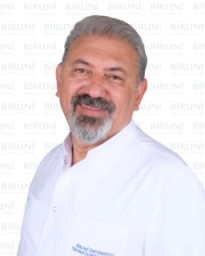
Prof. Dr. Mustafa Teoman YANMAZ
Medical Oncology
Last updated:


