
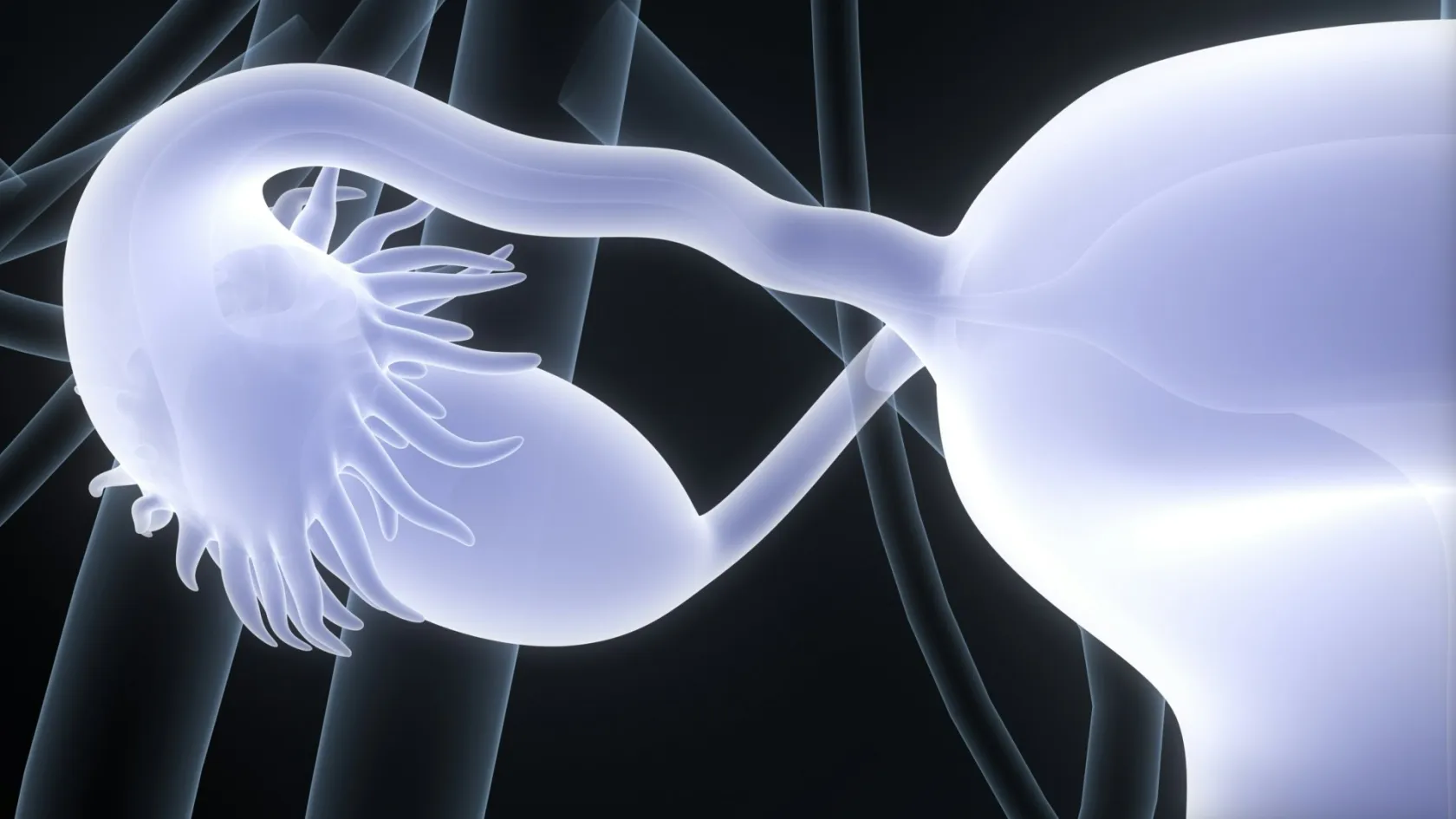
Ovarian Cancer Surgery
Most pages still quote a target of one centimetre. The number that predicts how long a woman lives is zero, and the gap between them is measured in years.
About This Department
Most pages you will read about this operation still quote a target of leaving no deposit larger than one centimetre, and call that an optimal result.
That threshold is a museum piece.
The number that predicts how long a woman lives is zero, meaning nothing visible left anywhere in the abdomen at the end of the operation, and the gap between zero and one centimetre is not a rounding difference but a different prognosis. Everything else on this page follows from that single change, including the part most patients find surprising, which is that doing more surgery is not the same thing as doing better surgery. Both halves matter.
Free consultation
Send the CT of the chest, abdomen and pelvis, and the CA125
What a gynaecological oncology team reads is the imaging itself, so send the study on a disc or by file transfer and not only the written report, since the decision about whether complete removal is achievable is made by looking at specific places, the diaphragm, the small bowel mesentery, the porta hepatis and the space behind the liver. Add the CA125 with the date it was taken, any earlier values, and any biopsy or fluid cytology result you already hold. Tell us whether your abdomen has been operated on before and what was done, whether you are carrying fluid and how quickly it is accumulating, and whether anybody in your family has had ovarian or breast cancer, because that last question changes the genetic testing and eventually the drug plan. If chemotherapy has already started, say which drugs and how many cycles. The review costs nothing and commits you to nothing.
From one centimetre to zero
Ovarian cancer spreads by shedding cells into the abdominal fluid, which then settle wherever that fluid travels, so by the time most women are diagnosed the disease is not one mass in one ovary but a scattering of deposits across the peritoneal surfaces, the omentum, the diaphragm, the bowel and its mesentery. Surgery for it is therefore a clearance, and the surgeon is doing something closer to weeding a garden than removing a tumour. The measure of how well that clearance went is what remains at the end, and that measure has changed. For decades the accepted target was optimal cytoreduction, defined as leaving no individual deposit bigger than one centimetre, and a great many patient information pages still describe it that way. The evidence accumulated in a different direction. Complete cytoreduction, meaning no visible disease at all, turned out to separate itself from everything else, and the difference between a woman who ends the operation with nothing visible and one who ends it with several millimetre deposits scattered across the diaphragm is measured in years. That is why the modern operating note records a completeness score rather than a size, and why the phrase to look for in your own report is complete or no macroscopic residual disease. Look for that phrase.
This table scrolls sideways on a narrow screen. Swipe or drag to see every column.
| What it says | What it means for you |
|---|---|
| Complete, or no macroscopic residual | Nothing visible was left anywhere. This is the aim and it is the single strongest thing a surgical team can do for your prognosis. It does not mean cured, since microscopic disease is assumed to remain, which is why chemotherapy follows. |
| Residual under 2.5 millimetres | Scattered tiny deposits remain, usually where removing them would have cost an organ or a length of bowel that could not be spared. Better than gross residual and measurably worse than nothing, and the operation note should say where the deposits are. |
| Optimal, under one centimetre | The old standard, still quoted widely. Reading it in a modern report should prompt a question about why complete clearance was not achieved, since the answer is usually informative and is sometimes that the operation was attempted in the wrong place by the wrong team. |
| Suboptimal, or gross residual | Substantial disease remains. Where this happens because the abdomen was opened and the disease proved unresectable, chemotherapy is given and an interval operation is considered afterwards, which is a legitimate route and not a failure. |
One consequence of this deserves stating without diplomacy. Achieving complete clearance requires a surgeon who is prepared to strip the diaphragm, remove the spleen, resect bowel and dissect around the liver in the same sitting, and a team and intensive care set up for that. A general gynaecologist opening the abdomen for what was assumed to be a cyst is not equipped to complete that operation.
Where an unexpected cancer is found, the correct move is to take a biopsy and close, then refer on, and there is no shame anywhere in that sequence. Closing and referring is the right call.
More surgery is not better surgery
Having just argued for a very extensive operation, the honest next step is to say where extensiveness stops paying. For many years, systematic removal of the pelvic and para-aortic lymph nodes was standard in advanced ovarian cancer, on the reasonable-sounding argument that nodes might harbour disease that imaging and inspection had missed.
It was tested properly. The answer was uncomfortable.
What removing fifty-seven lymph nodes achieved
A randomised trial assigned 647 women with advanced ovarian cancer, all of whom had already had a macroscopically complete resection and all of whom had normal-looking nodes before and during surgery, either to systematic pelvic and para-aortic lymphadenectomy or to no lymphadenectomy. Every participating centre had to demonstrate its surgical skills before being allowed to join. In the group who had the dissection, the median number of nodes removed was 57. Median overall survival was 69.2 months without lymphadenectomy and 65.5 months with it, a hazard ratio for death of 1.06 with a confidence interval of 0.83 to 1.34. Progression-free survival was 25.5 months in both arms. Serious complications were more frequent after lymphadenectomy, with repeat laparotomy needed in 12.4 percent against 6.5 percent, and death within sixty days of surgery in 3.1 percent against 0.9 percent. Removing fifty-seven lymph nodes bought nothing and roughly tripled the chance of dying within two months of the operation.
Read that carefully, because it is easy to draw the wrong lesson.
This does not mean lymph nodes are ignored. Enlarged or suspicious nodes are still removed, and the trial deliberately excluded women who had them. What it means is that removing normal nodes, for completeness, in a woman whose abdomen has already been cleared, is an addition that costs and does not pay. The general principle underneath it is worth carrying into any surgical conversation you have, which is that the value of a manoeuvre has to be demonstrated rather than assumed, and that a longer operation is not automatically a more thorough one. Ask what each step buys.
Operate first, or treat first
Patients are most often given a confident answer to this question by whoever they happen to ask first, and the confidence is not warranted by the evidence. Two routes exist. Primary debulking surgery means operating at the outset and giving chemotherapy afterwards. Neoadjuvant chemotherapy means giving three cycles of chemotherapy first, shrinking the disease, then operating, then giving three more cycles. Both are legitimate. Which one is right for a particular woman turns on how extensive the disease is, how fit she is, and whether complete clearance looks achievable at the outset. Both routes are defensible.
A meta-analysis published in 2026 pooled all five phase three randomised trials that have compared the two sequences, meaning EORTC 55971, CHORUS, JCOG0602, SCORPION and TRUST, covering 2,296 women with 1,139 assigned to surgery first and 1,157 to chemotherapy first. Overall survival was equivalent, with a risk ratio of 0.99 and a confidence interval of 0.94 to 1.03. Disease-free survival was equivalent at 0.98. Subgroup analyses looking separately at women in whom complete clearance was achieved, at those with stage three disease, and at those under seventy, all found the same absence of difference, with no heterogeneity between trials in any of them.
The authors concluded that no clear survival advantage exists for operating first, and called for better patient selection instead of a blanket rule. Selection is what they wanted improved.
What this means in a consultation is that anybody insisting there is only one correct order is overstating the case. The practical arguments run in both directions. Operating first avoids the risk that chemotherapy fails and the window closes, and it establishes the diagnosis and the extent of disease with certainty. Chemotherapy first makes the eventual operation smaller and safer in a woman carrying an enormous burden of disease, allows the tumour's chemosensitivity to be observed before a major undertaking, and is the safer route for someone whose fitness is marginal.
One thing does not change with the order. Complete clearance matters whichever order you arrive at it in. Zero is still the target.
What the operation involves
A full cytoreduction is a long operation, commonly four to eight hours and occasionally longer, performed through a midline incision running from the pubic bone to above the navel.
Keyhole surgery has a place in early disease and in assessing whether clearance is achievable, and it is not how an advanced clearance is done. Midline, and a long afternoon.
Washings and a full survey
Fluid is collected for cytology before anything is disturbed, then every peritoneal surface is inspected and felt in a fixed order, including both diaphragms, the liver surfaces, the whole length of the bowel and its mesentery. The survey decides whether complete clearance is possible, and it happens before the first resection.
The core resection
Both ovaries and tubes, the uterus and the omentum come out, and the omentum matters more than its unfamiliar name suggests, since this apron of fatty tissue hanging over the bowel is where ovarian cancer settles most reliably and it is removed even when it looks normal.
Clearing the upper abdomen
Deposits on the diaphragm are stripped or the affected part of the diaphragm is resected and repaired, which is where a chest drain sometimes becomes necessary. Disease around the spleen, the liver capsule and the porta hepatis is dealt with here, and this is the part of the operation most often left undone by teams who do not do it often.
Bowel work and closure
Where disease encases a segment of bowel it is resected and the ends rejoined, most often at the rectosigmoid junction. A temporary stoma is sometimes formed to protect that join, and whether one is likely should have been discussed with you before the operation rather than explained afterwards.
Most women spend the first night in intensive care or a high dependency unit, which is planned, and no sign that something went wrong. Blood transfusion is common in the larger operations. The main early risks are bleeding, infection, a leak from a bowel join, clots in the legs or lungs, and a collection of fluid or infection under the diaphragm where it was stripped. Being told these figures for the specific unit operating on you, rather than published averages, is a reasonable request and a revealing one. Ask for their own figures.
What else may come out
Consent forms for this operation run longer than most, because achieving complete clearance can require removing or repairing structures that have nothing to do with the ovaries. None of these is done routinely and each is done only where disease sits on it. Knowing the list in advance makes the consent conversation a discussion rather than a shock. Read the list beforehand.
This table scrolls sideways on a narrow screen. Swipe or drag to see every column.
| Added procedure | Why it is done, and what follows from it |
|---|---|
| Diaphragm stripping or resection | The right diaphragm is one of the commonest sites of deposits and one of the commonest sites left untouched. Stripping the peritoneum off it, or resecting and repairing a full thickness patch, may require a chest drain for a few days and can produce shoulder tip pain afterwards. |
| Bowel resection | Usually the rectosigmoid, sometimes small bowel. The ends are rejoined and a temporary stoma is occasionally formed to protect the join, most often reversed a few months later. Bowel function takes weeks to settle and often changes permanently to some degree. |
| Splenectomy | Needed where disease sits at the tail of the pancreas or the splenic hilum. It commits you to vaccination against encapsulated bacteria, a standing risk of serious infection and often daily preventive antibiotics, all of which should be arranged before you leave hospital. |
| Peritoneal stripping | The peritoneal lining of the pelvis and abdominal wall is peeled away where studded with deposits. It adds operating time and blood loss without removing an organ, and it frequently separates a complete clearance from an incomplete one. |
| Appendicectomy and gallbladder | The appendix comes out in mucinous tumours and where it looks involved, since a mucinous ovarian tumour can turn out to have started in the appendix. The gallbladder is removed only when disease sits on it. Neither adds materially to recovery. |
The heated chemotherapy question
Hyperthermic intraperitoneal chemotherapy, usually shortened to HIPEC, means washing the abdomen with heated chemotherapy at the end of the clearance, while the patient is still asleep, for around ninety minutes. The logic is straightforward. Microscopic disease is left behind even after a complete clearance, the drug reaches it directly at a concentration no intravenous dose could achieve, and heat makes tumour cells more susceptible. Whether that logic translates into longer life has been argued about for a decade and marketed enthusiastically throughout. Enthusiasm is not evidence.
Reconstructing the time to event data from every randomised trial settled part of it. A 2026 meta-analysis took from all seven randomised trials, covering 1,300 patients, and the answer turns out to depend entirely on when it is given. In newly diagnosed disease treated with interval surgery after neoadjuvant chemotherapy, HIPEC improved progression-free survival with a hazard ratio of 0.65 and overall survival with a hazard ratio of 0.68, both statistically robust. In recurrent disease it did nothing detectable, with an overall survival hazard ratio of 0.85 that did not reach significance and a progression-free difference of minus 0.02 years, which is a fortnight in the wrong direction. Severe adverse events occurred in 45.7 percent of the HIPEC group against 36.4 percent of controls, a gap that stayed inside the bounds of chance, with electrolyte disturbance and reversible kidney dysfunction the usual culprits. Both settle.
So the honest position is a specific one.
If you are having interval surgery after chemotherapy for newly diagnosed disease, HIPEC has good randomised evidence behind it and is worth asking about. If you are being offered it for a recurrence, ask what evidence the offer rests on, because the pooled randomised data does not support it there. And in either case ask about the protocol, since the analysis found the effect most pronounced with ninety minute perfusions, so a shorter one is not the same intervention wearing the same name. Ask about the timing.
Early disease, and keeping fertility
A minority of ovarian cancers are found while still confined to one ovary, and everything above changes for them. The operation is a staging procedure and not a clearance, meaning the affected ovary and tube are removed along with the omentum, peritoneal biopsies and washings, and lymph nodes are sampled to establish whether the disease is truly early. Done properly this can be a keyhole operation. Done improperly, by rupturing the cyst and spilling its contents, it upstages the disease and adds chemotherapy that might not have been needed, which is the single strongest argument for having even an apparently simple ovarian mass handled by somebody who has thought about the possibility of cancer. Spillage upstages you. For a young woman who has not completed her family, fertility-sparing surgery keeps the uterus and the unaffected ovary. Whether that is safe depends on the exact subtype and stage, and here the detail matters more than the headline. A 2025 review of mucinous ovarian carcinoma, which is a distinct and relatively uncommon subtype that tends to present early and in younger women, sets out how far the histological detail drives the surgical decision. Mucinous tumours divide into expansile and infiltrative patterns, and lymph node metastases occur in under 1 percent of expansile tumours against up to 23 percent of infiltrative ones, which is the difference between omitting a lymph node dissection safely and omitting it recklessly.
The same review concludes that fertility-sparing surgery appears safe in stage IA expansile mucinous carcinoma with good reproductive outcomes, while advising caution at higher stage or with infiltrative histology. It also makes a point that reaches beyond fertility, which is that mucinous ovarian carcinoma responds poorly to the platinum chemotherapy that works well in the commoner serous type, and that its frequent KRAS mutations and HER2 amplifications are the reason targeted approaches are being studied. Two women with the same stage and the same operation can therefore need entirely different treatment afterwards, decided by a word on the pathology report. One word, two diseases.
The four things that decide whether a second operation is offered
How long the disease stayed away after first-line treatment, since a recurrence appearing within six months of finishing platinum behaves differently from one appearing after three years. Whether fluid has collected in the abdomen, which usually signals disease too widely distributed to clear. Whether the first operation achieved complete clearance, because a surgeon who could not reach zero the first time is unlikely to reach it in a scarred abdomen. And your own fitness, measured honestly rather than optimistically. Those four questions are what a team should be able to answer before proposing to open you again.
Operating again when it returns
Recurrence follows in a majority of women with advanced disease, and whether to operate a second time has been contested for years, with trials pointing in different directions and a real risk of putting somebody through a major operation that shortens rather than lengthens their good time. A meta-analysis of three randomised trials covering 1,249 patients found that adding surgery to chemotherapy at recurrence improved overall survival with a hazard ratio of 0.83 and disease-free survival with a hazard ratio of 0.63. The subgroup analysis is where the useful information sits. When the comparison was narrowed to women in whom the second operation achieved complete clearance against those left with residual tumour, overall survival improved with a hazard ratio of 0.65 and disease-free survival with 0.67, both significant. Which is the same lesson as the first operation, arriving a second time. Surgery at recurrence helps the women in whom everything visible can be removed, and an operation that leaves disease behind has imposed a recovery without buying the benefit. The authors named patient selection as the outstanding challenge, and that is exactly right. Selection is the whole game.
Practically, the selection criteria that matter are how long the disease stayed away after the first treatment, whether there is fluid in the abdomen, whether the first operation achieved complete clearance, and how well you are in yourself. A team that proposes a second operation should be able to say why they expect to achieve complete clearance this time.
If the honest answer is that they are not sure, that is an argument for chemotherapy and a further look later rather than for opening the abdomen on optimism. Optimism is not a plan.
Recovery and what changes
Getting out of bed happens on the first day and it is not optional, since the clot risk after this operation is among the highest in abdominal surgery and movement is the main defence alongside injections that continue for four weeks after you go home. Eating restarts gradually where bowel was joined. Full recovery to ordinary activity takes six to twelve weeks, and the honest figure is nearer twelve when chemotherapy follows. Plan for the longer figure.
This table scrolls sideways on a narrow screen. Swipe or drag to see every column.
| Operation | Hospital stay, and what governs the recovery |
|---|---|
| Keyhole staging, early disease | Two to four days. Recovery is governed by the anaesthetic and the small incisions rather than by anything internal, and most women are back to light activity within a fortnight. |
| Open cytoreduction | Seven to twelve days, with the first night usually in intensive care by plan. The midline wound and the fatigue set the pace, and six to twelve weeks is the realistic range before ordinary activity returns. |
| With bowel resection | Ten to sixteen days, since eating restarts gradually and the join is watched. Where a temporary stoma was formed, the stay is similar and reversal is usually considered a few months later. |
| With HIPEC added | Longer again, because kidney function and electrolytes are monitored closely for several days afterwards. The disturbances that occur are usually mild and reversible, and they are the reason for the extra observation. |
Two changes are permanent and both deserve naming before surgery rather than after.
Removing both ovaries ends fertility and, in a woman who was still menstruating, produces immediate surgical menopause, which arrives more abruptly than the natural version and is correspondingly harder. Hot flushes, sleep disturbance, joint aches, vaginal dryness and mood changes all start within days. Whether hormone replacement is appropriate depends on the tumour type and is a conversation worth insisting on rather than accepting a shrug about, and there are non-hormonal options where it is not. Insist on the conversation.
Chemotherapy usually starts three to six weeks after surgery, and a complication that delays it is more than an inconvenience, since the interval to starting treatment is itself associated with outcome. That is one of the reasons an unhurried recovery in a unit that manages complications quickly is worth more than a short hospital stay. Genetic testing for BRCA and related genes should be arranged during this period if it has not happened already, because the result changes both your own maintenance treatment and the advice given to your relatives. Arrange it early.
Coming to Istanbul
How long you need to stay in Istanbul is four to six weeks for a full cytoreduction including hotel nights, and two to three weeks for a keyhole staging operation for early disease. The first several days go on assessment. Imaging is reviewed or repeated with attention to the specific sites that decide resectability, CA125 and general fitness are measured, any outside pathology is re-read by our own pathologists, and the case is presented to a gynaecological oncology multidisciplinary meeting including the surgeon, the medical oncologist, the radiologist, the pathologist and the anaesthetist before a plan is agreed. Where the imaging leaves the question of resectability genuinely open, a diagnostic laparoscopy is sometimes done first, which is a short procedure that answers it directly. Chemotherapy is the part that usually belongs at home. Six cycles spread over four to five months is not something to compress into a single trip, and the common arrangement is surgery here with treatment delivered by your own oncologist, or three cycles at home, interval surgery here and three more at home. We will say which pattern fits your case, and that answer comes out of the multidisciplinary discussion. We will say which fits.
Flying home after a full cytoreduction is reasonable at around three weeks, once the wound is healed, bowel function has returned, any drains are out and the pathology has been discussed with you in person. Clot risk after this particular operation is high enough that the anticoagulant injections continue for four weeks, compression stockings matter and moving around the cabin is part of the plan rather than advice. Interpreting is arranged in advance in English, Arabic, Russian, French and German. You go home with the operative note stating the completeness of cytoreduction explicitly, the full pathology with subtype and stage, the imaging on a disc, the genetic testing result or the arrangement for it, and a written chemotherapy plan for your own oncologist. Check it before you fly.
What moves the cost
Ovarian surgery covers the widest genuine range of any operation in this guide, because a keyhole staging procedure for a stage one tumour and a nine hour clearance involving the diaphragm, the spleen and a length of bowel are not variants of one operation. They are different undertakings with different teams, different theatre times and different intensive care requirements.
Any figure quoted before the imaging has been reviewed is a figure for an operation nobody has yet defined. Send the imaging first.
- How extensive the clearance turns out to be, which is what drives operating time, and whether a second surgical specialty joins for the bowel or upper abdominal work.
- Whether bowel is resected, and whether a stoma is formed, since that carries its own supplies and a later reversal.
- Whether the spleen or part of the diaphragm comes out, and whether a chest drain is needed.
- Whether HIPEC forms part of the plan, which adds theatre time, the drug itself and closer monitoring afterwards.
- How many nights of intensive care are required, which for the larger clearances is planned rather than exceptional.
- Whether blood transfusion is needed and how much.
- How much pathology the specimen requires, including subtype, staging and the molecular work that follows.
- Whether genetic testing is done here or at home, and whether any chemotherapy is delivered here.
Ask any written quotation the same five questions. Does it cover intensive care for as many nights as prove necessary rather than a fixed allowance. Does it cover the treatment of a complication, naming specifically a bowel leak, a chest collection and a wound problem, since those are the three that happen. Does it include the full pathology and the genetic testing. Does it include a return to theatre if one is needed. And what happens to the figure if the operation turns out to be larger than the imaging suggested, which in this disease is common rather than exceptional. A quotation that survives those questions is one you can plan around. Ask all five.
Follow-up once you are home
Surveillance after ovarian cancer treatment is clinical examination and CA125 every three months for the first two years, then every four to six months to five years, with imaging used when the examination or the marker raises a question. A rising CA125 in a woman who feels entirely well is one of the more difficult situations in oncology, since treating on the marker alone has been shown not to extend life while it does shorten the time she spends feeling untreated.
That is worth knowing in advance of the phone call. Markers are not symptoms.
Five documents make handing over care practical, and you should leave with all of them.
- The operative note stating the completeness of cytoreduction explicitly, with every organ removed or repaired listed by name.
- The pathology report with the histological subtype, the grade and the final stage.
- The genetic testing result, or written confirmation of where and when it has been arranged.
- The chemotherapy plan naming the regimen, the number of cycles and any maintenance treatment proposed.
- Where the spleen was removed, the vaccination record with dates, the antibiotic plan and instructions for what to do with a fever.
Our team stays reachable for your oncologist's questions afterwards, and if a scan or a marker raises a question two years from now we would rather look at it with you than hear about it later.
Frequently asked questions about ovarian cancer surgery
What does a successful ovarian cancer operation actually mean?
Should all my lymph nodes be removed?
Is it better to have surgery first or chemotherapy first?
Is HIPEC worth having?
Which organs might be removed besides the ovaries?
Can I keep my fertility?
If the cancer comes back, is another operation worth it?
How long should I plan to be in Istanbul?
References
- Harter P, Sehouli J, Lorusso D, et al. A randomized trial of lymphadenectomy in patients with advanced ovarian neoplasms. The New England Journal of Medicine. 2019;380(9):822-832.
- Ronsini C, Cucinella G, Solazzo MC, et al. Primary debulking surgery versus neoadjuvant chemotherapy in advanced ovarian cancer, a meta-analysis of all randomized clinical trials with subgroup analysis by patient profile. Oncology Research. 2026;34(5):3.
- Altayf A, Nelson G, Chiva LM, et al. The role of hyperthermic intraperitoneal chemotherapy in newly diagnosed and recurrent ovarian cancer, a time-to-event meta-analysis of randomized trials. Gynecologic Oncology. 2026;208:22-31.
- Climent MT, Serra A, Llueca M, Llueca A. Surgery in recurrent ovarian cancer, a meta-analysis. Cancers. 2023;15(13):3470.
- Maiorano MFP, Maiorano BA, Cormio G, Loizzi V. Mucinous ovarian carcinoma, integrating molecular stratification into surgical and therapeutic management. Biomedicines. 2025;13(5):1198.
Editor's note
Written by the Biruni Hospital medical editorial team. Reviewed by Prof. Dr. Metin GÜDEN, Radiation Oncology.
Medically reviewed by

Prof. Dr. Metin GÜDEN
Radiation Oncology
Related Treatments
View All-
Bilateral Mastectomy
Whether you carry a BRCA mutation, have cancer in one breast or in both, bilateral mastectomy removes both breasts in one operation, and how much it helps depends on which of those three paths brought you to it.
-

Breast Conserving - Lumpectomy Surgery
Keeping the breast has never been the less thorough choice, and the largest recent studies now point the other way. This page explains who can have breast conserving surgery, what the margin report decides, and how long a woman traveling for it needs to stay.
-

Cytoreductive - Tumor Reduction Surgery
Patients cleared of every visible deposit lived 30 months in one gastric series. Those left with anything at all lived 7.3 months, however little remained.
-
Debulking - Ovarian Cancer Tumor Reduction
Two women with the same diagnosis on the same morning can get operations that share almost nothing. What decides it is who measured the disease first.
-
Debulking Surgery
Surgeons removed a median of 57 lymph nodes from women already cleared of visible disease. It bought no extra months, and tripled deaths within 60 days.