Mouth cancer is one of the few head and neck cancers where surgery remains the first treatment almost every time, and removing the neck lymph nodes at the same operation raised three-year survival from 67.5 to 80 percent in a 500-patient trial. This guide explains the operation, rebuilding the mouth, the sentinel node option and the stay.
About This Department
Ear, Nose and Throat
Mouth cancer surgery treats the neck as well as the tumor. Treating the nodes early raises survival.
In a randomized trial of 500 patients with early mouth cancer at the Tata Memorial hospital in Mumbai, removing the neck lymph nodes at the first operation raised three-year survival to 80.0 percent from 67.5 percent with watchful waiting. Send the biopsy report, the MRI or CT of the mouth and neck, and photos of the lesion, and our head and neck surgery team will tell you what the operation involves and how the mouth would be rebuilt.
80%
Alive at three years with elective neck dissection, early mouth cancer
90.7%
Free of neck recurrence at two years after sentinel node biopsy
53%
Alive at five years with chemoradiation after surgery for advanced cancer
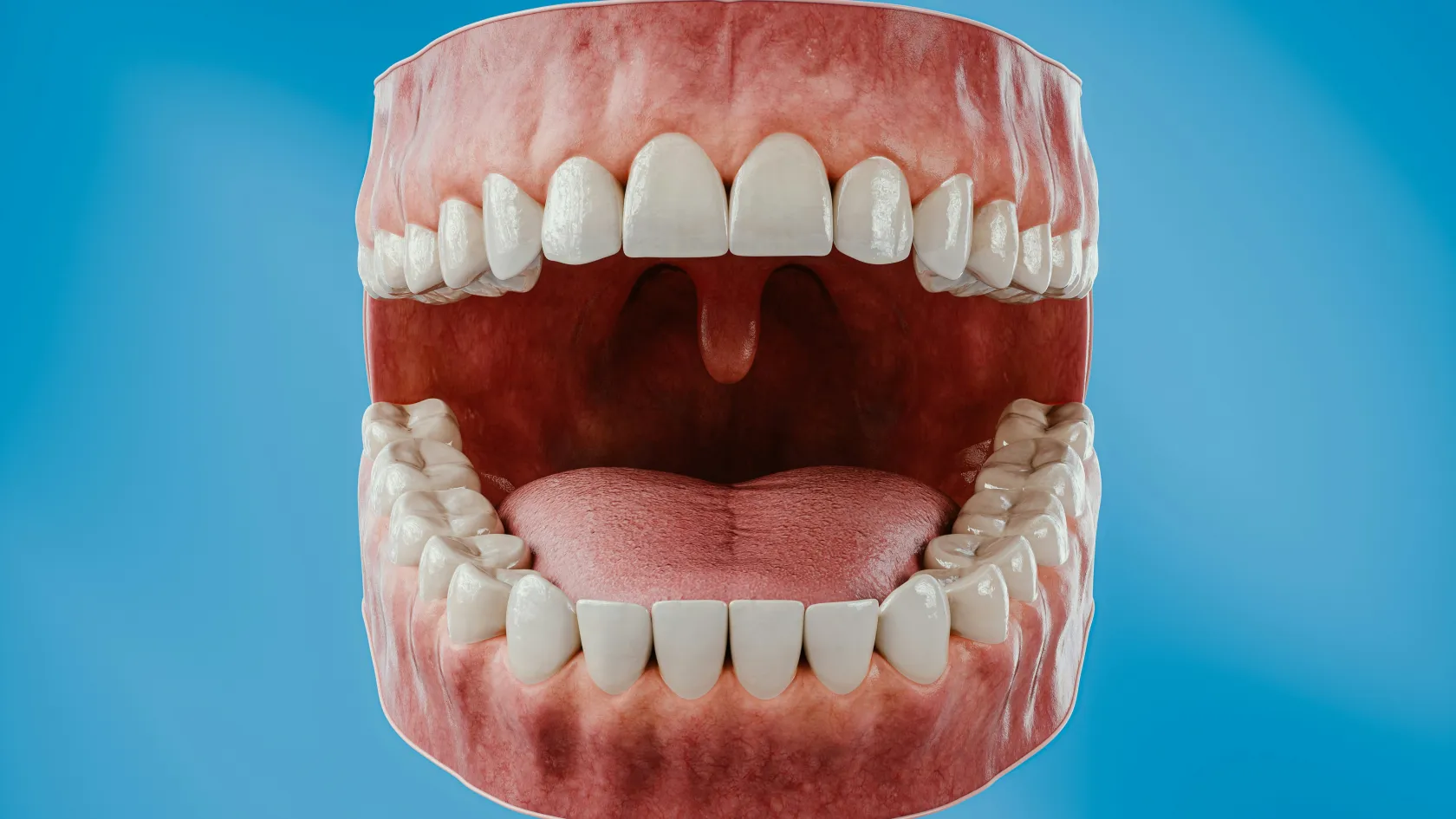
Oral cancer, or mouth cancer, starts in the lining of the tongue, the floor of the mouth, the cheeks, the gums, the hard palate or the lips. Nine in ten are squamous cell carcinomas. Tobacco in any form, alcohol, betel quid and areca nut drive most of them, and a mouth ulcer, white or red patch or lump that has not healed in three weeks deserves a biopsy.
Surgery comes first for almost every mouth cancer.
Radiotherapy and chemotherapy, which can replace surgery for cancers of the throat and voice box, have not matched it in the mouth, where the jaw bone sits close to the tumor and tolerates radiation poorly. The operation removes the tumor with a margin of healthy tissue, treats the lymph nodes of the neck, and rebuilds whatever was removed so that the patient can speak, swallow and keep the shape of the face.
What to send for a free review
The biopsy pathology report, with depth of invasion if stated.
MRI or CT of the mouth and neck as image files, a chest CT or PET-CT if done, and clear photographs of the lesion.
A list of medicines and medical conditions. A head and neck surgeon reviews the file, and the coordinator sends the written opinion back in your language.
1
Examination and biopsy review
The surgeon examines the mouth and neck, and our pathologists review your slides or take a new biopsy.
2
Imaging
MRI for the tongue and floor of mouth, CT for bone involvement, and a chest CT or PET-CT for spread.
3
Tumor board
Surgeon, radiation oncologist, medical oncologist, radiologist and pathologist agree the plan, including reconstruction.
How far does the cancer reach?
Size alone no longer stages mouth cancer. A study of 3,149 patients treated at 11 cancer centers worldwide showed that depth of invasion, how far the tumor has grown into the tissue beneath the surface, predicted survival better than width, and the international staging system has used it since 2017. Depth also decides whether the neck needs treatment.
This table scrolls sideways on a narrow screen. Swipe or drag to see every column.
Tumor stage in oral cancer, with depth of invasion
Stage
Size
Depth of invasion
T1
2 centimeters or less
5 millimeters or less
T2
2 centimeters or less, or 2 to 4 centimeters
More than 5 millimeters, or 10 millimeters or less
T3
More than 4 centimeters
Or more than 10 millimeters at any size
T4
Any size
Grows into jaw bone, the sinus, the skin of the face or deep muscles
Removing the tumor and rebuilding the mouth
Margins
The surgeon removes the tumor with one centimeter of normal-looking tissue around it, and the pathologist checks the edges during the operation on frozen sections, so that a close edge gets more tissue taken at once.
Operations by site
Partial glossectomy, removing part of the tongue.
Floor of mouth resection.
Marginal mandibulectomy, shaving the upper rim of the jaw bone while keeping it in one piece, for tumors touching the bone.
Segmental mandibulectomy, removing a full section of the jaw when the tumor has entered the bone.
Maxillectomy, removing part of the upper jaw and palate.
Advances in microvascular free-flap reconstruction have extended the limits of resection and enabled enhanced restoration of function and cosmesis.
Oral cavity carcinoma review, Journal of Clinical Oncology, 2015
Reconstruction
Small defects close directly or heal on their own. Larger ones need tissue from elsewhere, and the plastic surgeon takes it with its own artery and vein, then connects them under the microscope to vessels in the neck.
Free flaps from the forearm, thigh or leg
Thin, pliable skin from the forearm rebuilds half the tongue or the floor of the mouth. Thigh tissue fills a larger tongue defect. The fibula, the thin bone of the lower leg, rebuilds a missing section of jaw, shaped with plates to the patient's own jaw line planned on the CT before surgery, and dental implants can go into it later so that the patient chews on teeth again.
Neck dissection or sentinel node biopsy?
What a neck dissection removes
A neck dissection removes the lymph nodes and fatty tissue of the neck on the side of the tumor through a cut in a skin crease, keeping the nerve to the shoulder, the jugular vein and the neck muscles. In early mouth cancer the surgeon clears levels one to three, the nodes under the jaw and down the upper neck, where these cancers spread first.
Neck treatment fits these patients.
Anyone with nodes that look involved on the scan.
Early tumors deeper than 3 to 4 millimeters, where hidden spread to the nodes becomes common.
Tumors of the tongue and floor of mouth, which spread to the neck early.
Treating the neck at the first operation
The Tata Memorial trial randomized 500 patients with T1 or T2 mouth cancer and no visible neck disease. Those who had the neck dissected at the first operation lived longer, 80.0 against 67.5 percent at three years, and stayed free of disease more, 69.5 against 45.9 percent, than those watched and operated on when nodes appeared.
Among patients with early-stage oral squamous-cell cancer, elective neck dissection resulted in higher rates of overall and disease-free survival than did therapeutic neck dissection.
Tata Memorial trial, 500 patients, New England Journal of Medicine, 2015
1
Tracer injection
A small dose of radioactive tracer goes around the tumor the day before or the morning of surgery.
2
Mapping
A scan and a handheld probe in theater find the first one to three nodes that drain the tumor.
3
Decision
Those nodes come out through a small cut. If any holds cancer, the full neck dissection follows.
This study demonstrated the oncologic equivalence of the SN and ND approaches, with lower morbidity in the SN arm during the first 6 months after surgery, thus establishing SN as the standard of care in OC.
French SENT trial, 279 patients, Journal of Clinical Oncology, 2020
Radiotherapy, recovery and risks after surgery
The pathology report from the operation decides what follows. Small tumors with clear margins and clean nodes need nothing more than follow-up, while larger tumors, nerve or vessel invasion and involved nodes bring radiotherapy, starting within six weeks of surgery.
This table scrolls sideways on a narrow screen. Swipe or drag to see every column.
What the pathology report decides
Finding
What follows
Evidence
Clear margins, no nodal spread, small tumor
Follow-up only
Standard practice
Close margins, nerve invasion, larger tumor or one involved node
Radiotherapy to the tumor bed and neck, six weeks
Standard practice
Positive margin or cancer breaking out of a node
Radiotherapy with cisplatin chemotherapy
EORTC trial, five-year survival 53 against 40 percent
Call the team the same day
Bleeding from the mouth or neck, swelling that grows fast, a flap that turns pale, blue or dark, fever, a wound that leaks, or new trouble breathing or swallowing saliva. A failing flap is rescued by returning to theater within hours.
The stay in Istanbul and the return home
The extent of the operation sets the stay.
This table scrolls sideways on a narrow screen. Swipe or drag to see every column.
Hospital stay and the flight home
Operation
Nights in hospital
Cleared to fly
Small tongue or cheek resection
Two to three
Seven to ten days after surgery
Resection with neck dissection or sentinel node biopsy
Five to eight
Two weeks
Resection with free flap reconstruction
Seven to fourteen, with a temporary tracheostomy in some patients
Three weeks, once eating is safe
Speech, swallowing and follow-up at home
Speech and swallowing therapists start in the first days after surgery. Patients with a small tongue resection talk clearly within weeks. A large one needs months of therapy, a feeding tube for some weeks in many cases, and practice at home. Once you are back home, the coordinator stays on the same WhatsApp number, and the surgeon reviews photos of the mouth and the follow-up scans, every one to three months in the first two years.
Postoperative concurrent administration of high-dose cisplatin with radiotherapy is more efficacious than radiotherapy alone in patients with locally advanced head and neck cancer and does not cause an undue number of late complications.
EORTC 22931 trial, 334 patients, New England Journal of Medicine, 2004
What moves the cost
Reconstruction weighs most. A free flap adds a second surgical team.
It also adds hours under anesthesia and a longer stay in intensive care and on the ward. A neck dissection, a sentinel node study, PET-CT, jaw plates and later dental implants add to it, and so do radiotherapy or chemoradiation given in Istanbul. Radiotherapy and chemotherapy both run at Biruni Hospital, so treatment after surgery continues with the same team, or at home with a written handover. Published packages for head and neck cancer surgery in Turkey include the operation, anesthesia, the planned hospital nights, the interpreter and transfers, and leave out flights, insurance and the treatment of complications. A written estimate, free after the surgeon reads your reports, names the operation and the reconstruction it assumes.
Your companion, your language, your food
One family member stays in your room each night on the companion bed. Hotel nights around the admission, airport and daily transport, and the consulate invitation letter, sent ten days before you travel, come from the international patients office.
Your coordinator works in English, Arabic, French, Russian, Serbian, Romanian or Spanish and books interpreters for other languages. Soft and liquid diets, halal, vegetarian and diabetic, come from the hospital kitchen, the hospital has a prayer room, and the department arranges a female doctor on request wherever the rota allows.
Oral cancer surgery FAQ
Is mouth cancer curable with surgery?
Yes, in most early cancers. Surgery with a clear margin and treatment of the neck cures the majority of T1 and T2 tumors, and radiotherapy after surgery improves the outlook in advanced ones.
Will I be able to speak after tongue surgery?
Yes. After a small resection speech returns within weeks, and after a large one a free flap and speech therapy restore understandable speech in most patients.
Do I need a neck dissection for a small tumor?
The neck needs treatment when the tumor is deeper than 3 to 4 millimeters. A sentinel node biopsy is an alternative with fewer side effects.
How long will I stay in Istanbul?
One to two weeks for a small operation, three weeks or more after a free flap, and six to seven weeks more if radiotherapy follows here.
Can a family member stay with me?
Yes. One family member sleeps on the companion bed in your room every night.
References
D'Cruz AK, Vaish R, Kapre N, et al. Elective versus Therapeutic Neck Dissection in Node-Negative Oral Cancer. New England Journal of Medicine. 2015;373(6):521-529.
Garrel R, Poissonnet G, Moya Plana A, et al. Equivalence Randomized Trial to Compare Treatment on the Basis of Sentinel Node Biopsy Versus Neck Node Dissection in Operable T1-T2N0 Oral and Oropharyngeal Cancer. Journal of Clinical Oncology. 2020;38(34):4010-4018.
Bernier J, Domenge C, Ozsahin M, et al. Postoperative irradiation with or without concomitant chemotherapy for locally advanced head and neck cancer. New England Journal of Medicine. 2004;350(19):1945-1952.
Ebrahimi A, Gil Z, Amit M, et al. Primary tumor staging for oral cancer and a proposed modification incorporating depth of invasion: an international multicenter retrospective study. JAMA Otolaryngology Head and Neck Surgery. 2014;140(12):1138-1148.
Chinn SB, Myers JN. Oral Cavity Carcinoma: Current Management, Controversies, and Future Directions. Journal of Clinical Oncology. 2015;33(29):3269-3276.
Editor's note
Written by the Biruni Hospital medical editorial team. Reviewed by Assistant Professor Hazel Çağın KUZEY, Gynecology and Obstetrics.