Cochlear Implant Surgery - Hearing Implant Surgery
Cochlear implant surgery places a thin electrode in the inner ear of adults and children with severe to profound hearing loss who gain too little from hearing aids, sending sound directly to the hearing nerve. Most adults understand speech far better within a year, and deaf infants benefit most from early implantation. At Biruni Hospital in Istanbul, our ENT and audiology team evaluates candidacy, performs the surgery and continues programming after you return home.
About This Department
ENT
When hearing aids no longer make speech clear, a cochlear implant can. The implant bypasses the damaged inner ear and sends sound straight to the hearing nerve.
Cochlear implant surgery, a type of hearing implant surgery, places a thin electrode inside the cochlea, the snail-shaped hearing organ, for adults and children with severe to profound hearing loss who gain too little from hearing aids. A sound processor worn behind the ear turns sound into electrical signals that the electrode delivers to the hearing nerve. Results in adults are strong. In a multicenter study of 100 adults, 97 percent understood words significantly better one year after implantation than with their hearing aids, with an average gain of 51 percentage points (Kelsall and colleagues, American Journal of Otolaryngology, 2021). For babies born deaf, timing shapes speech. A review of 642 infants found implantation before 12 months safe, with outcomes equal to or better than later implantation in eight of nine comparisons (Wu and colleagues, Otolaryngology Head and Neck Surgery, 2023). This page explains who is a candidate, the evaluation, the operation, switch-on and programming, other hearing implants, risks, life with an implant, and how patients from abroad arrange cochlear implant surgery at Biruni Hospital in Istanbul.
97
Percent of adults with clearly better word understanding one year after implantation
51
Percentage point average gain in word scores over hearing aids
12
Months of age, before which implantation in deaf infants is safe and effective
Free
Review of your hearing tests and scans by our ENT and audiology team
The internal implant, a receiver under the skin behind the ear and an electrode inside the cochlea.
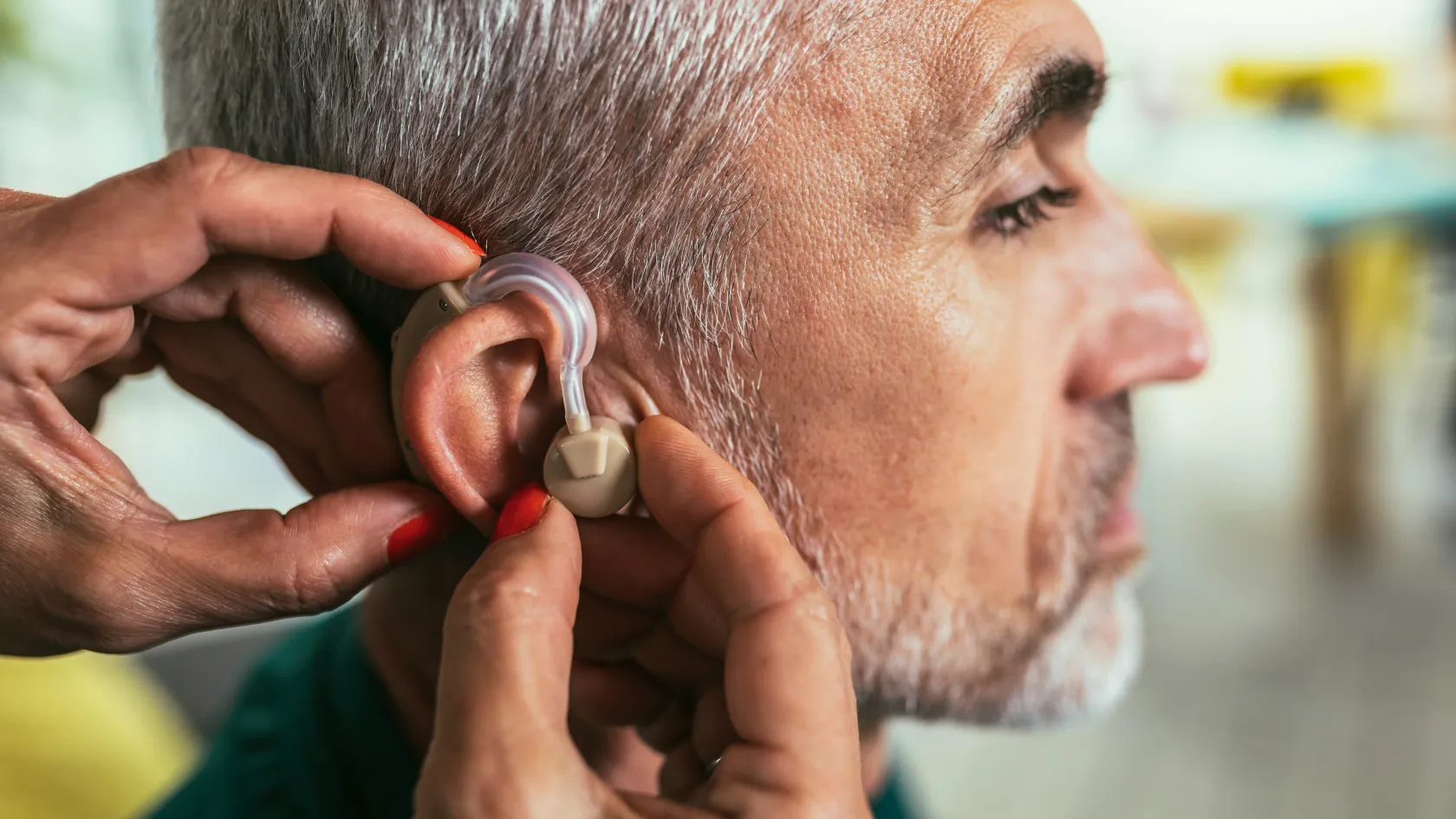
The external sound processor, worn on the ear or as a small button on the head, held in place by a magnet.
Programming software that sets each electrode to the patient's hearing nerve.
A hearing aid makes sound louder, which helps only while enough inner ear hair cells remain. When most hair cells are lost, louder sound stays unclear. A cochlear implant skips the hair cells and stimulates the hearing nerve directly, so speech becomes clear again for most users.
Not the same as normal hearing
An implant gives access to speech and environmental sounds, and most users talk on the phone. Sound is different at first and becomes natural over months as the brain adapts.
Who is a candidate
Typical candidates for a cochlear implant
Group
Hearing level
Main criterion
Adults
Severe to profound in both ears
Poor speech understanding with well fitted hearing aids
Children
Severe to profound, congenital or acquired
Limited progress with hearing aids
After meningitis
Sudden profound loss
Early surgery before the cochlea hardens
Single-sided deafness
Profound loss in one ear
Selected adults and children
Some hearing left and still a candidate
Current criteria rest on speech understanding with hearing aids, and the hearing graph is only one part of the decision. Many adults with residual low frequency hearing benefit. Thin electrode designs aim to preserve that remaining hearing, which adds natural low tones to the sound of the implant.
No upper age limit
Adults in their eighties and nineties receive implants. General health and the ability to undergo a short anesthetic matter more than age.
The hearing nerve must be present. Scans confirm the nerve and the shape of the cochlea before surgery.
Children born deaf
Implantation before 12 months, systematic review of 642 infants
Finding
Result
Note
Safety
Safe in all studies
Experienced pediatric teams
Comparison with later implantation
Equal or better in eight of nine studies
Hearing and early speech
Common causes
Congenital CMV, genes such as GJB2, meningitis
Genetic testing helps
1
The first years matter
The hearing pathways of the brain develop fastest in the first three years. Early implantation, ideally around the first birthday or earlier, uses this window (Wu and colleagues, 2023).
Children with profound deafness in both ears receive implants on both sides, in one operation or two, which helps hearing in noise and locating sounds.
Results in adults
Adults who lost hearing after learning to speak gain the most, and the first three months bring the steepest improvement, with further gains up to a year and beyond.
Speech understanding in 100 adults, implant ear
Time after switch-on
Significant improvement
Mean gain
Three months
84 percent
Steepest rise
Six months
93 percent
Continued gains
Twelve months
97 percent
51 points for words, 32 points for sentences in noise
1
Implant and hearing aid together
Many adults keep a hearing aid on the other ear. In the same study, this bimodal combination gave better results than two hearing aids, especially in noise (Kelsall and colleagues, 2021).
What affects results
Factor
Effect
Note
Duration of deafness
Shorter is better
Do not wait for years
Hearing aid use before
Keeps the nerve active
Wear aids until surgery
Rehabilitation
Practice speeds progress
Listening therapy
Hearing, memory and thinking
Hearing loss is the largest modifiable risk factor for dementia in large population studies. Restoring hearing keeps the brain engaged in conversation and daily life.
Implants and memory
A meta-analysis of 20 studies in 648 mostly older adults found improvement in executive function and verbal memory within a year of implantation, alongside fast gains in speech perception (An and colleagues, Heliyon, 2023). Long-term studies are ongoing.
1
Beyond speech
An umbrella review of 42 reviews found that cochlear implants improve speech recognition, quality of life and cognition in adults (Tang and colleagues, Ear and Hearing, 2024).
Why so few adults get one
Fewer than one in ten adults who could benefit have an implant.
In developed countries, fear of surgery, worry over losing the hearing that remains, the belief that the operation is only for children and simple lack of awareness keep most eligible adults struggling with hearing aids that no longer help for many years, while conversations, work, music and social life fade and the brain loses practice in processing speech (Tang and colleagues, 2024). A candidacy evaluation costs a day and gives a clear answer.
A candidacy test comes before a stronger aid.
The evaluation
Candidacy tests
Test
Purpose
Time
Pure tone and speech audiometry
Hearing levels, speech understanding with aids
Half a day
Objective tests
Inner ear and nerve function, for children
One to two hours
CT and MRI
Cochlea shape, hearing nerve, inner ear fluid
Same visit
Speech and language assessment
Baseline and goals
One hour
Vaccination against pneumococcus is completed before surgery to lower the risk of meningitis.
Balance tests are done for adults with dizziness or before a second implant.
Families of children meet the rehabilitation team before surgery.
Bring all previous hearing tests, hearing aid settings and scans, because results from your home country are reviewed before you travel.
At the end of the evaluation, the team explains the expected benefit for your ear, the choice of device and which ear to implant.
The operation
1
Behind the ear
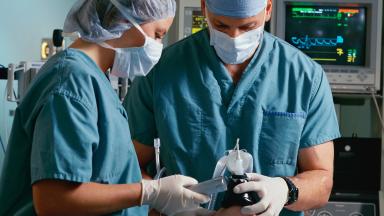
Under general anesthesia, the surgeon makes a small incision behind the ear, creates a pocket for the receiver, opens a narrow path through the mastoid bone to the middle ear, and inserts the electrode gently through the round window into the cochlea. Facial nerve monitoring protects the nerve that moves the face. The operation takes one and a half to two and a half hours.
Most patients stay one night. The electrode is tested during surgery to confirm the nerve responds.
Switch-on and programming
1
Switch-on
The sound processor is fitted and switched on two to four weeks after surgery, once the wound has healed.
At first, voices may sound high pitched or mechanical. Over the following weeks, audiologists program the implant in several sessions, called mapping, setting comfortable levels for each electrode.
Programming schedule
Visit
Timing
Purpose
Switch-on
Two to four weeks after surgery
Activation, first map
Early mapping
Weekly for the first month
Adjust levels
Later reviews
Three, six and twelve months
Fine tuning, speech tests
Yearly checks
For life
Device and hearing review
Programming from a distance
After the first sessions in person, many adjustments can be made by remote fitting or by a local audiologist using the same software, and we coordinate with your local team.
Children need more sessions, and their parents learn to check the device daily.
Learning to hear again
The brain does most of the work.
After switch-on, adults practice listening every day with audiobooks, music and conversation, and use apps and auditory training from our speech and language therapists, while children learn through play, daily listening and language therapy with their parents at the center, because the brain needs months of steady input to turn the new electrical signal into clear speech, and the effort pays back in the steady rise of scores at three, six and twelve months. Patience in the first weeks makes the difference.
Wear the processor every waking hour.
Other hearing implants
Not every hearing loss needs a cochlear implant. Other implants suit conductive and mixed hearing loss or problems of the ear canal.
Hearing implants and their uses
Implant
How it works
Suits
Bone conduction implant
Sends sound through the skull bone to the inner ear
Bone-anchored implants in 952 implants in children
Finding
Result
Note
Skin reactions
26.4 percent
Treated locally in most
Revision surgery
16.8 percent
Varies by technique
Implant loss
13.3 percent
Lower with wide-diameter implants
Risks
1
A safe operation
Cochlear implant surgery is one of the safest ear operations, and serious complications are uncommon in experienced centers.
Short-lived dizziness, taste change or tinnitus, which settle in most people.
Wound infection or skin problems over the receiver.
Device failure needing a replacement operation, which is uncommon and can happen years after implantation.
Facial nerve injury, rare, reduced by nerve monitoring.
Meningitis, rare, reduced by vaccination.
How we reduce risks
Measure
Purpose
When
Pneumococcal vaccination
Lowers meningitis risk
Before surgery
Facial nerve monitoring
Protects the face nerve
During surgery
Soft electrode insertion
Preserves remaining hearing
During surgery
Residual hearing in the implanted ear can be reduced by surgery. Gentle techniques and thin electrodes preserve it in many patients, and we discuss the chance for your ear before surgery.
Living with an implant
MRI scans with an implant
Modern implants allow MRI under specific conditions, at 1.5 Tesla and with many devices at 3 Tesla, sometimes with a head bandage or temporary magnet removal. Always tell the radiology team about your implant.
1
Daily life
Showering and swimming with waterproof covers, sports with a helmet where needed, phone calls and music streaming through Bluetooth to the processor.
The internal implant is designed to last a lifetime, and the external processor is upgraded every five to seven years as technology improves.
For patients from abroad
Hearing implants need follow-up for life. We plan your care so that programming continues smoothly at home.
Send recent audiograms, speech test results with hearing aids, CT or MRI images, and vaccination records. Our team confirms candidacy before you travel.
1
Length of stay
Plan for one week for evaluation and surgery, with fitness to fly after the wound check. Switch-on two to four weeks later can be done on a second visit, with a week of programming, or arranged with a partner center near you. After you return home, we continue programming remotely or with your local audiologist.
One coordinator from the international patients office handles arrangements from the first message through discharge and answers the same WhatsApp number after you return. The office works in English, Arabic, French, Russian, Serbian, Romanian and Spanish and books interpreters for other languages, and it arranges the visa invitation letter, airport transfers, daily transport and accommodation near the hospital. Halal, vegetarian and diabetic meals, a prayer room on site, and a female physician on request wherever the rota allows.
Cost
The device is the largest part of the cost, and the price depends on the manufacturer and model you choose.
We send a written quote after reviewing your tests, before you travel, listing the device, surgery, hospital stay, switch-on and the first programming sessions.
What a quote for cochlear implant surgery covers
Item
Included
Priced separately
Device
Internal implant and sound processor
Spare processor, accessories
Surgery
Surgeon, anesthesia, monitoring, one night stay
Second side
Programming
Switch-on and first-year mapping sessions
Later upgrades
References
Kelsall D, Lupo J, Biever A. Longitudinal outcomes of cochlear implantation and bimodal hearing in a large group of adults, a multicenter clinical study. Am J Otolaryngol. 2021;42(1):102773.
Wu SS, Sbeih F, Anne S, et al. Auditory outcomes in children who undergo cochlear implantation before 12 months of age, a systematic review. Otolaryngol Head Neck Surg. 2023;169(2):210-220.
An S, Jo E, Jun SB, Sung JE. Effects of cochlear implantation on cognitive decline in older adults, a systematic review and meta-analysis. Heliyon. 2023;9(9):e19703.
Tang D, Tran Y, Lo C, et al. The benefits of cochlear implantation for adults, a systematic umbrella review. Ear Hear. 2024;45(4):801-807.
Kruyt IJ, Bakkum KHE, Caspers CJI, Hol MKS. The efficacy of bone-anchored hearing implant surgery in children, a systematic review. Int J Pediatr Otorhinolaryngol. 2020;132:109906.
Editor's note
Written by the Biruni Hospital medical editorial team. Reviewed by Assistant Professor Gültekin AKYOL, Emergency Medicine.