
Oral Cancer Surgery
Removing the neck lymph nodes during the first operation, even when the scan looks normal, raised three-year survival from 67.5 to 80.0 percent in a trial of 500 patients with early mouth cancer. This guide explains the operations for the tongue, jaw and cheek, how the mouth is rebuilt, and the weeks in Istanbul.
About This Department
Most mouth cancers start with an operation. Clear margins and a planned neck decide what comes next.
In a randomized trial of 271 patients with early oral cancer treated with surgery, published in the Journal of Clinical Oncology in 2021, 87.9 percent of those whose neck was managed by sentinel node biopsy were alive at three years, and the group given a full elective neck dissection did almost exactly as well.
Your biopsy, taken from a sore on the tongue, the floor of the mouth, the gum or the inside of the cheek has come back as squamous cell carcinoma, and the next word the doctor used was surgery. This guide covers which operation matches which part of the mouth, why the neck nodes get treated even when they look normal, how the mouth is rebuilt, the complications with their published rates, and the whole trip from the first message to the follow-up scan back home.
Inside the mouth, the operation comes first in almost every treatment plan.
Why surgery leads the treatment of mouth cancer
Oral cancer surgery removes a cancer from the lips, the front two-thirds of the tongue, the floor of the mouth, the gums, the lining of the cheeks, the hard palate or the small area behind the last molar, together with a rim of healthy tissue around it.
Nine in ten of these cancers start in the flat squamous cells lining the mouth, and tobacco in any form, heavy drinking and chewed betel quid drive most of them, while cancers just behind the mouth, in the tonsils and the back of the tongue, belong to a different group called oropharyngeal cancer, where radiotherapy with chemotherapy competes with surgery as a first treatment. Inside the mouth the balance tips firmly toward the operation. Surgeons can see and feel the tumor directly. Radiotherapy to the jaw carries a lifelong risk of bone damage, and starting with surgery spares that risk for every patient whose final report shows no need for radiation, while the removed specimen gives the pathologist the exact depth, margins and node count that decide each later step, information no scan can match.
Depth decides more than width.
Staging under the 8th edition of the American Joint Committee on Cancer system measures how far the tumor has grown down into the tissue, called depth of invasion, alongside its width. A tumor 2 cm or smaller and no deeper than 5 mm counts as T1. Up to 4 cm wide and no deeper than 10 mm makes T2. Anything wider than 4 cm or deeper than 10 mm moves to T3, and growth into bone, the skin of the face or the deep space beside the jaw makes T4. Deep tumors send cells to the neck nodes more readily than shallow ones of the same width, so the depth on the biopsy and the MRI carries real weight in the first review of your file.
Which operation fits which part of the mouth
The operation takes its name from where the tumor grew.
This table scrolls sideways on a narrow screen. Swipe or drag to see every column.
| Tumor site | Operation | Usual reconstruction |
|---|---|---|
| Side of the tongue | Partial glossectomy, removing the tumor with a rim of normal tongue | Stitches for a small defect, a thin forearm flap for a larger one |
| Floor of the mouth | Wide excision, taking the inner rim of the jawbone when the tumor touches it | Forearm or thigh flap |
| Lower gum and jaw | Marginal mandibulectomy for the top rim of the jaw, segmental mandibulectomy for a full section | Fibula or shoulder blade bone flap after a segmental resection |
| Upper gum and hard palate | Partial maxillectomy | A removable palate plate called an obturator, or a flap |
| Inside of the cheek | Wide excision through the mouth, through the skin for a deep tumor | Thigh or forearm flap |
| Lip | Wedge excision | Tissue borrowed from the rest of the lip |
Small, superficial cancers come out through the open mouth, in an operation surgeons call transoral excision. The skin stays untouched. Patients go home after one to three nights. Larger tumors need wider access, through a cut along a crease of the neck or, for tumors far back in the mouth, a planned split of the lower lip and jaw that titanium plates fix together at the end of the operation. A laser or a surgical robot adds little inside the mouth itself, where the tumor sits in plain view.
Every step of the operation aims at clear margins. Surgeons take 1 to 1.5 cm of normal tissue around the tumor in the fresh specimen, since tissue shrinks once removed and the pathologist needs at least 5 mm of clearance under the microscope to call a margin clear, and frozen sections, thin slices examined while you are still asleep, let the surgeon take more tissue on the spot when an edge looks close.
Treating the neck when the scan looks clean
Mouth cancer reaches the lymph nodes of the neck early, and small deposits hide from MRI, CT and PET scans alike, which for decades left surgeons arguing over whether a normal-looking neck should be operated on at once or watched. A trial from the Tata Memorial cancer hospital in Mumbai, published in the New England Journal of Medicine in 2015, settled the question for early tumors. Among 500 patients with T1 or T2 cancers of the mouth and a neck that felt and looked normal, 80.0 percent of those given an elective neck dissection during the first operation were alive at three years, against 67.5 percent of those watched and operated on only once nodes appeared. Disease-free survival showed a wider gap still, 69.5 against 45.9 percent. Adverse events after the elective dissection ran at 6.6 percent against 3.6 percent with watching, a small price for a gain of 12.5 points in survival.
Waiting for a node to grow meant operating on a bigger problem later.
An elective neck dissection removes the nodes in levels I to III, under the jaw and along the upper half of the jugular vein, through a cut in a skin crease, and it adds one to two hours to the operation and a drain for a few days.
Sentinel node biopsy offers a lighter route for selected early tumors. A small dose of radioactive tracer injected around the cancer shows which one to three nodes drain it first, and only those come out for detailed examination. In the 2021 Japanese trial in the Journal of Clinical Oncology, 271 patients across 16 hospitals were randomized between this approach and a standard elective dissection. Three-year survival came out at 87.9 percent with sentinel node biopsy and 86.6 percent with elective dissection. Neck and shoulder function scored better in the sentinel group, and any positive sentinel node led straight on to a full dissection of that side.
Very thin tumors, less than 2 mm deep, rarely hide nodes, and for them close ultrasound follow-up of the neck can stand in for surgery. Which side gets treated depends on where the tumor sits. Lymph from the tip of the tongue, the floor of the mouth and any cancer reaching the center line drains to both sides of the neck, so both sides need attention, whether by dissection or by sentinel node biopsy. A tumor on the side of the tongue that stays well clear of the middle drains to its own side first, and treating that side alone keeps the operation shorter and spares the nerves and muscles on the other. Surgeons read this from the MRI and from the examination under anesthesia, which shows how close the edge of the cancer comes to the midline of the tongue.
Nodes already visible on the scan call for a therapeutic dissection. It reaches down to levels IV and V when the disease sits lower in the neck.
Rebuilding the tongue, the jaw and the floor of the mouth
You wake up with the mouth already rebuilt, because reconstruction happens in the same operation as the cancer removal.
A free flap moves skin, fat, muscle or bone from another part of the body to the mouth together with its own artery and vein, which a microsurgeon joins to vessels in the neck under a microscope. Thin, pliable skin from the inside of the forearm, the radial forearm flap, suits the tongue and the floor of the mouth because it moves with what remains of the tongue. The anterolateral thigh flap brings more bulk for a larger tongue or cheek defect and leaves a scar that trousers cover. When a full segment of the lower jaw comes out, the fibula flap carries a length of the thin outer leg bone, shaped with cuts and plates into a new jawline that can later hold dental implants, and the scapula flap from the shoulder blade serves patients whose leg vessels are unsuitable. A 2026 meta-analysis in the International Journal of Oral and Maxillofacial Surgery pooled 9996 head and neck free flaps from 37 studies and found an overall success rate of 97.09 percent.
The first three days carry the risk. Nurses check the color, warmth and blood flow of the flap every hour, and a flap showing trouble goes back to the operating room the same day, where the surgeon clears or rejoins the blocked vessel.
Smaller defects heal well without any flap. After a partial glossectomy for a small tumor, the edges close with stitches or line themselves within weeks.
The hospital stay, day by day
The timeline below follows an operation that includes a neck dissection and a free flap.
Operation day
Days one to three
Days four to seven
Days eight to twelve
Excision through the open mouth, with no flap, skips most of this. One to three nights on the ward cover it, with no tracheostomy and soft food from the next day. Packages for oral cancer surgery published by Turkish hospitals and medical travel agencies list three to ten nights in hospital, and the ten-night end matches an operation with a free flap and a neck dissection on both sides.
Complications and how often they happen
Longer operations carry more risk. A mouth that has already received radiotherapy heals more slowly. Below, each problem sits beside its standard treatment and, where a trial or meta-analysis measured it, the published rate.
This table scrolls sideways on a narrow screen. Swipe or drag to see every column.
| Complication | How common | What is done |
|---|---|---|
| Flap loss | Under 3 percent of free flaps in the 2026 meta-analysis | Same-day return to theater to rejoin the vessel, a second flap if it cannot be saved |
| Wound infection or saliva leak | The most frequent wound problem after open surgery, higher after previous radiotherapy | Antibiotics, drainage, and tube feeding until the leak closes |
| Bleeding in the neck | Uncommon, almost always in the first 24 hours | Return to theater to stop it |
| Chest infection | More likely in smokers and after long operations | Walking from day two, chest physiotherapy, antibiotics |
| Shoulder stiffness after neck dissection | Less with the sentinel node approach in the 2021 trial | Shoulder physiotherapy from the first week |
| Speech and swallowing change | Set by how much tongue and floor of mouth come out | Speech and swallowing therapy, starting on the ward |
| Numb lower lip or chin | After jaw surgery close to the nerve inside the bone | Partial return of feeling over months |
| Donor site problems | Slow skin graft healing on the forearm, ankle stiffness after a fibula flap | Dressings, then a walking and stretching program |
Stopping smoking before surgery lowers the chance of chest and wound problems, and even two weeks off cigarettes helps.
Who is a candidate, and who is better served another way
Anyone with a cancer confined to the mouth and neck who can safely go through a long general anesthetic qualifies for this operation. Age alone rules nobody out. Heart and lung function decide fitness, and an anesthetist assesses both before the date is set.
Some situations point away from surgery. Cancer that has spread to the lungs, liver or bones moves treatment to drugs and radiotherapy. Cancer wrapped around the carotid artery or grown up into the base of the skull leaves no way to reach clear margins, and chemoradiotherapy then serves the patient better than an operation that leaves cancer behind. Severe heart or lung disease that makes eight hours under anesthesia unsafe shifts the plan in the same direction, and when the remote review finds any of these, the surgeon says so in writing before any travel is booked.
When the pathology report adds radiotherapy or chemotherapy
Final pathology arrives seven to ten days after surgery and settles whether the operation was the whole treatment.
Radiotherapy after surgery follows for larger tumors, several positive nodes, cancer growing along nerves or into small vessels, and margins closer than 5 mm. Two findings add chemotherapy to it. When cancer reaches the cut edge of the specimen, or breaks out through the capsule of a lymph node, a pooled analysis of the European and American trials published in Head and Neck in 2005 found that adding cisplatin to postoperative radiotherapy improved the outcome, and these two findings carried the clearest benefit. The European trial alone, published in the New England Journal of Medicine in 2004, randomized 334 patients after surgery and reported five-year overall survival of 53 percent with combined treatment against 40 percent with radiotherapy alone, with severe acute side effects in 41 against 21 percent.
Radiotherapy should start within six weeks of surgery.
Biruni Hospital delivers radiotherapy, on an Elekta Versa HD linear accelerator, and chemotherapy on the same site as surgery, so a patient whose report calls for further treatment continues with the same team and the same records, with no referral and no transfer. Going home for it remains open too. A written handover and the full pathology report go to the oncologist there, so treatment starts on time.
Teeth come first. Any tooth in poor condition inside the planned radiation field comes out before treatment begins, since an extraction from irradiated jaw risks osteoradionecrosis, a slow-healing breakdown of the bone. That dental check fits into the recovery weeks before radiation planning.
How long to stay in Istanbul, and when you can fly
Seven to ten days in Istanbul cover a transoral excision alone. Add a neck dissection and the stay runs 10 to 14 days. With a free flap, plan three to four weeks.
Four checks clear you to fly, and the surgeon writes the date on the discharge summary. The tracheostomy has come out and its hole has closed. Wounds in the mouth, the neck and the donor site have healed, and you eat and drink enough by mouth to hold your weight steady. The pathology report has come back and the next step has been agreed. Book an aisle seat, keep the discharge summary and operation note in your hand luggage, and walk the aisle every hour on a long flight.
Staying on for radiotherapy changes the arithmetic. Recovery and radiation planning take up to six weeks, and treatment itself runs six to six and a half weeks, five days a week, so the whole stay comes to three months or a little more. The international patients office arranges longer accommodation for you and your companion for that period.
Speaking, eating and getting back to normal
Small tongue tumors leave speech close to normal within weeks. The rest of the tongue learns to cover. After a larger resection with a flap, words with t, d, s and k take longer, and three to six months of practice with a speech therapist brings most of the clarity back. Swallowing follows a similar course. Soft, moist food comes first, with sauces and purees, and solid food returns step by step over the first two months while a dietitian sets calorie targets, because weight loss slows wound healing and wears down strength before any radiotherapy.
Fatigue lasts longer than pain.
Desk work resumes at four to six weeks after a flap operation. Excision through the mouth allows it sooner. Jaw-opening exercises with a stack of wooden spatulas or a small device keep stiffness away, and they matter most during and after radiotherapy, when the chewing muscles tend to tighten. Dental implants in a fibula flap wait until the bone has healed, at least six months after surgery.
Follow-up after you fly home
You leave with a discharge summary in English, the operation note, the final pathology report and a medication list, which together let a head and neck surgeon or oncologist at home take over at once. Most recurrences of mouth cancer appear within the first two years, so checks run every one to three months in the first year, every two to six months in the second, then less often up to year five, with a baseline MRI or PET-CT three months after treatment ends. Each new scan report and photograph of the mouth can go to the surgical team through your coordinator, who stays on the same WhatsApp number after you return home.
Message the coordinator the same day for a new ulcer or lump in the mouth, bleeding, a swelling in the neck, a fever with a red or leaking wound, or swallowing that gets harder week by week. Sudden trouble breathing means the nearest emergency department, with the discharge summary in hand.
Patients who keep smoking after treatment face a higher risk of a second cancer in the mouth or throat. Stopping counts as part of the treatment.
What changes the cost of oral cancer surgery
Two patients with the same diagnosis receive different quotes because the operations differ. A transoral excision of a small tongue tumor sits at the low end. An open approach that splits the lip and jaw adds theater time, plates and nights on the ward. Both sides of the neck cost more than one. Reconstruction moves the figure most of all, from simple stitches through a forearm or thigh flap to a fibula flap with its plates and a second surgical team. Each night in intensive care and the days with a tracheostomy appear on the bill, a quote that assumes a stay of seven nights changes when the flap operation needs twelve, and missing scans add to the total too, because an MRI, a chest CT or a PET-CT done in Istanbul becomes part of the package.
Your own health counts as well. Diabetes, heart or lung disease, blood thinning medication and previous radiotherapy to the mouth all change the plan, and through it the cost.
Packages published by Turkish hospitals and medical travel agencies for this operation include the pre-operative tests and biopsy review, surgery and anesthesia, the planned hospital nights, medicines on the ward, pathology, airport transfers and an interpreter, while flights stay outside them, and so do extra nights, treatment of a complication, and radiotherapy or chemotherapy after surgery.
A quote worth comparing names the operation on the mouth, the neck levels on each side, the type of reconstruction, and the number of hospital and intensive care nights it assumes. It also says whether pathology and speech therapy sit inside the figure. And it states what happens to the bill if the flap needs a second trip to theater.
Only a surgeon reading your own biopsy and MRI can give a real figure. The review costs nothing.
The practical side of the trip
For the free remote review, send these.
- The biopsy pathology report, with the depth of invasion if it was measured
- MRI or CT of the mouth and neck, as image files on a disc or download link along with the written report
- Any chest CT or PET-CT
- Clear photographs of the tumor in the mouth
- Your medication list and any heart or lung reports
A head and neck surgeon reads the file and tells you which operation fits, whether the neck needs a dissection or a sentinel node biopsy, what reconstruction to expect, and how long the stay would run.
Your coordinator takes the case from the first message and stays with you through discharge, working in English, Arabic, French, Russian, Serbian, Romanian or Spanish, with interpreters arranged for other languages. After mouth surgery, when speaking takes effort for a few days, having the ward team and the coordinator in your own language makes a practical difference, and a notepad by the bed covers the days with the tracheostomy. Patient rooms have a companion bed, so one person stays with you overnight for the whole admission, and the international patients office books accommodation for both of you for the nights before and after. The same office handles airport transfers. The hospital kitchen prepares halal, vegetarian and diabetic meals, in soft form during recovery, and a prayer room is on site. A request for a female surgeon goes to the department in the first message and is met wherever the rota allows. The office also issues the appointment confirmation and the invitation letter a medical visa needs, naming the hospital and the treating doctor, about ten days before travel.
Oral cancer surgery FAQ
Is oral cancer surgery a major operation?
How long will I need to stay in Istanbul?
Can a family member stay in the hospital room with me?
Will I be able to speak and eat after tongue cancer surgery?
Will I have a tracheostomy, and is it permanent?
What happens if a problem starts after I fly home?
References
- D'Cruz AK, Vaish R, Kapre N, et al. Elective versus Therapeutic Neck Dissection in Node-Negative Oral Cancer. N Engl J Med. 2015;373(6):521-529.
- Hasegawa Y, Tsukahara K, Yoshimoto S, et al. Neck Dissections Based on Sentinel Lymph Node Navigation Versus Elective Neck Dissections in Early Oral Cancers. A Randomized, Multicenter, and Noninferiority Trial. J Clin Oncol. 2021;39(18):2025-2036.
- Bernier J, Domenge C, Ozsahin M, et al. Postoperative irradiation with or without concomitant chemotherapy for locally advanced head and neck cancer. N Engl J Med. 2004;350(19):1945-1952.
- Bernier J, Cooper JS, Pajak TF, et al. Defining risk levels in locally advanced head and neck cancers. A comparative analysis of concurrent postoperative radiation plus chemotherapy trials of the EORTC (# 22931) and RTOG (# 9501). Head Neck. 2005;27(10):843-850.
- Sánchez-Moreno RJ, Labrador-Carrillo R, González-García R, Sastre-Pérez J. Is double venous anastomosis better than single venous anastomosis in head and neck reconstruction with free flaps? A systematic review and meta-analysis. Int J Oral Maxillofac Surg. 2026;55(11):1308-1315.
Editor's note
Written by the Biruni Hospital medical editorial team. Reviewed by Prof. Dr. Mustafa Teoman YANMAZ, Medical Oncology.
Medically reviewed by
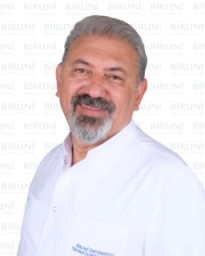
Prof. Dr. Mustafa Teoman YANMAZ
Medical Oncology
Last updated:


