
Neck Dissection For Thyroid Cancer
Papillary thyroid cancer that has reached the neck lymph nodes still carries a 99 percent five-year relative survival in US SEER data. This guide explains when the central or side-of-neck nodes need removing, the published complication rates, and how long the stay in Istanbul runs before the flight home.
About This Department
Thyroid cancer in the neck nodes remains highly curable. A complete compartment clearance keeps it that way.
American Cancer Society figures drawn from the US SEER registry put five-year relative survival for papillary thyroid cancer that has reached the regional lymph nodes at 99 percent, close to the figure for cancer confined to the gland. Surgery carries most of that result. Removing every node in the affected compartment at the first operation, with the voice nerves and the parathyroid glands protected, gives radioactive iodine and follow-up the cleanest possible starting point.
An ultrasound or a needle biopsy has found thyroid cancer in a lymph node. Now a surgeon has used the words neck dissection. This page explains which nodes come out and why, what the trials say about removing nodes that look normal, the complications with their published rates, and what the trip to Istanbul involves from the first message to the blood test back home.
For papillary cancer, node spread changes the operation far more than the outlook.
Central and lateral neck dissection, side by side
A neck dissection for thyroid cancer removes all the lymph nodes of one or more neck compartments in a single block, together with the fat they sit in, while the nerves, blood vessels and muscles running through that space stay where they are.
Surgeons map the neck in numbered levels. Level VI, the central compartment, wraps around the thyroid and the windpipe, from the hyoid bone under the chin down to the top of the breastbone, and it holds the nodes that thyroid cancer reaches first. Levels II to V run down the side of the neck along the jugular vein and behind the long muscle that turns the head, and together they make up the lateral compartment.
Two operations follow from that map. Some patients need one, some need both.
This table scrolls sideways on a narrow screen. Swipe or drag to see every column.
| Feature | Central, level VI | Lateral, levels II to V |
|---|---|---|
| Where | Beside and below the thyroid, along the windpipe, down to the upper chest | Side of the neck, from under the jaw to the collarbone |
| Main reason | Cancer seen in central nodes, or a larger or invasive tumor where nodes look normal | Cancer confirmed in a side-of-neck node by needle biopsy |
| Incision | The same low collar incision used for the thyroid | Collar incision extended up toward the ear on that side |
| Nights on the ward | 1 to 2 | 2 to 3, longer if the drain keeps filling |
| Risks particular to it | Low calcium from the parathyroid glands, voice change | Shoulder weakness, chyle leak, numb earlobe and neck skin |
Picking out the single enlarged node, which surgeons call berry picking, leaves smaller deposits behind in the same compartment. Those deposits grow back. A second operation then goes in through scar tissue, where the voice nerve and the parathyroid glands sit stuck in the scar and get injured more easily than at the first operation. The 2025 American Thyroid Association guideline keeps compartment-oriented dissection as the standard when cancer in the nodes has been proven, for exactly this reason.
Who needs a neck dissection, and who does not
Proven cancer in a neck node settles the question. Once an ultrasound shows a suspicious node and a needle biopsy confirms thyroid cancer in it, a therapeutic dissection of that compartment belongs in the operation, and nobody serious argues otherwise.
The real debate concerns central nodes in a neck that looks clean on ultrasound, where taking them out anyway is called a prophylactic central neck dissection and where endocrine surgeons have argued for twenty years. A 2018 systematic review in Annals of Surgical Oncology found hidden cancer in the removed central nodes of close to half of such patients, a finding that can move the decision on radioactive iodine. Five randomized trials pooled in a 2022 Annals of Surgery meta-analysis, 763 patients with low-risk papillary cancer in all, then showed structural recurrence of 2.7 percent with the extra dissection and 2.5 percent without it, along with a 3 percentage point rise in permanent low calcium. A 2023 meta-analysis of 18 studies in Frontiers in Endocrinology reported a small drop in recurrence in Western centers, from 5.5 to 3.8 percent, paid for with nearly double the rate of temporary low calcium. Put side by side, those numbers describe an extra procedure with a modest benefit for some tumors and a measurable cost for all of them.
For a small, low-risk papillary cancer with a normal neck on a careful ultrasound, the right operation leaves the central nodes alone. For a tumor larger than 4 cm, one that has grown through the thyroid capsule, or one with proven side-of-neck nodes, clearing the central compartment as well makes sense, and the 2025 guideline leaves room for exactly that judgment.
Medullary thyroid cancer plays by its own rules.
It ignores radioactive iodine, so surgery has to do the whole job, and the calcitonin level in the blood before the operation guides how far into the side of the neck the surgeon goes.
How the nodes are found before surgery
Ultrasound finds them. A needle confirms them.
An ultrasound by someone who scans thyroid necks every week sets the plan for this operation, because it maps the central and lateral compartments and shows which levels hold a suspicious node. A rounded shape raises suspicion. So do a lost fatty center, tiny bright calcium specks, cystic change and disordered blood flow on the color scan.
When a side-of-neck node looks wrong, a fine needle samples it. Fluid rinsed from that needle goes for a thyroglobulin test as well, and since only thyroid tissue makes thyroglobulin, a high level in a node confirms thyroid cancer even when the slide shows few cells.
Bulky, fixed nodes, or nodes reaching behind the windpipe or down into the chest, call for a CT scan with contrast. Its iodine delays radioactive iodine treatment by several weeks. The team weighs that delay before ordering it.
For the free remote review, send the ultrasound report with its images, the biopsy or cytology report, any CT or MRI, recent thyroid blood tests including thyroglobulin and calcitonin if they were measured, and the operation note and pathology from any earlier thyroid surgery. A video clip of the scan helps more than still pictures. A surgeon reads the file and tells you which compartments need clearing, whether your current plan looks complete, and how long the stay would be.
What happens in the operating room
Before the incision
You sleep through the whole operation under general anesthesia. Sensors built into the breathing tube let the surgeon track the recurrent laryngeal nerves, which move the vocal cords, from start to finish, and packages published by Turkish hospitals list this nerve monitoring as standard for thyroid cancer surgery.
The thyroid and the central compartment
The thyroid comes out first. Its collar incision sits in a natural skin crease. Next the surgeon clears the fat and nodes beside the windpipe on one side or both, working around each voice nerve and keeping every parathyroid gland on its own small blood supply. A parathyroid gland that loses its supply gets minced and tucked into a neck muscle, where it starts working again over several weeks.
The side of the neck
With side-of-neck disease, the incision is lengthened toward the ear. Levels II, III, IV and V come out as one block, peeled off the jugular vein, the carotid artery, the vagus nerve and the spinal accessory nerve, the nerve that powers the trapezius muscle and lets you shrug and lift your arm above your shoulder. Low on the left, the thoracic duct carries chyle, the milky fluid absorbed from the gut, into the great veins, and the surgeon ties its small branches one by one. A modern selective dissection keeps the jugular vein, the turning muscle and the accessory nerve. Taking any of them is reserved for cancer growing directly into that structure, which thyroid cancer seldom does.
Closing
Each dissected side gets a thin drain for one to three days. Dissolving stitches or skin glue close the wound.
Clearing the side of the neck adds one to two hours per side.
Complications, with the rates published
Each figure below comes from a named review or surgical series. Every complication listed has a standard treatment.
Complication rates in thyroid surgery fall as surgeon volume rises. The effect shows most clearly for nerve injury and permanent low calcium, the two outcomes patients fear most. Ask your surgeon how many of these operations they do in a year. A clear number is a good sign.
Recovery from day one to month six
The first night passes on the ward with the head of the bed raised and the drain in. Swallowing hurts like a bad sore throat. Thyroid hormone tablets, levothyroxine, start the next morning and continue for life.
Days two to four belong to the drains and the calcium. Each drain comes out once its output drops, a morning blood test shows whether calcium is holding, and those two results together set the day you move from the ward to the hotel, while gentle neck turns and shoulder rolls begin on day two because a stiff neck at week three is far harder to loosen than one kept moving from the start. By the end of the first week the wound is dry. The follow-up visit in clinic checks the scar, the voice and the shoulder before you fly. Final pathology, which counts how many nodes held cancer and whether any spread through a node's outer capsule, arrives in the same window, and in published Turkish packages it takes five to seven working days. Tiredness outlasts the pain. Energy takes two or three weeks to return after a lateral dissection and longer when both sides were cleared, and patients who planned to be back at full speed within a week find that the body sets a slower pace than the calendar, a fair trade for an operation that has removed every node in a compartment of the neck.
Desk work resumes at around two weeks.
Driving waits until you can turn your head far enough to check a blind spot without pain, which takes two to three weeks. Lifting, gym work and physical jobs wait four to six weeks. The scar stays pink and slightly raised for months, then flattens and fades over six to twelve months, and a lateral scar placed in a skin crease ends up thinner than most patients expect.
How long to stay in Istanbul, and when you can fly
Plan seven to ten days in Istanbul for a thyroidectomy with central neck dissection, and ten to fourteen days when one or both sides of the neck are cleared as well.
Packages for this operation published by Turkish hospitals and medical travel agencies build in one to two nights on the ward and five to seven in a hotel, which matches the central-only case. A lateral dissection needs extra margin. Its drain stays in longer, and a chyle leak takes several days on a fat-free diet to settle. Booking a flexible return ticket costs less than changing a fixed one.
Cabin pressure does nothing to a healing neck. Clearance to fly rests on four checks instead. The drains are out, the wound is dry, calcium holds steady on the tablet dose you will take home, and voice and swallowing are safe. The surgeon writes the clearance date on the discharge summary. On a long flight, walk the aisle every hour and drink water, as after any operation.
When the pathology changes the plan
Radioactive iodine comes up after almost every neck dissection for papillary or follicular cancer, because node involvement raises the risk category. The decision rests on the final pathology and on thyroglobulin measured several weeks after surgery. Treatment, when advised, follows six to twelve weeks after the operation. It needs a high TSH level. Stopping thyroid hormone for a few weeks raises TSH, and so do two injections of recombinant TSH, and either route is paired with a low-iodine diet for one to two weeks beforehand. You can return home after surgery and have it locally with a written handover, or plan a second trip.
Two less common turns are covered on the same site.
Cancer left stuck to the windpipe or esophagus that cannot be removed safely is treated with external beam radiotherapy, and Biruni Hospital delivers radiotherapy and cancer drug treatment on the same campus as surgery, so the same team continues without a transfer of records. Disease that stops taking up radioactive iodine moves on to targeted drugs, managed by medical oncology, and the option of continuing at home with your own oncologist stays open with a full written handover.
Recurrence in a lymph node years later is treated with a second, targeted dissection of that compartment.
Follow-up after you fly home
You leave with a written discharge summary in English, the operation note, the pathology report, your levothyroxine dose with its TSH target, and the plan for tapering calcium tablets. Your endocrinologist at home takes over the routine checks. Thyroglobulin and thyroglobulin antibodies are measured at six to twelve weeks and then at intervals your risk category sets, and the 2025 ATA guideline places the first follow-up neck ultrasound at six to twelve months. A rising thyroglobulin or a new node on that ultrasound comes back to the surgical team for review, and the same coordinator who handled your trip remains on the same WhatsApp number once you are home, so blood results and scan reports can be sent straight to the surgeon. Calcium tablets come down step by step over a few weeks. An undetectable thyroglobulin with a clean ultrasound at the end of the first year is what thyroid doctors call an excellent response. From then on the checks space out.
What shapes the cost
Two patients both booked for neck dissection for thyroid cancer receive different quotes because the extent of the surgery differs. Central clearance alone sits at the lower end. Clearing one side of the neck adds operating time, a second drain and a night or two on the ward, and clearing both sides adds more. Scar tissue slows everything. A neck already operated on elsewhere takes longer to dissect than a first operation. Imaging moves the figure too, since a CT, a fresh ultrasound and a needle biopsy with thyroglobulin washout done in Istanbul add to the total when recent results are missing. Pathology on forty or more nodes costs more than pathology on ten. Radioactive iodine, if given during the same trip, comes as a separate item. Patient factors count as well. Diabetes, heart or lung disease, blood thinning medication, and a calcium level that needs extra days to settle all change the plan, and through it the cost.
Packages published by Turkish hospitals and medical travel agencies for this operation list surgery with nerve monitoring, a private room for the planned nights, pre-operative tests and consultations, pathology, airport transfers and an interpreter. Flights sit outside them, and so do extra hospital nights and treatment of a complication. Some include hotel nights and some do not.
A quote you can compare names the levels to be cleared on each side, the number of nights it assumes, whether pathology and nerve monitoring sit inside it, and what happens to the bill if a chyle leak keeps you two nights longer.
An accurate figure comes from a surgeon reading your own ultrasound and biopsy. That review costs nothing.
Planning the trip
Your coordinator takes the case from the first message and stays with you through discharge, working in English, Arabic, French, Russian, Serbian, Romanian or Spanish, with interpreters arranged for other languages. The consent conversation and the morning ward round both happen in a language you follow. Patient rooms have a companion bed. One person stays overnight with you for the whole admission, and the international patients office books accommodation for both of you for the nights before and after. Airport transfers and the trips between hotel and hospital are arranged by the same office. The kitchen prepares halal, vegetarian and diabetic meals, and a prayer room is on site. If you prefer a female surgeon, say so in the first message and the department will accommodate it wherever the rota allows. The office also issues the appointment confirmation and the invitation letter that a medical visa needs, naming the hospital and the treating doctor, about ten days before travel.
Warning signs that need a call the same day
Fast swelling under the wound with any difficulty breathing is an emergency. Go to the nearest emergency department and tell them you had neck surgery.
- Tingling around the lips or in the fingertips, or muscle cramps in the hands
- Milky fluid from the wound, or swelling at the base of the neck that grows after meals
- Fever, spreading redness or discharge from the incision
- New loss of voice, or coughing and choking on thin liquids
In Istanbul, call the coordinator. At home, see your local doctor and send the coordinator a message so the surgeon hears about it too.
Neck dissection for thyroid cancer FAQ
Is a neck dissection for thyroid cancer major surgery?
How long do I need to stay in Istanbul?
Can my husband or wife stay in the room with me?
What happens if a problem starts after I fly home?
Does removing the nodes mean I will skip radioactive iodine?
References
- Ringel MD, Sosa JA, Baloch Z, et al. 2025 American Thyroid Association Management Guidelines for Adult Patients with Differentiated Thyroid Cancer. Thyroid. 2025;35(8):841-985.
- Sanabria A, Betancourt-Agüero C, Sánchez-Delgado JG, García-Lozano C. Prophylactic Central Neck Lymph Node Dissection in Low-risk Thyroid Carcinoma Patients Does Not Decrease the Incidence of Locoregional Recurrence. A Meta-analysis of Randomized Trials. Ann Surg. 2022;276(1):66-73.
- Hughes DT, Rosen JE, Evans DB, Grubbs E, Wang TS, Solórzano CC. Prophylactic Central Compartment Neck Dissection in Papillary Thyroid Cancer and Effect on Locoregional Recurrence. Ann Surg Oncol. 2018;25(9):2526-2534.
- Yang J, Han Y, Min Y, et al. Prophylactic central neck dissection for cN0 papillary thyroid carcinoma. Is there any difference between western countries and China? A systematic review and meta-analysis. Front Endocrinol. 2023;14:1176512.
- Glenn JA, Yen TWF, Fareau GG, Carr AA, Evans DB, Wang TS. Institutional experience with lateral neck dissections for thyroid cancer. Surgery. 2015;158(4):972-978.
Editor's note
Written by the Biruni Hospital medical editorial team. Reviewed by Prof. Dr. Mustafa Teoman YANMAZ, Medical Oncology.
Medically reviewed by
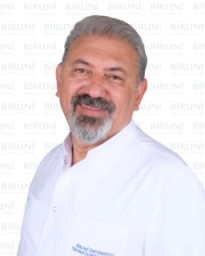
Prof. Dr. Mustafa Teoman YANMAZ
Medical Oncology
Last updated:


