Mommy makeover surgery combines a tummy tuck with muscle repair, a breast lift or augmentation and liposuction to restore the body after pregnancy and breastfeeding. Combining operations means one recovery, but longer surgery carries more risk, so we rank your priorities, limit operating time and prevent blood clots. At Biruni Hospital in Istanbul, our plastic surgery team plans one or two stages, with a stay of ten to fourteen days and video follow-up.
About This Department
Plastic Surgery
Pregnancy changes the breasts, the abdomen and the waist together. A mommy makeover treats them in one planned sequence.
Mommy makeover surgery combines a tummy tuck with breast surgery, a lift, an augmentation or both, and often liposuction of the flanks, to restore the shape of the body after pregnancy and breastfeeding. Combining operations means one anesthetic and one recovery, but a longer operation carries more risk. Among 25,478 tummy tucks in a large American database, the major complication rate reached 3.1 percent for the tummy tuck alone, 4.6 percent when liposuction and breast surgery were added, and 10.4 percent when liposuction and further body contouring were combined (Winocour and colleagues, Plastic and Reconstructive Surgery, 2015). Careful selection of the operations, a limit on operating time and prevention of blood clots keep the combination safe. This page explains what a mommy makeover includes, how the parts are chosen, one or two stages, safety, blood clots, timing after pregnancy, the operation day, recovery with young children, results, and how patients from abroad arrange a mommy makeover at Biruni Hospital in Istanbul.
4.6
Percent major complication rate for a tummy tuck combined with liposuction and breast surgery
10.4
Percent when liposuction and further body contouring were added, the reason we limit combinations
226
Average minutes in the operating room for breast reduction with a tummy tuck, against 115 for breast surgery alone
Free
Review of your photos and goals by our plastic surgery team
Mommy makeover is a popular name for a set of operations performed together, usually a tummy tuck with muscle repair, a breast lift or augmentation, and liposuction of the flanks and back.
No two mommy makeovers are the same. The plan follows what pregnancy changed in each woman.
Each operation also has its own page on our site, with detail on technique, risks and recovery. This page covers what changes when they are combined, the order, the safety limits and the recovery of a mother with young children.
Choosing the parts
Components of a mommy makeover
Operation
What it treats
Our page
Tummy tuck with muscle repair
Loose skin, separated muscles, overhang
Abdominoplasty
Breast lift
Sagging, stretched areolas
Mastopexy
Breast augmentation
Lost upper fullness, small breasts
Breast Augmentation Surgery
Lift with implant
Sagging and lost volume together
Mastopexy
Liposuction
Flanks, back, thighs
Vaser Liposuction
Breast reduction
Heavy breasts, neck and back pain
Discussed at consultation
1
The core
A tummy tuck with repair of separated abdominal muscles forms the center of most plans, and in a multicenter study it also relieved back pain and urinary leakage after childbirth (Taylor and colleagues, Plastic and Reconstructive Surgery, 2018).
The breast operation depends on volume and position. Women with sagging but enough volume need a lift, those with lost volume and little sagging an implant, and many need both.
Choosing what to leave out
2
Fewer areas, safer surgery
We treat the areas that bother you most in the first session and leave smaller wishes for later.
Priorities first
A list of everything is not a plan.
Most women arrive with three or four concerns, and adding them all to one long operation raises the risk of every complication, so we ask each patient to rank them, then build a session around the top two or three that fits within safe operating time, and place any remaining wishes, such as thigh liposuction or a small revision, in a shorter second stage months later when the body has healed.
The order matters too.
Safety of combined surgery
Evidence from 25,478 tummy tucks
Major complications within 30 days by combination
Operation
Complication rate
Main complications
Tummy tuck alone
3.1 percent
Hematoma, infection, blood clots
With breast surgery
4.3 percent
Same types
With liposuction and breast surgery
4.6 percent
Same types
With liposuction and other body contouring
10.4 percent
More blood clots and wound problems
Adding breast surgery to a tummy tuck raises risk modestly. Adding more body areas raises it steeply.
Why risk rises
Longer anesthesia, more blood loss, more raw surface for fluid to collect and longer immobility all add up. Age 55 or over, a body mass index of 30 or more and combined operations were independent risk factors in the same database (Winocour and colleagues, 2015).
One stage or two
Single-stage and staged mommy makeover
Plan
Advantage
Consideration
One stage
One anesthetic, one recovery, one trip
Longer operation, stricter selection
Two stages
Shorter operations, lower risk each time
Two recoveries, two trips
Breast lift then implant
Predictable shape in severe sagging
Second operation three to six months later
How we decide
1
Our rule
We plan one stage when the combined operation stays within about five to six hours and the patient has no added risk factors. Otherwise we stage.
Safety sets the plan. Convenience comes second.
Operating time
In a Canadian series of 738 women having breast reduction, those who also had a tummy tuck spent an average of 226 minutes in the operating room against 115 minutes. Their complication rate did not rise significantly, but their odds of a later revision were more than six times higher and they needed more follow-up visits (Pouramin and colleagues, Aesthetic Plastic Surgery, 2024).
Two operating teams working at once, one on the breasts and one on the abdomen, shorten anesthesia time where the anatomy allows.
How we keep operating time short
Measure
Effect
When
Two surgical teams
Less anesthesia time
Breast and abdomen together
Fixed sequence and positioning
Fewer turns of the patient
Every case
Staging extra areas
Shorter first session
When time would exceed limits
Preventing blood clots
1
The main danger
Blood clots in the legs, which can travel to the lungs, form the most serious risk of combined body surgery. Tummy tuck tightening raises abdominal pressure and slows blood return from the legs.
Before and during surgery
We score each patient's clot risk with a standard tool, stop estrogen-containing pills for four weeks before surgery, fit compression stockings and inflatable calf pumps in the operating room, and give blood thinner injections to women at higher risk (Matarasso and Smith, Plastic and Reconstructive Surgery, 2015).
After surgery
Walking starts on the evening of surgery and continues several times a day. Stockings stay on for several weeks. Calf pain, leg swelling or sudden breathlessness need medical attention at once.
Who is suited and when
Checks before a mommy makeover
Check
Why
Target
Stable weight
Lasting result, lower risk
Six months at a steady weight
Body mass index
Wound and clot risk
Ideally under 30
Smoking and nicotine
Skin healing
None for four weeks before and after
Blood count and iron
Recovery from blood loss
Treat anemia first
Breast imaging
Exclude disease
Ultrasound, mammogram from 40
Timing after pregnancy
Milestone
Wait at least
Reason
After birth
Six months
Abdomen and uterus settle
After breastfeeding ends
Six months
Breast size stabilizes
After a caesarean section
Six months
Scar healed
1
Family plans
The best time comes when a woman has finished having children, since another pregnancy stretches the repair.
Mothers often put their own health last. Anemia, low vitamin D and exhaustion are treated before surgery.
Arrange help at home for two to three weeks, ideally an adult who can stay overnight and handle the children.
Plan time off work of two to three weeks.
Avoid lifting children for six weeks.
Future pregnancy
What if I become pregnant after a mommy makeover?
Pregnancy after a tummy tuck and breast surgery is safe for mother and baby. It stretches the skin, can reopen the muscle gap and changes breast size, so part of the result may be lost. Women who become pregnant can have a revision later. Breastfeeding remains possible after most lifts and augmentations, although no surgeon can guarantee it.
Reliable contraception without estrogen is advised for several months after surgery, both for healing and for clot risk.
The operation day
1
Morning
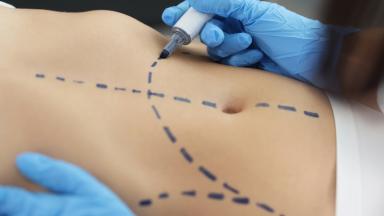
We mark the breasts and abdomen with you standing, check blood tests, fit compression stockings and review the clot plan.
Operation day timeline
Step
Timing
Note
Marking and checks
Morning
Final plan confirmed
Surgery
Four to six hours
Two teams where possible
Recovery room
Two hours
Pain relief, calf pumps
Ward
Two nights
Walking the same evening
Local anesthetic blocks in the abdominal wall and around the breasts reduce pain on waking. You wake in a surgical bra and an abdominal binder, often with small drains.
Recovery with young children
1
The first two weeks
Walking bent slightly forward, sleeping with the head and knees raised, and no lifting beyond a light bag. Drains come out within the first week.
Children and lifting
Toddlers who want to be carried pose the biggest challenge. Lifting a child strains both the muscle repair and the breast wounds, so another adult needs to do it for six weeks. Children can sit beside you or on your lap once you are seated.
Talking with older children before surgery about why you cannot carry them for a while helps everyone.
Recovery after a mommy makeover
Time
What happens
Activity
Days 1 to 3
Tightness, drains
Short walks, help with everything
Weeks 1 to 2
Drains out, posture straightens
Light tasks, no lifting
Weeks 3 to 4
Swelling lessens
Desk work, driving
Week 6
Wounds strong
Lifting children, gym gradually
Months 6 to 12
Scars fade
Final result
Help at home
Recovery goes better with a plan.
Meals prepared in advance, a partner, relative or helper who can take night feeds and school runs, and a comfortable place to rest on the ground floor make the first two weeks far easier, and mothers who try to carry on as normal swell more and heal more slowly.
Accept the help.
Results
Swelling in the abdomen and breasts settles over three to six months, and scars fade over a year. The waist, flat abdomen and breast shape remain as long as weight stays stable, while ageing continues gently in all tissues.
1
Revision
Small touch-ups, a scar revision or a little liposuction, are more common after combined surgery and are planned no earlier than a year later.
More than a body change
Many mothers describe the result in terms of clothes, exercise and comfort rather than looks.
A firm abdominal wall supports the back, a lifted breast fits a bra, and the overhang that trapped moisture under a caesarean scar is gone. Those practical gains matter as much as appearance.
Expectations need to stay realistic. Scars are permanent.
For patients from abroad
1
Length of stay
Plan for ten to fourteen days in Istanbul. Drains come out and wounds are checked before the flight home, and a longer stay lowers clot risk on a long flight.
What to send
Photographs of the breasts and abdomen from the front and sides, your height, weight and bra size, pregnancies and caesarean sections, earlier operations, recent breast imaging and your list of priorities. After you return home, follow-up continues by video at one, three, six and twelve months, and we send your local doctor the operative report.
One coordinator from the international patients office handles arrangements from the first message through discharge and answers the same WhatsApp number after you return. The office works in English, Arabic, French, Russian, Serbian, Romanian and Spanish and books interpreters for other languages, and it arranges the visa invitation letter, airport transfers, daily transport and accommodation near the hospital. Halal, vegetarian and diabetic meals, a prayer room on site, and a female physician on request wherever the rota allows.
2
A companion
Bring an adult companion for the stay. You will need help for the first days after discharge.
Cost
What a quote for a mommy makeover covers
Item
Included
Priced separately
Surgery
Surgeons, anesthesia, operating room for the agreed operations
Areas added later
Implants
When augmentation is planned
Premium implant lines
Hospital and aftercare
Two nights, blood thinners, binder, bra, stockings, video follow-up
Second stage if staged
The price depends on which operations are combined, implants and nights in hospital. We quote one package after reviewing your photographs.
Compare quotes for the same operations and aftercare, and ask whether blood clot prevention, the second stage of a staged plan and revisions are included.
References
Winocour J, Gupta V, Ramirez JR, Shack RB, Grotting JC, Higdon KK. Abdominoplasty. Risk factors, complication rates, and safety of combined procedures. Plast Reconstr Surg. 2015;136(5):597e-606e.
Pouramin P, Dow T, Williams J. Exploring complication rates. A comparative study of breast reduction and combined breast reduction with abdominoplasty. Aesthetic Plast Surg. 2024;48(22):4660-4666.
Matarasso A, Smith DM. Combined breast surgery and abdominoplasty. Strategies for success. Plast Reconstr Surg. 2015;135(5):849e-860e.
Taylor DA, Merten SL, Sandercoe GD, et al. Abdominoplasty improves low back pain and urinary incontinence. Plast Reconstr Surg. 2018;141(3):637-645.
Editor's note
Written by the Biruni Hospital medical editorial team. Reviewed by Assoc. Prof. Dr. Fatih CERAN, Plastic, Reconstructive and Aesthetic Surgery.