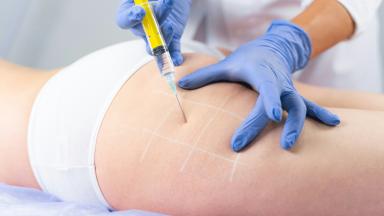
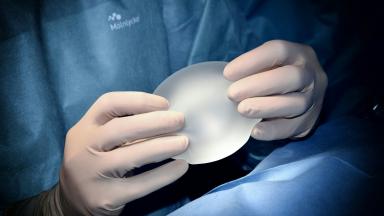
Abdominoplasty, or tummy tuck surgery, removes loose skin and fat from the lower abdomen, repairs muscles separated by pregnancy and creates a new navel opening, leaving a low scar inside the underwear line. After muscle repair, back pain and urinary leakage improved markedly in a multicenter study. At Biruni Hospital in Istanbul, our plastic surgery team plans full, mini or extended techniques, with a ten-day stay and video follow-up.
About This Department
Plastic Surgery
After pregnancy or major weight loss, exercise cannot remove loose skin or close separated muscles. A tummy tuck repairs both.
Abdominoplasty, the tummy tuck, removes the loose skin and fat of the lower abdomen, tightens the stretched abdominal muscles by stitching them back together in the midline, and gives the navel a new opening. The scar lies low, inside the underwear line. In a multicenter study of 214 women after childbirth, the back pain disability score fell from 21.6 to 3.2 percent six months after a tummy tuck with muscle repair, and urinary leakage scores fell from 6.5 to 1.6 (Taylor and colleagues, Plastic and Reconstructive Surgery, 2018). Abdominoplasty carries more risk than most cosmetic operations. Among 25,478 patients, 3.1 percent of those having a tummy tuck alone had a major complication, rising to 10.4 percent when it was combined with liposuction and other body contouring (Winocour and colleagues, 2015). This page explains the types of tummy tuck, muscle repair, who is suited, combined operations, seroma, risks, the operation day, recovery, the scar, and how patients from abroad arrange abdominoplasty at Biruni Hospital in Istanbul.
3.1
Percent major complication rate after a tummy tuck alone in 8,975 patients
3.2
Percent back pain disability score six months after surgery, down from 21.6 before
7.5
Percent seroma rate with preventive techniques, against 19.5 percent without
Free
Review of your photos and goals by our plastic surgery team
A tummy tuck removes skin, tightens muscle and reshapes the waist. Liposuction alone removes fat and leaves loose skin behind.
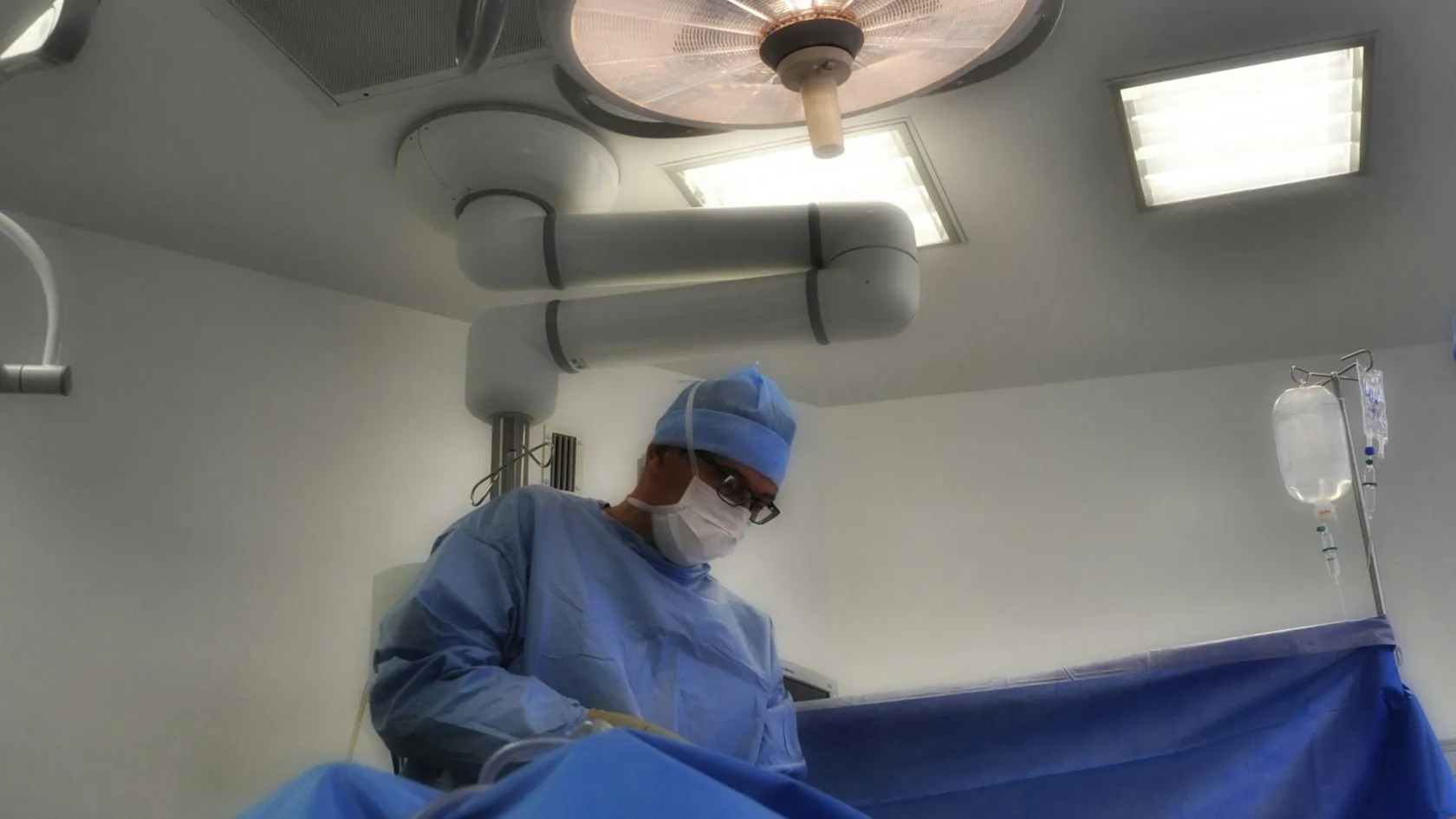
The surgeon makes a low incision from hip to hip, lifts the skin and fat of the abdomen off the muscle up to the ribs, stitches the separated muscles together, pulls the skin down and removes the excess below the navel. The navel stays attached to its stalk and comes out through a new opening in the tightened skin.
Stretch marks on the removed skin below the navel go with it. Those above it move lower and remain.
1
Liposuction as part of it
Most tummy tucks now include liposuction of the flanks and upper abdomen, called lipoabdominoplasty, which shapes the waist while protecting the blood supply of the skin.
Muscle repair and diastasis
Symptoms before and after abdominoplasty with muscle repair, 214 women
Measure
Before surgery
Six months after
Back pain disability score
21.6 percent
3.2 percent
Urinary incontinence score
6.5
1.6
Average muscle gap repaired
4.5 centimeters
Closed
Pregnancy stretches the two vertical abdominal muscles apart, a condition called diastasis recti. The gap lets the belly bulge even in slim women and weakens the core. Exercise strengthens the muscles but does not close a wide gap, and stitching the muscle sheaths together restores a firm wall (Taylor and colleagues, 2018).
Hernias
1
Repair in the same operation
Umbilical and small midline hernias, common after pregnancy, are repaired during the tummy tuck. Larger hernias may need a mesh and planning with a general surgeon.
Muscles as well as skin
Many women come for the skin and leave with a stronger core.
In the Australian study, nearly all participants had some back pain before surgery and most had some urinary leakage, and both improved within six weeks and stayed better at six months, regardless of the tummy tuck technique used, which suggests that restoring the muscle wall matters as much as removing skin for how the abdomen works day to day. Those results came from women after childbirth with an average muscle gap of four and a half centimeters, and they may differ in other groups.
The study had no control group. Its findings still point one way.
Types of tummy tuck
Choosing the operation
Tummy tuck variations
Type
What it treats
Scar
Full abdominoplasty
Loose skin above and below the navel, muscle gap
Hip to hip, around the navel
Mini abdominoplasty
Small skin excess below the navel only
Shorter low scar, navel unchanged
Extended abdominoplasty
Loose skin reaching the flanks
Wraps toward the back
Fleur-de-lis
Horizontal and vertical excess after major weight loss
Low scar plus vertical midline scar
Circumferential lower body lift
Skin excess all around the trunk
Around the whole waist
The mini tummy tuck suits far fewer people than its name suggests. Most women after pregnancy need a full abdominoplasty to treat skin above the navel and the muscle gap.
The choice depends on where the excess sits and how much of it there is. The hoped-for scar length plays a smaller part. We examine standing, sitting and lying down.
1
After major weight loss
Patients who have lost a large amount of weight after bariatric surgery often need extended or fleur-de-lis techniques, and sometimes staged operations for the thighs, arms and breasts.
Who is suited
Good candidates
Before a tummy tuck
Factor
Ideal
Why
Weight
Stable for six months, near goal
Weight change stretches the result
Body mass index
Under 30
Lower wound and clot risk
Smoking
Stopped four weeks before and after
Skin death and wound breakdown
Future pregnancy
Family complete
Pregnancy stretches the repair
Health
Diabetes and blood pressure controlled
Healing and anesthesia safety
1
Risk profile
In the large American database, male sex, age 55 or over, a body mass index of 30 or more and combined operations each raised the complication risk (Winocour and colleagues, 2015).
Timing after pregnancy
Wait at least six months after birth and after breastfeeding ends, so that the abdomen and breasts have settled.
Weight first
Contouring and slimming differ.
Fat inside the abdomen, around the organs, lies behind the muscle wall, and the repair cannot flatten a belly pushed out from within. Patients carrying that deep fat get a better and safer result after losing weight first, since tightening the muscles over a full abdomen raises pressure and the risk of complications, including blood clots. We will say so plainly at the consultation.
Many return once ready.
Combined operations
Complication rates by combination
Major complications within 30 days, 25,478 abdominoplasties
Operation
Complication rate
Note
Tummy tuck alone
3.1 percent
8,975 patients
With liposuction
3.8 percent
Most common combination
With breast surgery
4.3 percent
Mommy makeover
With liposuction and breast surgery
4.6 percent
Longer operation
With liposuction and other body contouring
10.4 percent
Highest risk
Hematoma accounted for 31.5 percent of complications, infection for 27.2 percent and blood clots in the legs or lungs for 20.2 percent. Operating time and the number of areas drive risk, so we keep combined sessions within limits and stage larger plans.
How we plan a combined session
Rule
Reason
Result
Limit total operating time
Clot and fluid risk
Staging when needed
Clot risk assessment
Blood thinners for higher-risk patients
Fewer clots
Overnight monitoring
Bleeding, pain, fluids
Early response
Preventing seroma
Seroma, a collection of clear fluid under the skin, remains the most common complication of abdominoplasty. It forms in the space where the skin was lifted off the muscle.
What reduces it
Seroma prevention in nine prospective studies, 664 patients
We leave a thin layer of tissue over the muscle below the navel, close the space with progressive tension sutures that stitch the skin flap down to the muscle, and use one or two drains when liposuction volume is large (Seretis and colleagues, Aesthetic Surgery Journal, 2017).
Risks
Expected effects
Tightness and a bent-forward posture for the first week while the repair heals.
Numbness of the lower abdomen, which improves over months but can remain partly.
Swelling above the scar for several months.
Complications after abdominoplasty
Complication
Frequency
Management
Seroma
One in five without prevention, less with it
Needle drainage
Hematoma
Leading major complication
Return to theater if large
Infection
Second most common
Antibiotics
Wound breakdown at the center of the scar
Higher in smokers
Dressings, sometimes revision
Blood clot in legs or lungs
One in five major complications
Prevention, blood thinners
Leg swelling, calf pain or sudden breathlessness after surgery need medical attention at once.
Pregnancy after a tummy tuck
Pregnancy after abdominoplasty is safe for mother and baby. It stretches the skin and can reopen the muscle gap, undoing part of the result.
Women planning more children usually wait. Those who do become pregnant can have a revision later.
Can a caesarean scar be removed with a tummy tuck?
In most women, yes. The caesarean scar lies within or just above the skin removed in a full abdominoplasty, and the new scar sits at a similar level or slightly lower. The overhang that often forms above a caesarean scar disappears with the excess skin.
The operation day
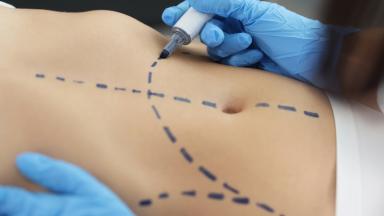
No food for six hours and clear water until two hours before. We mark the abdomen standing, fit compression stockings and give a blood thinner injection according to your clot risk.
Timeline
Operation day timeline
Step
Timing
Note
Marking
Morning, standing
Scar line within the underwear
Surgery
Two to four hours
General anesthesia
Recovery room
One to two hours
Pain relief, knees bent
Ward
One to two nights
Walking the same evening
1
Pain relief
Local anesthetic blocks in the abdominal wall, placed during surgery, reduce pain in the first day. Regular painkillers follow.
Recovery
Walk bent slightly forward for the first days, sleep with the head and knees raised, and wear the abdominal binder day and night for six weeks. Walking several times a day lowers the risk of clots.
Timeline
Recovery after abdominoplasty
Time
What happens
Activity
Days 1 to 3
Tightness, drains if used
Short walks, bent posture
Week 1
Drains out, posture straightens
Light tasks at home
Weeks 2 to 3
Swelling lessens
Desk work, driving when off strong painkillers
Week 6
Muscle repair strong
Gym, lifting, core work gradually
Months 6 to 12
Scar fades
Final result
Core exercises return gradually after six weeks, starting with gentle activation under guidance.
The scar and the navel
The scar runs low, from hip to hip, placed so that underwear and most swimwear cover it. Its length depends on the amount of skin removed. The navel receives a new, natural-looking opening with a small scar hidden in its rim.
1
Scar care
Silicone gel or tape for three to six months, sun protection and avoiding tension on the wound help the scar flatten and fade.
Patience with the scar
The scar looks its worst at three months.
It turns red and firm before it softens, and then fades slowly to a pale line over twelve to eighteen months, faster in fair skin and slower in darker skin.
Swelling above it takes months to settle. Judge the result at a year.
For patients from abroad
Plan for ten days in Istanbul. The drains come out within the first week, and a wound check follows before the flight home.
Blood clot risk stays raised for several weeks after abdominoplasty. On the flight, wear compression stockings, walk in the aisle, drink water and take the blood thinner if prescribed.
Send photographs from the front, sides and while bending forward, your height, weight and weight history, pregnancies and caesarean sections, earlier abdominal operations and medicines. After you return home, follow-up continues by video at one, three, six and twelve months, and a local doctor can check the wound.
1
Combined plans
A tummy tuck combined with breast surgery or extensive liposuction may add days to the stay.
One coordinator from the international patients office handles arrangements from the first message through discharge and answers the same WhatsApp number after you return. The office works in English, Arabic, French, Russian, Serbian, Romanian and Spanish and books interpreters for other languages, and it arranges the visa invitation letter, airport transfers, daily transport and accommodation near the hospital. Halal, vegetarian and diabetic meals, a prayer room on site, and a female physician on request wherever the rota allows.
Cost
The price depends on the type of tummy tuck, added liposuction or hernia repair, combined operations and nights in hospital.
Binder, compression stockings, scar silicone, video follow-up
Combined operations
We quote after reviewing your photographs, before you travel.
Compare quotes for the same technique, including whether muscle repair, liposuction of the flanks and the hospital nights are part of the price.
References
Winocour J, Gupta V, Ramirez JR, Shack RB, Grotting JC, Higdon KK. Abdominoplasty. Risk factors, complication rates, and safety of combined procedures. Plast Reconstr Surg. 2015;136(5):597e-606e.
Taylor DA, Merten SL, Sandercoe GD, et al. Abdominoplasty improves low back pain and urinary incontinence. Plast Reconstr Surg. 2018;141(3):637-645.
Seretis K, Goulis D, Demiri EC, Lykoudis EG. Prevention of seroma formation following abdominoplasty. A systematic review and meta-analysis. Aesthet Surg J. 2017;37(3):316-323.
Editor's note
Written by the Biruni Hospital medical editorial team. Reviewed by Assistant Professor Erman AK, Plastic, Reconstructive and Aesthetic Surgery.