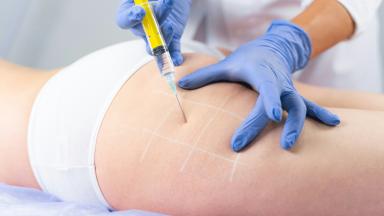
Less than many patients hope, and more than enough for a visible change.
Volume, body size and the local anesthetic
Rules that fix one limit for everyone, such as five liters, ignore body size. A study of 4,534 liposuction patients in the American Society of Plastic Surgeons registry found a complication rate of 1.5 percent overall, and a risk 4.6 times higher once the volume removed passed 100 milliliters for each point of body mass index. For a patient with a body mass index of 25 that threshold lies near 2,500 milliliters. At 30 it lies near 3,000. Surgeons split larger plans into two sessions.
The tumescent fluid carries lidocaine, a local anesthetic that is safe in large, dilute doses because it is absorbed slowly from fat. Measuring blood levels in volunteers, one study put the maximum safe dose at 45 milligrams per kilogram of body weight when liposuction removed part of the fluid, and 28 milligrams per kilogram without it. Over a large area the surgeon calculates the total dose before the first injection, and lowers it under general anesthesia.
Fluid balance matters as much as fat volume. Several liters of tumescent fluid go in, part is suctioned out and the rest is absorbed over the following day, while blood loss rises with the area treated. Over a whole trunk the anesthetist tracks every liter in and out, the patient stays overnight for monitoring, and a blood count the next morning confirms that the body has handled the shift. Patients with heart or kidney disease need a smaller plan or a staged one.
What about blood clots and other risks?
Clots are the risk to plan for.
- A risk score for clots before surgery, based on age, weight, medicines such as hormonal contraception, and personal or family history.
- Compression devices on the legs during the operation, and walking the same evening.
- Blood-thinning injections for several days in higher-risk patients.
- Plenty of fluid, a compression garment, and hourly walks on the flight home.
Scoring your risk
Plastic surgeons use the Caprini score to predict clots. Among 1,126 plastic surgery patients who received no blood thinners, 1.69 percent developed a clot, rising to one in nine among those with a score above 8. Half the clots in high-risk patients appeared between two weeks and two months after surgery, after most travelers are home. Other risks are those of liposuction in any area, contour irregularities, lasting numbness, fluid collections, infection and, rarely, damage to deeper structures. The Liposuction Surgery page on this site covers them in detail. For the traveler the practical lesson is simple. A long flight in the first weeks adds to a risk already raised by a long operation, so the score decides who receives injections, the injections continue at home when needed, and any calf pain, leg swelling, breathlessness or chest pain in the two months after surgery, wherever you are, means an emergency department the same day, with the operation note in hand, since early scanning and early treatment make these clots far less dangerous.
What are recovery and the results like?
Slower than after one area.
What patients report
Across the 360 patients of the prospective study, 85.8 percent reported better self-esteem and 69.6 percent a better quality of life after liposuction, a tummy tuck or both. Overall, 88.8 percent were satisfied. Liposuction alone meant a faster recovery. Pain was lower too.
- Wear the compression garment day and night for four weeks, then by day for two to four more.
- Sleep on the back with the upper body raised for the first week, since the back is also treated.
- Avoid saunas, baths and swimming until the small cuts have closed.
This table scrolls sideways on a narrow screen. Swipe or drag to see every column.
Recovery after 360 liposuction
| Time |
What to expect |
| Days one to three |
One night in hospital, walking the same evening, fluid seeping from the small cuts |
| Week one |
Bruising and swelling around the whole trunk, check before flying |
| Weeks two to three |
Desk work, light walks |
| Weeks four to six |
Gym and full exercise |
| Months three to six |
Final waistline as swelling settles |
1
First two weeks
Soreness around the whole trunk, worst when turning in bed, eased by tablets. Walking several times a day.
2
First two months
Firm, lumpy areas under the skin are normal and soften with time and gentle massage. Numbness fades gradually.
3
Six months
The waist settles into its final shape. A stable weight keeps it, and weight gained later tends to appear in untreated areas.
- Photographs from the front, both sides and back, following the guide we send.
- Height, weight, recent weight change and any plans for pregnancy.
- Any clot in you or your family.
- Medical history, medicines including hormonal contraception or hormone therapy, and previous surgery on the abdomen or back.
Days, cost and the trip
Allow extra days.
Plan seven to ten days in Istanbul, longer than for a single area. The first day covers the consultation, blood tests, clot risk scoring and markings. Surgery follows, then one night in hospital, and a check at the end of the first week before you fly, wearing the garment and walking every hour.
Cost depends on the number of zones, the operating time, the night in hospital and blood-thinning injections if you need them, and includes the garment and follow-up visits. A combined tummy tuck adds substantially. Your own figure follows the free review of your photographs.
Your coordinator arranges the airport pickup, a hotel close to the hospital for you and whoever travels with you, and the invitation letter for the visa, sent ten days ahead. Staff speak seven languages, and an interpreter joins any consultation in another one. The kitchen prepares halal, vegetarian or diabetic meals, the hospital has a prayer room, and a woman doctor is provided on request whenever the schedule permits. Back home, follow-up continues by message. Send the same WhatsApp number with photographs at one, three and six months, and the surgeon replies with advice on the garment, massage and training, and flags any area worth a closer look.
360 liposuction FAQ
What areas does 360 liposuction include?
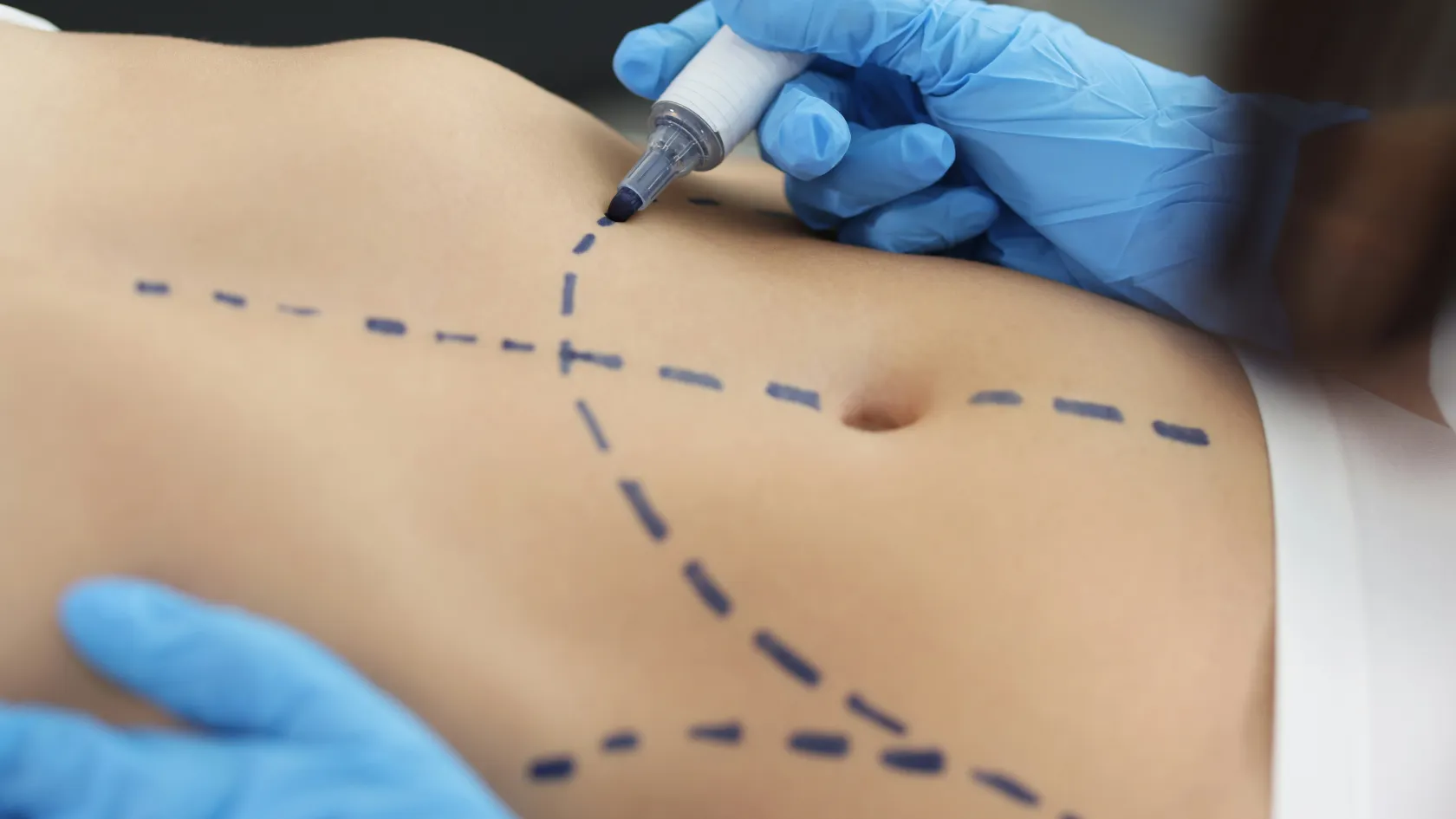
The upper and lower abdomen, the flanks and waist, the lower back and in many patients the upper back and bra line, treated in one session.
How much fat can be removed in one session?
It depends on body size. Complications rose once the volume passed 100 milliliters per point of body mass index, close to 2.5 liters for a body mass index of 25.
Can 360 liposuction be combined with a tummy tuck?
Yes. In a registry of 11,191 patients, adding trunk liposuction to a tummy tuck did not raise complications, 10.5 against 13.0 percent.
How long is recovery?
Desk work in two to three weeks, exercise in four to six, and the final shape at three to six months.
When can I fly home?
Seven to ten days after surgery, after a check, wearing the garment and walking every hour on the plane.
Can my family come with me?
Yes. The international patients office arranges a hotel for you and a companion.
References
- Chow I, Alghoul MS, Khavanin N, et al. Is There a Safe Lipoaspirate Volume? A Risk Assessment Model of Liposuction Volume as a Function of Body Mass Index. Plastic and Reconstructive Surgery. 2015;136(3):474-483.
- Klein JA, Jeske DR. Estimated Maximal Safe Dosages of Tumescent Lidocaine. Anesthesia and Analgesia. 2016;122(5):1350-1359.
- Vieira BL, Chow I, Sinno S, et al. Is There a Limit? A Risk Assessment Model of Liposuction and Lipoaspirate Volume on Complications in Abdominoplasty. Plastic and Reconstructive Surgery. 2018;141(4):892-901.
- Swanson E. Prospective outcome study of 360 patients treated with liposuction, lipoabdominoplasty, and abdominoplasty. Plastic and Reconstructive Surgery. 2012;129(4):965-978.
- Pannucci CJ, Bailey SH, Dreszer G, et al. Validation of the Caprini risk assessment model in plastic and reconstructive surgery patients. Journal of the American College of Surgeons. 2011;212(1):105-112.