
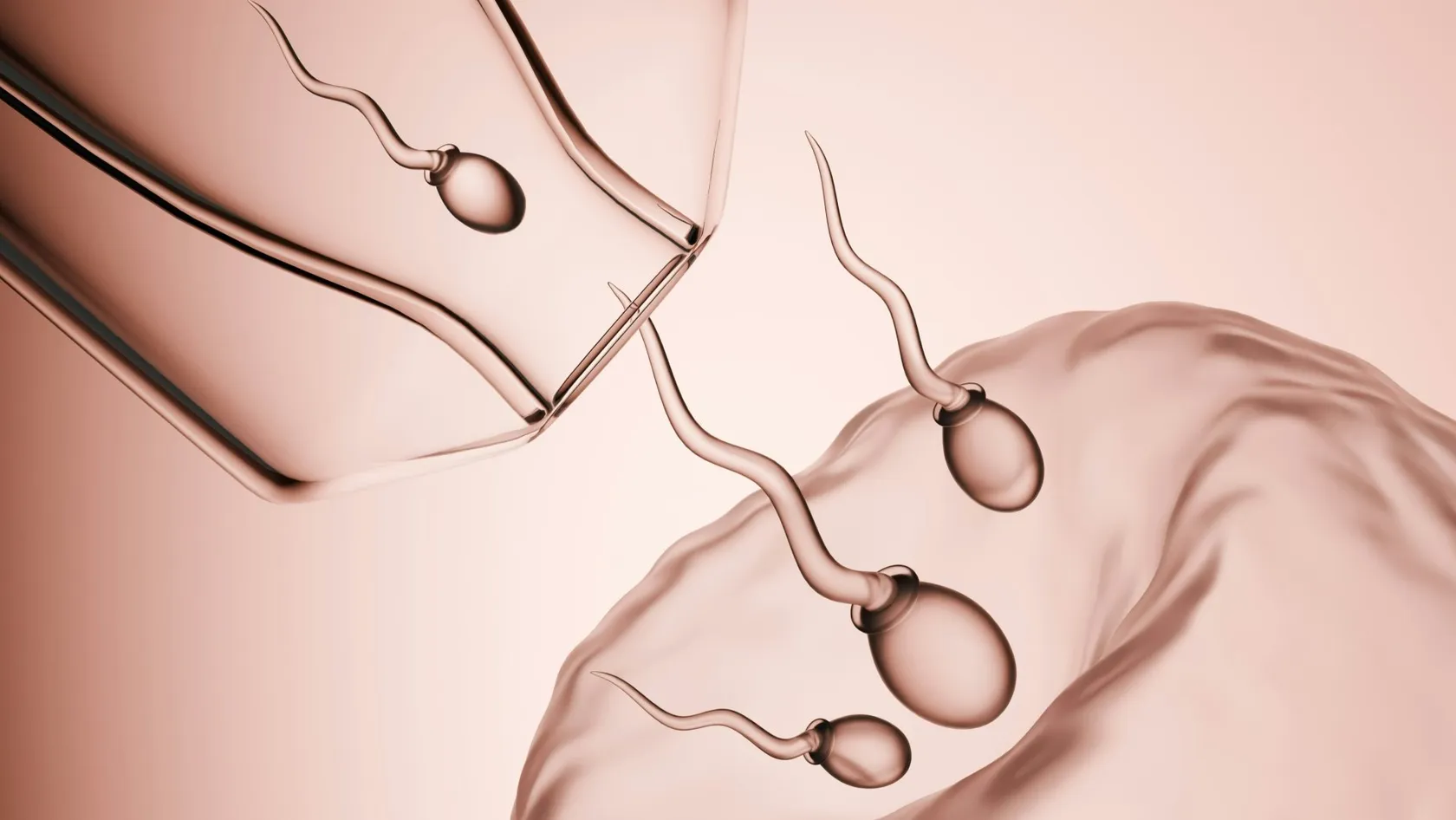
Microsurgical TESE - Testicular Sperm Extraction
Microsurgical TESE is a search for sperm inside testicles that have stopped producing them, and no blood test, scan or old biopsy reliably says in advance who has sperm to find. The only randomized trial of the operation retrieved sperm in 43 percent of men. This guide covers that trial, the pooled figures from nearly five thousand men, why the standard predictors barely beat a coin toss, reading an old biopsy report, the surgeon's learning curve, recovery, and Istanbul.
About This Department
No test can tell you whether sperm are in there. The operation is the test.
Hormone levels, testicular volume, an old biopsy report, a genetic panel. Every one of those gets quoted at men as though it settles the question, and when the numbers are checked against what surgeons actually find, none of them separates the men who have sperm from the men who do not. This page sets out what the evidence supports, and what it refuses to promise.
The operation is the test
Two semen samples with no sperm in them end one conversation and start another. The first conversation was whether anything could be done at all. The second runs harder, because the answer turns out to depend on something nobody can see from the outside, which is whether small pockets of sperm production survive somewhere inside testicles that have otherwise stopped working. Those pockets exist in roughly half of men in this situation. Finding out which half you belong to takes an operating microscope, a general anesthetic and a surgeon willing to spend two hours looking. That last sentence carries the whole of the matter, since microsurgical testicular sperm extraction diagnoses and treats in one sitting and no preliminary test reliably tells a man which way it will go. Clinics quote high success figures anyway. Some quote 60 percent, some 70, and those numbers come from selected series at single centers where the men being counted were chosen partly because they looked likely to succeed.
One randomized trial exists. It found 43 percent.
Not 70. Not 60.
Nothing on this page is written to talk anybody out of the operation, which remains the single best chance a man with this diagnosis has of a biological child and which succeeds often enough to be worth the risk and the money in most cases. The point of writing it plainly is different. Couples who go into this expecting a near certainty come out of a failed procedure devastated in a way that couples who understood the real odds do not, and the emotional cost of that gap is the reason the honest number belongs at the top of the page rather than buried near the bottom.
The words, before anything else
Men arrive at this subject carrying a folder of letters written in a language nobody translated for them. The terms below cover almost everything in that folder.
Narrow screens scroll this table sideways. Swipe or drag to reach every column.
| Method | What happens | Where it fits |
|---|---|---|
| TESA, needle aspiration | Tissue drawn through a needle, no incision, often under local anesthetic | Reasonable where production works and a blockage is the problem |
| Conventional TESE | One or more blind biopsies taken through a small opening, without magnification | Removes more tissue than micro TESE and searches less of the testicle |
| Microsurgical TESE | Testicle opened widely, tubules examined at 25 times magnification, only promising ones taken | The method with the highest retrieval in failed production, and the longest operation |
The one randomized trial
One hundred men, four centers, four years
Between June 2017 and April 2021, four centers in Denmark and Sweden randomized 100 men with failed sperm production to one of two operations. Forty nine had microsurgical extraction. Fifty one had testicular aspiration done properly, with multiple needle passes rather than one, which matters because a single pass is a weaker comparison and the trial was built to be fair. Sperm turned up in 21 of the 49 microsurgical cases, which comes to 43 percent, and in 11 of the 51 aspiration cases, which comes to 22 percent, a difference large enough to reach statistical significance in a trial of this size. Men whose aspiration failed then went straight on to a rescue microsurgical procedure in the same sitting, and that combined route reached 29 percent, well short of what microsurgery achieved when it went first.
Read that last figure twice. Starting with the cheaper, simpler operation and moving to microsurgery only after it failed produced a worse overall result than going to microsurgery directly. A needle passed through a testicle leaves bleeding and swelling behind, and the microscope then has to work through it.
The trial also counted harm, and here the result runs the other way. No man in the aspiration only group needed further surgery for a complication. Among the 89 men who had a microsurgical procedure at some point in the trial, five needed a return to theater, which is 6 percent. Reproductive hormones were measured at six months and showed no meaningful difference between the groups, which is a reassuring finding and a limited one, since six months is a short window for a testicle that has just been opened along its length.
What five thousand men add up to
Published in 2021, one review gathered every account of this operation it could find, 116 articles covering 4,895 men, and pooled what happened to them. Retrieval succeeded in 46.6 percent overall. The headline figure carries less information than the spread behind it though, because individual series reported anything from 18.4 percent to 70.8 percent, and those differences track the men who were operated on far more closely than they track the surgery. A unit that operates only on younger men with preserved testicular volume and a favorable biopsy will publish a high number and will have earned it honestly. That number then tells the next man almost nothing unless he resembles the men inside it. Comparing quoted success rates between clinics, without knowing who each clinic accepts, compares nothing at all, and the only question that gets anywhere near an answer is what a given unit achieved in men whose age, hormone profile and previous history resemble yours.
From sperm to a baby, which is a longer road
Finding sperm opens the first of several gates, and the numbers narrow at each one. Sperm taken from a testicle in this situation fertilized eggs in roughly 57 percent of attempts. Of couples who reached an embryo transfer, 39 percent achieved a clinical pregnancy and 24 percent a live birth. Multiply the chain through from the beginning and the realistic figure for a couple walking in on day one, with no other problems on the female side, lands somewhere close to one in five. Nobody enjoys writing that sentence and every couple deserves to have read it before they book anything.
Say that figure out loud. One in five.
One in five is an average across thousands of couples of every age and circumstance. A man of 31 whose partner is 29, with a testicular volume that has held up and a biopsy showing production continuing at a low level everywhere, sits far above that line. A man of 46 whose partner is 41, with complete Sertoli cell only histology, sits far below it. Averages describe populations and nobody is a population.
Why the predictors fail
Almost every man in this position has been handed an FSH result and a testicular volume and told what they mean. High FSH, small testicles, poor outlook. Low FSH, normal volume, better outlook. A meta analysis of 21 studies put that reasoning through the only test that counts, which is how well each measurement separates the men who turned out to have sperm from the men who did not.
Discrimination gets scored between 0.5 and 1.0, where 0.5 means the test performs exactly as well as tossing a coin and 1.0 means it is never wrong. FSH scored 0.61. Testicular volume scored 0.64. Neither of those is a test. Both are a coin with a slight lean.
The one finding that earns its place
Just one measurement in that analysis behaved differently. Where a previous biopsy showed hypospermatogenesis, meaning production carrying on everywhere at a reduced rate, the odds ratio for finding sperm came out at 16.49 with a specificity of 0.98. Read that in the direction it actually works. Hypospermatogenesis on a report is a strong positive sign, and the absence of it says almost nothing, because its sensitivity was only 0.30.
What this changes in a consultation
A clinic that quotes you a personal success percentage based on your FSH and your scan is quoting a number the evidence does not support. What an honest consultation delivers looks different and still repays the trip, because it can rule out the obstructive causes that need a completely different operation, find the treatable hormone problems, order the genetic tests that change the conversation entirely, and set an expectation matching the published range instead of the top of it.
Expect a range. Distrust a percentage.
Reading an old biopsy report
Many men come carrying a pathology report from a biopsy done years earlier, usually with one phrase in it that somebody translated for them badly. Maturation arrest causes the most harm of any of them, because it gets delivered as a verdict and amounts to nothing of the sort. A review of 211 men with that finding who went on to microsurgical extraction retrieved sperm in 52 percent of them, which is to say the same odds as everybody else. Within that group the wording of the report mattered enormously, and it is wording that men are rarely shown.
- Late arrest, where production stops at the early spermatid stage, gave sperm in 78 percent.
- Early arrest, at the primary spermatocyte stage, gave sperm in 40 percent.
- Arrest affecting every tubule examined gave 35 percent, against 57 percent where some tubules were spared.
- Higher FSH went along with successful retrieval in that analysis, which is the opposite of what most men are told.
So the useful instruction runs like this. Retrieve the original slides or the full pathology report and ignore the summary letter. Early or late, focal or diffuse, those two words change the estimate by a factor of two, and neither of them appears in the one line summary a man usually gets handed.
Undescended testicles, and one date
The age at the childhood operation still matters decades later
Researchers followed 162 men who had been born with undescended testicles and who later needed sperm retrieval, and what they found deserves the attention of anybody in that group and of any parent raising a small boy. The men whose retrieval succeeded had undergone their childhood corrective operation at a median age of seven. The men whose retrieval failed had undergone it at a median of eleven and a half. That gap held up after adjustment for everything else the researchers measured. Three other things separated success from failure. Retrieval succeeded in 62.8 percent of men where one testicle had been affected and in 31.6 percent where both had been. Position mattered as much, since retrieval succeeded in 66.7 percent where the testicle had sat just above the scrotum, in 44.8 percent where it had sat in the groin, and in 27.3 percent where it had remained inside the abdomen. Volume of the better testicle rounded out the list.
Nothing on that list can be changed now. All of it can be used, which is a different thing, because a man with a bilateral intra abdominal history deserves a franker conversation and a firmer plan for what happens if the operation finds nothing, while a man with a single suprascrotal testicle corrected at five has grounds for more optimism than the general figures suggest.
Named causes and what each means
Roughly half the men in this situation never receive a cause. The rest do, and the label changes both the plan and the conversation that has to happen with a genetic counselor before anybody books an operating list.
Columns run past the edge on a small screen. Slide the table across to read them.
| Finding | What it means for this operation |
|---|---|
| Klinefelter syndrome, an extra X chromosome | Retrieval succeeds in a substantial share of these men, and younger age favors it, so this diagnosis argues for acting sooner |
| Y chromosome microdeletion, AZFc region | Retrieval often succeeds, and any son conceived inherits the same deletion, which is a counseling matter and not a reason to stop |
| Y chromosome microdeletion, AZFa or AZFb region | Complete deletions here predict failure reliably enough that surgery is usually advised against |
| Previous chemotherapy | Retrieval remains possible years later, with the outlook depending heavily on which drugs were given and at what dose |
| Anabolic steroid use | Production may recover on its own after stopping, so this one deserves months of waiting and repeat testing before any operation |
This table also scrolls sideways on a narrow screen. Swipe or drag to reach every column.
| Situation | What to do first |
|---|---|
| Testosterone being taken in any form | Stop it and wait, since external testosterone shuts production down and recovery takes months |
| Low testosterone produced by the body itself | Treated with medicines that raise it without suppressing the testicle, given time to work |
| A large varicocele | Repair is debated and occasionally brings sperm back into the ejaculate, so it deserves a discussion |
| Untreated thyroid or prolactin abnormality | Corrected and rechecked, because these are the reversible causes people forget to look for |
The learning curve
One surgeon, 150 operations, three groups of fifty
One Japanese center published something most surgeons keep to themselves, namely its own founder's results split into thirds by chronology. The first fifty men gave sperm in 32 percent of cases. The middle fifty gave 44 percent. The last fifty gave 48 percent. Nothing separated the three groups clinically, meaning the men were comparable on age, hormones and testicular volume, and operating times fell as the numbers climbed.
Half again as many men left with sperm in the third fifty as in the first fifty, from the same hands doing the same operation on the same kind of patient. No gentler summary of that finding exists.
What it means for a couple choosing where to go is straightforward and slightly uncomfortable. Put the question directly to the surgeon, how many of these he has performed and how many the unit performs in a year, because the answer moves your odds more than any preoperative test on the list, and because a surgeon doing twelve a year sits on a different part of that curve from one doing eighty, with the curve apparently still rising well past the hundredth case.
The half that happens in the lab
A surgeon can carry the right tubules out of the testicle and the operation can still fail, because the search does not end at the operating table. Tissue goes to an embryologist who shreds it, spreads it, and hunts through it under high magnification for individual cells, sometimes for hours, sometimes finding four sperm in a field of debris. That search makes up the other half of the procedure and gets almost no attention in anything couples read beforehand.
- An embryologist experienced in this specific search finds sperm that a general laboratory will miss, so ask whether the same person does this work routinely.
- The theater and the laboratory should sit close together, since tissue handled well travels badly.
- Ask how long the laboratory will keep searching before it calls the result negative, and treat a short answer as a warning.
- Establish before the day what happens to sperm that are found, meaning whether they are frozen, used fresh, or both, and who decides.
Freezing deserves a sentence of its own. Sperm retrieved from a testicle survive freezing less reliably than ejaculated sperm, and some units prefer to synchronize the operation with the partner's egg collection so that everything is used fresh. That approach costs more coordination and avoids losing the sperm to the freezer, and it demands that the woman goes through stimulation before anybody knows whether there will be sperm to inject. Both plans hold up. The wrong version remains the one nobody explained.
Timing, and two clocks
Two clocks run in this situation and only one of them gets discussed. The man's clock runs slowly. Sperm production in a failing testicle declines over years rather than months, and the evidence that waiting makes retrieval harder is real but modest for most causes, with Klinefelter syndrome standing out as the exception where younger really does mean better.
The partner's clock runs faster and matters more.
Nobody says this out loud often enough.
Everything that follows a successful retrieval happens inside her body and on her timetable, and egg quality and number fall in a way that no procedure reverses. A couple where the woman is 32 has room to spend eight months on correcting hormones, on repeating tests, and on waiting to see whether stopping a drug brings production back on its own. A couple where she is 40 does not have those eight months to spend, and the calculation shifts toward acting while the eggs are what they are. Nobody enjoys putting it that way and leaving it unsaid serves nobody either. The same arithmetic argues against the drifting pattern that so many couples fall into, where a year passes between the first abnormal semen sample and the first proper andrology consultation, another year goes by in general fertility clinics treating the woman for a problem she does not have, and the operation finally happens when she is four years older than she was at the first appointment. The retrieval odds barely moved across those four years. Everything downstream of the retrieval moved a great deal.
The months beforehand
Here are the items to settle before an operating date gets booked. None of it is complicated and most of it gets skipped.
- Two separate semen samples, each centrifuged and examined properly, since a small number of men found to have no sperm on a first look turn out to have a few on a careful second one, and a few is enough.
- A karyotype and a Y chromosome microdeletion panel, both reported before anybody commits to a date.
- Morning testosterone, FSH, LH, prolactin and thyroid function, with anything abnormal treated and rechecked.
- A complete list of everything you take, prescribed or otherwise, with testosterone and anabolic steroids named openly, because concealing this wastes the operation and the surgeon has heard it before.
- The original pathology report from any previous biopsy, along with the slides themselves if the laboratory that produced them still holds anything.
The day itself
What the surgeon is looking for
Under general anesthetic the testicle is delivered through a small scrotal incision and opened along its length. The microscope goes to around 25 times magnification, and at that power the seminiferous tubules become individually visible, which is the entire reason the operation exists. Tubules that carry sperm production look fuller and more opaque than the thin, collapsed tubules around them. The surgeon works systematically across the whole cut surface, takes only the tubules that look promising, and hands each sample across as it comes. Two hours counts as ordinary. Four happens often enough when nothing obvious appears early, and stopping at ninety minutes because the list has overrun is how retrievals get missed. Compared with a blind biopsy this takes far more tissue out of the picture and far less out of the testicle, which sounds contradictory until you see it. A blind biopsy removes a block of tissue and hopes. Microsurgery removes a fraction of that volume, taken from the places most likely to hold something, with the blood supply kept in view throughout. Hence the steady hormone results at six months in the randomized trial.
Both testicles get searched where the first one yields nothing. Men should know that in advance, because waking up with two sore testicles when you were expecting one is a poor moment to be told.
Ask beforehand. Every unit answers this differently.
Recovery and testosterone
Two weeks of soreness, and a longer question
Men go home the same day or the following morning. The scrotum swells and bruises for a week or two, supportive underwear helps more than anything else, and simple painkillers cover it. Desk work resumes at around a week and exercise at three to four. Around 3 percent of men in the pooled literature had a complication needing attention, mostly bleeding into the scrotum, and the randomized trial found 6 percent needing a return to theater, which is the higher and more honest figure because that trial counted prospectively. Testosterone raises the longer question and gets asked too rarely. Opening a testicle and removing tissue can lower testosterone production, and while levels in the randomized trial had recovered by six months, a man who was already borderline before surgery can end up needing treatment afterward. Have a testosterone level measured before the operation and again at six and twelve months. If it falls and stays down, that is treatable, and it is far easier to treat when somebody thought to measure the starting point.
If nothing is found
More than half of men leave this operation without sperm, and almost nothing written about the procedure prepares anybody for that room. The surgeon says it, the embryologist confirms it, and the couple goes back to a hotel. What follows carries a grief with no ceremony attached to it and no obvious place to put it, and it hits men who had been managing the whole process at arm's length particularly hard.
Support that is worth arranging in advance
Counseling booked before the operation, for both partners, gets used by couples who would never have arranged it afterward. Fertility counselors who work with male factor infertility are used to men who arrive saying they are fine. Book the appointment at the same time as the surgery and cancel it if the news turns out good, which is a far easier order of events than trying to find a counselor who works with male factor infertility during the week after a failed retrieval, when neither of you is in any state to be making telephone calls.
Having this done in Istanbul
What to send before any date is discussed
Send both semen analysis reports in full, your hormone results with the reference ranges printed beside them, your karyotype and Y chromosome results if they have been done, the pathology report from any previous biopsy, and the operative note from any previous retrieval attempt. Write down your partner's age and whether she has been assessed. An andrologist reads all of it and replies in writing, at no charge and with no obligation, and where the reply says that a genetic result makes surgery pointless, it says that instead of offering you a date.
Language, the ward, and the week
We work in seven languages without booking an interpreter, those being English, Arabic, French, Russian, Serbian, Romanian and Spanish, and any other language gets one arranged in advance. A single coordinator takes your first message and stays with the two of you through to discharge, then answers on WhatsApp once you are back home, which matters on this operation because the questions that arrive in week three are usually about hormone results. Your partner sleeps in the room on a bed the ward provides. Hotel nights on either side of the admission, the airport transfers and each trip between hotel and clinic are booked before you land, and the invitation letter for a visa application leaves our office roughly ten days ahead of the flight. Meals come halal, vegetarian or adjusted for diabetes, and a prayer room sits on the ward floor. Couples traveling for this operation should tell us at the first message whether the partner will be present on the day, because the conversation that follows a negative result goes very differently when she is in the building.
Plan four to six nights for the retrieval alone. That covers the consultation and blood tests, the operation, one night on the ward, and a wound check before you travel. Fitness to fly is signed in writing at around day three to five by a doctor who has examined you that morning. Where the plan involves synchronizing with your partner's egg collection, the stay is longer and gets built around her cycle rather than around our theater list, and we will say so plainly at the planning stage instead of after you have booked flights. Once you are home, have the hormone checks at six and twelve months done locally and send them to us, and we will write back with an opinion.
What moves the cost
We publish no figures here. The cost turns on whether one testicle or both are searched, how long the laboratory search runs, whether freezing is used and for how long it is paid for, whether the cycle is synchronized with egg collection, and what genetic testing still needs doing. None of that is knowable before an andrologist has read your reports, and a price quoted before then has been chosen to win an inquiry.
Microsurgical TESE FAQ
How many sperm does the operation need to find
Very few. Injection uses one sperm per egg, so a handful of live cells can be enough for a cycle. Hence the weight an unhurried laboratory search carries, and hence the question a result reported after twenty minutes of looking deserves.
Is a high FSH a reason not to bother
No. FSH discriminates barely better than a coin toss in the pooled data, and in the study of men with maturation arrest a higher FSH went along with successful retrieval rather than against it. Nobody should be refused an operation on an FSH figure alone.
Will a child conceived this way be healthy
Follow up so far reads as reassuring and the total body of evidence remains limited, and both halves of that sentence matter. Where a Y chromosome deletion caused the infertility, any son will inherit it and face the same problem in adulthood, and that is the specific issue genetic counseling exists to cover.
Should I have a diagnostic biopsy first
Generally no. A biopsy samples a small area, cannot rule out sperm elsewhere, and leaves scarring that makes the real operation harder. The randomized trial showed that going to microsurgery first beats working up to it.
Can hormone treatment improve my chances first
Where testosterone runs low, raising it with medicines that leave the testicle unsuppressed counts as standard practice before surgery, though the evidence that this lifts retrieval rates stays thin. Where testosterone sits in the normal range, treatment has nothing to correct and should not be started.
Does it hurt as much as it sounds
Less than men expect. Simple painkillers cover it and the swelling looks worse than it feels.
What if we cannot afford to synchronize with an egg collection
Then the sperm get frozen, which is what most units do and what most couples choose. Survival after thawing is less reliable for testicular sperm than for ejaculated sperm, so ask how many separate straws will be stored, since spreading the material across several gives a second chance if the first thaw disappoints.
References
- Jensen CFS, Ohl DA, Fode M, et al. Microdissection testicular sperm extraction versus multiple needle-pass percutaneous testicular sperm aspiration in men with nonobstructive azoospermia, a randomized clinical trial. European Urology. 2022;82(4):377-384.
- Achermann APP, Pereira TA, Esteves SC. Microdissection testicular sperm extraction in men with infertility due to nonobstructive azoospermia, summary of current literature. International Urology and Nephrology. 2021;53(11):2193-2210.
- Li H, Chen LP, Yang J, et al. Predictive value of FSH, testicular volume, and histopathological findings for the sperm retrieval rate of microdissection TESE in nonobstructive azoospermia, a meta-analysis. Asian Journal of Andrology. 2018;20(1):30-36.
- Bernie AM, Shah K, Halpern JA, et al. Outcomes of microdissection testicular sperm extraction in men with nonobstructive azoospermia due to maturation arrest. Fertility and Sterility. 2015;104(3):569-573.
- Ishikawa T, Nose R, Yamaguchi K, et al. Learning curves of microdissection testicular sperm extraction for nonobstructive azoospermia. Fertility and Sterility. 2010;94(3):1008-1011.
- Chen XL, Wei YA, Ren XH, et al. Predictive factors for successful sperm retrieval by microdissection testicular sperm extraction in men with nonobstructive azoospermia and a history of cryptorchidism. Asian Journal of Andrology. 2022;24(5):503-508.
Editor's note
Written by the Biruni Hospital medical editorial team. Reviewed by Gökhan Yazıcı, Urology.
Medically reviewed by
Gökhan Yazıcı
Urology
Related Treatments
View All
Bladder Cancer Surgery
Bladder cancer is treated by two operations that share almost nothing. One scrapes tumor off the inside wall through the urethra in twenty minutes. The other removes the bladder and rebuilds the route urine takes out of the body. The short one is treated everywhere as a minor procedure, and how well it is done decides the staging, the recurrence rate and whether the long one ever becomes necessary.
Fusion Biopsy Prostate - MRI-Guided Prostate Biopsy
Software builds a model of your prostate from the MRI and another from the live ultrasound, then deforms one onto the other so the lesion lands somewhere the needle can reach. Every step of that carries a few millimeters of error. This page covers where the error comes from, what the trials comparing the three targeting methods found, who draws the outline the needle aims at, and why good units still take cores from the rest of the gland.

Inflatable Penile Prosthesis
An inflatable penile prosthesis has three parts, and only one of them gets discussed. The reservoir sits inside the abdomen, decides where the operation gets difficult, and causes most of the reoperations men end up needing. This guide covers the hydraulics, the move from the space of Retzius to high submuscular placement, the evidence on palpability and auto inflation, the link between blood sugar control and infection, recovery week by week, and what the operation means in Istanbul.
Kidney Cancer Surgery - Renal Cancer Surgery
Kidney cancer surgery means two different operations, and the choice between them is made from a scan before anyone knows what the tumor is. The only randomized comparison found that sparing the kidney protected kidney function and did not extend life. This page works through that result, the clamp and the clock, biopsy before surgery, surveillance, and what changed when the disease has already spread.
Kidney Stone Surgery
Three measurements on a CT decide which kidney stone procedure suits you, and none of them is a brand name. The stone free rate a clinic advertises is a different kind of number, because it depends on how hard that clinic looked afterward. This page covers shockwaves, ureteroscopy and percutaneous surgery, what the randomized trials found, and why half of stone formers come back.