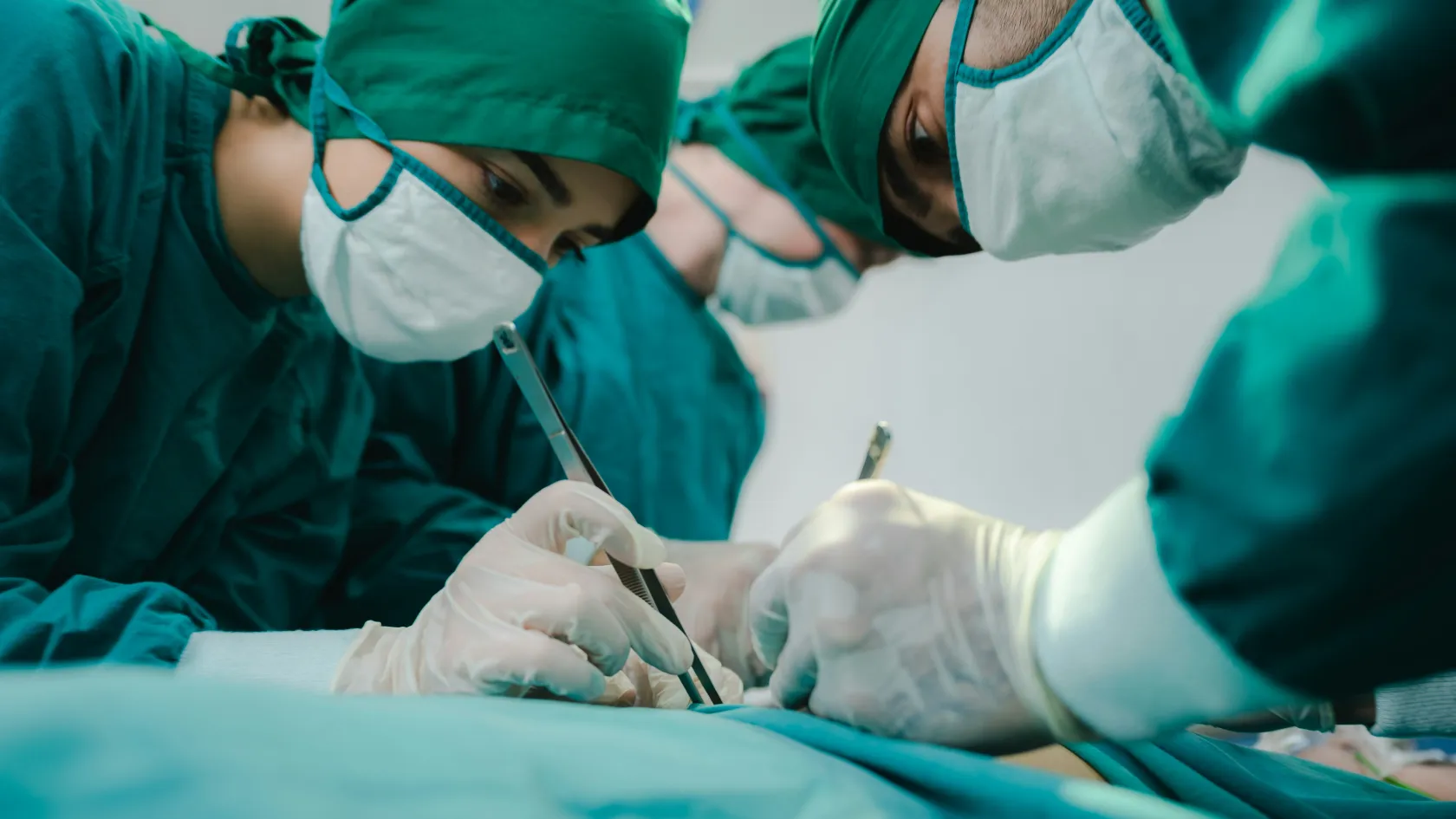
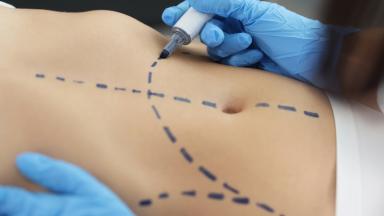
Microsurgery joins blood vessels, nerves and lymphatic channels of one to three millimeters under an operating microscope. It makes possible free flap reconstruction after cancer or injury, breast reconstruction with your own tissue, finger replantation, nerve repair and lymphedema surgery. At Biruni Hospital in Istanbul, our microsurgery team plans reconstructive operations with hourly flap monitoring after surgery and video follow-up once you return home.
About This Department
Plastic Surgery
Some vessels are no wider than a millimeter, and some nerves thinner still. Microsurgery joins them under magnification to save tissue, function and limbs.
Microsurgery uses an operating microscope, fine instruments and stitches thinner than a hair to join blood vessels, nerves and lymphatic channels of one to three millimeters or less. Magnification makes the difference. It makes possible free flap reconstruction after cancer or trauma, breast reconstruction with the patient's own tissue, reattachment of amputated fingers, nerve repair and surgery for lymphedema. In a systematic review of 2,273 fingertip replantations, 86 percent of reattached parts survived and 98 percent of patients returned to work (Sebastin and Chung, Plastic and Reconstructive Surgery, 2011). In 1,612 breast reconstructions with thigh tissue, the flap succeeded in 99.6 percent (Zhu and Liu, Aesthetic Plastic Surgery, 2025). This page explains what microsurgery treats, free flaps, breast reconstruction, replantation, nerve repair, lymphedema surgery, limb salvage, risks and flap monitoring, the hospital stay, and how patients from abroad arrange planned microsurgery at Biruni Hospital in Istanbul.
86
Percent of replanted fingertips that survived across 2,273 replantations
98
Percent of patients back at work after fingertip replantation
99.6
Percent success of thigh-based free flaps for breast reconstruction in 1,612 cases
Free
Review of your records and photos by our microsurgery team
Microsurgery is a technique more than a specialty. Plastic, hand, head and neck, orthopedic and other surgeons trained in it use magnification of ten to twenty-five times to repair structures the eye cannot see well.
A typical free flap artery measures one to three millimeters. Lymphatic channels may measure less than one.
1
Tools
An operating microscope or high-power loupes, needles curved like a fishhook and finer than an eyelash, and stitches of 9-0 to 12-0 size, about 20 to 40 thousandths of a millimeter thick.
Each vessel join, an anastomosis, takes a skilled surgeon fifteen to thirty minutes. Mechanical couplers speed up vein joins in many cases.
The precision of the join decides whether the tissue lives.
Small vessels, large consequences
A clot the size of a grain of rice can kill a flap.
Tissue moved on its vessels depends entirely on a single artery and one or two veins joined under the microscope, so a twist, a kink, pressure from a hematoma, low blood pressure or a clot in the first days can cut off the blood supply, and the flap then has only hours before it dies, and microsurgical teams therefore check flaps around the clock and keep an operating room ready to re-explore a threatened join. Smoking, cold, dehydration, tight dressings and even a lying position that presses on the pedicle all raise the risk in those first days, so nurses, anesthetists and surgeons share a written plan for warmth, fluids, blood pressure and positioning, and patients and families learn what each check means and why the night-time checks matter just as much as those during the day. Families ask why a nurse wakes the patient every hour. A clot found early can be removed and the flap saved, while one found the next morning may be too late.
Most flaps survive. Vigilance keeps it that way.
What it treats
Main uses of microsurgery
Area
Operation
Purpose
Cancer reconstruction
Free flaps for head and neck, breast, limbs
Restore form and function
Breast reconstruction
DIEP, PAP and other perforator flaps
Natural breast from own tissue
Hand and finger injuries
Replantation, revascularization
Save amputated parts
Nerve injury
Nerve repair, grafts, transfers
Restore movement and feeling
Lymphedema
Lymphovenous anastomosis, lymph node transfer
Reduce swelling
Limb trauma and bone infection
Free flaps, vascularized bone
Save the limb
Facial paralysis
Nerve transfer, free muscle transfer
Restore smile
Our head and neck cancer reconstruction page covers rebuilding of the mouth, jaw and throat in detail, and our lymphedema rehabilitation page covers the nonsurgical treatment that comes before and after lymphatic surgery, so this page gives the overview and the areas those pages do not cover.
1
Planned or emergency
Most microsurgery is planned, as part of cancer treatment or reconstruction. Replantation and severe limb injuries are emergencies that must be treated within hours.
Free flaps
Types of free flap
Type
Tissue
Example
Skin and fat, fasciocutaneous
Thin cover
Radial forearm, anterolateral thigh
Perforator flap
Skin and fat on a small vessel through muscle
DIEP, PAP, anterolateral thigh
Muscle flap
Bulk, fills cavities
Latissimus dorsi, gracilis
Bone flap
Living bone
Fibula, scapula, iliac crest
Bowel
Lining tube
Jejunum for the throat
Perforator flaps spare the donor muscle.
A free flap is cut away from its home with its artery and vein, moved to the defect and connected to local vessels. A meta-analysis found 3.8 percent total flap failure. That rate matches large centers worldwide (de Berker and colleagues, Journal of Plastic, Reconstructive and Aesthetic Surgery, 2022).
Breast reconstruction with your own tissue
After mastectomy, a breast can be rebuilt from the patient's own tissue instead of an implant. The result feels warm and soft, ages with the body and does not need replacing.
Donor sites
Autologous breast reconstruction flaps
Flap
Donor site
Suited to
DIEP, deep inferior epigastric perforator
Lower abdomen
Women with spare abdominal tissue
PAP, profunda artery perforator
Upper inner thigh
Slimmer women, earlier abdominal surgery
Latissimus dorsi
Back
Smaller breasts, sometimes with an implant
1
Thigh flaps
A meta-analysis of 1,612 PAP flap reconstructions found 99.6 percent success, 0.4 percent total flap loss and 3.3 percent fat necrosis in the breast, with donor site wound separation in 9.2 percent (Zhu and Liu, 2025).
Reconstructing both breasts with DIEP flaps carried a modestly higher risk of total flap loss than one breast, odds ratio 1.48, in a meta-analysis of 5,120 patients, yet remains a recommended option (Tekdogan and colleagues, 2024).
Outcomes after PAP flap breast reconstruction
Outcome
Rate
Note
Flap success
99.6 percent
1,612 flaps
Fat necrosis in the breast
3.3 percent
Firm lumps, often observed
Donor site wound separation
9.2 percent
Heals with dressings
Replantation
Replantation reattaches an amputated finger, hand or other part by joining bone, tendons, arteries, veins and nerves. Clean cuts do better than crush or avulsion injuries.
Distal finger replantation, 2,273 cases
Outcome
Result
Note
Survival of the replanted part
86 percent
Similar in zones I and II
Two-point discrimination, feeling
7 millimeters on average
Useful sensation
Return to work
98 percent
Of those reported
Nail deformity
23 percent
Cosmetic
Pulp atrophy
14 percent
Thinner fingertip
Repairing a vein as well as the artery improved survival in both zones of fingertip amputation (Sebastin and Chung, 2011).
Thumbs, several fingers, hand amputations and amputations in children have the strongest case for replantation. Single fingers cut at the base in adults sometimes do better with a well-shaped stump.
Timing
A cooled finger may still be reattached up to 12 hours after injury, sometimes longer, while a hand or arm with muscle needs surgery within six hours.
The first hours after an amputation
What happens before the hospital matters.
Rinse the amputated part gently with clean water or saline, wrap it in moist gauze, put it in a sealed plastic bag and place the bag on ice water, never directly on ice, which freezes and destroys tissue. Press on the wound to stop bleeding, raise the hand, and go to the nearest emergency department with a hand surgery service.
Speed saves fingers.
Nerve repair
Cut nerves are repaired end to end under the microscope. When a gap exists, a nerve graft from the leg or a conduit bridges it, and when the injury lies too close to the spine, a working nerve nearby can be redirected to the paralyzed muscle, a nerve transfer.
1
Brachial plexus and facial paralysis
Injuries to the nerves of the arm from motorcycle accidents and long-standing facial paralysis may need nerve transfers or free muscle transfers to restore movement, timed carefully because muscles stop responding after about a year without nerve supply.
The earlier a nerve is repaired, the better the result. Delayed referral costs function.
Patience with nerves
Nerves regrow slowly, a millimeter a day.
A nerve repaired at the elbow may need many months to reach the hand, and feeling and strength keep improving for two years or more with hand therapy.
Recovery takes time. Therapy fills it.
Risks
Swelling and bruising at the operated area and the donor site.
Long operations under general anesthesia, from three to ten hours or more.
Scars at the donor site.
Microsurgery-specific complications
Complications and their management
Complication
What happens
Management
Arterial or venous clot
Flap turns pale or congested
Return to theater within hours
Total flap loss
Flap cannot be saved
Second flap or other reconstruction
Hematoma
Blood collects around the vessels
Drainage, vessel check
Donor site problems
Wound separation, seroma, weakness
Dressings, physiotherapy
Failed replantation
Part does not survive
Shortening and closure
A meta-analysis of 1,196 microsurgical patients found that routine aspirin after surgery did not reduce clots or flap loss but raised hematoma rates (Azam and colleagues, Microsurgery, 2025). Blood thinning is tailored to each patient.
Lymphedema surgery
Lymphovenous anastomosis connects blocked lymphatic channels to tiny veins, letting trapped fluid drain into the circulation through incisions of a few centimeters.
Can microsurgery cure lymphedema?
It can reduce it. A systematic review of 18 studies and 939 patients found that every study reported a reduction in limb circumference after lymphovenous anastomosis, symptom relief in 50 to 100 percent of patients and fewer episodes of cellulitis, although techniques varied widely (Scaglioni and colleagues, Microsurgery, 2017). Early lymphedema, before the tissue hardens, responds best, and compression therapy usually continues afterward.
Advanced lymphedema with fat and fibrous tissue may need lymph node transfer or liposuction in addition.
Before surgery
Indocyanine green lymphography maps the working lymphatic channels under the skin, guiding where the joins are made. Patients follow decongestive therapy before and after surgery.
Limb salvage
Open fractures with exposed bone, chronic bone infection, crush injuries and tumor removal from the arms and legs leave wounds that grafts cannot close. Free flaps bring living tissue and blood supply to save the limb.
1
Living bone
Vascularized fibula or iliac crest bone bridges long bone gaps in the arm or leg after tumor or infection, healing faster than ordinary bone grafts.
Limb salvage indications
Situation
Microsurgical option
Goal
Open tibia fracture with exposed bone
Muscle or skin free flap
Cover and fight infection
Chronic osteomyelitis
Flap after debridement
Healthy blood supply
Bone tumor resection
Vascularized fibula
Bridge the gap
Diabetic foot defects, selected cases
Small free flaps
Avoid amputation
Orthopedic and plastic surgeons operate together, often in the first days after injury.
Monitoring and the hospital stay
After free flap surgery, nurses check the flap's color, warmth, capillary refill and Doppler signal every hour for the first two to three days, then less often.
Typical hospital course
Operation
Hospital stay
Note
Free flap reconstruction
Five to ten days
Longer after head and neck surgery
Breast reconstruction with own tissue
Four to six days
Walking from day one or two
Lymphovenous anastomosis
One to two days
Compression restarted
Finger replantation
Five to seven days
Warm room, no smoking or caffeine
Patients keep warm, drink well and avoid nicotine and caffeine, which tighten small vessels.
A sudden change in flap color, swelling or temperature needs a call to the team at once.
Recovery
Recovery depends on the operation. Breast reconstruction patients return to light activity in two to three weeks and full exercise in six to eight. Hand and nerve surgery needs months of therapy.
1
Hand therapy and physiotherapy
Splints, guided exercises and scar care start early and continue for months, and they make as much difference to the final function as the operation itself.
For patients from abroad
Emergency replantation must happen near the injury within hours, so patients from abroad come to us for planned microsurgery and for secondary reconstruction after earlier treatment elsewhere.
Planned operations need one to three weeks in Istanbul. Fitness to fly is confirmed at the last wound check. Send your medical reports, imaging, photographs of the area and a summary of earlier surgery. After you return home, follow-up continues by video, and we coordinate therapy with your local team.
1
Your coordinator
One coordinator from the international patients office handles arrangements from the first message through discharge and answers the same WhatsApp number after you return. The office works in English, Arabic, French, Russian, Serbian, Romanian and Spanish and books interpreters for other languages, and it arranges the visa invitation letter, airport transfers, daily transport and accommodation near the hospital. Halal, vegetarian and diabetic meals, a prayer room on site, and a female physician on request wherever the rota allows.
Cost
What a quote for microsurgery covers
Item
Included
Priced separately
Surgery
Surgical teams, anesthesia, microscope time
Second operations
Hospital
Flap monitoring, ward or intensive care stay
Extra nights
Aftercare
Dressings, garments, first therapy sessions
Long-term hand therapy
The price depends on the operation, its length, the number of teams and the hospital stay.
We quote after reviewing your records, before you travel. Compare quotes for the same procedure and ask about flap monitoring and the plan if a return to theater is needed.
Elements that change the price
Element
Effect
Note
Bilateral breast reconstruction
Higher
Two flaps
Bone flap with planning
Higher
Guides and plates
Lymph node transfer added
Higher
Longer operation
References
Sebastin SJ, Chung KC. A systematic review of the outcomes of replantation of distal digital amputation. Plast Reconstr Surg. 2011;128(3):723-737.
Zhu L, Liu C. Clinical outcomes following profunda artery perforator flap breast reconstruction. A systematic review and meta-analysis. Aesthetic Plast Surg. 2025;49(5):1349-1368.
Tekdogan B, Martineau J, Kalbermatten DF, Oranges CM. Unilateral versus bilateral deep inferior epigastric perforator flap breast reconstruction. A systematic review and meta-analysis. Plast Reconstr Surg Glob Open. 2024;12(12):e6359.
Scaglioni MF, Fontein DBY, Arvanitakis M, Giovanoli P. Systematic review of lymphovenous anastomosis (LVA) for the treatment of lymphedema. Microsurgery. 2017;37(8):947-953.
Azam F, Awaida C, Dogaroiu A, Odobescu A. Current practices and evidence of aspirin usage in microvascular surgery. A systematic review and meta-analysis. Microsurgery. 2025;45(1):e70029.
de Berker HT, Čebron U, Bradley D, et al. Outcomes of microsurgical free tissue transfer performed on international surgical collaborations in low-income and middle-income countries. A systematic review and meta-analysis. J Plast Reconstr Aesthet Surg. 2022;75(7):2049-2063.
Editor's note
Written by the Biruni Hospital medical editorial team. Reviewed by Assistant Professor Erman AK, Plastic, Reconstructive and Aesthetic Surgery.