
Melanoma Surgery
Melanoma surgery removes the tumor with a margin of normal skin set by its thickness, and for thicker melanomas checks the nearest lymph node. This guide explains the biopsy report, margins, sentinel node biopsy, what a positive node means today, recovery, and how many days to plan in Istanbul.
About This Department
One number on your biopsy report decides the operation. The depth of the melanoma, measured in millimeters.
Melanoma surgery removes the tumor with a margin of normal skin, and for thicker melanomas it also checks the nearest lymph node. Trials have settled how wide to cut and when to leave the nodes alone.
Anyone reading this has probably just received a biopsy report with the word melanoma on it, along with a thickness in millimeters, perhaps the word ulceration, and a referral for a wider excision. This guide explains what that operation removes, why the margin depends on the thickness, what a sentinel lymph node biopsy is and who needs one, what happens when a node contains melanoma, how recovery goes, and how many days to plan in Istanbul.
Reading the biopsy report
Breslow thickness comes first.
That figure measures in millimeters how deep the melanoma reaches from the top of the skin, and it predicts behavior better than anything else on the page. A melanoma in situ sits only in the top layer of skin and cannot spread. Under 1 mm, the outlook after surgery is excellent. Beyond that, each extra millimeter raises the chance that cells have reached the lymph nodes. Ulceration, meaning the skin over the tumor has broken down under the microscope, moves a melanoma into a higher stage at the same thickness, and the report may also list the mitotic rate, the subtype, such as superficial spreading, nodular, lentigo maligna or acral, and whether the edges of the biopsy were clear. An excision biopsy that removed the whole mole with a 1 to 3 mm rim gives the most reliable thickness. A shave or punch biopsy that cut through the base can understate it. When the first report leaves the depth unclear, the pathologists in Istanbul review your original slides before anyone plans the operation.
How wide the excision goes
The second operation, called wide local excision, removes the biopsy scar with a band of normal-looking skin around it and the fat beneath, down to the layer covering the muscle. Those extra centimeters clear microscopic cells spreading sideways. The width follows the thickness.
This table scrolls sideways on a narrow screen. Swipe or drag to see every column.
| Breslow thickness | Margin of normal skin | Sentinel node biopsy |
|---|---|---|
| In situ | 0.5 to 1 cm | Not needed |
| Up to 1 mm | 1 cm | Discussed from 0.8 mm or with ulceration |
| 1 to 2 mm | 1 to 2 cm | Recommended |
| Over 2 mm | 2 cm | Recommended |
Wider has not proved better. A trial in nine European centers, published in The Lancet in 2011, randomly assigned 936 patients with melanomas thicker than 2 mm to a 2 cm or a 4 cm margin, and five-year overall survival came out at 65 percent in both groups after a median follow-up of 6.7 years. A 2 cm margin therefore covers even thick melanomas, and on the face, ears, hands and feet surgeons sometimes take a little less to keep function and appearance, guided by the pathology of the edges.
Sentinel lymph node biopsy
Lymph from the skin drains to one or two lymph nodes first. Melanoma cells usually land in these sentinel nodes before going anywhere else. On the morning of surgery, a small amount of radioactive tracer goes into the skin beside the biopsy scar, and a scan called lymphoscintigraphy shows which node basin it drains to, whether the armpit, the groin, the neck or sometimes two places at once. In theater, a blue dye injected at the same spot and a handheld gamma probe lead the surgeon to the node through a cut of 3 to 4 cm, and the node goes to the pathologist for detailed examination.
The evidence comes from MSLT-I.
That international trial, whose final report appeared in The New England Journal of Medicine in 2014, randomly assigned 2001 patients either to wide excision with sentinel node biopsy or to wide excision with the nodes watched. For melanomas 1.2 to 3.5 mm thick, ten-year disease-free survival reached 71.3 percent with the biopsy against 64.7 percent with observation, and among patients whose nodes contained melanoma, biopsy-based management also improved melanoma-specific survival. Across the whole trial, melanoma-specific survival did not differ. No other test predicts outcome as well. The node result also decides whether treatment after surgery is offered.
If the sentinel node contains melanoma
Until 2017, a positive sentinel node meant a second operation to clear every lymph node in that armpit or groin. MSLT-II changed that. Published in The New England Journal of Medicine, the trial randomly assigned 1934 patients with a positive sentinel node to immediate completion dissection or to regular ultrasound scans of the node basin, and three-year melanoma-specific survival came out at 86 percent in both groups. Dissection did control the node basin better, but lymphedema, a lasting swelling of the arm or leg, affected 24.1 percent of patients after dissection against 6.3 percent with ultrasound surveillance. So most patients with a positive sentinel node now keep their remaining nodes, have ultrasound of that area every few months, and are offered drug treatment after surgery. A full node dissection remains the standard when nodes are enlarged and can be felt or seen on a scan, or when ultrasound follow-up would be hard to arrange where the patient lives.
Closing the wound
On the back, chest, arms and thighs, the excision is drawn as an ellipse about three times longer than it is wide. The edges then meet in one straight line.
The face, scalp, hands and feet leave less spare skin. There a local flap, which slides neighboring skin across the gap, or a skin graft taken from elsewhere covers the defect, and a plastic surgeon often joins the operation. Melanoma under a fingernail or toenail usually means removing the end of that digit, because the nail bed has no fat layer to give a clear margin.
Recovery and risks
Wide excision alone takes less than an hour under local or general anesthesia, while adding a sentinel node biopsy stretches the operation to one to two hours and always calls for general anesthesia. Published packages from Istanbul hospitals and medical travel agencies list day surgery or one night for wide excision and up to two or three nights when a sentinel node biopsy is added. Pain stays modest. The blue dye tints the skin near the injection for months and the urine for a day or two. Stitches come out after 10 to 14 days, sooner on the face. Lower-leg and foot wounds heal slowest. Keep the leg raised in the first week. A fluid collection called a seroma can form where the node was taken and is drained with a needle in the clinic. Wound infection, a small gap in the wound edge, and numbness around the scar are the other common problems, while lymphedema after a sentinel node biopsy alone is uncommon.
Desk work resumes after a few days, sport after two to four weeks.
Treatment after surgery
For stage III melanoma, meaning melanoma found in the lymph nodes, immunotherapy after surgery lowers the risk of recurrence. The KEYNOTE-054 trial in The New England Journal of Medicine gave 1019 patients with fully removed stage III melanoma either pembrolizumab or placebo every three weeks for a year. One-year recurrence-free survival reached 75.4 percent with pembrolizumab against 61.0 percent with placebo. Serious side effects rose from 3.4 to 14.7 percent. Patients with a BRAF gene change in the tumor can be offered targeted tablets instead, and some stage II melanomas now qualify for immunotherapy too, a discussion for the medical oncologist once the pathology is complete.
A year of infusions every three weeks rarely suits repeated flights. Biruni Hospital delivers cancer drug treatment on the same site as surgery, so a patient who chooses to continue here keeps the same team and records, and a written handover to your own oncologist lets you start it at home just as easily.
How long to stay in Istanbul
Plan seven to ten days. The first day covers the consultation, a review of your slides and any scans the stage calls for, and surgery takes place on the second or third day, after which you need time for the wound check and for a seroma, if one forms, to be drained. Pathology takes five to seven working days. Fly before it arrives and the report reaches you on WhatsApp, after which the surgeon goes through it with you on a video call. Stitches come out at home, or in Istanbul if you stay to day ten.
Wear compression stockings on a long flight after surgery on the leg or groin.
Follow-up once you are home
You leave with a discharge summary, the operation note and, once ready, the pathology report, all in English. Skin checks by a dermatologist every three to six months for the first years catch a second melanoma early, and anyone with a positive sentinel node kept under surveillance also needs ultrasound of that node basin on the schedule the surgeon writes down. Your coordinator keeps the same WhatsApp number after you return home. Scan reports go straight back to the surgeon.
Self-checks matter too. Look over your skin every month. A new or changing mole, a lump near the scar, or a firm swelling in the armpit, groin or neck on the same side deserves a doctor's visit that week.
What moves the cost of melanoma surgery
A sentinel node biopsy changes the scale of the operation, since it adds the nuclear medicine scan, general anesthesia, a second wound and detailed node pathology. Site matters next. A flap or graft on the face or foot, with a plastic surgeon in theater, costs more than a straight-line closure on the back. Staging scans, a review of your slides and any repeat biopsy go on the bill when the stage calls for them. Packages published by Istanbul hospitals and medical travel agencies for melanoma surgery include the consultation, surgery, anesthesia, the hospital stay and transfers, and some add pathology and a companion's stay, while immunotherapy after surgery is always priced separately.
Your own quote follows the free review of your report.
Planning the trip
For the free remote review, send the biopsy report, a clear photo of the scar with a ruler beside it, the location on the body, and any scan reports, and a surgeon replies within a few days with the margin planned, whether a sentinel node biopsy applies, whether the slides need a second look, and how many days to book. Bring the original slides if you have them. Coordinators work in English, Arabic, French, Russian, Serbian, Romanian and Spanish, interpreters cover other languages, and one coordinator stays with you from the first message to discharge. Rooms have a companion bed for one person overnight, and the international patients office arranges accommodation for both of you before and after the admission, along with airport and hotel transfers. The hospital kitchen cooks halal, vegetarian and diabetic meals. A prayer room is available on site. Ask for a female surgeon in the first message and the department meets the request wherever the rota allows. About ten days before travel the office sends the appointment confirmation and an invitation letter naming the hospital and the treating doctor, the document most consulates ask for with a medical visa.
Melanoma surgery FAQ
Why do I need a second operation if the biopsy removed the whole mole?
Do I need a sentinel lymph node biopsy?
Will all my lymph nodes be removed if the sentinel node is positive?
How long do I need to stay in Istanbul?
Can a family member stay with me in hospital?
References
- Gillgren P, Drzewiecki KT, Niin M, et al. 2-cm versus 4-cm surgical excision margins for primary cutaneous melanoma thicker than 2 mm. A randomised, multicentre trial. Lancet. 2011;378(9803):1635-1642.
- Morton DL, Thompson JF, Cochran AJ, et al. Final trial report of sentinel-node biopsy versus nodal observation in melanoma. N Engl J Med. 2014;370(7):599-609.
- Faries MB, Thompson JF, Cochran AJ, et al. Completion Dissection or Observation for Sentinel-Node Metastasis in Melanoma. N Engl J Med. 2017;376(23):2211-2222.
- Eggermont AMM, Blank CU, Mandala M, et al. Adjuvant Pembrolizumab versus Placebo in Resected Stage III Melanoma. N Engl J Med. 2018;378(19):1789-1801.
Editor's note
Written by the Biruni Hospital medical editorial team. Reviewed by Prof. Dr. Mustafa Teoman YANMAZ, Medical Oncology.
Medically reviewed by
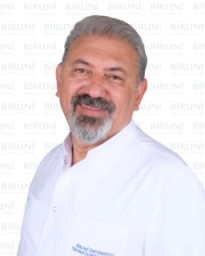
Prof. Dr. Mustafa Teoman YANMAZ
Medical Oncology
Last updated:


