
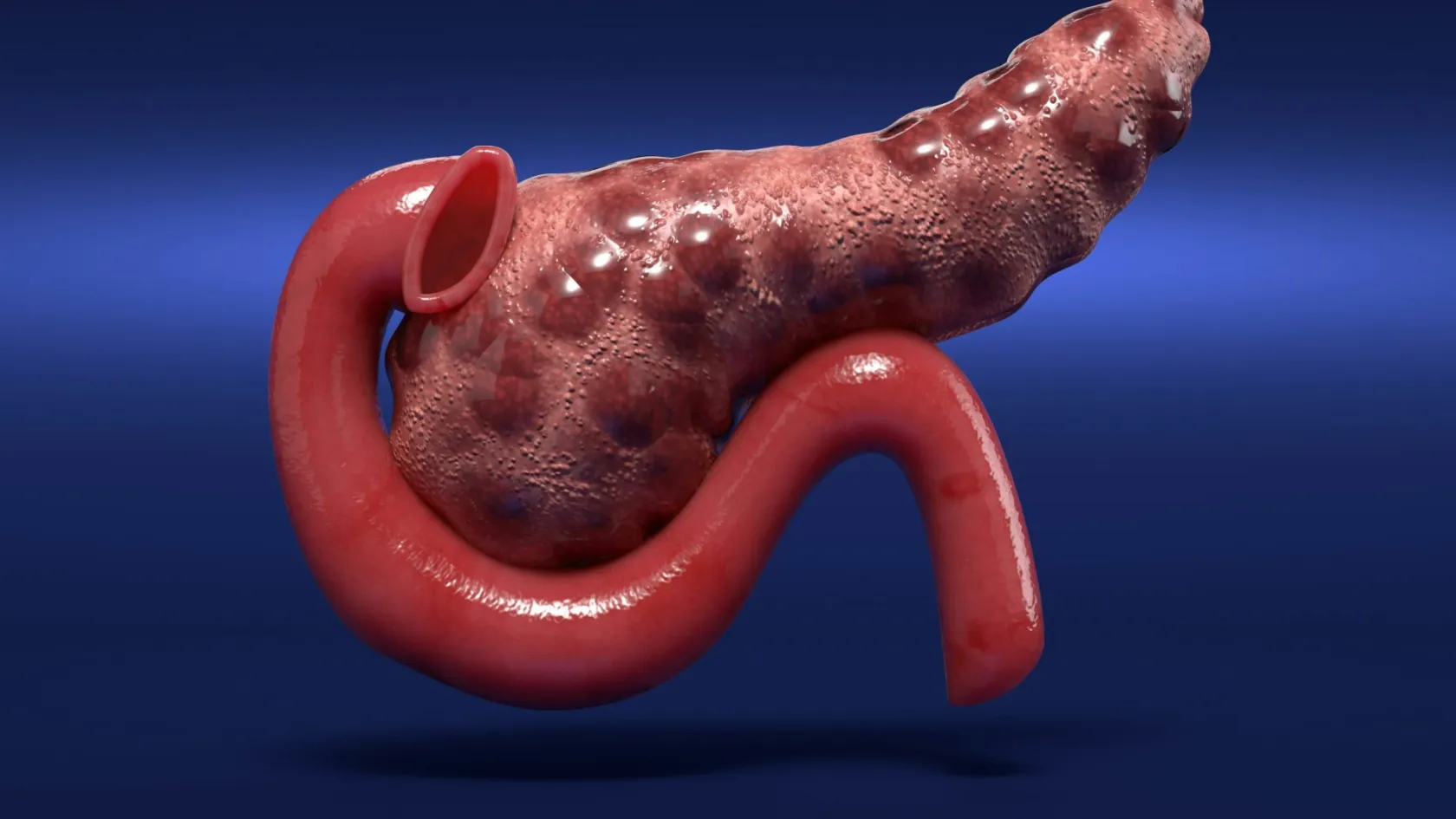
Liver Cancer Surgery
Removing the tumour is often the easy part. What decides whether a liver operation is possible at all is how much working liver would be left behind, and two people with identical scans can get opposite answers.
About This Department
In most cancer operations the difficult question is whether the tumour can be taken out. In the liver it is usually the opposite. Removing the tumour is frequently the straightforward part, and the question that decides everything is what is left behind, because the liver is the one organ you cannot live without and cannot substitute with a machine. Two patients with identical scans and identical tumours receive opposite answers, and the difference is the state of the liver around the tumour rather than the tumour itself.
Free consultation
Send the CT or MRI as image files, plus the liver blood tests
Resectability shows on the images and not in the report, because the surgeon has to see which segments the tumour occupies and how it sits against the portal vein, the hepatic veins and the bile ducts. Send the scan files, the full liver function panel including bilirubin, albumin, INR and platelet count, any hepatitis B or C results, the biopsy if one was taken, and the tumour marker levels. What comes back is an opinion on whether resection is possible now, whether the remnant would first need growing, and whether ablation or transplant assessment would serve you better. The review costs nothing and carries no obligation.
Eight segments, and the names on your consent form
From the outside the liver looks like one soft mass with a crease in it. Inside sit eight independent territories, each with its own branch of the portal vein, its own artery, its own bile duct and its own drainage into a hepatic vein. Those territories are what a surgeon actually removes, because a segment lifts out without stranding the blood supply of the ones beside it.
Everything else in this field follows from that. A surgeon reading your scan is not measuring the tumour so much as working out which segments it occupies, which vessels it touches, and what would remain if those segments left.
This table scrolls sideways on a narrow screen. Swipe or drag to see every column.
| Name | What comes out | What it means for you |
|---|---|---|
| Wedge or non-anatomical resection | A rim of liver around a surface tumour, ignoring segment boundaries. | The smallest option, and the one that spares the most liver. Frequently done through keyhole incisions. |
| Segmentectomy | One complete segment, taken along its own vascular boundaries. | Removes the territory the tumour could have spread into through its own portal branch. |
| Hemihepatectomy | The right or left half, meaning four segments. | A major resection. Around half to two thirds of the organ leaves, and the remnant volume becomes the central question. |
| Extended hemihepatectomy | A half plus one or more segments from the other side. | Up to 75 or 80 percent of the liver. Almost always needs the remnant grown beforehand. |
Ask which segments are coming out. That question tells you more than asking how big the operation is, and any hepatobiliary surgeon will answer it in one sentence.
How much liver has to stay
Surgeons call it the future liver remnant, and it is calculated from your CT before anybody schedules an operation. Software returns a volume once a radiologist has outlined the segments that will remain, which is then expressed as a percentage of the whole or of what your body size predicts your liver should weigh.
That threshold moves with the health of the liver, and it moves a long way.
The same operation, three different answers
Healthy liver tolerates being cut down to roughly 20 to 25 percent of its volume, so up to three quarters of a healthy liver can be removed. A liver damaged by months of chemotherapy, which is the usual situation in bowel cancer that has spread, needs closer to 30 percent. A cirrhotic liver, which is where most hepatocellular carcinoma arises, needs 40 percent or more. In some patients no safe resection exists at any volume. One series of jaundiced patients having bile duct cancer surgery found the conventional 40 percent threshold too generous, with the real cut-off closer to 53 percent. One operation, one anatomy, three or four different answers depending on the liver it is being performed on.
Volume alone settles nothing either. Function is measured separately, through the bilirubin, albumin, clotting and platelet count, through the Child-Pugh and MELD scores, through whether there is portal hypertension, and in some units through a nuclear medicine scan that measures how hard the remnant is actually working and not merely how big it looks. A remnant of adequate size that does not function is the situation everybody is trying to avoid. What they are avoiding has a name. Post-hepatectomy liver failure is the leading cause of death after major liver resection, and published mortality once it develops runs as high as 50 percent. Almost every decision described on this page exists to keep that number from being reached, which is also why a surgeon who declines to operate on a liver that another surgeon has offered to resect is not necessarily being timid, and is frequently the one who has done the volumetry properly.
Growing the remnant first
Too small a remnant rarely ends the discussion. It gets made bigger before operating, and this is the part of liver surgery that surprises patients most, because it means an extra procedure and a wait of weeks between it and the operation they came for.
Portal vein embolisation
A radiologist blocks the portal vein branches feeding the side that is coming out. Blood diverts to the other side, and that side grows. The whole thing goes through a needle in the skin under local anaesthetic and sedation, most people go home the next day, and the growth takes six to eight weeks. This remains the established standard, and published series report the remnant enlarging by up to 40 percent.
Liver venous deprivation
Same idea taken further, blocking the hepatic vein draining that side as well as the portal branches. The remnant grows faster and further than with portal embolisation alone, which matters when the wait itself is a risk because the tumour is growing during it.
Two-stage hepatectomy and ALPPS
Where disease sits on both sides, the smaller side is cleared first, the remnant is given time to grow, and the bigger resection follows. ALPPS compresses that into two operations days apart by splitting the liver at the first, which produces very fast growth and carries a higher complication rate, so it is used selectively and in high volume units.
None of this always works. Around a fifth to a third of patients having portal vein embolisation do not reach an adequate volume, either because the liver does not respond or because the tumour progresses during the wait, and a plan that assumed one trip becomes a plan that needs a different treatment. That possibility belongs in the plan from the start.
Three diseases in one organ
Liver cancer surgery covers three conditions that share an organ and almost nothing else. Confusing them is the commonest reason patients read something on the internet that does not apply to them.
Hepatocellular carcinoma
Hepatocellular carcinoma starts in liver cells, and it almost always starts in a liver already damaged by hepatitis B, hepatitis C, alcohol or fatty liver disease. That background separates it from every other cancer on this page. You are treating a tumour and a diseased organ at once, the diseased organ limits how much comes out, and the same disease that produced this tumour goes on producing others, so recurrence somewhere else in the liver is common even when the operation was perfect. Only transplant addresses both problems together, and that is how it enters the discussion even for tumours a surgeon could technically resect.
Colorectal liver metastases
Bowel cancer that has spread to the liver, and the surprise for most patients is that this is frequently curable. The liver itself is usually healthy, so it tolerates large resections. The strategy is to clear every deposit while sparing as much liver as possible. Chemotherapy commonly comes first to shrink the deposits, and it damages the liver as it works, so the remnant threshold rises after a long course, which is one reason oncologists and liver surgeons argue about how many cycles to give before an operation and why that argument is worth having in front of you rather than behind you. Where the bowel tumour and the liver deposits are both present, they can be removed at one operation or in stages, and that sequencing is a decision for a joint discussion between the bowel surgeon and the liver surgeon, taken in one room and not by two teams writing to each other, because the wrong order costs months, and sometimes costs the chance to operate at all, which is the single strongest reason to be treated where both specialties sit under one roof.
Cholangiocarcinoma
Bile duct cancer, which behaves differently again depending on whether it sits inside the liver, at the junction where the ducts leave it, or lower down. The versions at the junction are the most demanding operations in this field, because the resection has to take liver, bile ducts and sometimes a portion of the portal vein, and the drainage of the remaining side has to be rebuilt. Jaundice has to be relieved with a stent before surgery, and the recovery is longer than for the other two.
Resection, ablation or transplant
With a small liver cancer, the choice between cutting it out and burning it in place is genuinely open, and the trials say so more clearly than most hospital pages admit.
Two randomised trials, the same answer
A Japanese trial across 49 institutions randomised 301 patients with tumours of 3 cm or less to surgery or radiofrequency ablation. Median recurrence-free survival was 3.5 years after surgery and 3.0 years after ablation, a difference that did not reach significance. The procedure took 274 minutes against 40, and the hospital stay 17 days against 10. A Chinese trial randomising 150 patients with tumours up to 5 cm found five year survival of 74.7 percent after keyhole resection and 67.9 percent after ablation, again without a significant difference. Neither trial showed surgery to be the better option for a small tumour, and both showed ablation to be considerably less of an ordeal for the patient having it.
For a small, well placed tumour, ablation deserves a serious hearing, particularly where the liver is cirrhotic and every millilitre of it matters. Resection keeps its advantage where the tumour is larger, where it sits against a large vessel that carries the heat away and leaves cancer behind, where it is too deep or too close to the bowel or diaphragm for a needle, and where the pathology from a removed specimen would change the treatment that follows.
Transplant deserves a separate conversation, and a longer one. For hepatocellular carcinoma within accepted size and number limits, in a liver too damaged to tolerate resection, replacing the organ treats the cancer and the cirrhosis in one operation and produces the best long-term results of anything on this page. It also requires an organ, a waiting list, and lifelong immunosuppression, and eligibility rules differ by country. If your liver is cirrhotic, ask whether transplant assessment should happen before resection is planned rather than after.
Open or keyhole
Liver surgery came to keyhole techniques late, because the organ bleeds and because a laparoscopic instrument cannot compress a bleeding surface with a hand. The evidence caught up during the last decade, and it is now good.
What the randomised trials found
Norwegian investigators ran the first properly randomised comparison, allocating 280 patients having liver resection for bowel cancer deposits to one approach or the other. Complications within 30 days occurred in 19 percent of the keyhole group and 31 percent of the open group, the hospital stay was 53 hours against 96, and blood loss, operating time and the rate of clear margins were the same. A European trial of 332 patients having a formal half-liver resection, which is a much bigger operation, found functional recovery at four days against five, no difference in major complications or in clear margins, better quality of life scores on both global health and body image, and a shorter wait before chemotherapy could start at 46.5 days against 62.8, which for a patient whose liver deposits came from bowel cancer is the result that matters most on that list.
That last figure is the one worth holding onto. For someone whose liver deposits came from bowel cancer, getting back onto systemic treatment two weeks sooner is not a comfort measure. Open surgery keeps its place for tumours involving the major veins where the liver joins the vena cava, for repeat operations through dense scarring, for the largest extended resections, and for the moment when a surgeon judges the view inadequate and converts. Surgeons increasingly use robotic platforms for the same operations, with the same rationale as elsewhere in abdominal surgery. What predicts your outcome more than the approach is the number of these resections the unit performs each year, and that is a fair question to ask directly, because liver surgery is one of the clearest volume-outcome relationships in surgery and the answer separates a department that does this every week from one that does it occasionally, and no amount of equipment closes that gap.
What goes wrong
Three complications belong to this operation specifically, and the rest are the familiar hazards of major abdominal surgery.
Bleeding dominates the planning, because the liver receives about a quarter of the heart's output through two separate systems. Modern technique controls it with careful division of the vessels before the parenchyma is cut, with low venous pressure during transection where the anaesthetist can achieve it safely, and with the ability to clamp the inflow temporarily. A minority of cases need transfusion, and larger resections and cirrhotic livers account for most of them.
Bile leak comes next in frequency and does most to keep you in hospital or bring you back. Cut liver surface leaks bile from small ducts, and where the leak persists it collects, causes fever and pain, and is drained by a radiologist through the skin. Most settle over days to weeks with a drain in place. A leak from a major duct is a different and rarer problem needing endoscopic stenting or an operation.
Liver failure matters most of all, and everything in the assessment exists to prevent it. It shows itself as jaundice that deepens instead of clearing, clotting that stays deranged, fluid collecting in the abdomen, and confusion. It stays uncommon after a properly assessed resection, and that is the reason nobody should shorten the assessment to save a week.
Beyond those three, the list runs through wound infection, chest infection and collapse at the lung base on the operated side, which is common and explains why breathing exercises are pushed hard, clots in the legs or lungs, fluid collections needing a drain, and a slow return of appetite. Death within 90 days is uncommon in high volume units and it is not zero, and any surgeon who quotes you a figure of zero is quoting a selected series rather than a practice.
Recovery and regrowth
The liver regenerates, and it does so quickly. Most of the volume comes back within three months, and published measurements after major resection with prior embolisation put the remnant at around 82 percent of the original whole liver volume at three months, with measured function at around 88 percent. What regrows is bulk rather than the original shape, so a scan a year later looks nothing like the one taken before surgery, and somebody unfamiliar with your history needs telling before they report it.
Your own experience runs on a slower timetable than the organ does.
- Out of bed and walking on the first day, with breathing exercises started immediately, because the commonest early problem is the lung base on the operated side.
- Drains, where used, come out once the fluid is clear of bile and the volume has fallen.
- Blood tests every day at first, watching bilirubin and clotting, since those two numbers are how the remnant reports on itself.
- Expect profound tiredness for four to six weeks, and expect it to be worse than the pain, because the regenerating liver is doing metabolic work.
- No alcohol, and no paracetamol beyond the dose you are given in writing, while the remnant is still small.
Driving comes back at four to six weeks after a keyhole resection and later after an open one, judged by whether you could perform an emergency stop without hesitating. Desk work follows at a similar point, physical work at around three months, and heavy lifting waits until the abdominal wall has healed properly. Chemotherapy, where it is part of the plan, restarts at around six weeks, and the keyhole approach shortens that wait.
Fix the date before you leave.
How long you stay
For a straightforward resection, plan on three to four weeks in the country. Where the remnant has to be grown first, plan on two trips, or on a stay of two to three months, and settle which before you book anything.
Assessment takes four to six days and it is more involved than for most cancer operations. Triple-phase CT or liver MRI with a liver-specific contrast agent, volumetry of the planned remnant, a full liver function assessment, hepatitis screening, endoscopy to look for varices where cirrhosis is suspected, and a hepatobiliary tumour board before a date is set. If a biopsy is needed it adds days. If embolisation is needed it adds six to eight weeks.
Expect four to seven days on the ward after a keyhole resection and seven to twelve after an open or extended one, longer if a drain stays in for a bile leak. Add a further week to ten days nearby. That covers the wound check, the pathology and the blood tests that confirm the remnant is behaving. Flying is cleared at around three weeks after an uncomplicated resection, and later after a major one or where a drain is still in place. Five things have to be true first.
- A healed wound with no discharge.
- A bilirubin that is normal, or falling clearly across consecutive tests taken days apart.
- No fever, and no collection sitting undrained in the abdomen.
- An agreed plan for clot prevention covering the flight itself.
- A named person here to contact from home, and a doctor at home who has your discharge summary.
Do not let anybody talk you onto an earlier plane on the grounds that you feel well, because a bile leak declares itself in the second week and feeling well on day ten predicts very little about day fourteen. Stay the extra week.
What drives the cost
Wedge resection and extended right hepatectomy sit on the same treatment list and are completely different operations to deliver. So eight things move the total.
- The extent of the resection. Theatre time, blood availability and intensive care planning all scale with how much liver leaves.
- Whether the remnant has to be grown first, which adds an interventional radiology procedure, a second admission and weeks of accommodation.
- Whether a vessel or a bile duct has to be reconstructed, which turns a resection into a reconstruction and lengthens everything.
- The surgical approach, since robotic and laparoscopic platforms carry per-case instrument costs.
- Whether ablation is combined with resection in the same sitting, which is common where deposits sit on both sides.
- The workup of the underlying liver disease, including hepatitis testing and treatment, endoscopy for varices and repeat imaging.
- Length of stay and intensive care, planned or otherwise.
- Chemotherapy or targeted and immune therapy before or after surgery, which sits outside almost every surgical quotation.
Your own condition moves it as much as the operation does. Cirrhosis, portal hypertension, diabetes, heart and lung disease, obesity, blood thinning medication, previous abdominal or liver surgery, and poor nutrition all raise the chance of a longer stay and of a complication that nobody budgeted for.
Packages published in this market normally cover the transfers, the pre-admission tests, the surgeon and anaesthetist, theatre and ward days, the interpreter, a set number of hotel nights and the follow up before you fly. They normally exclude flights, insurance, extra inpatient nights, intensive care beyond what was planned, the management of a complication, and all of the drug treatment.
Six questions turn a headline into a quotation. Which resection does the figure assume, named by segments. Does it include portal vein embolisation if the remnant turns out to be too small, and does it include the second admission. Is intensive care inside the figure or charged per night. What happens financially if a bile leak means an extra fortnight and a drain. Is the volumetry and the specialist liver imaging inside the assessment fee. And what proportion of any chemotherapy sits inside the quotation.
No figure means anything until a surgeon has measured your remnant on your own scan. That review costs nothing, and it comes before any figure does.
Once you are home
Surveillance after liver resection is closer and longer than most patients expect, and the reason differs by disease. After resection for hepatocellular carcinoma the liver that produced the tumour is still there and still diseased, so imaging every three to four months with tumour markers for the first two years is standard, and it continues indefinitely at longer intervals. After resection of bowel cancer deposits the schedule follows the bowel cancer protocol, with CT and CEA every three to six months. After bile duct cancer the intervals are similar and the imaging is more detailed.
Treating the underlying liver disease is part of the cancer treatment and it is the part most often dropped when a patient goes home. Antiviral therapy for hepatitis B or C measurably lowers the chance of a second cancer. Stopping alcohol does the same. Nobody should leave without a written plan for the liver as well as for the tumour. Take home the operative note naming the segments removed, the pathology with the margin status, the volumetry report, the imaging on disc and the surveillance schedule with dates. A regenerated liver looks strange on a scan, and a radiologist who does not know which segments went will report the distortion as suspicious, which sets off a round of scans and worry that the operative note in your own hand would have prevented in a minute, which is why the single most useful thing you can pack for the flight home is a folder rather than a memory of what you were told. Carry it, in English.
Contact the team here for yellowing of the eyes or skin, a fever, abdominal pain that worsens instead of settling, a swollen abdomen, confusion or unusual drowsiness, or a wound that opens. Between appointments a message and a photograph answer most worries within hours.
Frequently asked questions about liver cancer surgery
How much of my liver can be removed safely?
Does the liver really grow back?
Is surgery better than ablation for a small liver tumour?
Why would I need a procedure weeks before the operation?
How long do I need to stay abroad, and when can I fly?
Will the cancer come back after surgery?
References
- Fichtinger RS, Aldrighetti LA, Abu Hilal M, et al. Laparoscopic versus open hemihepatectomy, the ORANGE II PLUS multicenter randomized controlled trial. Journal of Clinical Oncology. 2024;42(15):1799-1809.
- Fretland AA, Dagenborg VJ, Bjornelv GMW, et al. Laparoscopic versus open resection for colorectal liver metastases, the OSLO-COMET randomized controlled trial. Annals of Surgery. 2018;267(2):199-207.
- Takayama T, Hasegawa K, Izumi N, et al. Surgery versus radiofrequency ablation for small hepatocellular carcinoma, a randomized controlled trial (SURF trial). Liver Cancer. 2022;11(3):209-218.
- Song J, Cao L, Ma K, et al. Laparoscopic liver resection versus radiofrequency ablation for small hepatocellular carcinoma, randomized clinical trial. British Journal of Surgery. 2024;111(4):znae099.
- Boubaddi M, Marichez A, Adam JP, et al. Comprehensive review of future liver remnant assessment and hypertrophy techniques before major hepatectomy. Annals of Surgical Oncology. 2024;31(13):9205-9220.
Editor's note
Written by the Biruni Hospital medical editorial team. Reviewed by Prof. Dr. Mustafa Teoman YANMAZ, Medical Oncology.
Medically reviewed by

Prof. Dr. Mustafa Teoman YANMAZ
Medical Oncology
Related Treatments
View All-
Bilateral Mastectomy
Whether you carry a BRCA mutation, have cancer in one breast or in both, bilateral mastectomy removes both breasts in one operation, and how much it helps depends on which of those three paths brought you to it.
-

Breast Conserving - Lumpectomy Surgery
Keeping the breast has never been the less thorough choice, and the largest recent studies now point the other way. This page explains who can have breast conserving surgery, what the margin report decides, and how long a woman traveling for it needs to stay.
-

Cytoreductive - Tumor Reduction Surgery
Patients cleared of every visible deposit lived 30 months in one gastric series. Those left with anything at all lived 7.3 months, however little remained.
-
Debulking - Ovarian Cancer Tumor Reduction
Two women with the same diagnosis on the same morning can get operations that share almost nothing. What decides it is who measured the disease first.
-
Debulking Surgery
Surgeons removed a median of 57 lymph nodes from women already cleared of visible disease. It bought no extra months, and tripled deaths within 60 days.