Many patients with spinal stenosis are offered screws and a fusion along with their laminectomy, yet two Scandinavian trials found that decompression alone works as well for most of them. This page explains when surgery beats physiotherapy, how the bone-sparing techniques compare, what the complication figures look like and how long to plan in Istanbul.
About This Department
Orthopedics
A laminectomy makes room for squeezed nerves in the spine. In most patients, the room is all they need, without a fusion.
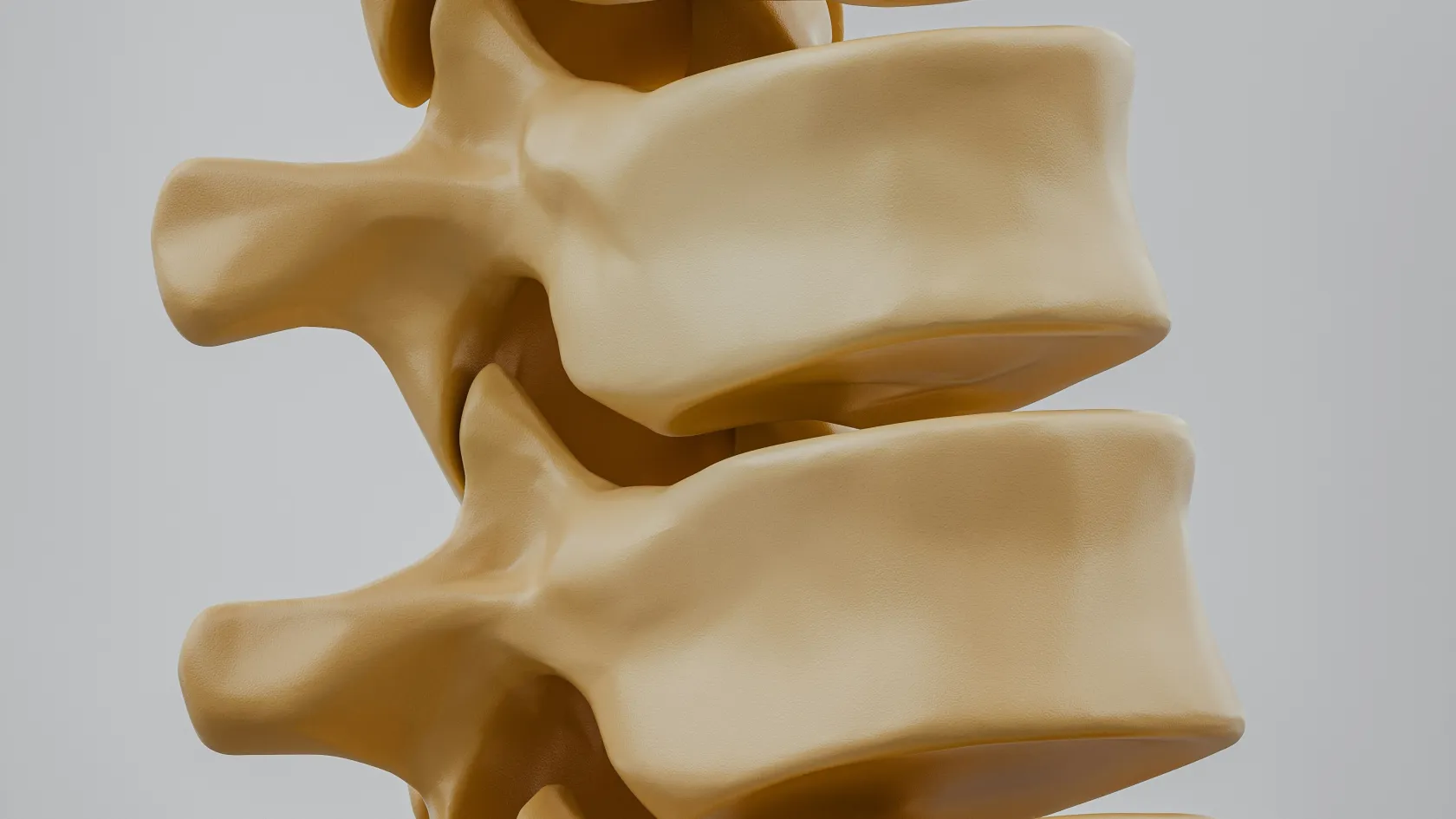
A laminectomy removes the lamina, the thin arch of bone at the back of a vertebra, together with the thickened ligament and bone spurs beneath it, so the nerves in a narrowed spinal canal have space again. Most laminectomies are done in the lower back for lumbar spinal stenosis, the cause of leg pain and heaviness that comes on with walking and eases with sitting. This page explains who benefits, what the trials say about physiotherapy and about adding a fusion, how the newer bone-sparing techniques compare, and what to send for a free review of your MRI.
22%
Needed another spine operation within 5 years after decompression alone, against 24% with added fusion
8.8%
Surgical complications after decompression without implants in 8,033 patients aged 65 or older
1 to 7 nights
In hospital in published packages in Turkey, by the number of levels
The spinal canal narrows slowly with age, as discs bulge, the joints at the back thicken and the ligament inside the canal stiffens. Walking is the test.
The typical complaint is leg pain, heaviness or numbness that starts after a few minutes of walking or standing and eases within minutes of sitting down or bending forward.
Walking distance shrinks to a few hundred meters, then to one street
Leaning on a shopping trolley or walking uphill feels easier than walking straight
Pain in the buttocks and thighs, often in both legs
Back pain is common, but the leg symptoms are what surgery treats
Signs that need an emergency department
Numbness between the legs, new trouble passing urine or controlling the bowels, or weakness in both legs can mean cauda equina syndrome, and it needs an emergency department today, in the country where you are.
These signs are rare in stenosis. When they appear, decompression is done within hours, and a flight abroad has no place in the plan.
Physiotherapy or surgery
Physiotherapy deserves a proper try first. An American trial randomized 169 patients aged 50 or older who were already candidates for surgery to decompression or to a structured physiotherapy program, and measured physical function at two years with assessors who did not know the treatment. Both groups improved by a similar amount. The difference between them was close to zero. The trial also showed why surgery stays on the table, since 57 percent of the physiotherapy group went on to have the operation within the two years.
This table scrolls sideways on a narrow screen. Swipe or drag to see every column.
Surgery against physiotherapy for lumbar spinal stenosis, two-year results
Outcome
Decompression
Physiotherapy
Patients randomized
87
82
Gain in physical function score
22.4
19.2
Crossed over to the other treatment
Not applicable
57% had surgery
Surgery makes sense when walking distance keeps shrinking despite several months of physiotherapy, or when weakness appears.
Does a laminectomy need a fusion
Adding screws and a fusion lengthens the operation, the stay and the recovery. The question matters. Two Scandinavian trials have tested it directly.
The Swedish Spinal Stenosis Study
The trial took 247 patients with stenosis at one or two levels, with or without a slipped vertebra, and randomized them to decompression alone or decompression with fusion. At five years, disability scores were the same, quality of life was better after decompression alone, and 22 percent of the decompression group had needed another spine operation against 24 percent of the fusion group. On MRI at two years, new narrowing at the operated or neighboring level appeared in 47 percent after fusion and 29 percent after decompression alone. Fusion did not prevent new narrowing.
For most stenosis, with or without a mild slip, decompression alone is the better first operation.
The Norwegian trial in degenerative spondylolisthesis
A degenerative spondylolisthesis means one vertebra has slid a few millimeters forward on the one below, most commonly at the L4 to L5 level, and for years fusion was the standard answer. The Norwegian trial tested that answer. In patients whose vertebra had slipped forward, decompression alone proved noninferior to decompression with fusion. When the surgeons were asked beforehand which operation each patient needed, following that advice did no better than the random allocation, with 75 against 73 percent reaching the main improvement target at two years. The result came from 16 Norwegian hospital departments, and surgeons with years of spine experience could not pick the fusion patients better than chance. Fusion still has a place for an unstable segment that moves on bending X-rays, a curve of the spine, or stenosis that cannot be freed without removing a joint, and the surgeon explains which of these applies to your scans.
On a phone, slide this table sideways to read all of its columns.
Decompression alone against decompression with fusion, Swedish Spinal Stenosis Study
Outcome
Decompression alone
With fusion
Disability score at 5 years, lower is better
25
28
Another spine operation within 5 years
22%
24%
New narrowing on MRI at 2 years
29%
47%
Open laminectomy or a smaller decompression
Several techniques free the same nerves. Their results barely differ.
Classic laminectomy
The surgeon removes the whole lamina and the spinous process at the level, the bony bump you feel in the middle of the back, through an incision of a few centimeters, and keeps the facet joints intact.
In the Swedish spine registry, 3,339 patients had the same improvement after a classic laminectomy as after midline-preserving surgery, with repeat surgery in 5.5 against 4.9 percent.
Midline-preserving decompression
Laminotomy removes only a window of bone on one or both sides and leaves the spinous process and its ligaments in place, and a unilateral approach reaches across to free the opposite side as well. In a Norwegian trial, 437 patients were randomized to three of these techniques, and at five years their disability scores and repeat surgery rates were the same. Experience counts for more than technique. The choice of technique, then, rests with the surgeon and the anatomy rather than with the patient, and the outcome depends far more on choosing the right patient and freeing every compressed level.
Risks in numbers
Japan's national survey of 8,033 patients aged 65 or older who had surgery for lumbar spinal stenosis gives the clearest figures for an older population. Surgical complications occurred in 8.8 percent of operations without implants and 17.3 percent with them. That gap gives one more reason to keep fusion for the patients who truly need the extra stability it provides, rather than adding it to every laminectomy as a precaution. The most frequent problem, a small tear in the membrane around the nerves that surgeons call a dural tear, is repaired during the operation and rarely changes the recovery beyond a day of lying flat. Ask for your own surgeon's figures.
Drag sideways on a narrow screen to see the whole table.
Complications after lumbar stenosis surgery, 8,033 patients aged 65 or older
Complication
How often
What it means
Tear in the membrane around the nerves
3.6%
Repaired during surgery, sometimes a day of bed rest
Deep wound infection
1.4%
Antibiotics, sometimes a washout
New nerve symptoms
1.3%
Most improve over weeks
Blood collection over the nerves
1.3%
Can need a second operation to drain it
Diabetes and implants both raised the risk of deep infection in that survey, so blood sugar control before surgery matters.
The stay, the flight and the weeks at home
Published packages in Turkey range from one night for a single-level decompression to six or seven nights for a two-level laminectomy with stabilization, and most of the gap between those two figures comes from the fusion, the extra level and the slower first days that follow. Plan seven to ten days in Istanbul after decompression alone and two weeks after a fusion. That leaves time for the wound check before the flight.
Day of surgery or the morning after, walking on the ward
Days one to three, discharge after a single-level decompression
Days ten to fourteen, wound check and removal of any stitches
Weeks two to six, desk work and longer walks
Weeks six to twelve, lifting and sport as the surgeon advises
Walking is the main exercise from the first day, and distance grows week by week. Leg pain eases first, sometimes on the first day. Numbness takes longer. Back stiffness can last a few weeks. Short walks spread through the day work better than one long walk. You leave with a written discharge report for your doctor at home, and your coordinator stays on WhatsApp once you are back home, in English, Arabic, French, Russian, Serbian, Romanian or Spanish, with interpreting in other languages arranged on request. One companion sleeps in the patient room for the admission, and the international patients office arranges the hotel nights either side of it, airport transfers and transport to appointments. Halal, vegetarian and diabetic meals are cooked in the hospital kitchen, a prayer room is on site, a female surgeon can be requested and is assigned wherever the rota allows, and the visa invitation letter is sent ten days before travel.
Call the same day for fever, a wound that leaks clear fluid or pus, a severe headache on standing, or new numbness between the legs.
What a quote should cover
Cost depends on the number of levels and on whether a fusion is added, since screws, rods and extra nights change the total far more than the decompression itself. Published packages in this market include the operation and anesthesia, scans and tests before surgery, the hospital nights, airport transfers, an interpreter and a coordinator, and some cover a companion. Flights and the hotel sit outside most of them. Fusion changes the bill. Get both versions in writing.
A figure worth comparing comes after a surgeon has read your MRI and decided whether you need a fusion at all, and that review is free.
Laminectomy FAQ
Is a laminectomy major surgery?
A single-level lumbar decompression is a modest operation, with one to three nights in hospital in most cases. Adding a fusion makes it larger, with a longer stay and recovery.
Do I need a fusion with my laminectomy?
For most spinal stenosis, including many cases with a mild slip, trials show decompression alone works as well, with fewer new narrowings on later scans. Fusion is kept for instability, curvature or a joint that has to be removed.
How long is recovery after a laminectomy?
Walking from the first day, desk work after two to six weeks, and lifting after six to twelve weeks, longer after a fusion.
How soon can I fly home?
Seven to ten days after decompression alone, once the wound has been checked, and two weeks after a fusion.
What should I send for a free review?
Send these.
The MRI images of the lower back and the report
Standing X-rays, including bending views if you have them
How far you can walk before the legs force you to stop
A list of medications and other conditions, such as diabetes
A spine surgeon replies with whether surgery is advised, whether a fusion is needed, and the expected stay, at no charge and with no obligation to travel.
References
Delitto A, Piva SR, Moore CG, et al. Surgery versus nonsurgical treatment of lumbar spinal stenosis: a randomized trial. Ann Intern Med. 2015;162(7):465-473.
Karlsson T, Forsth P, Ohagen P, et al. Decompression alone or decompression with fusion for lumbar spinal stenosis: five-year clinical results from a randomized clinical trial. Bone Joint J. 2024;106-B(7):705-712.
Karlsson T, Forsth P, Skorpil M, et al. Decompression alone or decompression with fusion for lumbar spinal stenosis: a randomized clinical trial with two-year MRI follow-up. Bone Joint J. 2022;104-B(12):1343-1351.
Seip A, Hellum C, Fagerland MW, et al. Surgeon recommendation and outcomes of decompression with vs without fusion in patients with degenerative spondylolisthesis. JAMA Netw Open. 2025;8(1):e2453466.
Elmqvist E, Lindhagen L, Forsth P. No benefit with preservation of midline structures in decompression for lumbar spinal stenosis: results from the National Swedish Spine Registry 2-year post-op. Spine. 2022;47(7):531-538.
Hermansen E, Indrekvam K, Franssen E, et al. A randomized trial on three different minimally invasive decompression techniques for lumbar spinal stenosis: five years follow-up from the NORDSTEN-SST. Eur Spine J. 2025;34(5):1590-1599.
Imajo Y, Taguchi T, Neo M, et al. Complications of spinal surgery for elderly patients with lumbar spinal stenosis in a super-aging country: an analysis of 8033 patients. J Orthop Sci. 2017;22(1):10-15.
Editor's note
Written by the Biruni Hospital medical editorial team. Reviewed by Assoc. Prof. Dr. Suat BATAR, Orthopedics and Traumatology.