
HIPEC - Heated Chemotherapy Surgery
The operation has two halves. The eight hours of surgery are where the survival comes from. The ninety minutes it is named after are not.
About This Department
The operation has two halves, and they are not equally supported by evidence.
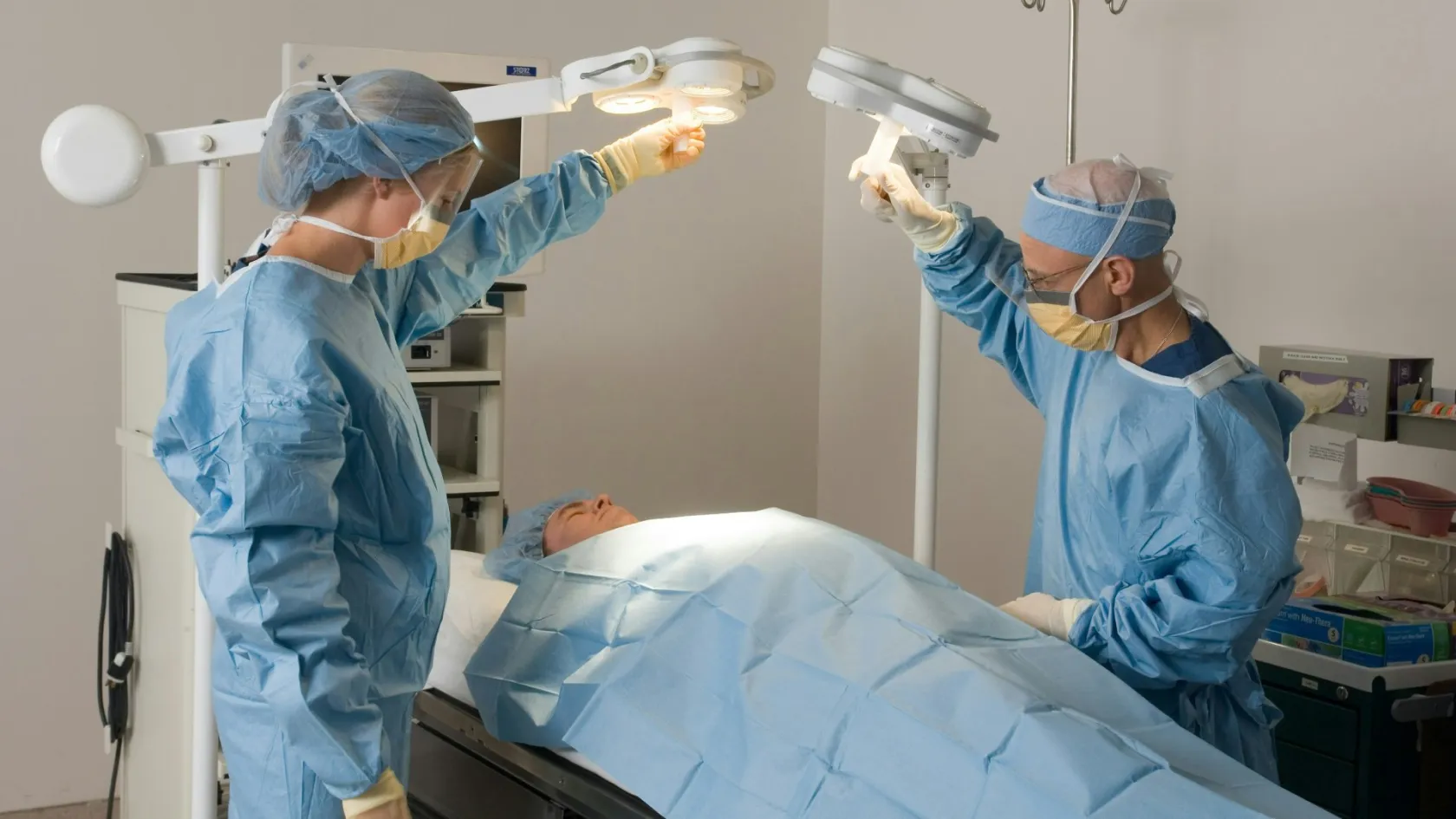
One half is cytoreductive surgery, which means opening the abdomen and removing every visible deposit of cancer from every surface it has settled on, stripping peritoneum off the diaphragm and the pelvis, taking out whatever organs are involved, and working for eight, ten or twelve hours until nothing can be seen. That half is where the survival comes from. The second half is the heated chemotherapy, ninety minutes of warmed drug circulated through the abdomen at the end while the patient is still asleep, and it is the half the whole treatment is named after.
It is also the half that the largest randomised trials have struggled to show a benefit for.
That sentence is uncomfortable for a hospital to publish. It is also the most useful thing on this page, because it tells you what to ask about, which is not whether a service offers HIPEC, since almost all of them now do, but how well it performs the eight hours that come before it.
Free consultation
Send the CT on a disc, and every operation note you have
Eligibility here is decided on images and operation notes and never on a summary, so send the most recent CT of chest, abdomen and pelvis as raw images and not as a report, since the extent of peritoneal disease has to be measured off the pictures. Include every previous operation note in full, because what was found, what was removed and how difficult it was tells us more about a second operation than any scan. Send the original pathology with the exact tumour type and grade. List all chemotherapy given, with dates and how each line ended. Tell us honestly what you can do in a day, whether you have lost weight, and whether you are eating normally, because those three answers decide more than the scan does.
Two halves, unequally supported
Reasoning behind the heated chemotherapy is sound and it is worth understanding before the evidence is examined, because a good idea failing a trial is a different thing from a bad idea.
Cancer that has spread across the lining of the abdomen sits on surfaces rather than inside organs, and drugs given into a vein reach those surfaces poorly. Putting the drug directly into the abdominal cavity produces a concentration many times higher than the bloodstream would tolerate. Warming it to around forty-two degrees is thought to make cells more vulnerable and help it penetrate a little further into tissue. Microscopic disease is what remains after the surgeon has removed everything visible, and killing it is what would turn a very good operation into a cure, which is a coherent chain of reasoning and is exactly why people built the technique in the first place. All of that is reasonable.
Heated drug penetrates only a couple of millimetres into tissue, which means it can reach a film of cells and cannot reach a nodule. Everything therefore depends on how little is left behind. And how little is left behind is a property of the surgery, not of the wash.
Which is why the two halves separate the way they do in the trials.
What the operation involves
Longer than almost anything else in general surgery. More extensive, too, than most people are told.
A full cytoreduction can involve stripping the peritoneal lining from the right and left diaphragm, removing the greater and lesser omentum, taking the spleen, removing segments of large or small bowel with joins or a stoma, stripping the pelvic peritoneum, removing the uterus and ovaries in women, taking the gallbladder, and in some cases resecting part of the stomach or a portion of the liver capsule as well. Not everybody needs all of that. Anybody being offered this operation should nonetheless be told which parts are likely in their own case before consenting, because a conversation that describes the day as a washout with a bit of surgery attached has misdescribed it entirely.
Two numbers govern the whole enterprise. Both appear in your operation note.
This table scrolls sideways on a narrow screen. Swipe or drag to see every column.
| The number | What it measures, and why it decides things |
|---|---|
| Peritoneal cancer index | The abdomen is divided into thirteen regions and each is scored from zero to three by the size of the largest deposit in it, giving a total out of thirty-nine. It is measured properly only with the abdomen open, since imaging consistently underestimates it. Low scores travel with better outcomes across every tumour type studied, and a high score is the commonest honest reason to decide against operating. |
| Completeness of cytoreduction | What the surgeon left behind, scored from CC-0 meaning nothing visible, through CC-1 meaning deposits under two and a half millimetres, to CC-2 and CC-3 meaning more than that. This is the single most consistent predictor in the whole field. An operation that ends at CC-2 has not achieved what the operation exists to achieve, and adding heated chemotherapy to it does not rescue the situation. |
| Why they matter to you | Ask for both, in writing, after your operation. A study of 153 patients with pseudomyxoma found the preoperative index and the completeness score were independent predictors of survival alongside tumour type, and a separate series of 210 appendiceal cancers found the completeness score determined who benefited from chemotherapy afterwards. |
Anaesthetic time runs from six to twelve hours. Blood loss is significant. Transfusion is usual. Intensive care afterwards is normal and never a sign that something has gone wrong. The hospital stay is measured in weeks.
What the colorectal trials found
Bowel cancer that has spread to the peritoneum is the commonest reason this operation is performed. It is also where the evidence has shifted most since the technique became popular, which makes it the place to start.
Two randomised trials, and what a real cohort looks like afterwards
A 2026 report from Helsinki University Hospital opens by stating the position plainly, that the efficacy of heated intraperitoneal chemotherapy in colorectal cancer has recently been questioned, and that two randomised controlled trials, COLOPEC and PRODIGE 7, both failed to demonstrate a significant survival benefit of adding it to cytoreductive surgery alone. Both used oxaliplatin as the drug. The Helsinki team then reported their own 98 patients treated with mitomycin-based heated chemotherapy after complete surgery between 2008 and 2023, followed until death or May 2025. Recurrence occurred in 71.4 percent, at a median of 0.69 years, with cumulative recurrence of 43.4 percent at one year, 65.1 percent at two and 72.9 percent at three. Forty-one patients died and almost all of those deaths were from recurrent cancer. Overall survival was 95.9 percent at one year, 69.6 percent at three and 56.3 percent at five. The authors read this as supporting continued use in appropriately selected patients, and it does, while also showing exactly what selected means.
More than half alive at five years, in a disease once treated as terminal, is a real achievement and it belongs on this page in the same breath as the recurrence figures, since publishing either number alone would misrepresent what this operation does. It is not a cure rate.
How the surgical community responded to those negative trials is instructive, and worth knowing about if somebody is explaining to you why their protocol is different.
After PRODIGE 7, most centres switched from oxaliplatin to mitomycin, on the reasoning that the drug rather than the concept had failed. A 2025 systematic review and meta-analysis tested that reasoning across thirteen studies and 3,406 patients. The pooled hazard ratio for overall survival comparing the two drugs was 1.03, with a confidence interval running from 0.79 to 1.35, which is as close to no difference as these things come. Disease-free survival showed the same. The reviewers graded the certainty of all of it as very low, because none of the underlying studies were randomised and all carried serious risk of bias. So the honest summary is short. The drug was changed for a reason that has never been demonstrated, and nobody currently knows which agent is better, because the comparison that would settle it has not been done properly.
Where it genuinely earns its place
None of the above means the operation is worthless. It means it is worth a great deal in some diseases and much less in others, and that the difference between those two groups is knowable in advance if somebody bothers to look.
This table scrolls sideways on a narrow screen. Swipe or drag to see every column.
| Disease | Where it stands |
|---|---|
| Pseudomyxoma peritonei | The strongest ground. This rare disease, usually starting in the appendix, fills the abdomen with mucin and kills slowly, and complete cytoreduction with heated chemotherapy is the accepted standard treatment and not an experiment. A 2026 series of 153 patients reported survival of 82.5 percent at one year, 66.0 percent at three and 56.8 percent at five, with tumour type, the peritoneal index and the completeness score all independently predicting outcome. |
| Other appendiceal tumours | Also strong ground, and the numbers are worth stating. In 210 patients with appendiceal goblet cell cancer, going without cytoreductive surgery was independently associated with an increased risk of death, and the completeness score identified who benefited from chemotherapy afterwards. |
| Peritoneal mesothelioma | A rare cancer of the peritoneal lining itself, where complete cytoreduction with heated chemotherapy has produced survival unattainable with drugs alone, and where specialist centres see enough cases to have learned how to select. Referral belongs here, ahead of local improvisation. |
| Colorectal peritoneal disease | Cytoreduction in carefully selected patients gives real long-term survival. The added value of the heated wash specifically is what two randomised trials failed to demonstrate, as set out above. The operation is still offered here, and it is offered with that sentence said out loud. |
| Ovarian cancer | Genuinely different, and the evidence depends entirely on timing and not on the disease. Our ovarian surgery pages set the randomised data out in full, including where it works and where it does not, so this page does not duplicate them. |
| Stomach cancer | The most difficult ground of all, and the subject of the next section, where a recent randomised trial changed what should be offered and to whom. |
| Preventive use | Giving heated chemotherapy to somebody whose abdomen is clear, on the grounds that their cancer was the kind that might spread there, has been tested and has not delivered. It is not offered here. |
Read down that table and a pattern appears. The technique performs best in the diseases nobody markets, meaning the rare appendiceal and peritoneal tumours that are slow, surface-bound and resistant to ordinary chemotherapy, and it performs least convincingly in exactly the common cancers that generate almost all of the demand for it.
Stomach cancer, and the order of things
Peritoneal spread from stomach cancer carries the worst outlook of any group discussed here. Which is exactly why it attracts the most aggressive offers.
A trial that changed the sequence as well as the answer
A 2026 commentary in the gastrointestinal cancer literature examines what the PERISCOPE II trial did and did not settle. That trial provided the first direct randomised comparison of an integrated operative strategy against continued systemic treatment in patients selected for limited peritoneal disease. Removing the stomach, performing cytoreduction and giving sequential heated oxaliplatin followed by normothermic docetaxel did not improve survival, and it caused substantial morbidity. The author is clear that this should exclude routine adoption of that pathway. He is equally clear that it does not prove every form of peritoneal-directed treatment is futile, noting that the intervention had several components, followed only brief systemic treatment, did not require laparoscopic confirmation of peritoneal response before randomisation, and frequently disrupted the systemic therapy that followed. Meanwhile a separate trial has shown that repeated intraperitoneal paclitaxel given at body temperature can improve survival when added to systemic treatment, and another has shown that repeated laparoscopic reassessment with response-directed surgery is feasible. The closing argument is the one worth carrying away. Surgery should become the consequence of demonstrated response, and not the intervention used to discover it.
That last sentence deserves reading twice, because it inverts how this operation is usually sold to somebody with gastric peritoneal disease. The offer is normally made early, as a way of finding out whether the disease can be controlled. The evidence points the other way, towards giving systemic treatment first, looking again with a camera, and reserving the large operation for the people whose disease has already demonstrated that it responds.
So for stomach cancer with peritoneal spread, assessment here begins with what the systemic treatment has already achieved. Diagnostic laparoscopy answers that question before anybody discusses a twelve-hour operation.
What it costs you physically
Major surgery by any definition, and describing it otherwise is the commonest failure of consent in this field.
Serious complications occur in a substantial minority of patients. The list is specific. A join in the bowel can leak, which is the complication most likely to require a return to theatre and the one that lengthens a hospital stay from weeks into months. Collections of infected fluid form and need draining. Bleeding can require transfusion or reoperation. Blood counts fall because of the chemotherapy, which raises the risk of infection at exactly the moment a large wound is healing. Kidney function and electrolytes disturb, usually reversibly. Clots form in the legs or lungs. Chest infections and prolonged reliance on a ventilator are common after a long anaesthetic with the diaphragm stripped. A stoma may be needed, sometimes permanently. And death within thirty days is a real if uncommon outcome, quoted honestly at specialist centres and understated almost everywhere else.
Recovery is measured in months and not in weeks. Most people lose weight, lose muscle and lose stamina. Regaining all three takes a season. Eating is often difficult for a long period, particularly where part of the bowel or stomach was removed, and a dietitian is part of the treatment and not an optional extra. None of that is an argument against having it. It is an argument for knowing what you are agreeing to, and for being fit enough to survive it, which is why the eligibility assessment described below is as long as it is.
Why the centre matters more here
In most operations the surgeon's experience affects the complication rate. In this one it decides whether the operation achieves its entire purpose, because that purpose is defined as leaving nothing behind, and leaving nothing behind is a skill rather than an intention.
What a genuine peritoneal centre looks like is worth seeing written down. A 2026 report from a single specialist peritoneal malignancy institute in England covered the appendiceal tumours it treated between 2015 and 2023, and the denominator was 1,615 patients who underwent cytoreductive surgery with heated chemotherapy for perforated appendiceal tumours in that period. Within them, 132 had one particular uncommon subtype, which is how a centre learns the difference between subtypes at all.
The same paper carries a finding with immediate consequences for anybody being reassured by a scan.
Among patients who had already had an appendix removed and were later found to have a high-grade mucinous tumour in it, 37 percent had no detectable disease anywhere on preoperative imaging. When those patients were operated on anyway, histologically confirmed peritoneal disease was present in 35 percent of them. A clear scan in that situation is no evidence that the peritoneum is clear, and the practical instruction that follows is to be assessed by somebody who knows that instead of discharged by somebody who does not. Four questions are therefore worth putting to any unit, including this one.
- How many cytoreductive operations with heated chemotherapy does the unit perform in a year, counted rather than estimated.
- What proportion of them end at CC-0, meaning with nothing visible left behind, since that is the number the whole operation exists to produce.
- What the thirty-day mortality is, stated as a figure and not as a reassurance.
- Whether the pathologist who will report your specimen sees peritoneal disease routinely, because subtype changes both prognosis and what happens next.
A service unable to answer all four is not a peritoneal centre, whatever it calls itself.
What we do not offer
Heated chemotherapy has become a destination product. It is sold to people whose cancer has spread and who have been told at home that nothing more can be done, and that combination deserves a plainly worded section.
We do not perform this operation where complete cytoreduction is not achievable. An operation ending at CC-2 or CC-3 exposes somebody to every risk listed above and delivers almost none of the benefit, and where the assessment says the disease is too extensive the answer is no and never an attempt.
Nor do we offer it as a preventive measure to people with no peritoneal disease. That has been tested. It did not work.
It is not offered for peritoneal spread from cancers where no evidence supports it, including pancreatic and most breast and lung disease. And we do not offer it where the cancer is also present in the liver, the lungs or the bones in a way that will determine the outcome regardless, since clearing the abdomen of somebody whose disease is systemic is a great deal of suffering purchased for very little.
We do not accept a patient on the basis of a scan report and an agency summary. Images are reviewed here, previous operation notes are read in full, and where the disease burden cannot be assessed properly the honest step is a diagnostic laparoscopy instead of a decision made on paper.
One further thing. Somebody told no by this service has usually been told yes by somebody else, and the difference is rarely technical capability at all. It is a different reading of the same scan, and you are entitled to ask both parties to show you their reasoning in writing.
How eligibility is decided
Slowly. On documents, and by more than one person.
The images are re-read, and never the report alone
A radiologist who reads peritoneal disease routinely estimates the extent from the raw images, looking specifically at the small bowel and its mesentery, since disease there is what most often makes complete clearance impossible. Imaging underestimates the true burden in almost everybody, and knowing by how much is the skill.
Every previous operation note is read in full
What was found, what was removed, how the abdomen looked and how hard it was. A previous laparotomy that ended early because the surgeon judged the disease unresectable is a more useful document than any scan. Summaries written by agencies are sent back.
Fitness is measured and not estimated
Heart and lung function, kidney function, nutritional state, weight loss over recent months and what you can actually do in a day. Somebody who becomes breathless climbing one flight will not tolerate twelve hours of anaesthesia and a stripped diaphragm, and saying so early is kinder than saying it after a flight.
A laparoscopy where the answer is genuinely unclear
A short camera operation under general anaesthetic settles the peritoneal index far better than any scan and prevents the far worse outcome of a full laparotomy abandoned halfway. It is offered honestly as a step that may end with a decision not to proceed, which is the point of doing it.
A meeting, and a written answer either way
Surgery, medical oncology, radiology, anaesthesia, intensive care and pathology agree the recommendation together, including the estimated chance of achieving complete clearance. You receive it in writing with the reasoning, and a refusal arrives with its reasons and with whatever alternatives exist.
Coming to Istanbul
Few operations offered at this hospital require a longer stay, and underestimating it is the commonest planning error.
Assessment is remote and takes one to two weeks, being a matter of images, operation notes and a meeting. A substantial share of enquiries end there, with a written explanation and no journey. Where the operation goes ahead, expect four to six weeks in Istanbul in total. That covers preoperative assessment and any nutritional preparation, the operation itself, several days in intensive care, two to three weeks on the ward, and a period afterwards during which you must remain nearby while eating and bowel function recover. Flying with a fresh abdominal wound, a recent anaesthetic of that length and a raised clot risk is not something to compress, and the discharge date is set by physiology and not by a booking. A companion is required and not merely welcome. Somebody has to be present through intensive care and the ward weeks, and that person needs their own visa, their own accommodation and a briefing. Most nationalities enter Turkey visa-free or on an electronic visa completed online, with a letter of invitation issued for the longer stay this operation requires. Interpreters cover Turkish, English, Arabic, Russian and German as standard with other languages arranged, and for a stay of this length interpretation is arranged as a continuing service instead of appointment by appointment.
One honest point about sequencing. Where systemic chemotherapy is part of the plan, and it usually is, delivering it at home under a protocol written here is better than extending an already long stay, and we correspond directly with the oncologist who will give it.
What moves the cost
More than almost any other operation, the figure here depends on things nobody can know until the abdomen is actually open.
Theatre time is the first driver and it ranges from six hours to twelve. What has to be removed is the second, since bowel resections, a splenectomy, diaphragm stripping, a stoma or a liver capsule resection each add time, staff, equipment and risk. Blood transfusion is usual and its volume varies. Then intensive care, which is measured in days rather than hours and which is the single most variable line in any quotation, since a straightforward recovery and a recovery complicated by a leak differ by weeks. The chemotherapy drug and the perfusion circuit are a modest component by comparison, which is itself worth noticing given that the treatment is named after them. Outside theatre the items most often missing from a quotation are the ones most likely to be needed. Whether a return to theatre for a complication is covered at all. Whether extended intensive care sits inside the figure or is billed per day. Whether nutritional support, which many people need for weeks, is included. Whether the diagnostic laparoscopy is charged separately if it ends with a decision not to proceed. And whether the four to six weeks of accommodation for two people sits inside the figure or outside it.
Four questions make any quotation in this field comparable. Ask what is included if you spend two weeks in intensive care and what is included if you spend two days. Ask what happens, clinically and financially, if the abdomen is opened and complete clearance turns out to be impossible. Ask whether a reoperation for a leak is covered. And ask what the expected total length of stay is, in nights, for a case like yours. A figure that does not move when those are answered is describing a room rather than an operation.
Once you are home
Recovery continues for months. Surveillance afterwards is more intensive than after most cancer operations, because recurrence, when it comes, tends to come early.
You leave with the operation note stating exactly what was removed, the peritoneal index recorded at the start and the completeness score recorded at the end, because those two numbers are what any future clinician will ask for and what determine your prognosis more than anything else in the file. Alongside it goes the pathology, the plan for systemic chemotherapy where it applies, and a surveillance schedule with imaging intervals stated plainly. Video review runs at six weeks, three months and then at each imaging interval. Eating deserves its own paragraph. Appetite is poor for a long time, portions stay small, and weight loss after this operation is expected and not alarming in the first months and becomes a problem if it continues past them. Written dietary guidance goes home with you and is reviewed at each contact, since nutritional decline is the commonest quiet reason somebody fails to recover the life the operation was meant to give back.
The Helsinki figures earlier on this page are the honest frame for surveillance in colorectal disease. Recurrence reached 43.4 percent by one year and 65.1 percent by two, which is why scanning is frequent early and why a new symptom is investigated rather than watched. Recurrence is not always the end of treatment, and a second cytoreduction is occasionally appropriate in carefully chosen people, which is another reason the original operation note has to be precise.
Frequently asked questions
Does the heated chemotherapy part actually work?
I was told a different drug is used now. Is it better?
What are the two numbers I should ask for?
How long will I be in hospital and in Istanbul?
My scan is clear. Does that mean I do not need this?
Should I have it for stomach cancer that has spread?
How likely is the cancer to come back?
Another hospital said yes. Why would you say no?
References
- Karjalainen E, Haapamaki C, Yrjonen A, Koskenvuo L, Lepisto A. Recurrence of colorectal cancer with peritoneal metastases after cytoreductive surgery and HIPEC, a retrospective single-centre cohort study. Journal of Surgical Oncology. 2026.
- Kazi M, Ajith A, Bhatt A. The mitomycin versus oxaliplatin debate on HIPEC in colorectal cancers, an updated systematic review and meta-analysis. European Journal of Surgical Oncology. 2025;51(8):110080.
- Burke E. Beyond PERISCOPE II, redesigning peritoneal-directed treatment for gastric cancer. Journal of Gastrointestinal Cancer. 2026;57(1).
- Jiao J, Li F, Liu Q, Zhang H, Yu G, Yu W, Wang Y. Development of a prognostic model for postoperative survival in appendiceal pseudomyxoma peritonei based on clinical indicators. World Journal of Surgical Oncology. 2026;24(1).
- Flood MP, Warner NR, Samuel VM, et al. Clinicopathological features and outcomes in 132 patients with perforated high grade appendiceal mucinous neoplasm treated with cytoreductive surgery and HIPEC. European Journal of Surgical Oncology. 2026;52(10):112046.
- Strach MC, Aziz O, Nonaka D, et al. Long-term outcomes, pathological classification and prognostic factors in localised and advanced appendiceal goblet cell adenocarcinoma following cytoreductive surgery, intraperitoneal and systemic chemotherapy. ESMO Open. 2026;11(7):108245.
Editor's note
Written by the Biruni Hospital medical editorial team. Reviewed by Prof. Dr. Metin GÜDEN, Radiation Oncology.
Medically reviewed by
Prof. Dr. Metin GÜDEN
Radiation Oncology
Related Treatments
View All-
Bilateral Mastectomy
Whether you carry a BRCA mutation, have cancer in one breast or in both, bilateral mastectomy removes both breasts in one operation, and how much it helps depends on which of those three paths brought you to it.
-

Breast Conserving - Lumpectomy Surgery
Keeping the breast has never been the less thorough choice, and the largest recent studies now point the other way. This page explains who can have breast conserving surgery, what the margin report decides, and how long a woman traveling for it needs to stay.
-

Cytoreductive - Tumor Reduction Surgery
Patients cleared of every visible deposit lived 30 months in one gastric series. Those left with anything at all lived 7.3 months, however little remained.
-
Debulking - Ovarian Cancer Tumor Reduction
Two women with the same diagnosis on the same morning can get operations that share almost nothing. What decides it is who measured the disease first.
-
Debulking Surgery
Surgeons removed a median of 57 lymph nodes from women already cleared of visible disease. It bought no extra months, and tripled deaths within 60 days.