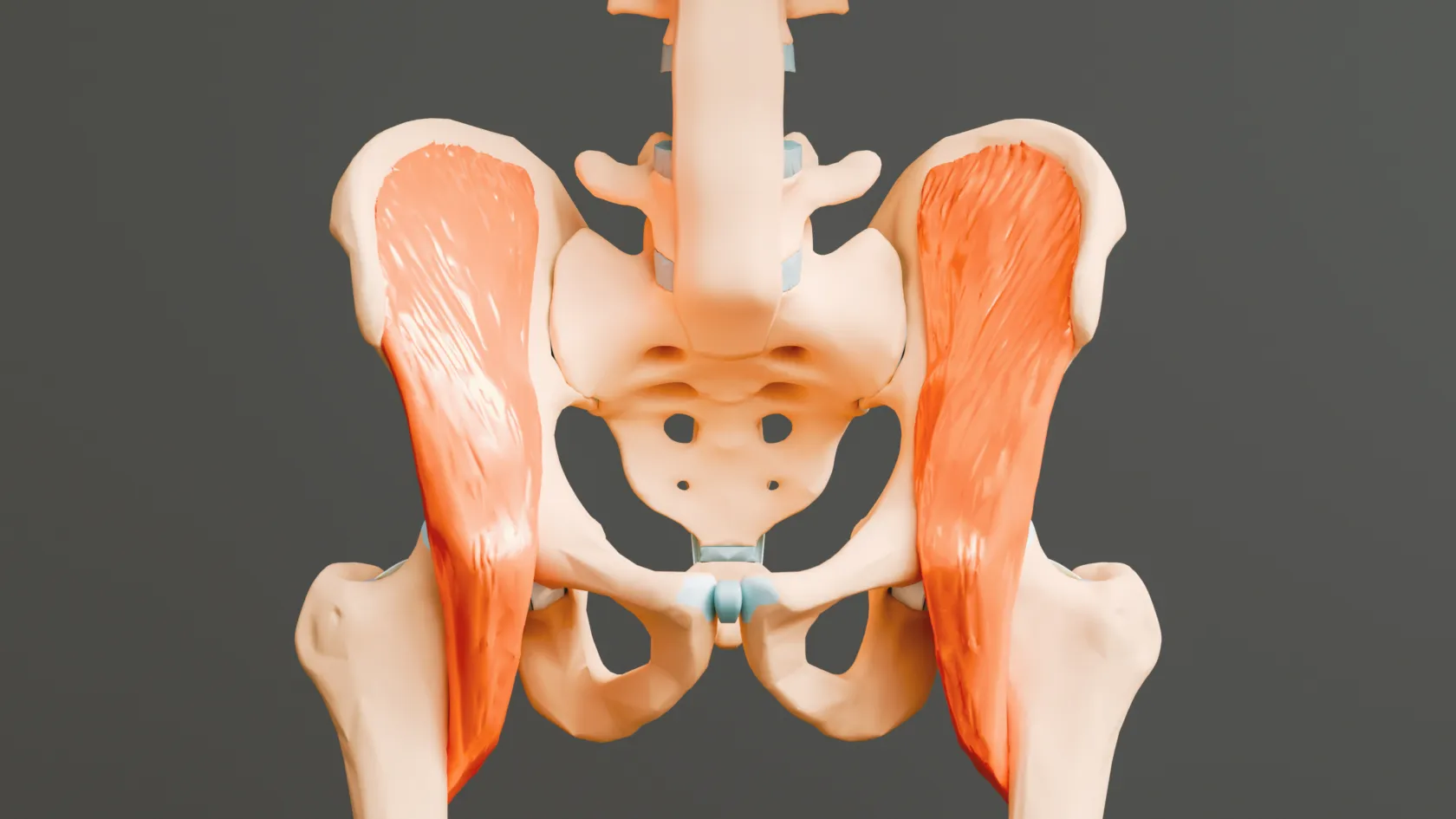
Dislocation, loosening and infection account for most failed hip replacements, and each one leads to a different operation, so hip revision surgery starts with finding the cause before any part of the implant is changed.
About This Department
Orthopedics
A failed hip is revised for a reason. Finding that reason comes before any new implant.
In national registry data on more than 215,000 hip replacements, 57.9 percent were still in place 25 years after surgery. When one fails, the cause sets the plan.
57.9%
Hip replacements still in place at 25 years in registry data
22.5%
Revisions done for dislocation, the leading cause in a US analysis
About 14 days
Published total stay in Turkey for a single revision
Free
Review of your X-rays and implant details before you book
Free consultation
The review costs nothing and carries no obligation. Send every hip X-ray since your first operation, the original operation note with the implant details, any CT scan and recent blood test results, and an orthopedic surgeon will tell you what has failed, which revision fits, and whether infection needs ruling out first. A coordinator replies in your own language.
Your hip replacement has started to hurt again, it has dislocated, an X-ray shows the implant has loosened, or a wound problem has raised the fear of infection, and a surgeon has said the word revision. Hip revision surgery removes some or all of a failed artificial hip and puts in new parts, rebuilding any bone that has been lost along the way. Below you will find why hips fail and how long they last, the tests that find the cause, the difference between a partial and a full revision, how an infected hip is treated in one or two stages, how to prepare, the risks including the chance of a further revision, the recovery, how long to stay in Istanbul, and the follow-up at home.
Why a hip replacement needs revising
Every artificial hip wears and every one can fail in time. A Lancet review in 2019 pooled national registry data on more than 215,000 hip replacements from Australia and Finland and found that 57.9 percent were still in place at 25 years, while published case series from specialist centers reported 77.6 percent. Failure is not only a matter of age, though, because some hips fail within the first two years from a dislocation, an infection or a fracture around the implant, and others fail after decades as the plastic liner wears, the debris it sheds inflames the tissues and the bone holding the implant thins away. An analysis of more than 51,000 revisions in the United States found the leading causes to be instability or dislocation in 22.5 percent, mechanical loosening in 19.7 percent and infection in 14.8 percent, with fractures around the implant, wear and implant breakage making up much of the rest. The cause decides the whole plan, so the first job is always to find it, and a revision done for the wrong reason, say a new implant put into a hip with an unrecognized low-grade infection, fails again.
Signs to report to a surgeon
Groin or thigh pain that is new or worse after years of comfort, a clunk or a feeling that the hip is slipping, a leg that has shortened or turned outward, repeated dislocations, or a wound that drains.
This table scrolls sideways on a narrow screen. Swipe or drag to see every column.
Common reasons for hip revision and the usual answer
Reason
What happens
Typical revision
Dislocation
The ball slips out of the socket, often more than once
Repositioning a part, a larger head or a dual mobility cup
Aseptic loosening
The implant comes loose from bone without infection
New cup or stem, often longer, with bone graft where needed
Infection
Bacteria settle on the implant surface
One stage or two stage exchange with antibiotics
Fracture around the implant
The thigh bone breaks around the stem after a fall
Plates and cables, or a longer stem if the old one is loose
Wear and bone loss
The liner thins and debris dissolves bone
Liner and head exchange, with grafting of the defects
Metal reaction
Some metal on metal hips release ions that damage soft tissue
Change to a different bearing and repair of damaged tissue
Finding the cause first
Infection has to be ruled out in every painful hip.
A low-grade infection can look exactly like simple loosening on an X-ray. Clues that raise the suspicion include the following.
Pain at rest and at night.
A wound that drained for weeks or needed antibiotics after the first surgery, even if it healed in the end and the hip felt good for a while.
Early loosening.
Records worth finding before the first consultation
The operation note from the original surgery, which names the implant maker, model and size, the implant stickers if you were given them, every hip X-ray since the operation, details of any earlier infection or wound problem, and the results of any fluid sample already taken.
1
Blood tests
Markers of inflammation, and cobalt and chromium levels for a metal on metal hip.
2
Fluid from the hip
If the markers are raised or the story suggests infection, a needle sample goes for a cell count and culture, which can name the bacterium and the antibiotics it responds to.
3
Imaging
Standing X-rays compared with earlier films show loosening, wear and bone loss, and a CT scan maps the bone left for the new implant.
Partial or full revision
Not every revision replaces everything.
Changing only the worn parts
When a hip dislocates or the liner wears while the cup and stem stay firmly fixed, the surgeon can exchange only the head and liner, a shorter operation with a faster recovery.
Changing a loose cup or stem
A loose cup or a loose stem has to come out, and removing a well-fixed stem sometimes needs a controlled cut along the thigh bone, an extended trochanteric osteotomy, which is wired shut at the end. Lost bone is replaced with bone graft or porous metal augments, and long stems that grip healthy bone further down the thigh carry the load when the upper femur has thinned. Dislocation remains one of the main reasons a revised hip needs another operation, and surgeons choose a larger head or a dual mobility cup, which has a second moving surface inside the cup, to make it harder for the ball to slip out, and the final choice is often made on the table once the surgeon has tested how stable the hip feels through its full range of movement. Data from the Australian national joint registry on 1,295 first revisions found no difference between dual mobility cups and large femoral heads, with a dislocation re-revision rate of 4.0 against 4.1 percent at five years.
One stage or two for an infected hip
Both approaches remove the infected implant and all infected tissue.
In a one stage exchange the new hip goes in during the same operation, while a two stage exchange removes the implant, places a temporary antibiotic cement spacer and puts in the new hip weeks later once the infection has settled. A 2015 meta-analysis of 98 studies with more than 5,800 patients found reinfection in 8.2 percent after one stage and 7.9 percent after two stage revision, and no randomized trial had yet settled the question at that point.
1
First operation
The implant, cement and infected tissue come out, samples go to the laboratory, and an antibiotic spacer holds the hip.
2
Antibiotics
Antibiotics by drip and then by mouth for some weeks, chosen for the bacterium found, with blood tests to check the response.
3
Second operation
Once the infection markers settle, the spacer comes out and the new hip goes in.
Signs it may be time
One stage suits a known bacterium that responds to standard antibiotics, healthy soft tissue around the hip, no draining sinus and enough bone for the new implant.
Talk to us first
Two stage suits an unknown or resistant bacterium, a sinus or poor soft tissue, severe bone loss, or a failed earlier attempt to clear the infection.
Getting ready for surgery
1
Blood count and iron
Revision bleeds more than a first hip, so low iron is treated beforehand.
2
Diabetes and weight
Good sugar control and, where possible, weight loss lower the risk of infection in the new joint, so your doctor at home may adjust treatment in the weeks before you travel.
3
No smoking
Stop several weeks before surgery.
4
Teeth and skin
Dental infections and skin breaks near the hip are treated first.
5
Home set-up
Raised toilet seat, firm chair with arms, and help for the first weeks.
Risks and the chance of another revision
Revision is a bigger operation than a first hip replacement, and its results are less predictable.
Dislocation
Higher than after a first hip. Larger heads, dual mobility cups, careful positioning and a few weeks of hip precautions lower it.
Infection
Antibiotics around surgery, a clean wound and good sugar control. A deep infection may mean another operation.
Fracture of the thigh bone
The bone can crack while an old stem comes out or a new one goes in. Cables and plates hold it.
Leg length difference and limp
Weak muscles around a hip that has had several operations can leave a limp that physiotherapy improves over months.
Blood clots and bleeding
Clot prevention medicine, early walking and blood-saving measures during surgery.
The same Australian registry data showed that 17.6 to 17.8 percent of first revisions done for reasons other than infection had a second revision within five years.
Why a revised hip dislocates more easily
Each operation weakens the muscles and the capsule that hold the ball in the socket, bone loss can force a less than ideal position for the new cup, and the larger operation leaves more scar tissue. Bigger heads, dual mobility cups and, in a few patients, a constrained liner that locks the ball in place answer this.
The recovery
Weight bearing depends on the reconstruction.
Patients sit out of bed and stand with a physiotherapist on the first or second day, and walking with a frame or crutches begins on the ward, but how much weight the leg may take varies far more than after a first hip replacement, because a revision with a long stem gripping healthy bone allows full weight at once while a large bone graft, an osteotomy that has to unite or a fracture fixed with plates calls for touching the foot down only, for six weeks or more. Hip precautions, such as not bending past a right angle or crossing the legs, protect against dislocation in the first weeks. Most of the walking gain comes over three to six months, strength in the muscles around the hip can keep improving for a year, and patients who had several earlier operations should expect a longer road, perhaps with a stick for outdoor walking.
Driving, stairs and flights
Stairs one at a time with a rail before discharge. Driving once off strong painkillers and able to brake hard, commonly six weeks or later, and later still after a large bone graft or a fixed fracture on the right side. Long flights with a walk every hour, compression stockings and the clot prevention plan your surgeon writes.
How long to stay in Istanbul
Plan for two weeks, and longer for an infected hip.
Published revision packages in Istanbul list five or six nights in hospital and recommend about fourteen days in Turkey, with the operation itself lasting three hours or more. A two stage exchange for infection means two trips or one long stay, since the second operation follows weeks after the first, and one Istanbul center describes one to two months for the full treatment.
Fitness to fly is checked before you leave Istanbul, with a dry wound, safe walking on crutches and a clot prevention plan for the journey.
What decides the cost
Five things set most of the figure.
Whether one part or every part is changed.
Augments, long stems or grafts for lost bone, which add both to the implants used and to the time in theater.
An osteotomy to remove a well-fixed stem.
The number of nights in hospital.
One operation or two for an infected hip.
What published hip revision packages in Istanbul cover varies from one center to the next.
Listed in most of them are the operation, the implants, anesthesia, five or six hospital nights and transfers.
Listed in some are a companion's stay, preoperative tests, medicines and translation.
Left out of several are flights, hotel nights, extra tests and changes in the plan found during surgery.
Your quote should name the parts to be changed, any augments or long stems, the nights in hospital and the plan if infection is found during surgery. That figure comes only from a surgeon reading your X-rays, CT scan, blood results and the original operation note. The review costs nothing.
Arranging the trip
Your coordinator answers the first WhatsApp message, stays with you until discharge and keeps the same number afterward, and the team speaks English, Arabic, French, Russian, Serbian, Romanian and Spanish, with an interpreter for any other language. One person can stay in your room on a companion bed, and the international patients office books the hotel, sends the invitation letter for a medical visa ten days before travel and arranges transfers. Halal, vegetarian and diabetic meals come from the hospital kitchen, a prayer room sits on site, and a request for a female physician goes to the department with your first message.
Bring the original implant details.
The old operation note saves time.
Once you are back home
X-rays at six weeks, three months, one year and then every few years follow the new implant, and a local surgeon can take them while the coordinator passes them to the surgeon in Istanbul. Antibiotics after an infected revision continue exactly as written.
A hip that slips out, sudden pain after a fall, fever, a red or draining wound, or a swollen painful calf. Each needs a doctor the same day.
Hip revision surgery FAQ
How long does a hip replacement last before revision?
In registry data from Australia and Finland, 57.9 percent of hip replacements were still in place at 25 years.
What are the most common reasons for hip revision?
Dislocation, loosening of the implant from bone, and infection, followed by fractures around the implant and wear.
Is an infected hip treated in one or two operations?
Either can work. Reinfection rates were 8.2 percent after one stage and 7.9 percent after two stage revision in a large meta-analysis, and the choice depends on the bacterium, the soft tissue and the bone.
How long is the hospital stay?
Five or six nights in published Istanbul packages, and about two weeks in Istanbul in total for a single operation.
Can a revised hip be revised again?
Yes. Some revised hips need another operation, and the surgeon plans the reconstruction to keep that option open.
Can a family member stay with me?
Yes. One companion stays in your room on the companion bed, and the international patients office arranges the hotel.
References
Evans JT, Evans JP, Walker RW, Blom AW, Whitehouse MR, Sayers A. How long does a hip replacement last? A systematic review and meta-analysis of case series and national registry reports with more than 15 years of follow-up. Lancet. 2019;393(10172):647-654.
Bozic KJ, Kurtz SM, Lau E, Ong K, Vail TP, Berry DJ. The epidemiology of revision total hip arthroplasty in the United States. J Bone Joint Surg Am. 2009;91(1):128-133.
Kunutsor SK, Whitehouse MR, Blom AW, Beswick AD. Re-infection outcomes following one- and two-stage surgical revision of infected hip prosthesis. A systematic review and meta-analysis. PLoS One. 2015;10(9):e0139166.
Hoskins W, Rainbird S, Dyer C, Graves SE, Bingham R. In revision THA, is the re-revision risk for dislocation and aseptic causes greater in dual-mobility constructs or large femoral head bearings? A study from the Australian Orthopaedic Association National Joint Replacement Registry. Clin Orthop Relat Res. 2022;480(6):1091-1101.
Editor's note
Written by the Biruni Hospital medical editorial team. Reviewed by Assoc. Prof. Dr. Necdet DEMİR, Orthopedics and Traumatology.