
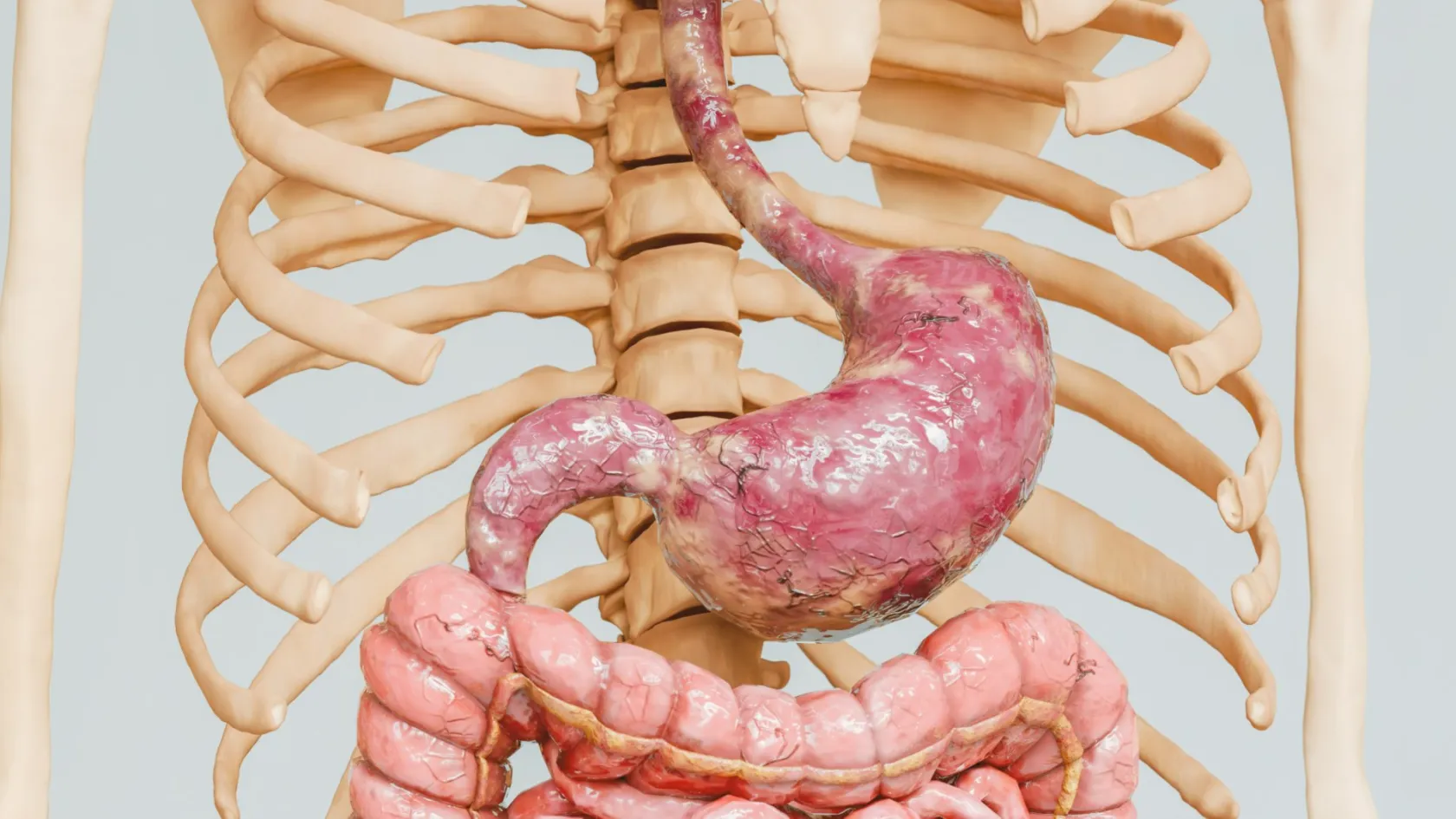
Gastric Cancer Surgery - Stomach Cancer Surgery
Two measurements decide this operation and they pull against each other. How much stomach comes out settles how you will eat for the rest of your life. How many lymph nodes come with it settles whether you are cured.
About This Department
Two measurements decide the outcome of stomach cancer surgery and they pull in opposite directions, since how much stomach comes out determines how you will eat for the rest of your life while how many lymph nodes come out with it determines whether you are cured. A surgeon wants to leave you as much stomach as possible and take as many nodes as possible, and the operation is where those two instincts are reconciled. This page explains how, and it gives more space than most pages do to the part patients say matters most afterwards, which is eating.
Free consultation
Send the endoscopy report with the tumour distance from the junction
Where the tumour sits inside the stomach decides whether part of it can be kept, so the endoscopy report matters as much as the scan. Send that report with the measured distances, the biopsy pathology including HER2 and mismatch repair results if they were done, the staging CT as image files, and any PET or laparoscopy findings. What comes back is an opinion on whether a distal resection is possible or the whole stomach has to go, whether chemotherapy should come first, and what eating would look like afterwards. The review costs nothing and carries no obligation.
How much stomach comes out
Position governs this, and size follows behind it. A tumour low in the stomach can be removed with the lower two thirds and the upper third left in place. A tumour high in the body or at the junction with the oesophagus forces the whole organ out, because a clear margin above it cannot be obtained any other way. That single anatomical fact decides most of what follows.
This table scrolls sideways on a narrow screen. Swipe or drag to see every column.
| Operation | What happens, and who it suits |
|---|---|
| Endoscopic resection | The tumour is lifted off the stomach lining through a scope, with no incision and no nodes removed. Reserved for very early cancers confined to the lining, which in most countries means a screen-detected one. |
| Distal or subtotal gastrectomy | The lower portion of the stomach comes out and the upper part is joined to small bowel. For tumours in the lower or middle stomach, and the operation surgeons work to make possible. |
| Total gastrectomy | The whole stomach comes out and the oesophagus is joined directly to small bowel. Required for tumours in the upper stomach or at the junction, for diffuse type cancers, and where a clear upper margin needs it. |
| Extended resections | Where the tumour has grown into the spleen, pancreas tail, colon or diaphragm, those structures come out with it. This adds substantially to the risk and is decided case by case. |
How much difference keeping part of the stomach makes against losing all of it is larger than most patients are told, and it has now been measured inside a randomised trial and not estimated from registries.
What 211 patients showed about keeping part of the stomach
A Dutch multicentre trial compared distal against total D2 gastrectomy, with three quarters of patients receiving chemotherapy before surgery. Overall complications occurred in 34 percent of the distal group and 57 percent of the total group, with anastomotic leak running at 3 percent against 19 percent, pneumonia at 4 percent against 22 percent, and atrial fibrillation at 3 percent against 14 percent. The median hospital stay was six days against eight, and quality of life at most points across the first year was better after distal resection by a margin the investigators judged clinically meaningful. Against all of that, the cancer outcomes were the same. Clear margins came in at 98 percent, the node harvest at 28 against 30, and one year survival did not differ between the two groups once the baseline differences were accounted for.
So the position is unambiguous where the anatomy allows a choice. Keep the stomach. What that does not mean is that a total gastrectomy represents a failure, because for a tumour high in the stomach it is the only operation that removes the cancer, and removing the cancer is the point, so a surgeon who recommends taking the whole organ is answering the anatomy in front of them rather than reaching for the bigger operation out of caution.
How many nodes come with it
Stomach cancer spreads to lymph nodes early and in a predictable order, so the node dissection is graded and not merely described. D1 takes the nodes sitting along the stomach itself. D2 goes further, clearing the stations along the named arteries that supply it, and it is the standard of care for any resectable gastric cancer that is more than superficial.
That standard was hard won, and the trial that established it deserves reading honestly rather than in summary.
Fifteen years of follow-up on 711 patients
A Dutch national trial randomised patients to D1 or D2 dissection and followed them for a median of 15 years. Death from gastric cancer occurred in 48 percent of the D1 group and 37 percent of the D2 group, with local recurrence running at 22 percent against 12 percent and regional recurrence at 19 percent against 13 percent. Overall survival at 15 years was 21 percent against 29 percent, a difference that did not reach statistical significance. That gain cost something severe, and the bill arrived immediately. Operative mortality reached 10 percent in the D2 group against 4 percent in the D1 group, complications 43 percent against 25 percent, and reoperation 18 percent against 8 percent. Much of that excess came from removing the spleen and part of the pancreas as part of the dissection, which is no longer done routinely, and the authors concluded that with a spleen-preserving technique in experienced hands D2 is the operation to have.
Two things follow from that for anybody choosing where to be treated. A D2 dissection performed badly is worse than a D1 performed well, and the difference between those two comes down to surgical volume and not to equipment. And the node count on your pathology report is the single most useful number for judging whether the operation was done properly, so ask for it, and read it rather than filing it.
Keyhole, robotic or open
For early gastric cancer this was settled a decade ago in favour of keyhole surgery. For locally advanced disease the question was whether a surgeon working through small incisions could still clear the node stations properly, and two large trials from Korea and China were built to answer it.
Pooling the individual patient data from both, 1,820 patients having distal gastrectomy for locally advanced cancer, five year overall survival was 82.7 percent after keyhole surgery and 83.3 percent after open, and recurrence-free survival 76.9 percent against 77.9 percent. Neither difference approached significance. Short-term recovery favoured keyhole surgery, with the one exception that anastomotic leak occurred more often.
One subgroup came out differently and it deserves stating. In tumours that had grown through the full thickness of the stomach wall, classified as pT4, recurrence-free survival was worse after keyhole surgery. That counts as a single subgroup finding from a pooled analysis and not a trial result, so it is a reason for caution rather than a prohibition, and it is a fair thing to raise if your own staging says T4.
Robotic surgery does the same operation with articulated instruments, and it is used increasingly for the node dissection around the vessels where the movements are fine, while open surgery keeps its place for bulky tumours, for extended resections taking neighbouring organs, and for the moment a surgeon judges the view inadequate and converts.
Chemotherapy before surgery
Outside the very earliest cancers, surgery is no longer the first thing that happens. Drugs come before and after it, and the regimen changed in a way that materially improved survival.
German investigators randomised 716 patients with locally advanced stomach or junctional cancer to the older three drug regimen or to a four drug combination given as four cycles before surgery and four after. Median overall survival came to 50 months with the newer regimen and 35 months with the older one, a hazard ratio of 0.77, while serious side effects and toxic deaths were no more common and hospital admission for toxicity ran the same in both groups.
Fifteen months of median survival is a large gain, and it comes with a cost in time.
Four cycles beforehand takes roughly two months, then surgery a few weeks after the last one, then four more cycles afterwards. For an international patient that shapes the entire plan. It usually means either a long stay or a split, with the chemotherapy given at home and the surgery here, and that split only works if the two teams agree the timing in writing before the first cycle. Raise it at the first consultation, because discovering the operating date has moved by two months is the most disruptive thing that happens to people arranging this from abroad.
The operation and the join
Three to five hours, longer for a total gastrectomy than a distal one, and longer again where neighbouring organs are involved.
Looking before committing
Many units begin with a short laparoscopy and a washing of the abdominal cavity sent for cell analysis, because deposits too small for any scan sit on the peritoneum in a meaningful minority of patients. Finding them changes the plan from surgery to drug treatment, and finding them before a four hour operation, and not halfway through one, is the whole point.
Freeing the stomach and taking the nodes
Surgeons separate the stomach from the omentum, the colon and the spleen, then divide the vessels feeding it at their origins because the node stations travel alongside them. This part constitutes the D2 dissection, it takes most of the operating time, and it is what the pathologist will later count.
Checking the margin while you are asleep
Cuts go above and below the tumour, and a frozen section frequently travels from the upper edge to the laboratory, since diffuse type cancers spread further through the wall than they appear to. A positive frozen section converts a planned distal resection into a total one on the spot, which is why consent covers both.
Rebuilding the route for food
Surgeons bring a limb of small bowel up and join it either to the stomach remnant or directly to the oesophagus, with a second join further down that returns bile and pancreatic juice to the stream. That second join is what keeps bile out of your oesophagus, and its absence is what made older reconstructions miserable, which is a piece of surgical history worth knowing only because it explains why the operation your grandparent had bears so little resemblance to the one being described to you.
Some units place a feeding tube into the small bowel at the same operation, particularly after a total gastrectomy or where the patient arrives underweight, and it is used for a few weeks while eating builds up. Accept it where it is offered, because losing weight in the month after this operation is much easier to prevent than to reverse.
Of the joins, the one to the oesophagus is the fragile one. It sits high, its blood supply is the poorest in the reconstruction, and it is why a total gastrectomy carries the complication profile the Dutch trial measured.
What goes wrong
Anastomotic leak dominates, and the figures from the Dutch trial give the honest shape of it. Around 3 percent after a distal resection and close to 19 percent after a total one, appearing between day four and day ten with fever, pain, a rising pulse or a patient who simply is not improving. Management runs from antibiotics and a drain placed by a radiologist through to a return to theatre, and a leak at the oesophageal join is the one that keeps people in hospital for weeks. Chest complications come next, and they arrive more often than patients expect after an operation on the abdomen. The incision sits high, breathing hurts, and pneumonia followed in 22 percent of total gastrectomy patients in that same trial, which is a rate that surprises people who came in worrying about their stomach and had not thought about their lungs at all. Breathing exercises and getting out of bed on the first day are the countermeasures, and they are effective. Then the shorter list. Bleeding. Duodenal stump leak, which is specific to this operation and presents late. Pancreatic fistula where the dissection ran close to the pancreas. Abscess in the space under the diaphragm. Delayed emptying of the stomach remnant, which resolves with time and patience. Atrial fibrillation. Clots in the legs or lungs.
Death within 90 days is uncommon in high volume units and it rises with the extent of the resection, with age, and with poor nutrition on arrival, which is the one item on that list that can be improved before the operation rather than after it.
Eating afterwards
Patients come back to this section more than any other, and most hospital pages give it three lines. The stomach does four jobs. It holds a meal, it grinds it, it releases it slowly into the small bowel, and it produces acid and the protein that lets you absorb vitamin B12. Remove it and every one of those jobs stops.
The first three months
Feeding starts early, frequently on the first day after surgery with sips and clear fluids, because early feeding shortens the stay and helps the join heal instead of threatening it, and from there fluids build to full liquids, then to soft moist food by the time you leave hospital, then to a normal texture across several weeks. What does not return is the volume. Six to eight small meals a day replaces three, and that is not a temporary measure for the recovery period but the way you will eat from now on. Drink between meals, never with them. Stop about half an hour before eating and wait half an hour afterwards, because fluid takes up the space food needs and pushes the meal through faster, which is precisely the mechanism behind the symptom described next.
Dumping syndrome, and what to do about it
When a meal arrives in the small bowel too quickly, fluid is drawn out of the circulation to dilute it. Fifteen to thirty minutes after eating you feel bloated, crampy, nauseated, sweaty and light-headed, with a racing heart and often diarrhoea. Doctors call that early dumping. Late dumping happens one to three hours after a meal, when a surge of sugar into the bowel provokes an insulin response that overshoots and leaves you shaky, sweating and confused until you eat something.
Both occur commonly after gastrectomy, both frighten people who were not warned, and both respond to management.
- Eat small and often, chew thoroughly, and take at least twenty minutes over a meal.
- Separate drinks from food by thirty minutes on either side.
- Cut simple sugars. Fruit juice, sweet drinks, cakes and puddings are what provoke both forms of it.
- Put protein and fat into every meal. Both slow the passage of food where sugar accelerates it.
- Lie down for twenty to thirty minutes after eating if early dumping is a problem, which slows things further.
- Ask about medication if the measures above are not enough, because drugs that slow gastric emptying exist and are underused.
What the stomach was absorbing for you
Vitamin B12 heads the list, and it is neither optional nor negotiable, and the rest follow from the same loss of acid and lining.
This table scrolls sideways on a narrow screen. Swipe or drag to see every column.
| Nutrient | Why it fails, and what replaces it |
|---|---|
| Vitamin B12 | Absorption needs a protein made only by the stomach lining. After a total gastrectomy that means injections every two to three months for life, with no oral substitute that reliably works. |
| Iron | Stomach acid converts dietary iron into the form the gut can take up, and less acid means less absorption. Checked on blood tests and supplemented, occasionally by infusion. |
| Calcium and vitamin D | Both absorb less well after the operation, and both are needed for bone, so a bone density scan belongs in the follow-up plan of anybody who has lost the whole stomach. |
| Lactose | Intolerance appears in a proportion of patients who never had it, producing wind, bloating and diarrhoea after milk. Lactose-free alternatives handle it without giving up dairy altogether. |
Levels get checked on blood tests at intervals, and a subtotal resection needs the same monitoring even though the deficiencies are less severe.
Weight and strength
Expect to lose weight, and expect the amount to alarm you before it stabilises. Ten to fifteen percent of body weight in the first six months is a common range after total gastrectomy and less after a distal resection, and most people then plateau instead of continuing to fall. Where weight keeps dropping past six months, something specific is usually behind it, meaning dumping that has never been addressed, a stricture at the join, exocrine pancreatic insufficiency or simple fear of eating, and every one of those has a treatment. Muscle goes before fat if protein intake is not deliberate. Aim for protein in every one of those six to eight meals, and see a dietitian instead of improvising, because this is the single area where specialist input measurably changes the outcome and is the most commonly omitted part of the aftercare, particularly for someone who was treated in one country and went home to another.
Fatigue lasts three to six months and improves in a way that is easier to see month by month than week by week, and walking daily while building the distance does more for it than resting ever will. Driving returns at around four weeks after keyhole surgery and six or more after an open operation, judged by whether you could brake hard without hesitating. Desk work follows at a similar point and physical work at around three months.
How long you stay
Three to four weeks in the country for surgery alone, and a good deal longer if the chemotherapy is given here as well.
Assessment takes four to six days. Endoscopy repeated or reviewed with the tumour position measured, a staging CT of chest, abdomen and pelvis, PET where the picture is unclear, laparoscopy with peritoneal washings in units that do it routinely, nutritional assessment with albumin and weight history, and a tumour board before a date is set. The nutritional assessment is not a formality, and where it identifies significant weight loss the operation may reasonably be delayed a fortnight while that is corrected. Expect six to eight nights on the ward after a distal resection and eight to twelve after a total gastrectomy, with the join and the return of eating deciding the exact day. Add a week to ten days nearby afterwards, because that period covers the wound check, the pathology discussion, the first proper dietitian session, and the confirmation that you are eating well enough to spend twelve hours on an aeroplane without it becoming an emergency.
Flying gets cleared at around three weeks after an uncomplicated operation, with a healed wound, no fever, no undrained collection, an intake that is holding your weight steady and an agreed plan for clot prevention. Leaving earlier carries real risk, because a leak declares itself in the second week and because the dietary problems that make people miserable surface in exactly that window, when somebody who knows the operation should be within reach.
What drives the cost
Distal and total gastrectomy carry different theatre times, different complication rates and different lengths of stay, so a single figure for stomach cancer surgery tells you very little. Eight things move the total.
- Whether the whole stomach comes out or part of it stays. That one decision moves theatre time, complication risk and ward days together.
- Whether neighbouring organs come out too, meaning the spleen, the pancreas tail or part of the colon.
- The surgical approach, since keyhole and robotic platforms carry instrument costs per case that open surgery does not.
- The staplers and circular anastomosis devices the reconstruction consumes, which is a real line item in this operation.
- Whether a staging laparoscopy is done as a separate procedure beforehand.
- Intensive care, planned or otherwise, and the ward days that the join ultimately decides.
- The pathology, including the node count and the HER2, PD-L1 and mismatch repair testing that guides drug treatment.
- Chemotherapy before and after the operation, which is the largest item of all and sits outside almost every surgical package.
Nutritional support hides in plain sight. Feeding tubes, supplement drinks, dietitian sessions and the extra days that poor intake adds to a stay are frequently uncosted at the outset and frequently needed. Your own condition moves the total as much as the operation. Weight loss before surgery, low albumin, diabetes, heart and lung disease, previous abdominal surgery and continued smoking each raise the chance of a longer stay and of care nobody budgeted for.
What a quoted price for this operation ordinarily covers is the airport pickup, the pre-admission workup, the operating fees, an agreed count of theatre and ward days, an interpreter, accommodation for you and a companion, and the review appointments before you fly. Sitting outside that figure, in almost every package published in this market, are the tickets home, travel insurance, every ward night past the agreed count, critical care that was not planned for, whatever a complication costs to treat, and all chemotherapy in either direction. Read the exclusion list first and the inclusion list second.
Six questions turn a headline into a quotation. Does the figure assume a distal or a total gastrectomy, and what changes if the frozen section forces the larger operation. Are the staplers and anastomosis devices inside it. Is a staging laparoscopy included. How many ward nights are covered, and what an extra night costs. Is the molecular pathology inside the figure. And whether any dietitian input or nutritional support is included after discharge.
No quotation means anything until a surgeon has read your endoscopy and your scans. That review costs nothing.
Once you are home
Surveillance runs on clinical review, blood tests and CT, at intervals of six months for the first two to three years and annually afterwards, with endoscopy where a stomach remnant was left. Something honest deserves saying about that schedule, because it is rarely said. A secondary analysis of 975 patients from a Korean trial compared those who kept to the follow-up protocol with those who did not, and found recurrence detected more often in the compliant group without any improvement in five year survival, at 84.5 percent against 87.5 percent. Regular follow-up did not predict survival independently. That finding does not mean skip your appointments. Detecting a recurrence early matters for treatment options and for planning, and the study was not designed to answer whether any follow-up is better than none. What it does mean is that the value of the schedule is honest information and not a survival guarantee, and a page that implies otherwise is overselling it.
What genuinely changes outcomes at home is the nutritional half of the plan. The B12 injections, the iron and vitamin D, the bone density check, the dietitian, and somebody reviewing your weight against a number written down on the day you left.
Take home the operative note naming the resection and the reconstruction, the pathology with the node count and the molecular results, the imaging on disc, your discharge weight, the vitamin schedule with doses and intervals, and the follow-up dates. Get it in English. An oncologist at home cannot plan treatment without the node count and the HER2 result, and asking for them six weeks later across a time zone wastes weeks.
Contact the team here for a fever, worsening abdominal pain, vomiting or an inability to keep food down, difficulty swallowing that is getting worse, black stools, or weight that is still falling at six months. A message and a photograph answer most questions within hours.
Frequently asked questions about gastric cancer surgery
Will the whole stomach have to come out?
How will I eat without a stomach?
What is dumping syndrome?
Will I need vitamin injections forever?
How long do I need to stay abroad, and when can I fly?
How much weight will I lose?
References
- de Jongh C, van der Veen A, Brosens LAA, et al. Distal versus total D2-gastrectomy for gastric cancer, a secondary analysis of surgical and oncological outcomes including quality of life in the multicenter randomized LOGICA-trial. Journal of Gastrointestinal Surgery. 2023;27(9):1812-1824.
- Songun I, Putter H, Kranenbarg EMK, Sasako M, van de Velde CJH. Surgical treatment of gastric cancer, 15-year follow-up results of the randomised nationwide Dutch D1D2 trial. The Lancet Oncology. 2010;11(5):439-449.
- Hu Y, Hyung WJ, Huang H, et al. Long-term outcomes of laparoscopic distal gastrectomy for locally advanced gastric cancer, an individual patient data meta-analysis of KLASS-02 and CLASS-01 randomized controlled trials. Chinese Journal of Cancer Research. 2025;37(3):365-376.
- Al-Batran SE, Homann N, Pauligk C, et al. Perioperative chemotherapy with fluorouracil plus leucovorin, oxaliplatin, and docetaxel versus fluorouracil or capecitabine plus cisplatin and epirubicin for locally advanced, resectable gastric or gastro-oesophageal junction adenocarcinoma (FLOT4). The Lancet. 2019;393(10184):1948-1957.
- Park SH, Hyung WJ, Yang HK, et al. Standard follow-up after curative surgery for advanced gastric cancer, secondary analysis of a multicentre randomized clinical trial (KLASS-02). British Journal of Surgery. 2023;110(4):449-455.
Editor's note
Written by the Biruni Hospital medical editorial team. Reviewed by Prof. Dr. Mustafa Teoman YANMAZ, Medical Oncology.
Medically reviewed by

Prof. Dr. Mustafa Teoman YANMAZ
Medical Oncology
Related Treatments
View All-
Bilateral Mastectomy
Whether you carry a BRCA mutation, have cancer in one breast or in both, bilateral mastectomy removes both breasts in one operation, and how much it helps depends on which of those three paths brought you to it.
-

Breast Conserving - Lumpectomy Surgery
Keeping the breast has never been the less thorough choice, and the largest recent studies now point the other way. This page explains who can have breast conserving surgery, what the margin report decides, and how long a woman traveling for it needs to stay.
-

Cytoreductive - Tumor Reduction Surgery
Patients cleared of every visible deposit lived 30 months in one gastric series. Those left with anything at all lived 7.3 months, however little remained.
-
Debulking - Ovarian Cancer Tumor Reduction
Two women with the same diagnosis on the same morning can get operations that share almost nothing. What decides it is who measured the disease first.
-
Debulking Surgery
Surgeons removed a median of 57 lymph nodes from women already cleared of visible disease. It bought no extra months, and tripled deaths within 60 days.