Plastic Surgery
Very large breasts pull on the neck, shoulders and back every day. After breast reduction, the share of women with pain most of the time fell from half to under one in ten.
Breast reduction removes skin, fat and breast tissue, lifts the nipple to a higher position and reshapes the breast into a smaller, lighter form. Few operations in plastic surgery satisfy patients as consistently, and a randomized trial found clear gains in quality of life, mood and confidence within four months. The choice of technique affects scars and the chance of breastfeeding later, so it deserves a proper conversation before the operation. Send us photographs, your bra size, height and weight, and a note of your symptoms and plans for pregnancy, and a plastic surgeon will tell you what a reduction could achieve and how long to plan.
50% to under 10%
Women with breast-related pain most of the time, before and after
75%
Median breastfeeding success when tissue under the nipple is partly kept
7 days
In Istanbul before flying home
Free
Plastic surgeon's review of your photos
Free consultation
Who does breast reduction help?
The symptoms of very large breasts
More than a cosmetic concern
Macromastia, the medical name for breasts large enough to cause symptoms, brings pain in the neck, shoulders, upper and lower back, grooves where bra straps dig into the shoulders, rashes and infections in the fold under the breasts, numbness in the hands, difficulty exercising and trouble finding clothes that fit. Many women also describe self-consciousness and unwanted attention that shape how they dress and move.
In a prospective American study of 179 women who had a reduction, half reported breast-related pain in the upper back, shoulders, neck or lower back all or most of the time before surgery, against fewer than one in ten afterward. Before surgery they scored below population norms on every domain of a standard health survey, and afterward above the norms on seven of eight. The benefit did not depend on body weight, bra size or the amount of tissue removed.
Reduction mammaplasty significantly improved quality of life, and increased extroversion and emotional stability.
Randomized trial of 73 women, British Journal of Surgery, 2006
What weight loss and bras can and cannot do
Weight loss shrinks the fatty part of the breast. Where weight is high it comes first, since it also lowers surgical risk. Supportive bras, physiotherapy and pain relief ease symptoms. In the American study, women had tried all of these, and none gave lasting relief. Breast tissue itself does not shrink with diet.
Age, pregnancy and breastfeeding plans
Surgeons prefer the breasts to have stopped growing before operating, in the late teens, unless symptoms are severe. Pregnancy can enlarge the breasts again, so a woman planning children may choose to wait, or to have a technique that best preserves the ability to breastfeed. Women over 40, or younger with a family history, have a mammogram first.
What the studies found
Few operations that sound cosmetic have been tested in a randomized trial. This one has.
This table scrolls sideways on a narrow screen. Swipe or drag to see every column.
Studies of breast reduction outcomes
| Study |
Women |
Result |
| Randomized trial, Hull, United Kingdom, British Journal of Surgery 2006 |
73, early surgery against a six-month wait |
Clear gains in quality of life on every scale at four months |
| Same trial, anxiety and depression, 2006 |
73 |
Highly significant improvement in anxiety and depression scores |
| Prospective study, United States, Plastic and Reconstructive Surgery 2002 |
179 operated, 184 controls |
Pain most of the time fell from half to under 10 percent. Pain index 26.6 before, 11.7 after |
Breastfeeding after reduction
What decides it
A systematic review of 51 studies and 31 different techniques found that breastfeeding success depended on one thing above all, whether the column of breast tissue between the nipple and the chest wall was kept. Removing it cut the median success to 4 percent. Keeping part of it gave 75 percent, and keeping all of it, 100 percent.
Most modern techniques keep the nipple attached to a pedicle of tissue that preserves this column, to different extents, and very large reductions sometimes require the nipple to be removed and replaced as a graft, which ends the ability to breastfeed. A woman who plans to breastfeed should say so, and the surgeon should explain which technique will be used and why.
This table scrolls sideways on a narrow screen. Swipe or drag to see every column.
Breastfeeding success by technique
| Tissue under the nipple |
Median breastfeeding success |
| Fully preserved |
100 percent |
| Partly preserved |
75 percent |
| Not preserved |
4 percent |
The operation
Techniques and scars
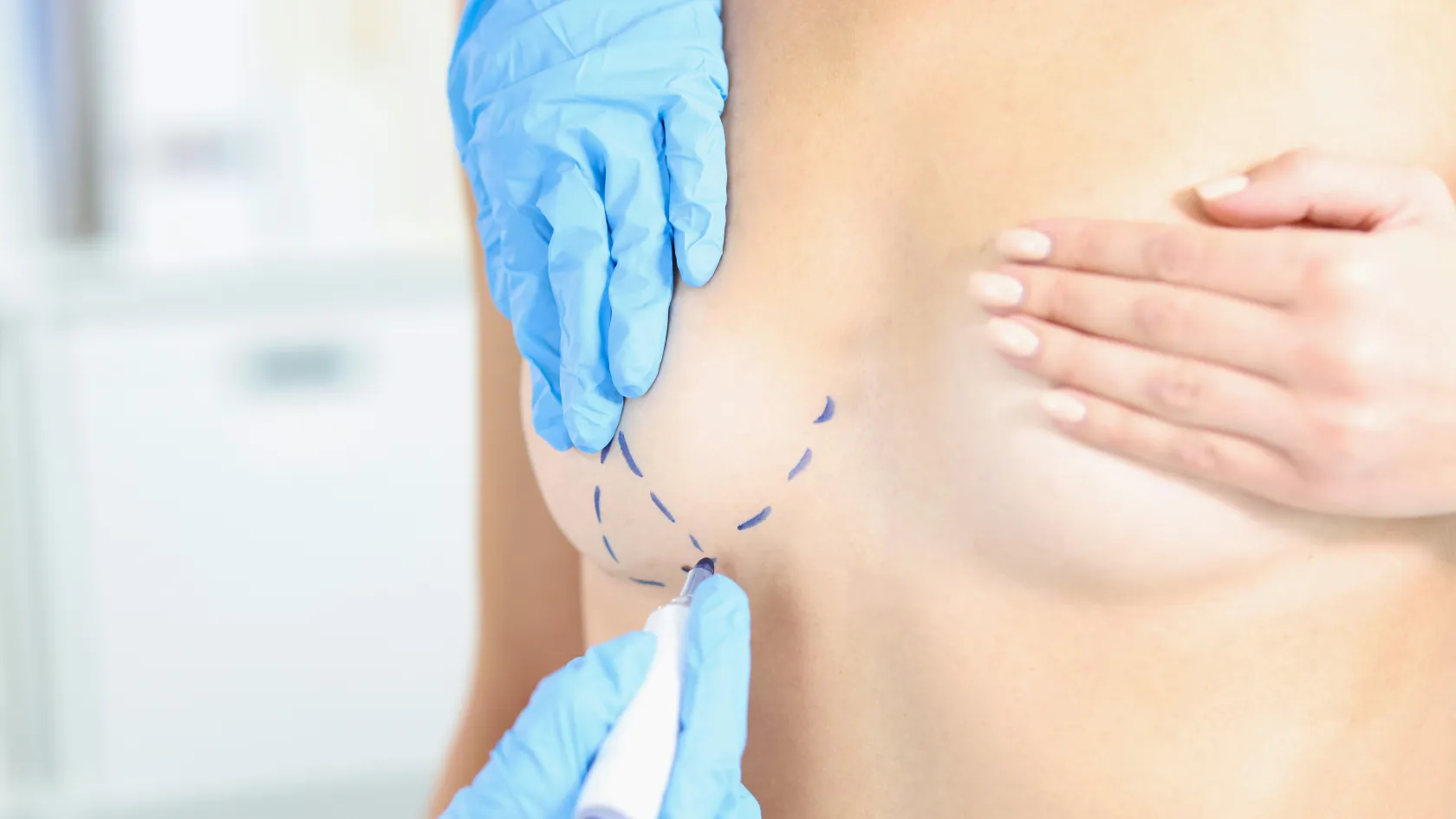
The scar follows the pattern of skin removed. A vertical, or lollipop, pattern leaves a scar around the areola and a line down to the fold, and suits moderate reductions. The anchor, or inverted-T, pattern adds a scar along the fold and suits larger ones. In a survey of plastic surgeons in the United Kingdom and Ireland, two thirds used the inferior pedicle technique, which keeps the nipple attached to a base of tissue from below. The scars fade over a year or two. Up close, they stay visible.
1
Marking
The surgeon marks the new nipple position and the skin to be removed with you standing, the morning of surgery.
2
The operation
Under general anesthesia, tissue is removed, the nipple lifted on its pedicle and the breast reshaped and closed in layers. Two and a half to four hours. Drains are used by some surgeons for a day or two.
3
The first night
One night in hospital for pain control and checks of the nipple blood supply. A surgical bra goes on before you wake.
- Stop smoking and nicotine products at least four weeks before and after surgery, since they starve the skin and nipple of blood.
- Pause blood thinners and some supplements on the surgeon's advice.
- Reach a stable weight, since large changes after surgery alter the result.
- Have a mammogram if you are over 40 or have a family history of breast cancer.
Warning signs after surgery
A breast that becomes rapidly swollen, tense and painful, a nipple that turns dark or cold, fever with spreading redness, or leg swelling and breathlessness need a doctor the same day.
1
The first week
Soreness controlled with tablets, walking from the first day, the surgical bra worn day and night, and a check of the wounds before you fly.
2
Weeks two to six
Return to desk work in one to two weeks. No lifting of heavy objects or arms above the head for strenuous tasks, and no sport, for six weeks.
3
Months three to twelve
Swelling settles. The breasts take their final shape, which sits a little higher at first and drops slightly over the following months as the skin relaxes, and the scars turn from red to pale over the year.
This table scrolls sideways on a narrow screen. Swipe or drag to see every column.
Recovery at a glance
| Time |
What to expect |
| Day one |
One night in hospital, walking the same evening |
| Day seven |
Wound check, fit to fly |
| Weeks one to two |
Back to desk work |
| Week six |
Sport and full activity |
| Month twelve |
Final shape and paler scars |
Complications
Small areas of delayed wound healing where the scars meet at the fold are the commonest problem and heal with dressings over weeks. Bleeding that needs a second operation, infection and fat necrosis, a firm lump where fatty tissue lost its blood supply, occur in a minority. Loss of part or all of the nipple is rare and more likely with very large reductions, smoking and obesity.
Nipple sensation changes in some women and improves over months in the majority. Slight asymmetry between the breasts remains in many women, and a small touch-up follows in a few. The risk of every complication rises with smoking, diabetes and a high body mass index, and the preparation list exists for that reason.
How many days in Istanbul, and what decides the cost?
- Photographs from the front and both sides, in underwear, following the guide we send.
- Your height, weight, bra size and any recent weight change.
- Your symptoms, previous breast surgery or biopsies, and any mammogram or ultrasound.
- Your plans for pregnancy and breastfeeding.
Seven days cover everything.
Plan seven days in Istanbul. The first day covers the consultation, blood tests and markings, the operation follows, then one night in hospital and a wound check before you fly on day seven. Flying earlier raises the risk of blood clots. Walk on the plane, drink plenty of water and wear compression stockings if the surgeon advises them, since a long flight in the first weeks after any operation of two hours or more slows the blood in the legs in a way that walking every hour largely undoes.
Cost covers the surgeon, anesthesia, the operating room, the night in hospital, the surgical bra and the checks, and larger reductions add operating time more than new items. The quote should state the expected duration and what happens to the price if the operation runs longer than planned. A mammogram and the amount of tissue sent for examination add small items. Your own figure follows the free review of your photographs.
One coordinator handles your visit. The team works in seven languages, with interpreters for the rest. Ten days before travel, an invitation letter naming the hospital and the surgeon goes out, and the international patients office books the transfer and a hotel for you and a companion. Halal, vegetarian and diabetic meals come on request, a prayer room is on site, and a request for a female doctor is passed to the department and met wherever the rota allows. Back home, the coordinator stays reachable on the same WhatsApp number, and the surgeon reviews photographs of your healing at two and six weeks, answers questions on scar care, bras and a return to sport, and writes to your own doctor with the operation note and the weight of tissue removed, which any future breast imaging will need to be read correctly.
Breast reduction surgery FAQ
Will breast reduction relieve my back and neck pain?
For most women, yes. In a study of 179 women, pain most of the time fell from half to under one in ten after surgery.
Can I breastfeed after a breast reduction?
It depends on the technique. When the tissue under the nipple was fully or partly kept, median breastfeeding success was 100 and 75 percent. Tell your surgeon if you plan to breastfeed.
What scars will I have?
A scar around the areola and a vertical line to the fold, with a horizontal scar in the fold for larger reductions. They fade over a year but remain visible up close.
How long is recovery?
One night in hospital, desk work in one to two weeks, and sport after six weeks.
When can I fly home?
About seven days after surgery, after a wound check.
Can my family come with me?
Yes. The international patients office arranges a hotel for you and a companion.
References
- Iwuagwu OC, Walker LG, Stanley PW, et al. Randomized clinical trial examining psychosocial and quality of life benefits of bilateral breast reduction surgery. British Journal of Surgery. 2006;93(3):291-294.
- Iwuagwu OC, Stanley PW, Platt AJ, Drew PJ, Walker LG. Effects of bilateral breast reduction on anxiety and depression: results of a prospective randomised trial. Scandinavian Journal of Plastic and Reconstructive Surgery and Hand Surgery. 2006;40(1):19-23.
- Collins ED, Kerrigan CL, Kim M, et al. The effectiveness of surgical and nonsurgical interventions in relieving the symptoms of macromastia. Plastic and Reconstructive Surgery. 2002;109(5):1556-1566.
- Kraut RY, Brown E, Korownyk C, et al. The impact of breast reduction surgery on breastfeeding: Systematic review of observational studies. PLoS One. 2017;12(10):e0186591.
- Iwuagwu OC, Platt AJ, Drew PJ. Breast reduction surgery in the UK and Ireland, current trends. Annals of the Royal College of Surgeons of England. 2006;88(6):585-588.